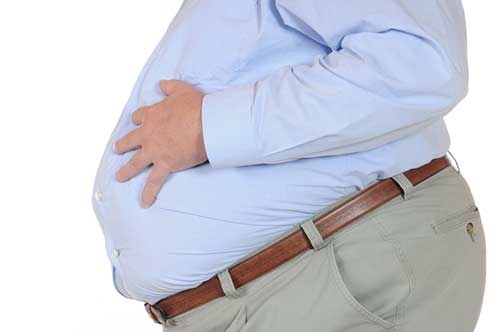

Trying to lose weight when your calendar is packed feels almost impossible.
Studies show time poverty leads to higher calorie intake and poorer nutrition for busy professionals.
It sounds like a lost battle, right?
But surprisingly, you do not need hours at the gym or elaborate meal plans. Even small, smart shifts in daily habits can change everything.
Table of Contents
- What Weight Loss Means For Busy People
- The Importance Of Weight Loss In A Fast-Paced Lifestyle
- How Busy Schedules Affect Weight Management
- Key Concepts In Weight Loss For Those With Limited Time
Quick Summary
| Takeaway | Explanation |
|---|---|
| Mindful Eating Matters | Practicing conscious eating helps busy individuals make healthier food choices under time constraints. |
| Focus on Metabolic Efficiency | Understanding and enhancing metabolism can aid weight loss even with limited time. |
| Maximize Workout Efficiency | Incorporating short, intense workouts can yield significant health benefits in busy schedules. |
| Manage Stress Effectively | Reducing stress is crucial, as it directly impacts weight gain and metabolic function. |
| Make Strategic Nutritional Choices | Choosing nutrient-dense foods can maintain energy levels and support sustainable weight loss. |
What Weight Loss Means for Busy People?
Weight loss for busy people is more than just a number on a scale.
It represents a holistic approach to health and wellness that acknowledges the unique challenges faced by individuals with packed schedules and limited time.
Understanding this concept goes beyond simple calorie counting and requires a strategic, personalized approach.
The Complexity of Weight Loss in a Fast-Paced World
For busy professionals and individuals constantly juggling multiple responsibilities, weight loss is not a linear journey.
It involves navigating complex lifestyle constraints while maintaining personal health goals.
Conscious eating strategies become crucial in this context, allowing individuals to make mindful choices even with limited time.
Key considerations for weight loss in busy lifestyles include:
- Integrating efficient nutrition strategies
- Maximizing short workout windows
- Reducing stress that contributes to weight gain
- Creating sustainable habit modifications
Metabolic Understanding for Time-Constrained Individuals
Weight loss for busy people requires a deeper metabolic comprehension.
According to research from the National Institutes of Health, metabolism doesn’t just slow down with age and busy schedules but can be strategically managed.
Metabolic efficiency becomes paramount when time for traditional diet and exercise is limited.
The human body adapts remarkably well to consistent, small interventions. Short, intense workouts, strategic meal planning, and understanding individual metabolic responses can create significant transformations.
This approach recognizes that weight loss is not about drastic measures but intelligent, consistent choices aligned with one’s lifestyle and physiological needs.
The Importance of Weight Loss in a Fast-Paced Lifestyle
Weight loss transcends aesthetic considerations in a high-stress, fast-moving world. It represents a critical investment in personal health, productivity, and overall quality of life.
Understanding its significance requires examining the intricate connections between lifestyle, metabolism, and long-term wellness.
Health Risks of Sedentary Professional Lives
Modern professional environments often create conditions that directly impede weight management.
Lifestyle changes become essential in counteracting the negative health impacts of prolonged sitting, irregular eating patterns, and chronic stress.
Key health risks associated with unmanaged weight in busy lifestyles include:
The following table summarizes the main health risks faced by busy professionals who struggle to manage their weight, as described in the article.
| Health Risk | Description |
|---|---|
| Cardiovascular Disease | Increased risk due to prolonged sitting and poor nutrition |
| Metabolic Syndrome | Greater likelihood linked to sedentary professional routines |
| Reduced Workplace Productivity | Lower energy and focus from unmanaged weight and poor eating |
| Compromised Mental Health | Negative impact on cognitive function and emotional well-being |
| Accelerated Cellular Aging | Faster aging processes triggered by chronic stress and inactivity |
- Increased cardiovascular disease probability
- Higher likelihood of metabolic syndrome
- Reduced workplace productivity
- Compromised mental health and cognitive function
- Accelerated cellular aging
Psychological and Professional Performance Implications
Weight management is deeply interconnected with psychological well-being and professional performance.
According to research from Harvard Medical School, maintaining a healthy weight directly correlates with improved cognitive function, emotional stability, and professional resilience.
Individuals who prioritize their physical health demonstrate enhanced decision-making capabilities, higher energy levels, and greater emotional regulation.
The compounding effect of these attributes can significantly impact career trajectory and personal satisfaction.
The relationship between weight management and professional success extends beyond physical appearance.
 It represents a holistic approach to personal development, acknowledging that optimal health is a foundational element of peak performance in an increasingly competitive and demanding world.
How Busy Schedules Affect Weight Management?
Busy schedules create a complex ecosystem of challenges that directly impact an individual’s ability to maintain a healthy weight.
The intersection of professional demands, time constraints, and physiological needs presents a nuanced landscape of weight management difficulties that require strategic understanding.
Metabolic Disruption and Stress Response
Sleep management plays a critical role in understanding how busy schedules compromise weight control.
Chronic time pressures trigger hormonal cascades that fundamentally alter metabolic functioning, creating conditions that make weight loss exponentially more challenging.
Key metabolic disruptions caused by busy lifestyles include:
- Elevated cortisol levels promoting abdominal fat storage
- Reduced quality and duration of sleep
- Increased insulin resistance
- Suppressed leptin and ghrelin hormone regulation
- Compromised cellular energy metabolism
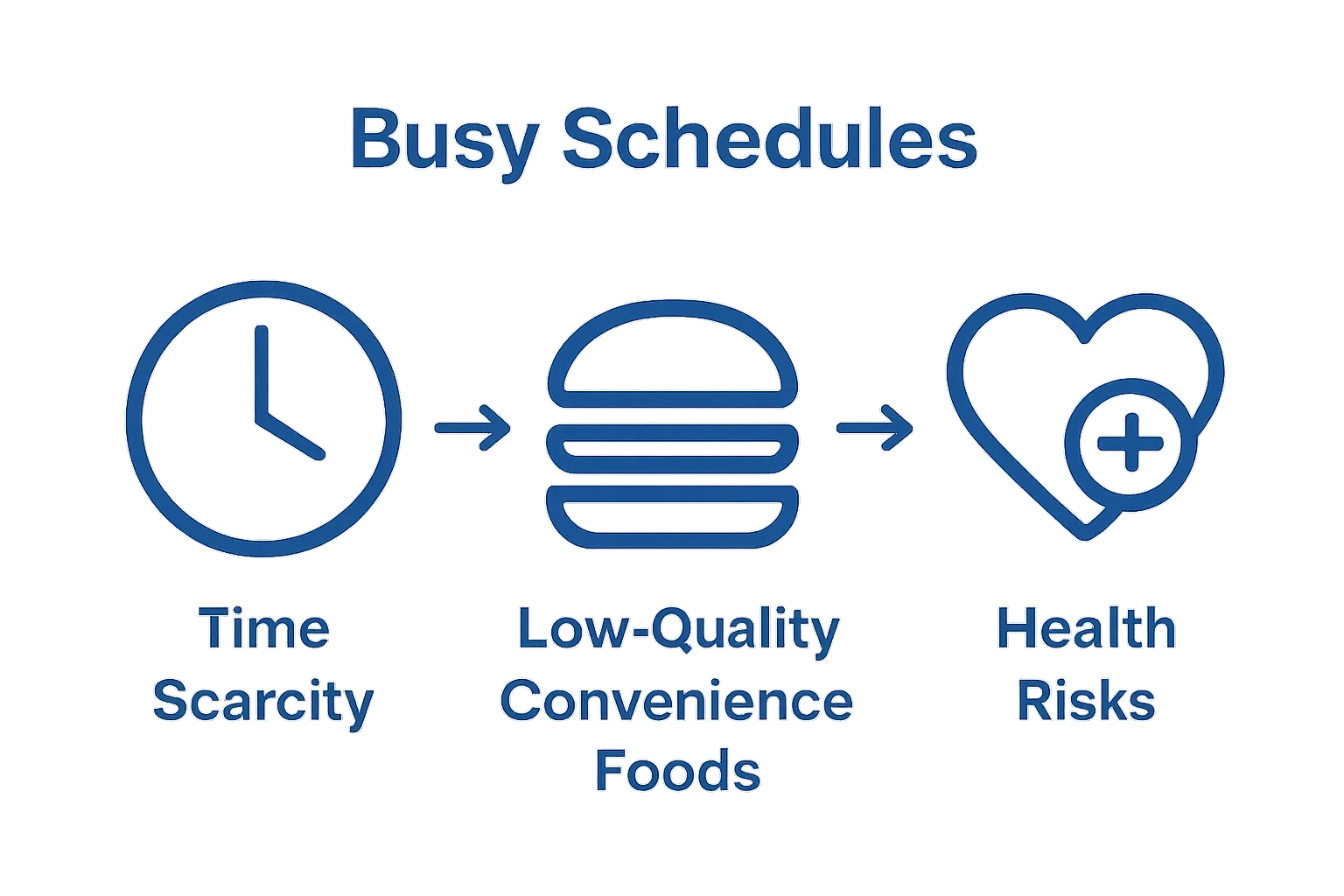
Time Scarcity and Nutritional Compromises
According to research from the National Institutes of Health, busy professionals frequently resort to convenience foods and irregular eating patterns that sabotage metabolic efficiency.
The time poverty syndrome directly correlates with decreased nutritional quality and increased caloric intake.
The physiological consequences extend beyond immediate weight gain. Continuous metabolic disruption can lead to long-term health complications, transforming what seems like temporary lifestyle adaptations into systemic health challenges.
Understanding these intricate connections becomes paramount for individuals seeking sustainable weight management in high-pressure environments.
This table presents key metabolic disruptions caused by busy schedules and their impact on weight management, as analyzed in the article.
| Metabolic Disruption | Impact on Weight Management |
|---|---|
| Elevated Cortisol Levels | Promotes abdominal fat storage and increases weight gain risk |
| Reduced Sleep Quality and Duration | Disrupts hunger cues and slows metabolism |
| Increased Insulin Resistance | Makes it harder to regulate blood sugar and burn fat efficiently |
| Suppressed Leptin and Ghrelin Regulation | Undermines appetite control, leading to overeating |
| Compromised Cellular Energy Metabolism | Lowers energy availability for exercise and daily functioning |
Key Concepts in Weight Loss for Those with Limited Time
Weight loss for busy individuals requires a strategic approach that transcends traditional diet and exercise paradigms.
Understanding fundamental metabolic principles and implementing targeted interventions becomes crucial when time is a scarce resource.
Metabolic Efficiency and Time-Sensitive Strategies
Healthy weight loss tips emphasize the importance of metabolic optimization.
The human body operates on complex biochemical pathways that can be strategically influenced even with minimal time investment.
Critical metabolic principles for time-constrained weight loss include:

- Prioritizing high-intensity interval training
- Implementing strategic nutrient timing
- Focusing on protein-rich, low-processed food selections
- Minimizing inflammatory food consumption
- Maximizing metabolic recovery windows
Caloric Consciousness and Minimal Time Investment
According to research from the National Institutes of Health, understanding caloric balance remains the foundational concept in weight management.
For busy professionals, this translates to making intelligent, time-efficient nutritional choices that create metabolic leverage.
The science of weight loss fundamentally involves creating a sustainable energy deficit while preserving muscle mass and metabolic rate.
This requires precision in nutritional choices, strategic movement, and an understanding that weight management is a complex physiological process, not simply a mathematical equation of calories consumed versus calories expended.
Take Back Control of Your Weight Loss—Even With a Busy Life
Busy professionals and anyone juggling a packed schedule know that weight loss is tough when time is scarce and stress is high. If you struggle with inconsistent meal choices, unpredictable routines, or a lack of structured eating, you are not alone.
Our article highlights these daily setbacks and the need for smart, efficient solutions like conscious eating and targeted meal planning.
Ready for change?
Discover how practical tools and advice from our Conscious Eating and Meal Planning guides can help you overcome the stress and metabolic roadblocks described in this article.
Visit leanandfit.info now and start building healthier habits that fit your life today. Do not let a busy schedule stop you from becoming the healthiest version of yourself.
Frequently Asked Questions:
Q1. How can I lose weight with a busy work schedule?
A: The secret is focusing on small, repeatable habits instead of drastic changes.
Research from the National Weight Control Registry shows that consistency beats intensity when it comes to long-term success.
Busy professionals benefit most from routines that fit seamlessly into their day.
You can “stack habits” by attaching them to existing routines—like taking a 10-minute walk after lunch or prepping meals while cooking dinner.
Even short bursts of activity and mindful eating can create a daily calorie deficit of 300–500 calories, which can lead to gradual, sustainable weight loss.
Actionable insight: Start with just one habit—like walking after meals—and build from there. Simple routines save time and deliver results.
Q2. What are the basics of weight loss for busy professionals?
A: Weight loss boils down to three essentials: calorie balance, movement, and consistency. The average U.S. adult consumes around 3,600 calories daily, often without awareness. Reducing intake by even 500 calories per day can result in steady progress.
Movement doesn’t have to mean structured workouts. Daily activity like walking, standing, or climbing stairs contributes significantly to calorie burn.
Actionable insight: Focus on calorie awareness instead of strict dieting. Small changes like cutting sugary drinks or reducing portion sizes can make a big difference.
Q3. Can I lose weight without exercising much?
A: Yes, because diet accounts for about 70–80% of weight loss. However, completely avoiding movement isn’t ideal. Non-exercise activity (NEAT) can burn hundreds of calories daily without formal workouts.
Simple actions like walking during calls, standing more, or doing household chores can significantly increase energy expenditure.
Actionable insight: Aim to move more throughout the day rather than relying only on workouts. Every step counts—literally.
Q4. What are the best 20-minute workouts for fat loss?
A: High-Intensity Interval Training (HIIT) is one of the most efficient options. Studies show HIIT can burn up to 30% more calories than traditional workouts in less time.
A simple 20-minute routine can include jumping jacks, squats, push-ups, and short rest intervals. These workouts boost metabolism and continue burning calories even after you finish.
Actionable insight: Schedule short workouts like meetings—20 minutes is enough if done consistently.
Q5. What are quick weight loss tips for full-time employees?
A: When time is limited, focus on high-impact habits:
- Eat protein-rich meals
- Drink water before eating
- Avoid mindless snacking
- Prioritize sleep
Sleep deprivation can increase hunger hormones by up to 24%, making weight loss harder.
Actionable insight: Set a fixed eating window (e.g., stop eating after 8 PM) to reduce unnecessary calorie intake.
Q6. Can I lose weight without going to the gym?
A: Absolutely. Gym workouts are helpful but not necessary. Activities like brisk walking, home workouts, and bodyweight exercises are highly effective.
A 30-minute brisk walk can burn 150–200 calories, making it a simple yet powerful fat-loss tool.
Actionable insight: Aim for 8,000–10,000 steps daily to maintain consistent calorie burn.
Q7. What are easy meal prep ideas for weight loss?
A: Meal prep doesn’t have to be complicated. The goal is to reduce decision fatigue and avoid unhealthy last-minute choices.
Simple options include:
- Grilled chicken with vegetables
- Boiled eggs and fruit
- Greek yogurt with nuts
- Rice, dal, and vegetables
Actionable insight: Prep just one meal in advance each day. Even small preparation can prevent overeating.
Q8. Is a high-protein diet effective for busy people?
A: Yes, protein helps control hunger, reduce cravings, and preserve muscle mass. Increasing protein intake to 25–30% of daily calories can significantly reduce overall calorie consumption.
Protein-rich foods also keep you full longer, making them ideal for busy schedules.
Actionable insight: Include protein in every meal—eggs, chicken, fish, lentils, or protein shakes.
Q9. How can I eat healthy with a hectic schedule?
A: The trick is to make healthy choices convenient. When nutritious options are easily available, you’re more likely to choose them.
Stock quick, healthy snacks ideas like fruits, nuts, protein bars, and ready-to-eat salads.
Actionable insight: Follow the “2-minute rule”—if a healthy option takes less than 2 minutes to prepare, you’ll stick to it.
Q10. What is a simple home workout routine for beginners?
A: A basic full-body routine works best:
- Squats
- Push-ups
- Lunges
- Plank
Perform 2–3 sets, 3–4 times per week. This improves strength, burns calories, and builds consistency.
Actionable insight: Start with just 10 minutes daily. Building the habit matters more than intensity.
Q11. How can I lose belly fat at home without equipment?
A: You can’t target belly fat directly, but overall fat loss will reduce it. Combining proper nutrition with full-body workouts is key.
Core exercises like planks help strengthen muscles but must be paired with calorie control.
Actionable insight: Focus on total fat loss through diet and activity instead of spot reduction.
Q12. What are sustainable weight loss habits?
A: Sustainable habits are realistic and easy to maintain long-term. Extreme diets often fail because they are too restrictive.
Effective habits include balanced eating, regular activity, proper sleep, and stress management.
Actionable insight: If a plan doesn’t feel doable for 6 months, it is not sustainable.
Q13. Why is weight loss harder for busy adults?
A: Stress, poor sleep, and irregular eating patterns make weight loss challenging. High stress increases cortisol levels, which can promote fat storage.
Over 60% of U.S. adults report stress-related eating behaviors, making consistency harder.
Actionable insight: Incorporate small stress-relief habits like walking or deep breathing into your routine.
Q14. How does metabolism affect weight loss?
A: Metabolism determines how many calories your body burns at rest. While genetics play a role, lifestyle factors like muscle mass and activity level are more influential.
Strength training helps maintain muscle, which supports a higher metabolic rate.
Actionable insight: Include strength exercises 2–3 times per week to support metabolism.
Q15. What are the most time-efficient fat loss strategies?
A: Focus on high-return habits:
- Short HIIT workouts
- High-protein meals
- Daily movement (steps)
- Quality sleep
These strategies deliver maximum results with minimal time investment.
Actionable insight: Combine habits—like walking during calls or exercising before your shower—to save time.
Free Tip of the Day:
Weight loss for busy people isn’t about doing everything—it’s about doing the right things consistently. You don’t need hours of free time or a perfect routine. Instead, focus on efficiency and sustainability.
Here’s a quick recap:
- Build small, repeatable habits
- Prioritize protein and calorie awareness
- Stay active with simple daily movement
- Keep meals easy and accessible
- Manage stress and sleep effectively
When you align your weight loss strategy with your lifestyle, success becomes not just possible—but inevitable.
Even the busiest schedule can make room for smarter choices. And over time, those small choices add up to big results.