

Why can two people follow similar diets and exercise regimes and experience different changes in body weight?
Why does one person appear to feel hungry soon after eating, while another can comfortably wait until their next meal?
And why does one person find that they can easily maintain weight loss after dieting while another person cannot?
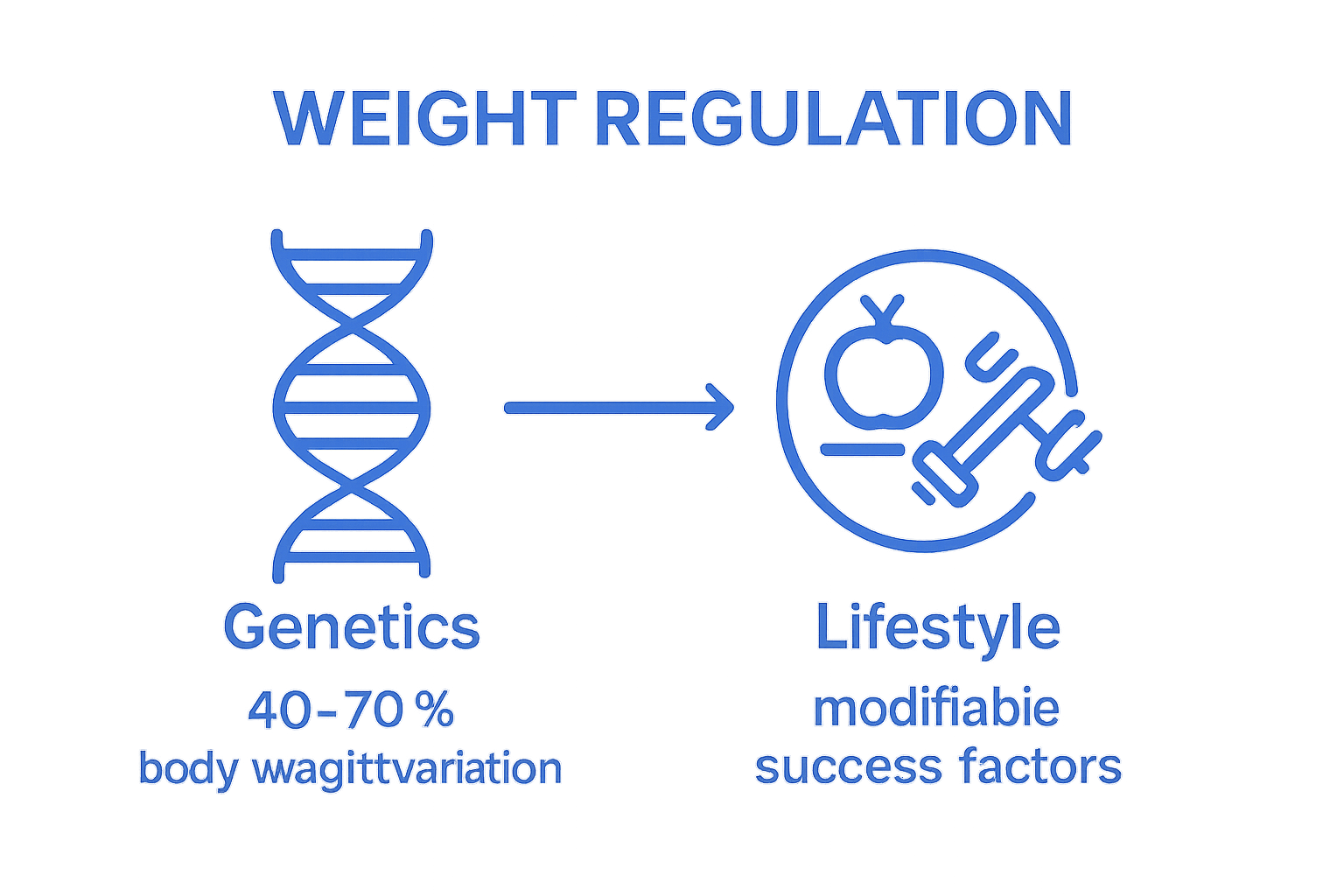
Genetics is only part of the answer, and the genes themselves are not the whole story. So, understanding weight loss and genetics is vital.
Genes can contribute to body weight by controlling appetite, food preferences, energy expenditure and fat storage or distribution, and the way in which the body interacts with the environment. Genes also influence and are influenced by diet, physical activity, sleep, stress, medications, health status and the environment.
A genetic predisposition can increase the likelihood of obesity, but it does not determine an individual’s weight or guarantee that weight loss will be unsuccessful.
Instead of asking “Do my genes prevent me from losing weight?”
You could be asking “What do my genes say about my appetite and weight control and how can this knowledge be used to influence my diet and lifestyle?”
This guide looks at the science behind genes and weight loss, covering topics such as FTO, MC4R and appetite, metabolism and genetic risk factors for obesity. Gene-environment interactions, gene expression and epigenetics and whether genetic testing can actually help you to lose weight.
Article Contents
- How Do Genetics Affect Body Weight?
- What Genetics Can and Cannot Tell You
- What Does a Genetic Predisposition to Obesity Mean?
- Is There an “Obesity Gene”?
- How Do Genes Influence Appetite and Hunger?
- FTO and Weight Loss: What Does the Research Show?
- MC4R and Body Weight Regulation
- Can Genetics Affect Metabolism and Energy Expenditure?
- Can Genetics Affect Where Your Body Stores Fat?
- Do Genes Affect How Well You Respond to Diet and Exercise?
- Can Genetics Make Weight Loss More Difficult?
- Genetics vs Environment: Which Matters More?
- What Is Epigenetics and Does It Affect Weight?
- Can Lifestyle Changes Alter Gene Expression?
- Should You Get a Genetic Test for Weight Loss?
- Can You Use Your Genetic Profile to Choose a Diet?
- Can Exercise Overcome Genetic Predisposition?
- What Genetics Means for Weight Maintenance
- What to Do If Obesity Runs in Your Family
- Practical Weight-Loss Strategy When You Have a Genetic Predisposition
- Frequently Asked Questions
- Bottom Line
- References
What the Evidence Says
Genetics clearly contributes to differences in body weight and obesity risk, but genes are only one part of a much larger system.
| Genetic factor | What research shows | What it does NOT mean |
|---|---|---|
| Multiple genetic variants | Can influence appetite, energy balance, body-fat distribution and obesity susceptibility | One gene determines your weight |
| FTO | Associated with obesity risk in many populations | FTO prevents weight loss |
| MC4R | Important in appetite and energy-balance pathways; rare pathogenic variants can cause severe obesity | Everyone with an MC4R-related variant has severe obesity |
| Family history | Associated with higher likelihood of overweight/obesity | Obesity is inevitable if your parents have obesity |
| Gene-environment interaction | Genes interact with lifestyle and environmental conditions | Lifestyle completely overrides genetics |
| Genetic testing | Research is developing | A consumer test can currently identify your perfect diet |
NIDDK states that obesity and overweight can be caused by many factors including lifestyle and environment, lack of sleep, medication, medical conditions, family history and genes. The CDC also says that there is a link between genes and feelings of hunger and satiety and metabolism.
This means that:
You should not blame your genes for being overweight
Genes may make it harder for you to manage your weight, but they are only one factor in the equation.
What Genetics Can and Cannot Tell You
Genetics can tell you about:
- susceptibility to obesity
- differences in appetite and sensations of fullness
- distribution of body fat
- aspects of energy expenditure
- why obesity can run in families
- rare gene variants that cause severe obesity
Genetics cannot tell you about:
- your exact future weight
- exactly how much weight you will lose
- an ideal diet for you
- whether you will regain lost weight
- that weight loss is impossible due to your genes
How Do Genetics Affect Body Weight?
Body weight is a complex trait.
It is determined by the interaction of biological and environmental factors rather than one mechanism on its own.
Genes can affect characteristics related to:
- appetite / hunger
- a sense of fullness
- taste preferences
- expenditure of energy
- fat storage
- distribution of body fat
- glucose and lipid metabolism
- exercise / activity
- response to environmental factors
NIDDK’s research program on nutrition and obesity genetics studies genes associated with body composition and distribution of fats, metabolism, energy expenditure and balance, food consumption and preference, and activity.
This helps explain why two people in the same environment may have differing propensities to gain weight. On the other hand, it’s also important to look at a genetic contribution to weight gain not on its own.
Genetics does not mean:
“My genes dictate what I should precisely weigh!”
rather,
Genetics can influence biological systems involved in appetite, energy balance, body-fat distribution and other processes related to body weight.
What Does a Genetic Predisposition to Obesity Mean?
Genetic predisposition refers to the fact that certain genetic variations may make a person more or less likely to develop a particular trait or condition.
When it comes to obesity, this theory speaks of genetic variations that may affect:
- appetite control
- feeling of fullness
- eating behavior
- energy expenditure
- fat storage
- body fat distribution
- hormone levels
It is important to note that with a genetic predisposition to obesity, the likelihood of developing this condition increases, but it does not mean that the person will inevitably become overweight.
On the other hand, the absence of genetic variations does not mean that a person cannot become obese. According to NIDDK, the likelihood of having overweight or obesity increases if one or two parents are overweight or obese. This genetic risk is significant and should be taken into consideration.
Is There an “Obesity Gene”?
No single gene accounts for the majority of obesity cases.
The role of genetics in obesity is complex for the majority of people who experience it, as it tends to be polygenic, where many genetic variants may each contribute a small amount to increased susceptibility.
Hundreds of genetic variants have been linked to obesity or related traits.
Some of these variants impact biological processes involved in regulating appetite and energy expenditure, and others may affect body fat distribution or other characteristics.
Rare genetic variants affecting specific biological pathways can cause monogenic forms of obesity.
For instance, the melanocortin pathway, among others – such as the MC4R gene – when impacted, can play a significant role in modulating the feeling of hunger and subsequent weight.
This is in contrast to a common understanding of obesity being driven by a “genetic obesity gene”.
In the majority of cases, it is a combination of:
various genes + the environment + behavior + physiology + and circumstances.
How Do Genes Influence Appetite and Hunger?
One of the most common ways by which genetics can influence body weight is by controlling the feeling of hunger.
The brain uses information about:
- hunger
- fullness
- energy available in the body
- how much food is eaten
- body fat levels
Genes responsible for these processes can affect their functioning and, as a result, the feeling of hunger or fullness.
For a more detailed explanation, see our guide to genetic variants linked to appetite regulation.
For instance, the system regulating energy and food intake and using leptin and melanocortins (MC4R) is essential for normal appetite and body weight.
Moreover, several rare genetic defects in this system can lead to hyperphagia (excessive eating) and severe obesity.
On the other hand, common genetic variations usually have only a moderate impact on weight.
Therefore, it is crucial to distinguish between rare diseases caused by genetic mutations and the effect of common genes on weight.
A genetic predisposition can increase susceptibility to obesity, but it does not by itself determine whether a person will develop obesity or obesity-related health problems. However, one cannot say the same about a person with a common genetic variation.
FTO and Weight Loss: What Does the Research Show?
The FTO gene is among the most intensively studied gene in obesity research.
Certain variants of this gene are associated with higher obesity risk at population level. As a result, there is much interest in the idea that people carrying these variants might have different responses to diet or exercise.
The evidence is more nuanced than the idea that an FTO risk variant determines whether someone can lose weight.
A large scale systematic review and meta-analysis of eight randomized controlled trials including 9,563 participants found that people carrying the FTO minor allele did not have significantly different changes in BMI, body weight or waist circumference following weight-loss interventions than non-carriers.
The authors concluded that FTO-related genetic predispositions did not appear to limit individuals’ responses to dietary, physical or drug-based weight-loss interventions.
A newer 2024 meta-analysis drew slightly different conclusions about differences in weight response to diet and exercise in certain FTO genotypes, highlighting that this remains an area of active investigation.
So the responsible conclusion is:
FTO may influence obesity susceptibility, but an FTO risk variant does not mean that you cannot lose weight.
Nor does knowing your FTO status currently provide a simple prescription for the perfect diet.
MC4R and Body Weight Regulation
The MC4R gene is of particular interest due to its involvement in the biological pathway controlling hunger and satiety.
The rare causative variants in this gene lead to significantly higher obesity risks and increased appetite.
MC4R is one of the best-established genes involved in the biological regulation of appetite and energy balance. Rare pathogenic variants affecting MC4R can cause severe obesity and increased appetite.
It is essential to distinguish between the impact of common genetic variants and rare disease-causing variants.
In most cases, polygenic inheritance determines body weight instead of a single-gene mutation.
Can Genetics Affect Metabolism and Energy Expenditure?
Indeed, but this area is often oversimplified.
Genes can contribute to a person’s:
- Resting energy expenditure,
- body composition
- muscle characteristics
- energy balance
- physical activity
- nutrient metabolism
NIDDK’s genetics research program focuses on genetic contributions to metabolic rate, energy balance, body-fat distribution, food consumption and physical activity.
While it is common for people to state,
“I have a slow metabolism because of my genes”,
This is seldom an adequate explanation of a person’s energy expenditure.
Energy expenditure depends on numerous interrelated factors, including:
- body size
- body composition
- age
- sex
- physical activity
- spontaneous physical activity
- food intake
- adaptive thermogenesis
- weight loss
- health status
- drugs
- genetics
Genetics can play a role, but they are seldom the only factor.
The relationship between inherited traits, metabolism and obesity is discussed in greater detail in our guide to inherited metabolism and obesity.
For a broader explanation of energy balance and fat loss, see our guide to Understanding Fat Loss: The Science Behind Shedding Pounds.
Can Genetics Affect Where Your Body Stores Fat?
Yes.
Genes do contribute to body-fat distribution pattern, such as higher proportion of body fat around the abdomen, hips, thighs or other areas.
It is important to consider, since fat distributed in different parts of the body is not the same.
Visceral fat, which accumulates around internal organs, differs biologically from subcutaneous fat stored beneath the skin.
Genes are one of the factors that researchers are investigating when it comes to explaining individual differences in the location of body fat.
However, if you have a certain body type, it does not mean that you have specific genes turned on, and you cannot ‘turn off’ genes by working out a particular body area.
To reduce total body fat, you need to reduce overall body fat.
Do Genes Affect How Well You Respond to Diet and Exercise?
This is indeed a question of great interest to many weight-loss geneticists.
Not everyone will lose the same amount of weight on a certain kind of intervention.
That doesn’t mean that someone’s diet is intrinsically failing or that another person’s biology dictates that they cannot lose weight.
The response to a given intervention will be affected by numerous variables, including genetics, but also:
- adherence
- starting body weight
- food intake
- physical activity
- sleep
- medications
- health conditions
- appetite
- socioeconomic circumstances
- food environment
- changes in energy expenditure
Studies of the FTO gene give us a useful model for thinking about this question.
One large meta-analysis found no significant disadvantage among carriers of the risk allele for weight loss response, while more recent studies are working to understand whether certain genetic profiles might lead to differential response to different interventions.
So genetics is a research issue, not a reason to despair about a specific diet.
Can Genetics Make Weight Loss More Difficult?
Yes.
Though, it is not impossible for a person to achieve.
Depending on a person’s genetics:
- experience stronger hunger signals
- experience differences in satiety or fullness
- have differences in food reward or eating behavior
- differ in energy expenditure
- differ in body-fat storage or distribution
- differ in physical activity tendencies
- respond differently to environmental food cues
According to the CDC, multiple genes can contribute to a feeling of hunger/fullness, metabolism, and fat storage while outside factors also contribute to a person’s ability to eat right and exercise.
This is why simply telling someone with obesity to “eat less and exercise more” does not fully explain the biological, behavioral and environmental factors that can influence weight.
While energy in/energy out does matter, the fact of the situation is that the variables affecting energy in/out are much too complex than to just be solved by willpower alone.
Genetics vs Environment: Which Matters More?
It is not an either/or question.
Genes and the environment interact.
Your genetic background may affect your body’s response to your surroundings and your surroundings may influence behaviors and exposures that influence body weight.
Consider two people with similar genetic susceptibility.
If the first has:
- easy access to nutritious food
- opportunities to walk
- regular sleep
- and supportive social circumstances
while the second lives in an environment dominated by:
- inexpensive high-calorie foods
- long periods of sitting
- irregular working hours
- chronic stress
- and limited opportunities for physical activity
then, their weight trajectories may be very different.
The CDC emphasizes that systems and environmental conditions including access to healthy foods, opportunities for physical activity, health care, housing and economic stability can influence obesity risk.
Genes should never be considered in isolation.
What Is Epigenetics and Does It Affect Weight?
Epigenetics refers broadly to changes in gene regulation that can affect how genes are expressed.
Researchers are studying epigenetic processes in obesity because environmental and lifestyle factors are often linked to DNA methylation changes and other regulatory processes.
Variables that may be explored for their role in obesity and weight gain include:
- nutrition
- physical activity
- stress
- sleep
- developmental exposures
- environmental factors
However, this is an area in which health websites tend to run far ahead of the science.
It would not be honest to encourage readers that they can simply eat a certain food to turn obesity genes off.
Research so far has found associations between obesity, weight loss and epigenetic changes, but researchers are still working to find out which cause, which follow and which have clinically significant relevance.
So epigenetics are scientifically interesting, but not something that should be touted as a fast way to reprogram your genes.
Can Lifestyle Changes Alter Gene Expression?
Lifestyle factors can affect biological processes that play a role in gene regulation, and associations between diet, exercise, weight loss and epigenetic markers have been documented by researchers.
But there’s a big difference between:
“Lifestyle influences gene expression”
and:
“You can turn your obesity genes off.”
The latter is far too simplistic.
A 2023 review of human intervention studies found that lifestyle-induced weight loss can be associated with changes in obesity-related DNA methylation patterns, but also stressed that larger and more robust studies were needed to identify which epigenetic biomarkers have meaningful effects on obesity and treatment.
Therefore, the practical takeaway isn’t to be searching for a particular “gene-switching” food.
It’s to continue to do the things already known to be beneficial for health:
- maintain a nutritious eating pattern
- remain physically active
- get adequate sleep
- manage stress
- avoid smoking
- follow appropriate medical treatment
- work toward a sustainable body weight
Should You Get a Genetic Test for Weight Loss?
This is where caution is particularly important.
Commercial genetic tests may provide information about genetic variants associated with obesity, appetite, caffeine metabolism, nutrient metabolism or other traits.
But a genetic test is not currently a magic tool that tells you which diet will make you lose weight.
Research into polygenic risk scores and genetic predictors of obesity is advancing, but their clinical usefulness for individualized weight-loss prescriptions remains an active area of investigation.
For most people trying to lose weight, the more useful information is often simpler:
- What are you eating?
- How active are you?
- How much sleep are you getting?
- What medications are you taking?
- Are you experiencing significant hunger?
- What does your weight trend look like?
- Do you have a medical condition affecting weight?
- What approach can you realistically sustain?
If severe obesity begins very early in life, hunger is unusually intense, or there is a strong family history of severe obesity, discussing the possibility of a genetic or endocrine cause with a qualified healthcare professional may be appropriate.
Can You Use Your Genetic Profile to Choose a Diet?
Currently, it’s too soon to be certain that genetic testing can determine the optimal dietary plan for each person.
What genetic testing can potentially tell you?
- presence of particular variants
- rare genetic causes in appropriate clinical situations
- genetic risk associations
What it cannot reliably tell you?
- your exact future body weight
- the perfect diet
- exactly how much weight you will lose
- whether a diet will definitely work
You may encounter claims such as:
“Your genes tell you whether you should eat low-carb.”
or:
“Your DNA reveals the perfect weight-loss diet.”
A more reliable method is to choose a dietary pattern based on:
- nutritional adequacy and overall diet quality,
- energy intake and feelings of fullness,
- medical conditions,
- food preferences and cultural traditions,
- cost,
- and sustainability and adherence.
Your genetics may become a more significant factor in the future; however, there is not yet enough knowledge to say that a consumer genetic test can accurately recommend the perfect diet for weight loss.
Can Exercise Reduce the Impact of Genetic Risk for Obesity?
Exercise does not change the underlying genetic variants you inherit, but regular physical activity can influence energy expenditure, fitness, body composition and metabolic health.
It can, however, affect many of the same processes that contribute to weight control and metabolic health.
A physically active lifestyle can:
- increase energy expenditure,
- improve physical fitness,
- improve cardiovascular health,
- improve insulin sensitivity,
- help preserve muscle mass during weight loss,
- help maintain a healthy body weight
- improve physical function.
Most importantly, genetic risk is not a barrier to successful exercise.
Evidence from weight-loss intervention trials suggests that individuals with certain genetic predispositions may still benefit significantly from lifestyle changes, including increased physical activity.
The FTO literature is a good example of this; major evidence does not support the claim that FTO risk variants render individuals unresponsive to lifestyle interventions aimed at reducing body weight.
For related information, see our guide to Understanding Building Muscle for Fat Loss.
What Genetics Means for Weight Maintenance
Genetics could be a factor in your susceptibility to weight gain, as well as challenges in maintaining a healthy weight.
However, in addition to genetic predispositions, there are additional variables that determine the likelihood of successful maintenance after initial weight loss, and development of a new healthy routine.
A successful strategy for maintaining the achieved results and further weight reduction would include:
- sustainable eating patterns,
- appetite and biological responses after weight loss,
- physical activity,
- tracking progress,
- adequate sleep and stress reduction,
- awareness of the body’s signals,
- preparation for potential setbacks,
- prompt response to any signs of relapse.
If you are actively losing weight, our guide to a healthy rate of weight loss explains why the pace of weight loss matters and how to approach it sustainably.
What to Do If Obesity Runs in Your Family?
A family history of obesity is a piece of valuable information that should not be ignored but also should not serve as a reason to resign.
Instead, it should be used as an additional reason to take better care of yourself.
The following factors worth consideration if there is a strong genetic predisposition toward obesity in your family:
- A balanced diet
Focus on wholesome foods and portion sizes that keep you satisfied without depriving you of anything.
- Active lifestyle
Do not skip a chance to move as exercise is beneficial for everyone regardless of their current weight and body mass index.
- Resistance training
It is important to include resistance training to help preserve or build muscle and support physical function.
- Good sleep quality
Lack of sleep can make weight management more difficult. Our guide to sleep and weight loss explains the relationship between sleep, appetite, energy balance and weight management in greater detail.
- Weight progression
Do not wait too long before you monitor meaningful changes in weight and health rather than waiting until weight gain becomes substantial.
- Medications and diseases
Both of these factors are mentioned by NIDDK as contributors to weight gain.
- Your expectations
If there is a genetic reason behind your concerns regarding your weight, it does not necessarily mean that you have to put yourself through brutal diets.
Sometimes, the situation requires a subtle but persistent effort over an extended period of time.

Practical Weight-Loss Strategy When You Have a Genetic Predisposition
You do not need to know every genetic variant you carry before taking action.
A different approach is as follows:
Step 1: Consider your family history.
If obesity, type 2 diabetes or extreme obesity runs in your family, take this into account.
Step 2: Consider your own patterns.
Do not simply blame your genes if you have unhealthy patterns of eating, exercising, sleeping or weighing yourself.
Step 3: Establish an eating plan.
Do not fall for marketing gimmicks that tell you which fad diet to follow based on your genetic predispositions.
Step 4: Get regular physical activity.
Aim to engage in both aerobic and muscle-building exercises.
Step 5: Take note of hunger and fullness.
If you find that being hungry is extremely difficult for you to deal with, consult a registered dietician or your healthcare provider about how to change this.
Step 6: Evaluate medications and other health issues.
If you think that something unusual is going on with your weight, work with your doctor to determine whether a particular drug or medical condition may be to blame.
Step 7: Do not succumb to genetic determinism.
Remember that genetic risk is not the same as genetic certainty.
Frequently Asked Questions:
Does genetics affect weight loss?
Yes. Genetic differences can influence traits associated with appetite, energy balance, fat distribution, metabolism and body weight, but genetics interact with environmental and lifestyle factors and do not dictate an individual’s weight-loss outcome.
Can genetics make it harder to lose weight?
Genetic differences may make weight management more challenging for some people by influencing appetite, satiety, energy expenditure and other biological processes, but a genetic predisposition does not guarantee that weight loss will be impossible.
What genes are associated with obesity?
Many genes and genetic variants have been associated with obesity. FTO is one of the best-known common variants and MC4R is part of an important appetite-regulation pathway, but rare variants which affect appetite and energy-balance pathways can result in severe forms of obesity.
Is FTO the “fat gene”?
FTO is sometimes referred to as a “fat gene”, but this is a misleading term. FTO is associated with obesity risk, but does not dictate whether an individual will become obese or whether they can lose weight.
Can people with FTO variants still lose weight?
Yes. Available evidence indicates that people carrying common FTO risk variants can lose weight through dietary and physical-activity interventions. A large individual-participant meta-analysis of eight randomized controlled trials found no significant difference in weight-loss response by FTO genotype.
Does MC4R affect appetite?
Yes. MC4R is involved in the biological regulation of appetite and energy balance. Rare pathogenic variants affecting MC4R can cause severe obesity and increased appetite.
Can genetics determine my metabolism?
Genetics can contribute to differences in metabolic rate and energy expenditure, but metabolism can be affected by many other factors including body size, body composition, age, physical activity, food intake, health conditions and medications.
Why do siblings sometimes have very different body weights?
Siblings share some, but not all, of their genetic variants and have different experiences, eating patterns, activity levels, sleep patterns, health conditions, medications and environments, so genetics and environment combine differently for each individual.
Can genetic testing tell me which diet is best for me?
Not reliably at this point. Research into the field of personalized nutrition and genetic predictors of weight-loss response is ongoing, but genetic testing should not be presented as a definitive way to identify the perfect diet for an individual.
Can exercise overcome genetic risk for obesity?
Exercise cannot remove genetic variants, but regular physical activity can improve one’s energy expenditure, fitness, metabolic health and weight management. Genetic risk does not negate the benefits of exercise.
Does epigenetics change your genes?
Epigenetic mechanisms can affect the regulation of genes without changing an individual’s underlying DNA sequence and researchers are studying how nutrition, physical activity, obesity and weight loss are related to epigenetics, but the clinical implications of many of these findings are uncertain.
Can lifestyle changes switch obesity genes off?
That is an oversimplification. Lifestyle can influence biological processes which are involved in gene regulation, but there is no simple diet or exercise routine which can be said to “switch off” obesity genes.
Should I get genetic testing if obesity runs in my family?
Not necessarily. For most people, genetic testing is not required to begin evidence-based weight management, but people with severe obesity beginning at a very young age, unusually intense hunger, or a strong pattern of severe obesity within their family may benefit from discussing genetic or specialist evaluation with a healthcare professional.
What is the most important thing to understand about genetics and weight loss?
Genes influence susceptibility, but do not completely dictate destiny.
Your genetic background may affect how your body regulates appetite, energy and fat storage, but your weight is also influenced by your environment, behavior, health, medications and other factors.
The goal is not to “beat” your genes.
The goal is to understand the factors affecting your weight and build a strategy which is realistic for your biology and your life.
The Bottom Line
Genetics may well be a significant factor in the weight-loss equation, but it is only one part of the puzzle.
Genes may affect:
- appetite and satiety,
- energy expenditure,
- distribution of body fat,
- predisposition to obesity,
- metabolism,
- response to some interventions,
- but genes do not act in isolation.
Environmental factors, diet, exercise, sleep, stress, drugs, health status, and behaviors also play a role.
The most important takeaway message is, therefore, not the quotation at the beginning of this article,
but rather this: “Your genes may influence your biology, but remember that weight management is the result of your biology and environment, including your behavior.”
This is a critical difference because if you have a strong family history of obesity or if you are struggling with weight, you should not resign yourself to frustration and failure.
Key Takeaway:
- Genetics influences susceptibility.
- Genes do not work alone.
- Genetic testing cannot currently prescribe the perfect diet.
- Lifestyle, environment, health conditions, medications and behavior also matter.
- A family history of obesity is a reason to understand risk—not assume inevitability.
References:
- National Institute of Diabetes and Digestive and Kidney Diseases (NIDDK). Nutrition & Obesity Genetics & Genomics.
https://www.niddk.nih.gov/research-funding/research-programs/nutrition-obesity-genetics-genomics - National Institute of Diabetes and Digestive and Kidney Diseases (NIDDK). Factors Affecting Weight & Health.
https://www.niddk.nih.gov/health-information/weight-management/adult-overweight-obesity/factors-affecting-weight-health - Centers for Disease Control and Prevention (CDC). Risk Factors for Obesity.
https://www.cdc.gov/obesity/risk-factors/risk-factors.html - Livingstone KM, Celis-Morales C, Papandonatos GD, et al. FTO genotype and weight loss: systematic review and meta-analysis of 9563 individual participant data from eight randomised controlled trials. BMJ. 2016;354:i4707.
https://pubmed.ncbi.nlm.nih.gov/27650503/ - NIDDK. “Sensing” a genetic predisposition to obesity.
https://www.niddk.nih.gov/news/archive/2018/sensing-genetic-predisposition-obesity - Keller M, Svensson SIA, Rohde-Zimmermann K, Kovacs P, et al. Genetics and Epigenetics in Obesity: What Do We Know So Far? Current Obesity Reports. 2023;12:482–501.
https://link.springer.com/article/10.1007/s13679-023-00526-z - Mahmoud R, Kimonis V, Butler MG. Genetics of obesity in humans: a clinical review. International Journal of Molecular Sciences. 2022;23(19):11005.
https://www.mdpi.com/1422-0067/23/19/11005 - NIDDK. Large-scale genetic study identifies genes that increase risk of obesity while protecting against other metabolic diseases.
https://www.niddk.nih.gov/news/archive/2021/large-scale-genetic-study-identifies-genes-increase-risk-obesity - NIDDK. Discovery of Body Weight Regulation by the Protein MRAP2.
https://www.niddk.nih.gov/news/archive/2013/discovery-body-weight-regulation-protein-mrap2 - Why trust us?
- For educational purpose only
(Date Last Revised: 18th September 2026)