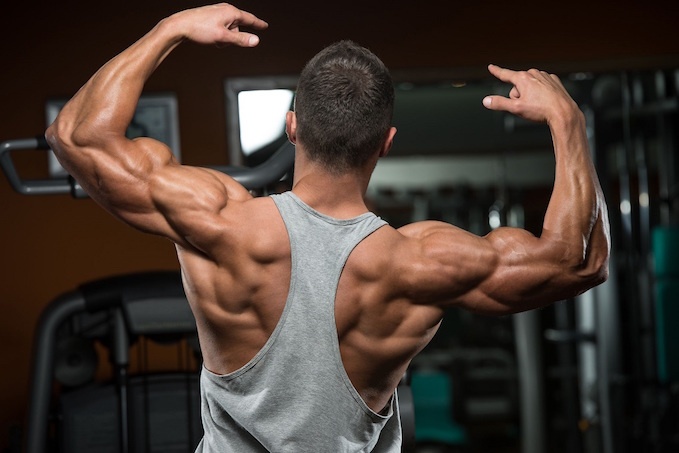
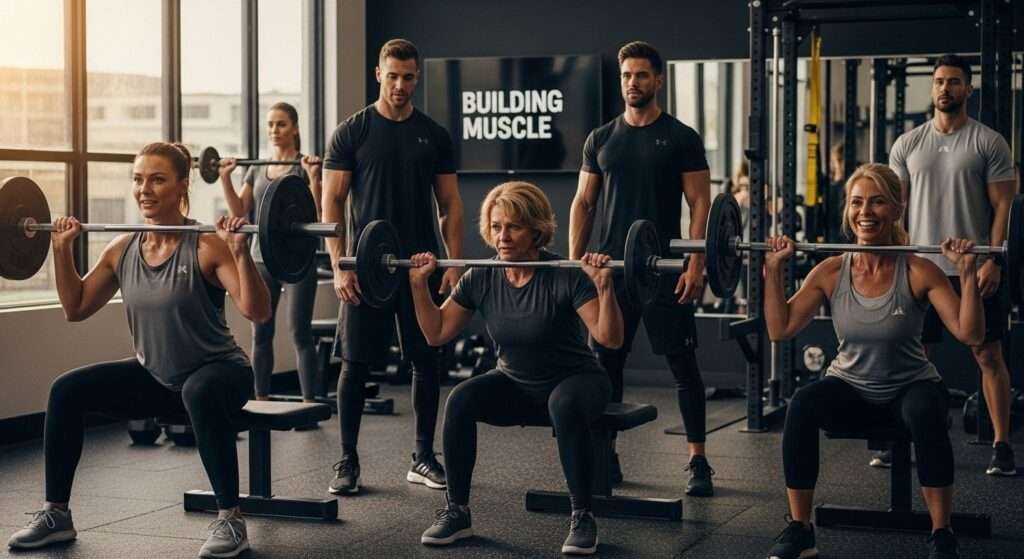
Building muscle and losing body fat are often viewed as opposing objectives.
Understanding how to build muscle for fat loss can help you improve body composition without relying solely on the scale.
They don’t have to be.
If your goal is to become leaner, simply watching the number on the scale is not enough; what happens to your muscle mass and body fat during the process can have a tremendous impact on your appearance, strength, physical function, and the results you see.
This is why resistance training is extremely valuable.
Building muscle doesn’t mean that you can eat whatever you want and burn away body fat simply by adding more muscle; muscle is metabolically active, however, the increase in resting energy expenditure that occurs from gaining muscle is generally much smaller than many fitness articles suggest.
The greater value is that resistance training can help you preserve lean mass during a calorie deficit, and in certain circumstances—particularly among people who are new to training, returning after a break, or carrying more body fat—it may even be possible to gain muscle while losing fat at the same time.
This is often referred to as body recomposition.
So can you build muscle and lose fat at the same time?
Yes, it can happen.
However, the process is more complex than simply building muscle. Your calorie intake, protein intake, resistance-training program, activity level, recovery, training experience, and starting body composition all play a role.
Table of Contents
- Can You Build Muscle and Lose Fat at the Same Time?
- Why Muscle Matters During Fat Loss
- Does Building Muscle Increase Your Metabolism?
- Why Resistance Training Helps During Weight Loss
- Building Muscle vs. Simply Losing Weight
- How Resistance Training Supports Fat Loss
- Can You Build Muscle While in a Calorie Deficit?
- How to Build Muscle While Losing Fat?
- The Role of Protein in Muscle Growth and Fat Loss
- How Much Muscle-Building Training Do You Need?
- Should You Train to Failure When Trying to Lose Fat?
- What About Cardio for Fat Loss?
- How to Combine Strength Training, Nutrition and Fat Loss
- Common Mistakes When Building Muscle for Fat Loss
- Frequently Asked Questions
- Key Takeaways
- Conclusion
Quick Answer
| Goal | What matters most |
|---|---|
| Lose body fat | Sustainable energy deficit, appropriate nutrition and regular physical activity |
| Preserve muscle while losing fat | Resistance training, adequate protein and appropriate calorie restriction |
| Build muscle while losing fat | Resistance training, sufficient protein, recovery and a manageable calorie deficit |
| Improve body composition | Reduce fat while maintaining or increasing lean mass |
| Increase strength | Progressive resistance training, adequate recovery and exercise specificity |
| Support resting energy expenditure | Maintaining or gaining lean mass can contribute, but the effect should not be exaggerated |
The most important idea is simple: fat loss requires an overall energy deficit, while resistance training helps determine what happens to your lean tissue during that process.
Can You Build Muscle and Lose Fat at the Same Time?
Yes.
But it does not happen equally easily for everyone.
Those new to resistance training, returning to the scene after a lengthy hiatus, or carrying an unwieldy amount of body fat can expect to see greater gains on the muscle-building front while losing fat.
It’s less common (though by no means impossible) for natural lifters who have been bulking and cutting for years to simultaneously pack on meaningful size and drop serious weight.
That’s why body recomposition should not be presented as a magical metabolic shortcut. Body recomposition is a process during which your body changes its composition – in other words, your ratio of fat to lean tissue.
For example, your body weight might remain relatively stable while:
- body fat decreases,
- muscle mass increases or is maintained,
- strength improves,
- waist circumference decreases,
- and your overall physique becomes leaner.
This is one reason the scale should not be your only measure of progress.
Weight Loss Is Not the Same as Fat Loss
Body weight is comprised of a number of elements:
- fat mass,
- skeletal muscle,
- water,
- glycogen,
- organs,
- bone,
- and other tissues.
The fact is, when you lose 10 lbs, it does not necessarily all come from body fat.
Same thing applies in reverse, someone could possibly decrease body fat while simultaneously gaining or maintaining muscle, hence the change on the scale would be much less drastic.
The goal is often not simply:
“Lose as much weight as possible.”
It is closer to:
“Lose unnecessary body fat while preserving as much useful lean mass as possible.”
Why Muscle Matters During Fat Loss
Skeletal muscle is much more than something that determines how your body looks.
It contributes to:
- movement,
- strength,
- physical performance,
- glucose disposal,
- energy metabolism,
- and physical function.
Muscle is also metabolically active tissue.
However, this is where a common fitness claim needs to be corrected.
You may have heard that one pound of muscle burns hundreds of additional calories every day or that adding muscle dramatically increases your metabolism.
Those claims are exaggerated.
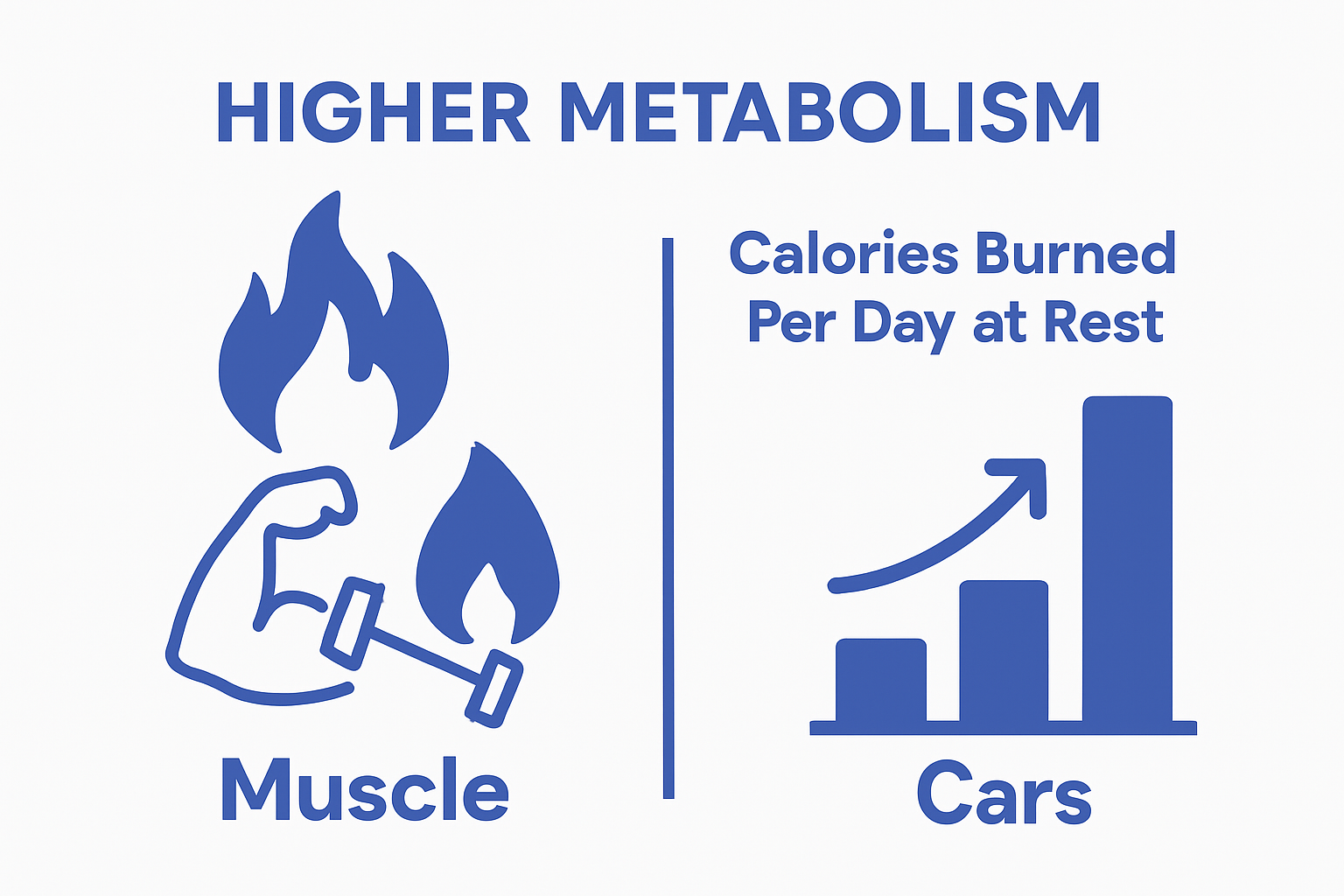
Estimates of resting energy expenditure suggest that skeletal muscle has a higher tissue-specific metabolic rate than adipose tissue, but the difference is not large enough to have gaining a few pounds of muscle suddenly transform your daily calorie expenditure.
One commonly cited estimate puts the resting metabolic rate of skeletal muscle at about 13 kcal per kilogram per day, compared with approximately 4.5 kcal per kilogram for adipose tissue. These are estimates of tissue-specific energy expenditure, not a promise that every pound of newly gained muscle automatically burns a fixed number of calories each day.
The practical message is therefore more nuanced:
Muscle contributes to resting energy expenditure, but its metabolic effect should not be used as the primary explanation for fat loss.
The more important reason to maintain muscle during weight loss is that doing so helps preserve lean body mass, strength, physical function and overall body composition.
Does Building Muscle Increase Your Metabolism?
Yes, but the increase is generally modest.
Your resting energy expenditure is influenced by many variables, including:
- body size,
- lean mass,
- fat mass,
- age,
- sex,
- organ mass,
- genetics,
- as well as other physiological variables.
Increased muscle mass will contribute to higher energy expenditure since muscle is metabolically active tissue.
However, it should not be viewed as a way to bypass the basic principles of energy balance.
Gaining several pounds of muscle will not necessarily increase daily energy expenditure by hundreds of calories, nor should muscle gain be relied upon to create the calorie deficit required for substantial fat loss.
The Bigger Benefit of Muscle During Fat Loss
The more significant advantage lies in what is happening to the body composition.
Imagine two people who both lost 10 lbs on the scale.
Person A had mostly fat loss while person B had a mix of fat and lean tissue loss.
They both lost the same amount of weight but have very different results on their body composition.
This is why resistance training is so great to do when in a fat loss phase.
It allows the body to have a reason to hold on to its muscle even though it might not get the required calories for that throughout the day.
Why Resistance Training Helps During Weight Loss
Resistance training is one of the most valuable tools in enhancing the quality of weight loss.
Recent research supports this approach. A 2025 systematic review and meta-analysis found that adding resistance exercise during dietary weight loss helped protect fat-free mass, increased fat-mass loss and improved muscular strength compared with dietary weight loss alone.
Research in adults with overweight or obesity has found that resistance-based exercise can improve body composition by reducing fat mass while preserving or increasing lean mass.
If you’re specifically interested in how resistance exercise can be incorporated into a fat-loss program, see our guide to strength training for weight loss.
More recent literature further supports the notion that incorporating resistance exercise into a calorie-restricted diet can preserve fat-free mass while enhancing fat loss and strength.
This does not negate the importance of a calorie deficit but rather emphasizes the role of resistance training in determining the type of weight lost.
Resistance Training Can Help You:
- preserve lean mass,
- maintain or increase strength,
- improve physical function,
- support muscle development,
- improve body composition,
- and increase the amount of energy you expend through physical activity.
This makes resistance training particularly valuable when your primary goal is fat loss without unnecessary muscle loss.
Building Muscle vs. Simply Losing Weight
Often traditional dieting revolves around the scale. Intentionally reducing calories and body weight is the objective.
While that makes sense there’s a glaring omission.
What did You actually Lose?
A lower scale weight reflects decreases in:
- bodyfat,
- muscle,
- glycogen,
- water
- or a combination of the above.
Aggressive dieting can accelerate the loss of muscle and other lean tissue.
A meta-analysis found that prolonged energy deficiency can impair gains in lean mass from resistance training, even though strength gains may be less affected.
Which is part of why an aggressive calorie deficit isn’t always the best strategy for fat loss.
A Better Objective
Rather than thinking about how to maximize the rate of weight loss think about how to maximize the quality of the weight being lost.
Which means reducing excess bodyfat while preserving lean mass (especially muscle) and strength.
Resistance training and adequate protein intake are a good start.
If you’re interested in the science behind increasing muscle size, our guide to muscle hypertrophy goes deeper into how muscles adapt to resistance training.
How Resistance Training Supports Fat Loss
Resistance training can aid fat loss in various ways.
- It Helps Preserve Lean Mass
Which is probably its most important function during calorie restriction.
When you reduce your energy intake, your body needs to tap into its own stores for energy.
Resistance training acts as a potent stimulus for preservation of lean mass.
Studies looking at the effects of resistance exercise during a dietary-induced weight loss have found that resistance training can attenuate loss of fat-free mass compared to diet alone.
- It Helps Maintain Strength
Strength is not the same thing as muscle mass. Your ability to produce force also depends on neural adaptations, coordination, exercise-specific skill and technique. Therefore, maintaining strength during a period of calorie restriction can be a useful sign that your training is continuing to provide an effective stimulus, although it should not be treated as a direct measure of muscle mass.
Therefore, being able to maintain strength during a period of calorie restriction is a useful sign that your training is still providing an adequate stimulus.
- It Can Help You Gain Lean Mass
Muscle gain is not a given during a calorie deficit.
Some people can actually gain muscle mass while losing fat, especially if:
- they are new to resistance training,
- coming back from a break,
- have higher body fat,
- consume enough protein,
- are employing a good resistance-training program.
- It Can Improve Body Composition, Even if the Scale Doesn’t Move Much
This is probably one of the most important points when discussing body recomposition.
You may not lose weight quickly.
But if your waist measurement decreases while your strength and lean mass are maintained or improved, the result may still represent meaningful progress.
Can You Build Muscle While in a Calorie Deficit?
Yes, but it often depends on who you ask.
Muscle growth typically requires an adequate training stimulus, sufficient protein, recovery and energy availability to support the process.
A calorie deficit makes gaining muscle more difficult by limiting the amount of energy available.
That does not make muscle gain impossible.
Who Is More Likely to Be Able to Recompose?
You may be more likely to gain muscle while losing fat if you are:
- new to resistance training
- coming back to training after some time away
- carrying a high amount of body fat
- increasing your protein intake from a previously inadequate level
- or, starting a more effective resistance-training program
Gaining muscle and losing significant amounts of fat at the same time is generally more challenging for experienced and relatively lean lifters.
The size of the calorie deficit matters. A meta-analysis found that prolonged energy deficiency can impair gains in lean mass from resistance training, even though strength gains may be less affected.
How to Build Muscle While Losing Fat
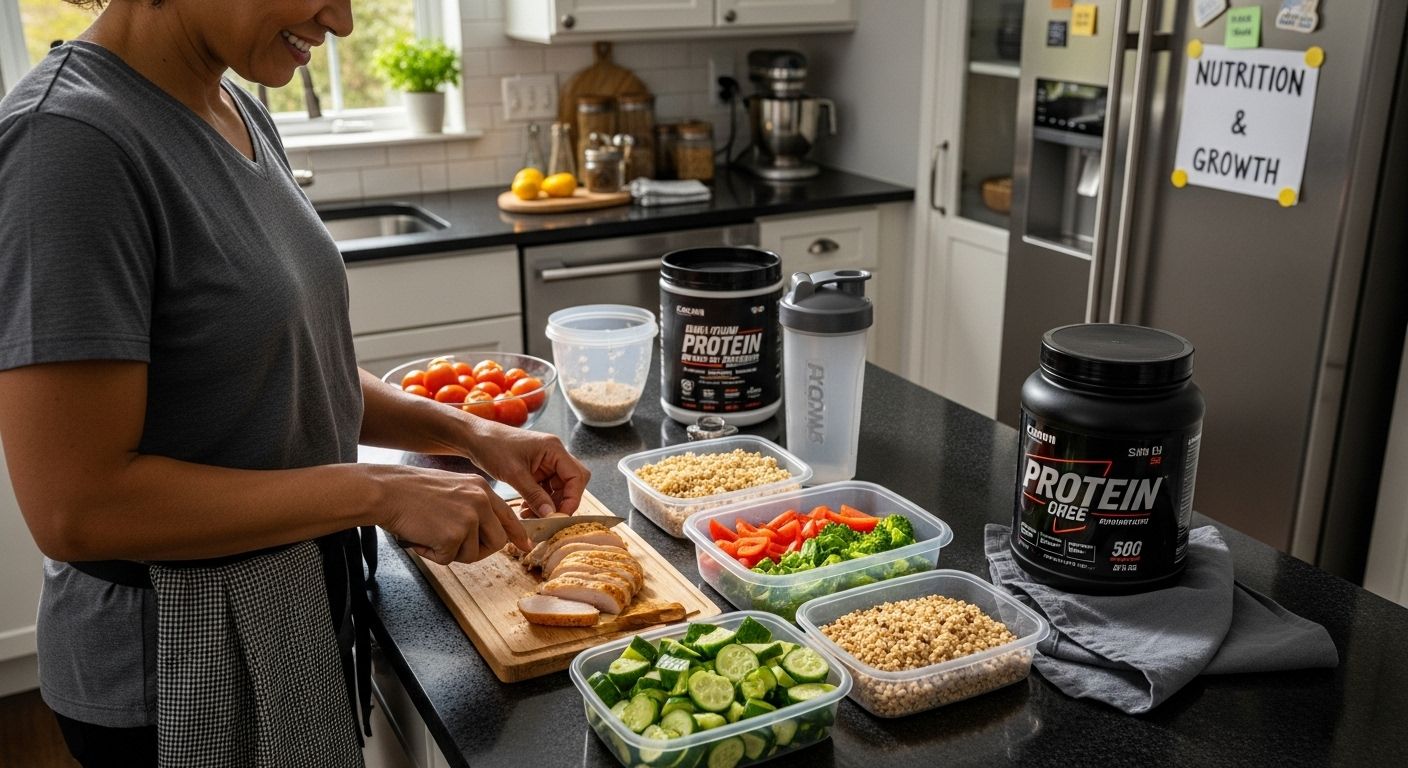
If your goal is to simultaneously build muscle while losing fat, the key is to set up your lifestyle in a way that supports both of these goals. This means cutting calories moderately, not excessively. A moderate calorie deficit allows you to reduce body fat while still having enough energy to train effectively and recover adequately, helping you preserve lean mass.
Resistance training should be the cornerstone of your program. Your primary focus should be on progressive overload and doing enough high-quality work in the gym to stimulate muscle growth. This doesn’t mean you have to train to failure on every set, but your training should provide enough volume and effort to give your muscles a reason to adapt.
Protein intake should also be adequate to supply your body with the amino acids needed to maintain and build lean mass, especially when you’re in a calorie deficit.
Lastly, make sure to prioritize sleep, take deloads when necessary, and most importantly, have realistic expectations. Gaining muscle and losing fat is definitely possible, but it might not happen equally easily for everyone.
People who are new to training, returning after a training break, or carrying excess body fat may be in more favorable circumstances for body recomposition.
If you’re new to resistance exercise, start with the fundamentals rather than immediately chasing advanced training techniques. Our beginner strength training (https://leanandfit.info/beginner-strength-training-step-by-step/) guide can help you build that foundation.
But how close should those working sets actually come to failure? Our guide examines the evidence on training close to failure for muscle growth and strength.
Don’t Make the Calorie Deficit Too Aggressive
A huge energy deficit may accelerate scale-weight loss, but it does not necessarily cause more pleasant body composition.
Research even shows that chronic energy deficiency may decrease lean-mass gains from resistance training.
If you are concerned about preserving muscle mass, going slower and more moderate seems like an easier approach to combine with resistance training and adequate nutrition.
The Role of Protein in Muscle Growth and Fat Loss
Protein is particularly important when looking to lose fat while maintaining or building muscle.
Dietary protein supplies the amino acids required for the synthesis of muscle protein, and helps support the remodeling of muscle tissue after resistance exercise.
Research also suggests that protein intake can enhance gains in muscle mass and strength when combined with resistance training. However, this does not mean that everyone needs a protein supplement; total dietary protein and overall diet quality still matter.
Protein is also more satiating than either carbs or fats, making it easier for some to adhere to a calorie restricted diet.
Protein has three important roles:
Maintenance of Muscle Mass
Adequate protein can allow for the maintenance of lean tissue when in a calorie deficit. If you want to explore the practical side of protein selection, see our guide to protein for muscle recovery.
Muscle Growth
When combined with an appropriate resistance-training stimulus, adequate protein supports the process of building and maintaining muscle.
Adherence to a Calorie Restricted Diet
Protein can increase satiety, aiding in the consumption of fewer calories overall.
You do not need to consume absurd amounts of protein.
The amount of protein needed will depend on things like:
- body size,
- training status,
- total calories,
- age,
- diet,
- and the size of the calorie deficit.
For people who are dieting while resistance training, protein needs may be higher than the basic minimum required to prevent deficiency, particularly when calorie restriction is substantial or the person is already relatively lean.
How Much Muscle-Building Training Do You Need?
You do not need to spend hours at the gym every day.
What’s more important in the long run is that you accumulate enough productive resistance training while also letting the body recover.
A good program will include things such as:
- multiple resistance exercises,
- progressive overload,
- adequate weekly training volume,
- appropriate repetition range,
- adequate rest between sets that are challenging,
- good technique,
- and consistency.
Progressive Overload
Progressive overload means gradually increasing the training challenge over time.
This could be done by:
- lifting heavier weights,
- or doing more repetitions,
- or adding sets when appropriate,
- or improving technique or range of motion,
- improving the quality or execution of the same workload.
You do not necessarily have to add weight every set. The important thing is that the muscles are given a progressive challenge with good technique.
For a more detailed look at structuring your workouts, see our guide to strength training for lean muscle development, including how to progress your training over time.
How Much Volume?
There’s no magic number when it comes to how many sets we should be doing. It’s going to depend on things like:
- how experienced you are,
- how well you’re able to recover,
- what exercises you’re doing,
- your goals,
- how much time you have to train.
The 2026 American College of Sports Medicine position stand noted that higher weekly resistance-training volumes were associated with greater hypertrophy, while also highlighting the importance of individualizing resistance-training prescriptions.
The 2026 ACSM resistance-training guidance also emphasizes consistency and individualized resistance-training programs rather than relying on unnecessarily complicated routines.
The important thing is not to chase the most sets possible. The goal is to perform enough high-quality work to stimulate adaptation without accumulating so much fatigue that performance and recovery deteriorate.
Should You Train to Failure When Trying to Lose Fat?
Not every set has to go to absolute failure.
That’s especially important during a calorie deficit, when recovery and training capacity may be more limited.
You can work close to failure to stimulate the muscle growth, but it doesn’t mean that you have to go to total failure on every single set.
The way to implement this is by using different ‘levels’ of effort on different exercises.
Isolation Exercises:
These exercises include:
- curls,
- extensions,
- lateral raises,
- leg curls,
- leg extensions etc.
They are termed as isolated movements. They target one muscle group and can usually be taken closer to failure.
Heavy Compound Exercises:
These exercises use multiple joints and utilize heavier weights like:
- squats,
- deadlifts,
- bench presses,
- overhead presses,
- rows
These are compound movements. They may be better performed with some repetitions in reserve because fatigue can affect technique and repetition quality, particularly on heavier sets.
If you’re unsure how close to failure you should train, our guide to training close to failure explains what recent research suggests about muscle growth, strength and fatigue.
The point is not to beat yourself by doing the most grueling workout ever.
The point is to get enough stimulus to keep growing muscles and to keep being able to work out in the future.
What About Cardio for Fat Loss?
You do not have to choose either resistance training or cardio.
They can serve different purposes and can complement one another.
While Cardiovascular exercise can help you burn more calories to improve your cardiovascular health, resistance training can give you the stimulus you need to maintain or build muscle and strength.
Therefore, a combination of the two can be ideal for improving overall health and body composition.
However, no particular type of exercise is a magic solution to burning away fat.
Over time, changes in body energy stores are determined by the relationship between energy intake and energy expenditure. For fat loss, this generally means maintaining an overall energy deficit.
The American College of Sports Medicine’s current position on physical activity and excess body weight states that while physical activity can play a role in weight management, no single exercise is superior for weight loss.
A Practical Combination
Depending on your personal goals and schedule, a week’s worth of training may consist of:
- regular sessions of resistance training,
- moderate cardiovascular exercise,
- everyday walking or other physical activity,
- adequate rest and recovery,
- a calorie-restricted diet that creates an appropriate deficit.
These activities may be combined in various ways depending on your personal preferences and schedule.
How to Combine Strength Training, Nutrition and Fat Loss
If your primary goal is to gain muscle for fat loss, think of the process as several pieces working together.
- Create an Appropriate Energy Deficit
In order to lose body fat, you need an overall energy deficit in terms of calories in versus calories out.
It doesn’t have to be large.
And it should be sustainable as well since you’ll probably have to train and recover well to support the process.
Your overall diet matters just as much as your training, so understanding macronutrients for weight loss can help you build a more balanced approach to eating.
- Perform Regular Resistance Training
Work your major muscles on a consistent basis.
Your program should have enough volume and intensity to maintain or stimulate muscle growth.
- Eat Enough Protein
Make sure you’re getting enough high-quality protein in your diet on a regular basis. Recent evidence on protein intake and muscle growth also suggests that the overall protein strategy matters more than obsessing over a single “perfect” protein source or timing window.
Good sources of high-quality protein can include:
- eggs
- greek yogurt
- cottage cheese
- fish
- poultry
- lean meat
- tofu
- tempeh
- beans
- lentils
- and other protein-rich foods
- Keep Carbohydrates and Fats in Perspective
You don’t have to totally cut out carbs to lose body fat.
You don’t have to totally cut out fat to lose body fat either!
Carbohydrates are a good fuel source for resistance training, while fats are important for providing essential fatty acids and supporting normal physiological functions.
Caloric balance and diet quality are more important than any one macronutrient.
- Recover Properly
Muscle does not magically appear just because you weight train.
Your body needs:
- enough sleep
- proper nutrition
- adequate rest between hard training sessions
- and enough recovery time to perform another round of challenging resistance training
- Track More Than Your Body Weight
Track Your:
- waist circumference
- weight changes
- strength and performance
- progress photographs
- and if you have access to them, body-composition measurements
A scale reading only tells you so much about what’s really going on in terms of body composition changes
A Simple Example of Building Muscle While Losing Fat
Imagine you are someone who starts resistance training, while having a relatively high body fat.
Suppose you:
- reduce your calories somewhat,
- eat enough protein,
- do resistance training three times per week,
- walk a lot,
- and get enough sleep.
You may have lost some weight on the scale after a few months.
At the same time:
- your waist circumference may decrease,
- your muscle mass may be maintained or even increase,
- your strength may improve,
- and your body-fat percentage may decline.
In other words, you didn’t really lose much weight per week, but your body composition has improved.
Hence the expression ‘building muscle to lose fat’ is very misleading, since muscle doesn’t ‘burn’ fat.
Rather, resistance training helps create the conditions for better-quality fat loss and improved body composition.
Common Mistakes When Building Muscle for Fat Loss
Mistake 1: Believing Muscle Automatically Burns Huge Numbers of Calories
Muscle is metabolically active, but adding a couple of pounds of muscle does not create a dramatic increase in daily calorie expenditure.
Do not think of muscle gain as an alternative to managing your calories and workouts.
Mistake 2: Using an Extremely Large Calorie Deficit
If you wish to lose weight, going on a very strict diet may seem like a good idea at first. However, it can make it harder to preserve lean mass and maintain training performance.
If you care to keep your muscle, think twice about using this method.
Mistake 3: Doing Cardio and Ignoring Resistance Training
Cardio is great, but it’s not the only way of training.
If you want to keep your muscle, resistance training has to be a part of your program.
Mistake 4: Treating Protein as Optional
If you’re on a calorie deficit with not enough protein and no resistance training, it’s not a good place to be if you want to keep your muscle.
Make sure to get enough protein in your diet.
Mistake 5: Taking Every Set to Failure
More is not always better.
Excessive fatigue can reduce your ability to perform high-quality repetitions later in the workout or in subsequent sessions.
Mistake 6: Judging Progress Only by the Scale
A scale cannot tell you whether a change in body weight came from fat, muscle, water, glycogen or other tissues. Track several indicators rather than relying on body weight alone.
Track multiple things.
Mistake 7: Expecting Body Recomposition to Happen Quickly
Gaining muscle is not something that happened overnight, and losing it is the same, so is with fat loss.
Don’t try to rush it.
Frequently Asked Questions:
Can building muscle help you lose fat?
Yes, but it is not because muscle is some kind of huge calorie burning entity.
While there is a theoretical possibility for increased resting energy expenditure following a period of progressive resistance training, the role of resistance training in muscle gain and fat loss diets is to maintain or increase lean mass while losing body fat, not to create large deficit by increasing resting energy expenditure.
Can you build muscle and lose fat at the same time?
Yes, it is possible, especially for beginners, people going back to resistance training, and those with high body fat percentages.
For seasoned and naturally muscular lifters, it’s not easy to gain substantial muscle mass and to lose significant body fat at the same time.
Before trying to combine muscle gain with fat loss, it is worth understanding the fundamentals of fat loss, including how energy balance influences changes in body fat over time.
Does muscle burn fat?
Muscle tissue has a higher resting metabolic rate per kilogram than adipose tissue. However, the difference is much smaller than many popular fitness claims suggest. Building muscle can modestly increase total energy expenditure, but it should not be relied upon as a way to create a large calorie deficit.
How much muscle do I need to build to lose fat?
There is no specific amount of muscle you need to build to burn fat.
You can lose body fat regardless of muscle gain.
The purpose of resistance training when dieting is to maintain lean mass and strength.
Is muscle building better than cardio for fat loss?
Resistance training and cardio are two different things.
While cardio exercises increase energy expenditure and improve cardiovascular health, resistance training is good for maintaining and improving lean mass and muscularity.
Most people would benefit from a combination of both resistance training and cardio.
Should I lift weights to lose weight?
Yes, if you are well enough to do so and not restricted in any way from doing resistance training.
Resistance training can help preserve lean mass during weight loss and improve strength and physical function.
How much protein I need to build muscle and lose fat?
No specific recommendation can be made, since protein needs vary from person to person, depending on their body mass, level of resistance training, caloric intake, and lean mass / body fat percentage and the degree of caloric restriction.
Dieting and resistance training together usually require higher protein intake than what is required to simply avoid deficiency.
Does heavy lifting help burn fat?
It doesn’t really help to burn fat, because fat loss is determined by total energy expenditure, not the amount of calories you burn during an exercise session.
However, resistance training can help maintain or increase lean mass and strength, which can improve body composition and physical function.
Does training to failure help when cutting?
You don’t need to train to failure when trying to cut.
It’s good to work close to failure, but to avoid overstress when dieting.
Use an effort level that allows productive training while maintaining good technique and recovering adequately between sessions.
Why am I getting stronger but not losing weight?
Because strength gains are not directly related to changes in body weight.
Strength can be increased due to improved neuromuscular connections, better coordination, improved technique and increased muscle mass.
Body weight can be used as a rough indicator of body composition, but it’s not a reliable metric.
Your body weight can fluctuate for numerous reasons.
When attempting to lose weight, look at how your weight changes over time and compare it to other metrics.
How long I need to train to build muscle and lose fat?
There are no hard and fast rules.
Everyone has their own muscle gain and fat loss timeline.
Key Takeaways
Building muscle can be a crucial element of a successful fat loss plan, but it is important to understand what muscle can and cannot do.
For Fat Loss:
- an overall energy deficit is required in order to reduce body fat
- Muscle gain itself is not a substitute for calorie control
- Resistance training can play a role in improved body composition
- while cardio and overall physical activity can also help expend energy and improve fitness.
For Muscle Preservation
- Continue resistance training during a fat-loss phase.
- Consume adequate protein.
- Avoid unnecessary aggressive calorie restriction.
- Prioritize recovery and sleep.
- Monitor strength and training performance.
For Body Recomposition
- beginners may be able to gain muscle while losing fat
- people returning to training may also be able to do so as well
- individuals with higher levels of body fat may have greater potential for simultaneous fat loss and muscle gain
- experienced, already-lean lifters generally have less opportunity for substantial simultaneous gains and losses.
The Big Picture
The goal should not simply be to make the number on the scale smaller.
A better goal is to improve body composition:
less unnecessary fat + preserved or increased muscle + improved strength and physical function.
Conclusion
Building muscle can help you lose fat, but probably not for the reason you’ve been told most often
Muscle is metabolically active tissue, but adding a few pounds of muscle mass will not dramatically transform your resting metabolism or cause significant amounts of body fat to disappear.
The more important benefit of resistance training is that it provides a reason for your body to maintain muscle and strength as you reduce body fat.
That matters, because weight loss and fat loss aren’t always the same thing
A good fat loss program should be designed to reduce excess body fat while simultaneously preserving lean tissue
For some people – especially beginners, people returning to training, and people with higher body fat percentages – it may even be possible to build muscle and lose fat at the same time.
The point is not that “building more muscle to burn more calories” is a bad idea
The point is it’s not the whole picture, and focusing only on it is potentially misleading
A more effective approach to body composition is resistance training, proper nutrition (protein intake, calories, etc.), activity level, and recovery, all working together to improve body composition.
A better focus is not on the number on the scale or how much muscle you’re able to build, but on your fat mass, muscle mass, strength, waist size, and general functionality as a human being.
For more information about how we approach health and fitness content, see why we trust LeanAndFit.
References:
- Resistance exercise during dietary weight loss — 2025 systematic review and meta-analysis
PubMed — Resistance Exercise During Dietary Weight Loss - Energy deficiency and resistance-training gains — 2022 meta-analysis
PubMed — Energy Deficiency and Lean-Mass Gains - Protein supplementation and resistance training — systematic review and meta-analysis
PubMed — Protein Supplementation and Resistance Training - 2026 ACSM Resistance Training Position Stand
ACSM — Updated Resistance Training Guidelines - Protein timing and types — network meta-analysis
PubMed — Protein Timing, Types and Muscle Outcomes
(Date Last Revised: 17’th September, 2026)