
Walking can turn simple steps into real weight loss, and millions have discovered its power for changing both body and mind.
Shockingly, tracking your walks increases the likelihood of hitting your fitness goals by up to 60 percent compared to winging it without any plan.
The surprise is that the real difference-maker is not walking further or faster, but setting small, measurable targets and celebrating every milestone along the way.
Table of Contents
- Step 1: Set Clear Weight Loss Goals
- Step 2: Choose The Right Walking Gear
- Step 3: Establish A Walking Routine
- Step 4: Track Your Progress Effectively
- Step 5: Adjust Your Diet For Optimal Results
- Step 6: Celebrate Your Success And Set New Goals
Quick Summary
| Key Point | Explanation |
|---|---|
| 1. Set Specific Weight Loss Goals | Establish clear, measurable, and realistic weight loss objectives to guide your walking routine and enhance motivation. |
| 2. Choose Proper Walking Gear | Invest in well-fitted walking shoes and moisture-wicking clothing to improve comfort, performance, and prevent injuries during walks. |
| 3. Create a Consistent Walking Routine | Develop a sustainable walking schedule that balances frequency and duration to steadily progress in your fitness journey. |
| 4. Track Your Progress Regularly | Utilize digital tools or journals to monitor your walking metrics, encouraging accountability and motivating adjustments. |
| 5. Adjust Your Diet for Optimal Benefits | Complement your walking with a balanced diet of whole foods, focusing on portion control and meal timing to support weight loss. |
Step 1: Set Clear Weight Loss Goals
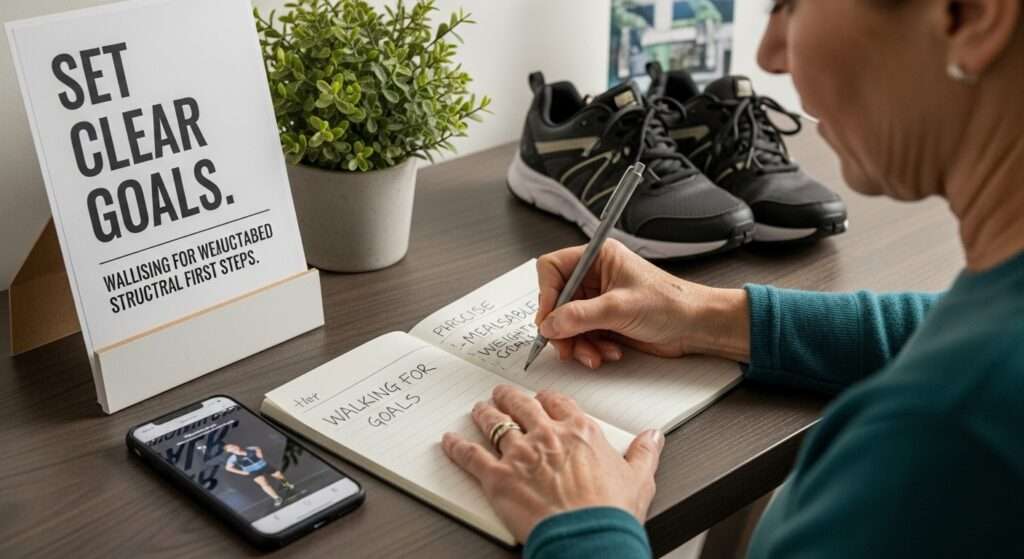
Walking for weight loss begins with establishing precise and achievable objectives that transform your fitness journey from a vague intention to a structured plan. Setting clear goals provides the roadmap and motivation necessary to stay committed to your walking routine. The key is developing targets that are specific, measurable, and realistic.
Understanding your current fitness level and weight loss aspirations helps create meaningful milestones.
Start by assessing your baseline physical condition through simple measurements like current weight, body measurements, and initial walking capacity. Learn how strategic goal setting can motivate your weight loss journey to maximize your potential for success.
Consider establishing progressive objectives that evolve as you advance. For instance, begin with a modest goal of walking 15 minutes daily, gradually increasing duration and intensity over several weeks.
Your initial target might involve walking 2-3 times per week, eventually progressing to 5-6 walking sessions weekly. Realistic progression prevents burnout and maintains long term motivation.
Tracking your progress becomes crucial in goal setting. Utilize tools like fitness apps, pedometers, or simple journal logs to monitor your walking distance, time, and frequency. These tracking methods provide tangible evidence of your advancement and help maintain accountability.
Some recommended tracking criteria include:
- Total weekly walking distance
- Average walking pace
- Calories burned during walking sessions
- Consistent workout frequency
Remember that weight loss goals should extend beyond numbers on a scale. Focus on holistic health improvements such as increased energy levels, enhanced cardiovascular endurance, and improved mental wellness.
By creating comprehensive, adaptable goals, you establish a sustainable approach to walking for weight loss that supports both physical and psychological transformation.
Step 2: Choose the Right Walking Gear
Selecting appropriate walking gear transforms your weight loss journey from a casual stroll to a strategic fitness approach. The right equipment not only enhances comfort but significantly improves walking performance and prevents potential injuries.
Your gear choices will directly impact motivation, endurance, and overall walking experience.
Walking safety and comfort guidelines from fitness experts suggest investing in quality essentials that support your body during exercise. Start with walking shoes as your fundamental investment. Seek footwear with excellent arch support, cushioned soles, and a comfortable fit that accommodates your foot’s natural movement.
Visit a specialized running or athletic store for professional fitting, where staff can analyze your walking gait and recommend shoes tailored to your specific biomechanics.
Beyond shoes, consider clothing that promotes comfort and temperature regulation. Moisture-wicking fabrics help manage sweat and prevent chafing, allowing you to focus on maintaining consistent walking momentum. Choose lightweight, breathable materials that enable easy movement and adapt to various weather conditions. Layer clothing during cooler months, starting with a thin base layer and adding lightweight jackets or vests that can be easily removed as you warm up.
Additional walking gear can enhance your experience and tracking capabilities.
Consider accessories that provide motivation and practical support:
- Fitness tracker or smartwatch for monitoring steps and calories
- Comfortable, moisture-wicking socks
- Lightweight water bottle for hydration
- Small backpack or waist pack for carrying essentials
Preparing your walking gear demonstrates commitment to your weight loss goals. By investing time in selecting appropriate equipment, you create a supportive environment that encourages consistent exercise and helps transform walking from a casual activity into a structured fitness strategy.
Below is a table summarizing essential walking gear options, their features, and the reasons they are recommended for your weight loss routine.
| Gear Item | Recommended Features | Purpose/Benefit |
|---|---|---|
| Walking Shoes | Arch support, cushioned soles, good fit | Comfort, injury prevention, better walking gait |
| Moisture-Wicking Clothing | Lightweight, breathable, flexible | Manages sweat, prevents chafing, regulates temp |
| Moisture-Wicking Socks | Comfort fit, keeps feet dry | Prevent blisters, enhance comfort |
| Fitness Tracker/Smartwatch | Step/calorie tracking, wearable design | Monitor progress, motivation, accountability |
| Water Bottle | Lightweight, portable | Maintain hydration during and after walks |
| Backpack/Waist Pack | Small, easy to carry essentials | Carry items like phone, keys, snacks conveniently |
Step 3: Establish a Walking Routine
Creating a consistent walking routine transforms weight loss from an aspiration into a structured strategy. Developing a sustainable walking schedule requires thoughtful planning and realistic expectations.
Your routine should balance frequency, duration, and intensity while accommodating your current fitness level and lifestyle demands.
Learn how step tracking can motivate consistent physical activity to maximize your walking commitment. Begin by establishing a baseline walking schedule that feels manageable.
For most beginners, starting with 15-20 minute walks 3-4 times per week provides an excellent foundation. Gradually increase duration and frequency as your fitness improves, aiming to progress toward 30-45 minute sessions 5-6 times weekly.
Consistency matters more than intensity during initial weeks. Schedule your walks during times that align with your natural energy levels and daily routine.
Morning walks can jumpstart metabolism, while evening walks might better suit individuals with demanding daytime schedules. Consider potential obstacles like weather or work commitments and develop flexible alternatives such as indoor walking or treadmill sessions.
Track your walking routine using digital tools or simple journal logs.
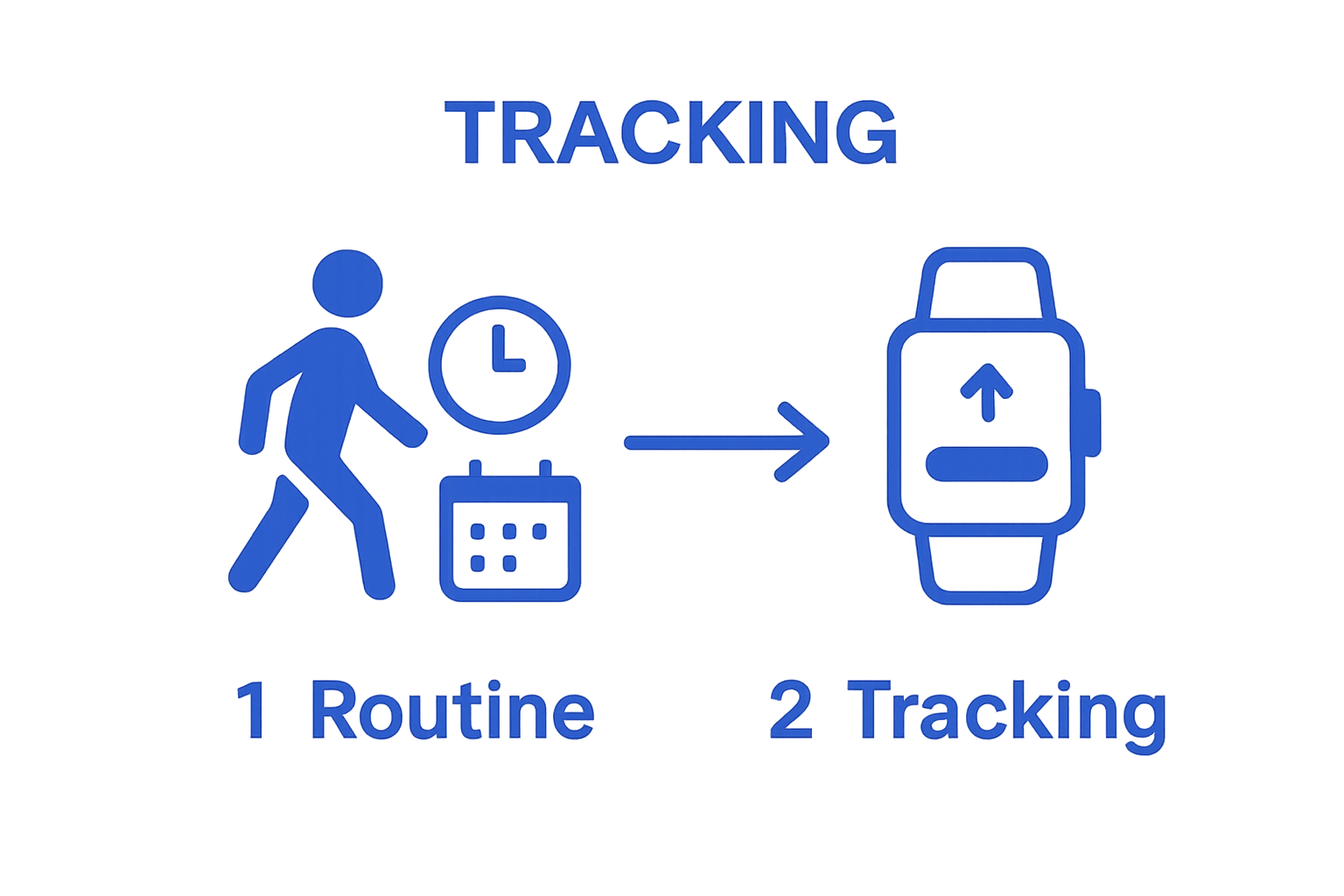 Monitoring progress helps maintain motivation and identifies areas for improvement.
Some effective tracking strategies include:
- Recording daily walking duration
- Tracking total weekly walking distance
- Noting perceived effort and energy levels
- Documenting walking locations and routes
Remember that flexibility is key. Some weeks you might walk less due to personal commitments, and that’s perfectly acceptable. The goal is establishing a sustainable pattern that gradually becomes an enjoyable, integrated part of your lifestyle.
By approaching your walking routine with patience and consistency, you create a powerful framework for achieving your weight loss objectives.
Step 4: Track Your Progress Effectively
Tracking your walking progress transforms weight loss from a vague intention into a measurable journey of personal achievement. Systematic progress monitoring provides motivation, accountability, and critical insights into your fitness transformation. The right tracking approach helps you celebrate victories and make informed adjustments to your walking strategy.
Discover comprehensive methods for tracking fitness progress consistently to maximize your weight loss potential. Modern technology offers multiple tracking options that make recording your walking journey both convenient and engaging. Fitness trackers, smartphone apps, and simple spreadsheets can capture essential metrics like daily steps, walking duration, distance covered, and calories burned.
Comprehensive tracking extends beyond numerical data. Consider maintaining a fitness journal that captures qualitative information about your walking experience.
Note your energy levels, mood, perceived effort, and any physical changes you observe. This holistic approach provides context to your numerical progress and helps you understand the broader impact of your walking routine.
Establish a consistent tracking method that feels natural and sustainable.
Some effective tracking strategies include:
- Weekly weigh-ins at the same time of day
- Monthly body measurement recordings
- Daily step count and walking duration
- Photographic progress documentation
Remember that progress is not linear. Some weeks you might see significant improvements, while others might show minimal changes. The key is maintaining consistency and viewing tracking as a tool for understanding your journey, not a judgmental scorecard.
By approaching progress tracking with curiosity and compassion, you transform data collection into a powerful motivational strategy that supports your walking for weight loss goals.
Step 5: Adjust Your Diet for Optimal Results
Successful walking for weight loss requires more than exercise alone. Nutrition plays a critical role in supporting your fitness goals and maximizing metabolic efficiency.
Your dietary approach should complement your walking routine, providing the right balance of nutrients to fuel performance and support weight reduction.
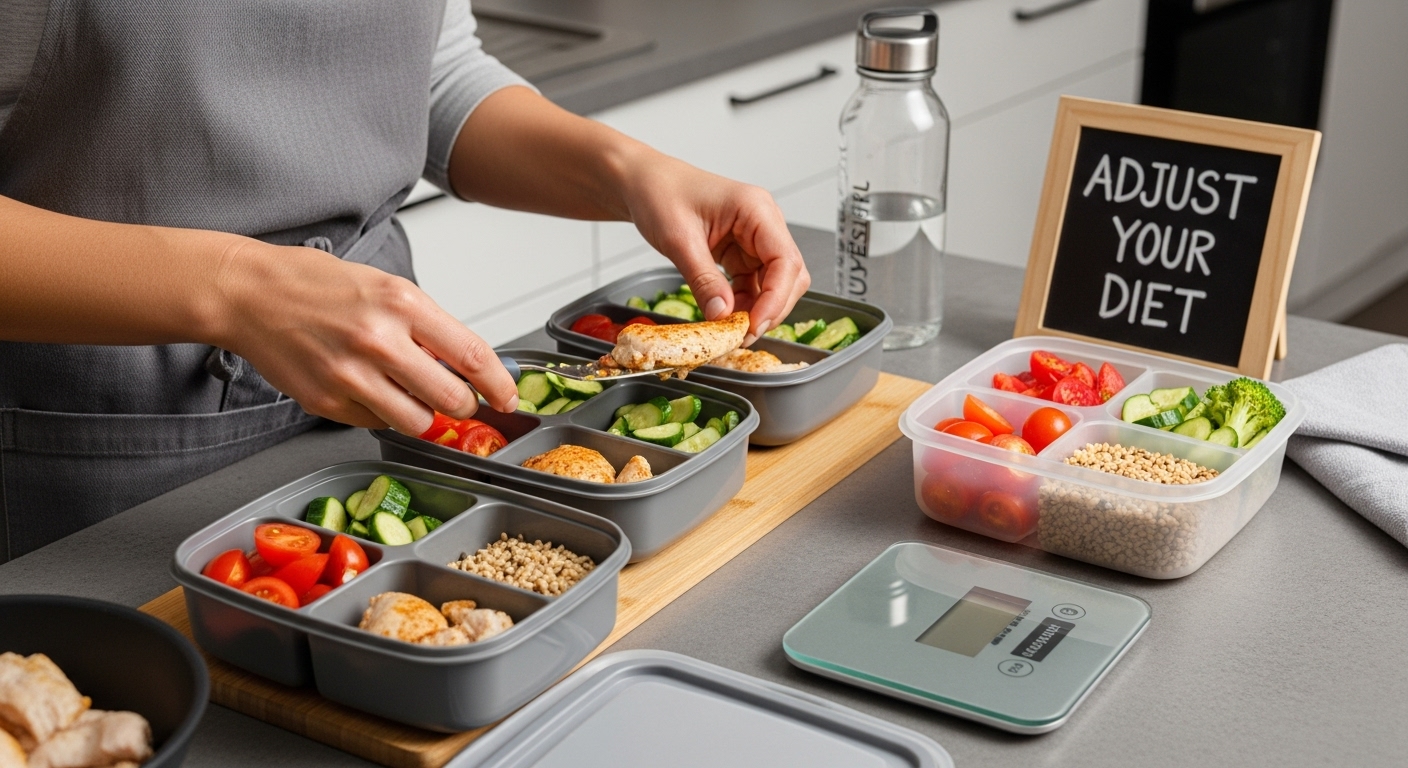
Explore strategies for conscious eating and sustainable weight management to enhance your overall nutrition plan. Begin by understanding that walking increases your metabolic demand, which means your body requires quality nutrients to recover and perform optimally.
Focus on whole foods that provide sustained energy and support muscle recovery. Lean proteins, complex carbohydrates, and healthy fats become your primary nutritional allies.
Portion control and meal timing are equally important as food quality. Consider eating smaller, more frequent meals that align with your walking schedule. A light meal or snack 30-60 minutes before walking can provide energy, while post-walk nutrition supports muscle recovery and metabolic health.
Hydration becomes crucial not just during walking but throughout your entire day. Water supports metabolism, helps control appetite, and enhances overall exercise performance.
Establish nutritional guidelines that support your walking and weight loss objectives:
- Prioritize whole, unprocessed foods
- Include lean protein in every meal
- Choose complex carbohydrates over refined options
- Stay consistently hydrated
- Plan meals that balance macronutrients
Remember that dietary adjustments are personal and may require experimentation. Your nutritional needs will evolve as your fitness level improves, so remain flexible and attentive to how different foods impact your energy, recovery, and weight loss progress.
By treating nutrition as a strategic component of your walking journey, you create a holistic approach to sustainable weight management.
The table below provides an at-a-glance overview of effective nutrition guidelines and their benefits to support your walking for weight loss plan.
| Nutrition Guideline | Description/Focus | Benefit to Walking for Weight Loss |
|---|---|---|
| Prioritize Whole Foods | Unprocessed, natural ingredients | Sustained energy, better recovery |
| Lean Protein in Every Meal | Sources like poultry, fish, beans, tofu | Supports muscle repair and growth |
| Complex Carbs over Refined | Whole grains, brown rice, oats | Provides long-lasting energy, stable blood sugar |
| Hydrate Consistently | Drink water before, during, and after walks | Boosts metabolism, controls appetite |
| Portion Control & Meal Timing | Smaller, frequent meals matched to walk schedule | Prevents overeating, sustains energy |
| Balance Macronutrients | Combine carbs, protein, healthy fats in meals | Overall health, better weight management |
Step 6: Celebrate Your Success and Set New Goals
Reaching milestones in your walking for weight loss journey deserves meaningful recognition and strategic reflection. Celebrating success is not about grand gestures, but acknowledging the consistent effort and personal transformation you have achieved.
This step transforms your achievement into momentum for continued growth and motivation.
According to psychological research on behavioral health changes, recognizing progress reinforces positive habits and sustains long-term commitment. Celebrate your achievements through intentional, meaningful rewards that honor your dedication.
These rewards should be non-food related and personally significant, such as purchasing new walking gear, scheduling a massage, or investing in a fitness class that excites you.
Reflection becomes a powerful tool for understanding your journey and charting future progress. Review your tracking data, examining not just numerical changes but holistic improvements in energy, confidence, and overall wellness.
Consider the challenges you overcame, the consistency you maintained, and the personal growth you experienced beyond weight loss. This comprehensive evaluation helps you set realistic, inspiring goals for your next phase of fitness.
Establish a framework for ongoing goal setting and celebration:
- Document your current achievements
- Identify specific improvements in fitness and health
- Create progressive, challenging yet attainable future objectives
- Plan meaningful, non-food rewards for milestone achievements
- Schedule periodic self-review sessions
Remember that goal setting is an evolving process. Your objectives will shift as your fitness level increases and your body adapts. Approach each new phase with curiosity, compassion, and a commitment to continuous personal development.
By treating your walking journey as an ongoing exploration of your potential, you transform weight loss from a temporary project into a sustainable lifestyle of health and wellness.
Take the First Step Toward Real Change With LeanAndFit
Are you struggling to stay motivated or overwhelmed by how to track your walking progress for weight loss? You are not alone. Many people find it hard to set realistic goals, keep their routine on track, and actually see measurable results.
Our article highlighted the importance of step tracking, proper gear, and structured routines to help you achieve your weight loss goals without guesswork or frustration. If you want to transform walking into a powerful tool for weight loss and lasting health, now is the perfect time to take action.
Explore our step-by-step tips and discover expert strategies inside the Step Tracking section at LeanAndFit.
Ready to see results?
Visit leanandfit.info for easy-to-follow guides, motivational resources, and proven methods. Whether you are looking for accountability, motivation, or expert advice, our platform empowers you to make every step count. Click now and begin your journey with support that keeps you moving forward.
Frequently Asked Questions:
Walking for weight loss: achieve your goals step-by-step is ultimately about simplicity and consistency. You don’t need complicated routines or extreme workouts to see results.
Walking works because it is sustainable, adaptable, and easy to integrate into daily life. When done regularly and paired with small lifestyle improvements, it becomes a powerful tool for long-term fat loss and better health.
The real success lies in turning walking into a daily habit that feels natural rather than forced.
Q-1: Why does something as simple as walking actually help with weight loss when it feels so easy?
A-1: Walking feels simple, but internally it does quite a lot. It activates large muscle groups in your legs, increases heart rate, and improves energy expenditure without stressing your body.
Unlike intense workouts that may feel overwhelming, walking can be done consistently, and consistency is the real driver of fat loss. It also improves circulation and helps your body use stored fat for energy over time.
The biggest advantage is sustainability—you can walk daily without burnout, which makes it far more effective than short bursts of extreme activity followed by long breaks.
Q-2: Can walking alone really create noticeable weight loss results?
A-2: Yes, especially for beginners or people restarting fitness. Walking creates a steady calorie deficit when done regularly. While it may not be as fast as high-intensity workouts, it is far more consistent.
Many people underestimate how much daily walking adds up.
For example, 30–60 minutes of walking per day can significantly increase weekly calorie burn. When combined with balanced eating, walking becomes a powerful tool for gradual and sustainable fat loss.
Q-3: Why do some people walk daily but still don’t lose weight?
A-3: This usually happens because walking alone is only part of the equation. If calorie intake is high, the deficit created by walking may be canceled out.
Another reason is walking intensity—slow, casual movement burns fewer calories than brisk walking. Sleep, stress, and inconsistent routines can also affect results.
Weight loss requires a balance between movement, nutrition, and recovery. Walking works best when it supports an overall healthy lifestyle rather than being the only change.
Q-4: Does walking at a specific time of day improve fat burning?
A-4: Timing is less important than consistency, but each time of day has subtle benefits. Morning walks may help boost metabolism early and set a healthy tone for the day.
Evening walks can aid digestion and reduce stress after meals. What truly matters is choosing a time you can stick to regularly. The body responds better to routine than to perfect timing.
So the best walking schedule is the one you can maintain long term.
Q-5: How does walking affect hunger and eating habits without people realizing it?
A-5: Walking helps regulate appetite hormones and reduces stress-related cravings. It also gives structure to your day, which often leads to more mindful eating choices.
Many people notice that after consistent walking, they naturally crave lighter and more balanced meals. This is because physical activity improves insulin sensitivity and stabilizes energy levels.
So walking doesn’t just burn calories—it indirectly influences better food decisions too.
Q-6: Can walking help reduce belly fat specifically?
A-6: Walking does not target belly fat directly, but it helps reduce overall body fat, which includes abdominal fat. Regular brisk walking improves metabolism and reduces visceral fat over time.
Combined with a healthy diet, walking can significantly change body composition.
The key is consistency and duration. Spot reduction is not possible, but full-body fat reduction through walking eventually shows in the waistline as well.
Q-7: Why is brisk walking more effective than slow walking for weight loss?
A-7: Brisk walking increases heart rate more than casual walking, which means your body burns more calories per minute. It also engages more muscles and improves cardiovascular fitness.
The difference might seem small in the moment, but over time it leads to a significant increase in total energy expenditure.
A simple test is that you should be able to talk but not sing comfortably while walking briskly—that intensity is ideal for fat loss.
Q-8: How does walking help people who struggle with intense workouts or gym anxiety?
A-8: Walking is low-pressure, accessible, and doesn’t require equipment or environment changes. For people who feel intimidated by gyms or high-intensity workouts, walking offers a safe starting point.
It builds confidence and creates a foundation of movement without stress.
Over time, it often encourages people to add more activity naturally. This gradual approach reduces mental resistance and makes fitness feel more approachable rather than overwhelming.
Q-9: Can walking improve weight loss results when combined with small lifestyle changes?
A-9: Absolutely. Walking becomes significantly more powerful when paired with small habits like drinking more water, reducing sugary snacks, or improving sleep. These changes work together to increase calorie balance and improve metabolism.
Even minor adjustments, when combined with daily walking, can lead to noticeable results over weeks. It’s the combination of consistency and small improvements that creates long-term transformation.
Q-10: What is the simplest long-term strategy to use walking for sustainable weight loss?
A-10: The simplest strategy is to make walking a non-negotiable daily habit rather than an occasional activity. Start with a realistic goal—like 20–30 minutes per day—and gradually increase duration or pace.
Focus on consistency over intensity.
Pair walking with basic healthy eating habits and adequate sleep. Over time, this creates a stable routine that supports natural fat loss without burnout. The goal is not perfection but persistence.
Recommended
- Top Healthy Weight Loss Tips for Lasting Results – LeanAndFit
- Are Step Challenges Overhyped for Getting Fit? – LeanAndFit
- How Goal Setting Motivates Weight Loss in Obesity Management? – LeanAndFit
- Effective Vegetarian Weight Loss Tips for Lasting Change – LeanAndFit
- Abnehmspritze Erfahrungen 2025: Alle Infos, Meinungen & Alternativen – mybody®x
- Why Trust LeanAndFit.info?
- For educational purposes only