

Healthy weight loss is more than just counting calories and hitting the gym.
Studies show that over 80 percent of people who lose significant weight will regain it within five years.
Most advice says you need to work harder or give up your favorite foods, but that approach actually sets you up for failure.
Real, lasting results come from smart eating habits, a mindset shift, and small changes that you can actually stick with for the long haul.
Table of Contents
- Building Healthy Eating Habits
- Exercise Tips For Effective Weight Loss
- Mindful Practices To Support Your Journey
- Overcoming Common Weight Loss Challenges
Quick Summary
| Takeaway | Explanation |
|---|---|
| Develop sustainable eating habits | Focus on whole foods, balanced nutrition, and gradual dietary changes for lasting weight loss. |
| Prioritize regular exercise | Incorporate a mix of aerobic and resistance training to boost metabolism and preserve muscle mass. |
| Practice mindfulness and emotional awareness | Use techniques like meditation and journaling to address emotional eating and cultivate healthy habits. |
| Overcome weight loss challenges proactively | Develop adaptive strategies to manage hunger, motivation, and social influences that may hinder progress. |
| Set realistic goals and celebrate progress | Break your weight loss journey into achievable milestones, and recognize small victories to maintain motivation. |
Building Healthy Eating Habits
Transforming your diet isn’t about drastic changes or temporary fixes. Sustainable weight loss requires creating lasting healthy eating habits that nourish your body and support your wellness goals.
Learn more about developing smart eating strategies that make nutrition enjoyable and effective.
Understanding Nutritional Foundations
Healthy eating starts with understanding how food fuels your body.
According to the National Institutes of Health, successful weight management depends on consistent dietary patterns that provide balanced nutrition. This means focusing on whole foods that deliver essential nutrients while maintaining a moderate calorie intake.
The key is developing a mindset of eating for nourishment rather than restriction. Whole grains, lean proteins, fruits, vegetables, and healthy fats form the cornerstone of a nutritious diet.
These foods not only support weight loss but also provide sustained energy and critical micronutrients that optimize bodily functions.
Strategic Meal Planning and Portion Control
Meal planning represents a critical strategy in maintaining healthy eating habits. By preparing meals in advance, you reduce impulsive food choices and ensure balanced nutrition.
Start by creating weekly meal plans that incorporate diverse food groups and align with your caloric needs.
Portion control plays an equally important role. Using smaller plates, measuring serving sizes, and being mindful of hunger signals can significantly impact your overall calorie intake.
Research suggests that individuals who practice portion awareness are more likely to maintain weight loss long term.
Additionally, developing a practice of mindful eating helps you recognize true hunger versus emotional eating. This means eating slowly, savoring each bite, and paying attention to your body’s satiety signals.
By cultivating this awareness, you transform eating from a mechanical process to a deliberate, health-conscious experience.
Sustainable Dietary Modifications
Successful weight loss isn’t about eliminating entire food groups or following extreme diets. Instead, focus on making gradual, sustainable modifications to your current eating patterns.
Replace processed snacks with whole food alternatives, incorporate more plant-based meals, and reduce added sugars and unhealthy fats.
Stay hydrated and consider how different foods make you feel. Some individuals find keeping a food journal helpful in tracking not just calories, but also energy levels, mood, and overall well-being.
This holistic approach ensures that your dietary changes support both physical and mental health.
Remember, building healthy eating habits is a journey of consistent small choices.
Each nutritious meal is a step toward your wellness goals, creating lasting transformation that goes beyond temporary weight loss.

Exercise Tips for Effective Weight Loss
Exercise is a powerful tool in achieving sustainable weight loss, but not all physical activities are created equal. Understanding how to structure and approach your fitness routine can dramatically impact your results.
Learn more about advanced fat burning techniques that can accelerate your weight loss journey.
Understanding Exercise and Weight Loss Mechanisms
According to the National Institutes of Health, both aerobic exercise and resistance training play crucial roles in effective fat loss. Aerobic activities help reduce body fat, while resistance training preserves lean muscle mass during caloric restriction.
This combination is key to creating a metabolically active body that continues burning calories even at rest.
The human body is remarkably adaptable. When you engage in consistent physical activity, your metabolism increases, helping you burn more calories throughout the day.
This metabolic boost extends beyond the actual exercise period, creating a more efficient fat-burning environment.
Think of exercise not just as a calorie-burning activity, but as a comprehensive strategy for reshaping your body’s metabolic potential.
Designing an Effective Exercise Strategy
Research from Harvard T.H. Chan School of Public Health emphasizes that sustained physical activity is crucial for long-term weight management.
Successful weight loss maintainers typically engage in moderate-intensity exercise for about an hour daily.
This doesn’t mean you need to spend hours at the gym. Instead, focus on creating a diverse and enjoyable exercise routine that keeps you motivated.
Consider incorporating a mix of exercise types:
- Cardiovascular Exercise: Activities like brisk walking, cycling, or swimming that elevate heart rate
- Strength Training: Weight lifting or bodyweight exercises that build muscle and boost metabolism
- Flexibility Work: Yoga or stretching to improve overall fitness and prevent injury
Here is a quick comparison of different types of exercise and their unique benefits to weight loss, as discussed in the article:
| Type of Exercise | Examples | Key Benefit |
|---|---|---|
| Cardiovascular Exercise | Walking, cycling, swimming | Burns calories and reduces body fat |
| Strength Training | Weight lifting, bodyweight exercises | Preserves/builds muscle mass and boosts metabolism |
| Flexibility Work | Yoga, stretching | Improves fitness and prevents injury |
The key is consistency and progression. Start where you are and gradually increase intensity and duration. Listen to your body and make adjustments as needed. Remember that the best exercise routine is one you can maintain long-term.
Overcoming Exercise Challenges
Many people struggle with maintaining an exercise routine. Common barriers include time constraints, lack of motivation, and uncertainty about proper techniques. Address these challenges by:
- Scheduling exercise like any other important appointment
- Finding activities you genuinely enjoy
- Starting small and building gradually
Tracking your progress can also be incredibly motivating.
Use a fitness app or journal to record your workouts, noting improvements in strength, endurance, and how you feel. Celebrate small victories and understand that weight loss is a journey of consistent effort.
Don’t get discouraged by temporary plateaus.
Your body will adapt to exercise over time, so periodically changing your routine can help overcome these temporary stalls.
Mix up your workouts, try new activities, and keep challenging yourself.
Remember, effective weight loss through exercise is about creating a sustainable lifestyle, not achieving quick, temporary results.
Patience, consistency, and a positive approach will transform your fitness journey.
Mindful Practices to Support Your Journey
Weight loss is more than a physical transformation. It’s a holistic journey that requires mental resilience, emotional awareness, and strategic self-care.
Explore strategies for mental wellness during weight loss that can help you stay focused and motivated.
Understanding the Mental Landscape of Weight Loss
The psychological aspects of weight loss are often overlooked, yet they are critical to sustainable success. Mental barriers like stress, emotional eating, and negative self-talk can significantly impact your ability to maintain healthy habits.
Understanding and addressing these internal challenges is just as important as following a diet or exercise plan.
Research has consistently shown that psychological strategies play a crucial role in weight management.
A comprehensive study published in the Journal of Obesity demonstrates that individuals who develop strong mental coping mechanisms are more likely to achieve and maintain long-term weight loss.
This means cultivating a positive mindset, practicing self-compassion, and developing strategies to manage emotional triggers.
Cultivating Mindfulness and Emotional Awareness
Mindfulness is a powerful tool in your weight loss journey. It involves being fully present and aware of your thoughts, emotions, and physical sensations without judgment.
Practice techniques like meditation, deep breathing, and body scanning to develop greater emotional intelligence and self-awareness.
Key mindfulness practices include:
- Emotional Journaling: Track your feelings, identifying emotional eating triggers
- Meditation: Regular practice to reduce stress and improve mental clarity
- Positive Affirmations: Reinforce supportive, encouraging self-talk
These practices help you develop a more balanced relationship with food and your body. By understanding the emotional components of your eating habits, you can make more conscious, intentional choices that support your health goals.
Building Resilience and Maintaining Motivation
Weight loss is rarely a linear journey. There will be challenges, plateaus, and moments of doubt. Building psychological resilience is crucial for long-term success.
This means developing the mental strength to bounce back from setbacks, stay motivated, and maintain a positive outlook.
Strategies for building resilience include:
- Setting realistic, achievable goals
- Celebrating small victories
- Creating a supportive network of friends or support groups
- Practicing self-compassion during challenging times
Visualization techniques can also be powerful. Spend time imagining your future self, feeling healthy and confident. This mental practice can help reinforce your commitment and provide motivation during difficult moments.
Remember, your weight loss journey is unique. There is no one-size-fits-all approach.
Be patient with yourself, stay curious about your progress, and approach your goals with kindness and determination.
The most successful transformations happen when you nurture both your body and mind.
Overcoming Common Weight Loss Challenges
Weight loss is rarely a straightforward journey. Despite best intentions, most individuals encounter significant obstacles that can derail their progress.
Discover strategic approaches to navigate weight loss barriers that can help you stay on track and achieve your goals.
Understanding Persistent Weight Loss Obstacles
Research published in the journal Nutrients highlights that successful weight loss involves more than just dietary changes. It requires a comprehensive approach to managing behavioral and psychological challenges.
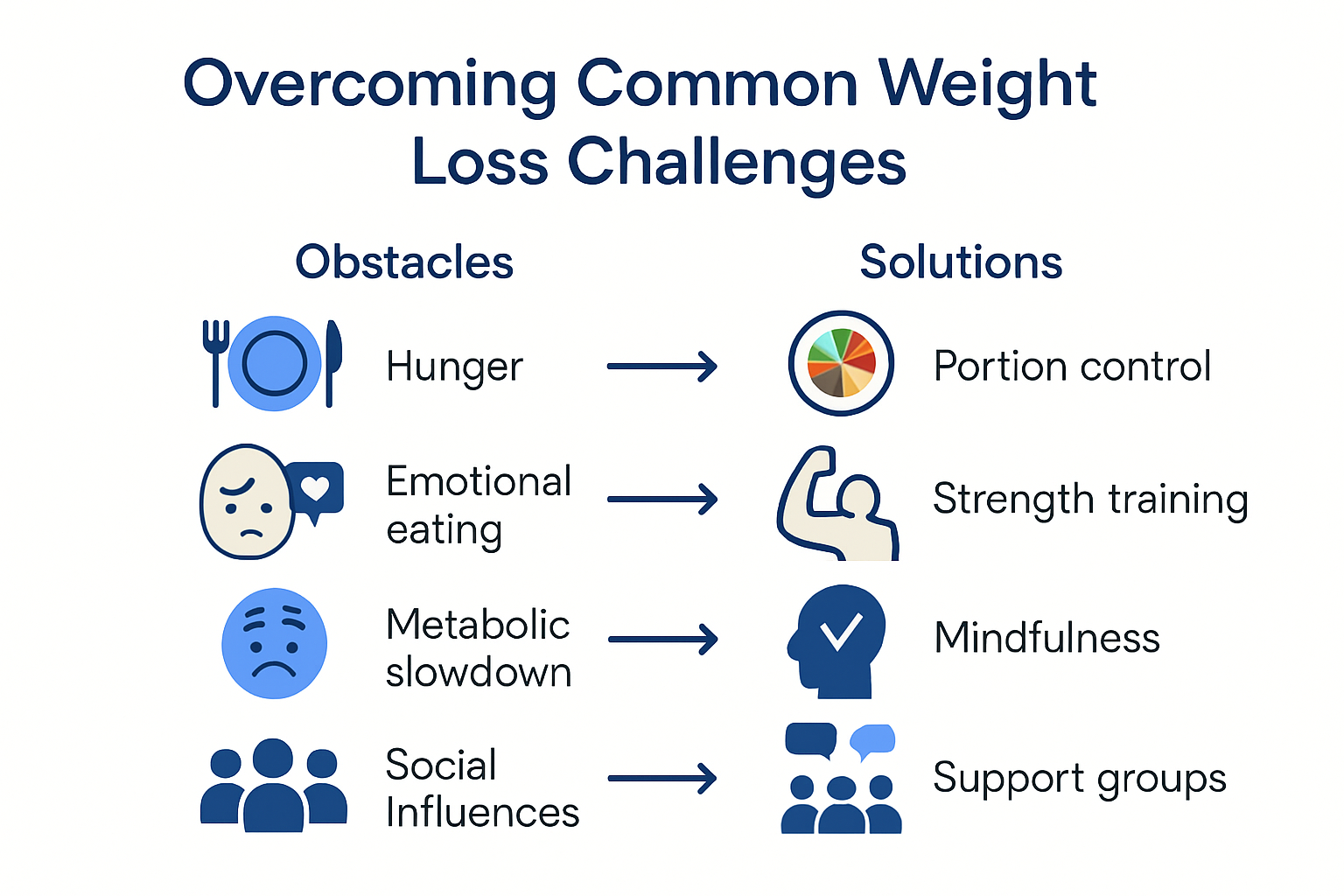
Common obstacles include persistent hunger, emotional eating, metabolic adaptations, and difficulty maintaining motivation.
Physiological challenges can be particularly frustrating. As you lose weight, your metabolism naturally slows down, making continued weight loss more difficult.
This biological response is your body’s way of preserving energy, a survival mechanism that can feel like a direct challenge to your weight loss efforts.
Understanding these natural processes can help you develop more realistic expectations and strategies.
Developing Adaptive Strategies
Overcoming weight loss challenges requires a multifaceted approach.
Key strategies include:
- Hunger Management: Learn to distinguish between true hunger and emotional eating
- Metabolic Optimization: Incorporate strength training to maintain muscle mass
- Psychological Resilience: Develop coping mechanisms for stress and setbacks
Below is a summary of adaptive strategies for overcoming common weight loss challenges cited in the article:
| Challenge | Suggested Strategy |
|---|---|
| Persistent Hunger | Distinguish hunger vs. emotional eating |
| Metabolic Slowdown | Incorporate strength training |
| Plateau | Adjust routine or calorie intake |
| Social/Environmental Pressures | Plan meals, communicate goals, seek support |
| Motivation/Setbacks | Celebrate small wins, practice self-compassion |
One critical aspect is understanding your body’s unique responses.
Some individuals may experience more significant metabolic slowdown than others. This variability means there’s no one-size-fits-all solution. Tracking your progress, being patient with yourself, and making incremental adjustments are crucial.
Plateau periods are normal and should be expected.
When weight loss stalls, it’s an opportunity to reassess your approach.
This might involve adjusting your calorie intake, changing your exercise routine, or addressing underlying lifestyle factors that could be impeding your progress.
Practical Approaches to Persistent Challenges
Social environments can present significant challenges to weight loss.
Dining out, social gatherings, and workplace food cultures can make maintaining healthy habits difficult.
Develop strategies like:
- Planning meals in advance
- Practicing portion control
- Communicating your health goals with friends and family
- Finding supportive communities
Technology can be a powerful ally. Fitness tracking apps, meal planning tools, and online support groups can provide additional motivation and accountability.
However, be cautious of becoming overly reliant on these tools. The most sustainable approach combines technological support with personal mindfulness and intrinsic motivation.
Remember that setbacks are not failures. Every challenge is an opportunity to learn more about your body, refine your approach, and build resilience. Weight loss is a journey of consistent effort, self-compassion, and continuous adaptation.
Your ability to navigate obstacles with patience and determination will ultimately define your success.
Frequently Asked Questions:
Below mentioned are the most frequently asked questions on the topic of weight loss via healthy eating habits. Let us address each of these in brief:
Are you tired of cycling through short-term diets and seeing the weight creep back?
This article highlighted persistent challenges like regaining lost weight, staying motivated, and navigating daily obstacles. Science reveals that real change requires more than just quick fixes.
You need lifestyle strategies that last. Discover how our Lifestyle Changes resources offer step-by-step support to help you build routines that stick for life.
Now is the time to make your commitment count.
Explore expert advice, practical meal ideas, and genuine personal stories at leanandfit.info. Let proven guidance empower you to achieve healthy weight loss that lasts.
Start your transformation today and take the first step toward long-lasting results.
Recommended:
- 10 Delicious Weight Loss Smoothie Recipes for Healthy Results – LeanAndFit
- How Low-Carb Diets Promote Fat Loss? – LeanAndFit
- For educational purposes only
- Why Trust LeanAndFit.info?
- Are Healthy Smoothie Recipes for Weight Loss Actually Making You Gain Weight? – LeanAndFit
- How to Calculate Your Calorie Deficit for Weight Loss? – LeanAndFit
- Meal Planning Tips 2025: Smart Ways to Eat Healthy – Dietium