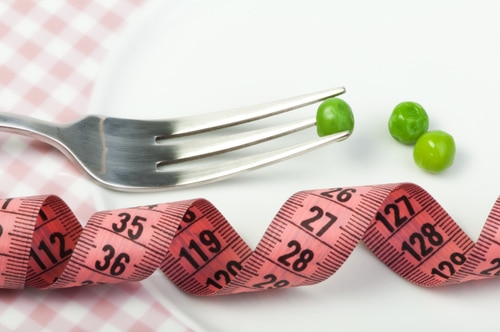
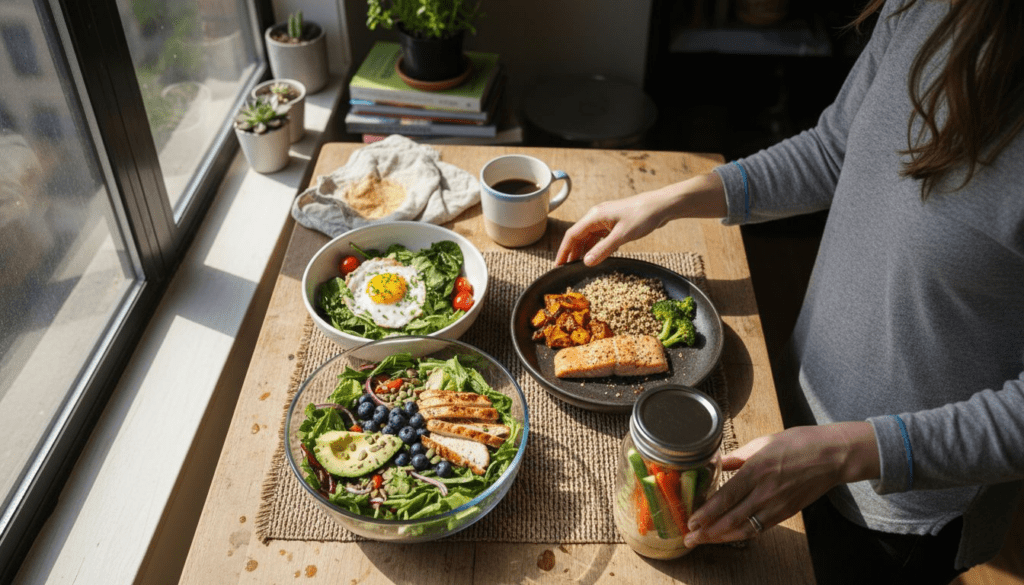
It may seem that the hardest thing ever is to stick to the rules of a healthy diet.
Hunger, temptation, and a busy schedule can make this process challenging.
However, each choice you make, even something as simple as what to have for breakfast, can affect your final result.
But what to do if there are too many factors to be considered?
The following advice may help you get full control of your diet and make the right choices at the right time.
The tips mentioned below are all reliable and perfectly working in everyday life.
They will teach you how to get the ability to make your body eat healthily without giving up your favorite foods.
Based on relevant scientific facts, these guidelines will introduce you to effective methods of preventing overeating and hunger.
So, you are going to receive lots of valuable information that will make you succeed at any diet.
Table of Contents
- 1. Start Your Day With Protein-Packed Breakfast Bowls
- 2. Enjoy Colorful Veggie-Loaded Lunch Salads
- 3. Include Lean Protein And Grain Dinners
- 4. Swap In Low-Calorie, High-Fiber Snacks
- 5. Try Hearty Soup Meals For Satiety
- 6. Opt For Quick Stir-Fries With Healthy Oils
- 7. Balance Meals With Portion Control Tips
Quick Summary
| Takeaway | Explanation |
|---|---|
| 1. Start with a protein-packed breakfast | Aiming for 28 grams of protein in the morning helps control hunger and reduces cravings throughout the day. |
| 2. Build colorful veggie-loaded salads | Use a variety of vegetables for fiber and nutrients, maximizing satisfaction without added calories, making lunch more enjoyable. |
| 3. Combine lean protein with whole grains at dinner | This pairing stabilizes energy levels and prevents late-night snacking, promoting healthy muscle recovery overnight. |
| 4. Choose low-calorie, high-fiber snacks | Opt for snacks that combine protein, fiber, and healthy fats to better control appetite and stabilize energy levels throughout the day. |
| 5. Practice portion control for sustainable weight loss | Use visual cues to manage portion sizes effectively, helping maintain a calorie deficit without feeling deprived or hungry. |
1. Start Your Day With Protein-Packed Breakfast Bowls
Breakfast is the most important meal of the day, and a protein-rich breakfast bowl will keep you satisfied for longer and help you lose weight. Focus on your breakfast, and the whole day will be successful. A healthy breakfast bowl acts as a solid platform for the rest of your day.
It allows you to maintain your food balance, keep your caloric intake in check, and avoid overeating. It also prevents you from getting constant hunger throughout the day.
The best breakfast ideas for weight loss will help you resist the urge to snack on the go.
Increasing your protein intake during breakfast will help you feel more energetic and less hungry after the meal. A high-protein breakfast delays the emptying of the stomach, creating a long-lasting feeling of fullness that makes it easier for you to resist the urge to snack or overeat at lunchtime.
Studies show that higher breakfast protein intake (up to 28 g or more) reduces overall hunger and increases the feeling of fullness and satisfaction after eating.
The best breakfast bowl should include a mix of protein-rich foods (eggs, legumes, fish), complex carbohydrates (whole grain cereal, oats), and healthy fats. This combination will keep you energized throughout the day, aid your digestion, and reduce the urge to snack on unhealthy foods.
Your breakfast bowl is an easy recipe.
Take your preferred protein (eggs are an excellent option because they help you get enough amino acids for the day), add some chopped vegetables, a serving of whole grain, and healthy fats (almonds, avocados). You like to feel full after your morning meal and not think about food until lunch. This breakfast idea will keep your caloric intake in check and help you lose weight.
There are many ways to prepare a delicious breakfast bowl that will help you lose weight. Choose your favorite protein, fiber-rich foods, healthy fats, and whole grains. Think about the ingredients you have at home and the dishes you like for breakfast. Some days you want to make a Mediterranean-style breakfast with eggs, spinach, and feta cheese, and on other days, you may want to make a heartier bowl with beans and sweet potatoes.
Pro tip: You need to definitely prepare your bowl components in advance especially on Sunday, and you’ll have grab-and-go breakfasts ready throughout the week that take just minutes to assemble each morning.
2. Enjoy Colorful Veggie-Loaded Lunch Salads
Lunch is where many people go wrong when it comes to weight loss. You get hungry and have a choice of grabbing something quick that is going to leave you feeling stuffed with calories.
A colorful veggie-loaded salad can solve this problem for you, as it will contain more volume and nutrients while providing you with less calories that would otherwise consume you.
Salads need to be interesting enough for you so that you enjoy them.
The reason behind making veggie loaded meals is that they are healthy and full of nutrients and fiber that your body needs without breaking the bank or your diet.
You can never go wrong with a salad since it has a lot of volume but not calories, so you feel full without going overboard on the calories. Each vegetable has its nutrient, and the ones with different colors have different nutrients.
Eating different colored vegetables would therefore give you a combination of nutrients needed by your body. Your afternoon snack should be full of fiber to keep you full throughout the day. Dark green leafy vegetables are high in iron, which is essential in building new blood cells. Orange colored vegetables are good for your eyesight and the overall health of your body.
Red vegetables are good for the repair and growth of tissues while purple cabbage is good for lowering the risk of having heart diseases. It is important that you include different colored vegetables in your salad to give your body a variety of nutrients it needs.
The next thing to do is come up with your own salad. Like mentioned, different colored vegetables are full of nutrients needed by the body.
Your salad should have a good mixture of greens and at least three other vegetables. You can also include protein in your salad to give you more energy. Nuts and seeds are also a good addition to your salad because of the healthy fats they contain. These healthy fats are necessary for you to absorb other nutrients that are essential for your body.
It is important that you add a small amount of dressing. Most people add a lot of dressing and do not realize that they are adding a lot of calories to their salad. The dressing should be light so that it will not overpower the other flavors in the salad. You can even consider making your own dressing.
Healthy lunch ideas can help you come up with the best salad that is full of nutrients and not too many calories.
The best part is that you can always prepare the salad on the weekends and enjoy it throughout the week.
Pro Tip: Remember to store the salad dressing separately and you can even add it to the salad before eating to avoid the greens from wilting.
3. Include Lean Protein and Grain Dinners
Dinner is the last meal of the day, when you make a choice that will affect your weight.
The ideal choice for any woman entering her 40s is a combination of lean protein and whole grains.
This way you will keep yourself satisfied until the morning, avoid late-night snacks and give your body the proper nutrients to repair and rebuild muscles.
This method is much better than fasting and other extreme dieting, as it gives you the ability to eat real food and finally lose that weight that is troubling you.
The reason why the combination of lean protein and whole grain foods is so effective lies in the way your body processes these nutrients.
Proteins keep you full for a long time after eating and help your muscles grow, while not increasing your calorie intake significantly.
Whole grains, on the other hand, provide you with the much needed minerals and vitamins, as well as fiber to keep you regular and help you to process food correctly.
These two food groups work synergistically to keep you full for a long period of time after your evening meal.
As a result, you will be less likely to snack at night – a very common occurrence among people on a diet.
Moreover, this combination will not leave you feeling hungry in the morning as many low-calorie diets do.
You simply have to take a few simple steps in order to make your own healthy plate.
First of all, select a piece of lean protein meat.
A good option would be chicken, turkey, fish or a bowl of legumes.
These are calorie friendly and keep you full for a long time after eating.
A recommended portion size is about a fist-sized piece of meat.
Second, choose a whole grain product that will accompany your piece of meat.
You can use white rice, quinoa, whole wheat pasta or any other whole grain product you may like.
Fill up the rest of the plate with vegetables, preferably with some volume, like broccoli, bell peppers or asparagus.
An example of such a plate could be a grilled chicken breast with rice and steamed broccoli or baked cod fillet with quinoa and spinach.
The possibilities are literally endless and you will never get tired of the same meals.
In addition, this method is very convenient as you can prepare your proteins and grains in advance on the weekends so that during the week you only have to assemble the plate.
You can grill a few pieces of chicken fillets, turkey breast or fish on Sunday and store them in the fridge.
That way, you will always have healthy dinner options ready to be served.
Pro Tip: All it takes is to assemble the plate with one portion of protein, one portion of whole grain products and several portions of vegetables.
4. Swap in Low-Calorie, High-Fiber Snacks
Snacking is when most diets go bad. You eat well for lunch, then, as afternoon approaches, you start feeling hungry. This makes you open to the first snack that catches your eye. A packet of chips, or a chocolate bar, or a sweet pastry can turn hours of healthy eating into a disaster.
The answer is to replace unhealthy snacks with healthier ones.
Low calorie snacks are necessary for dieting because they contain fiber and keep hunger at bay.
The explanation for the success of this approach is simple and is based on the properties of low calorie snacks.
Proteins, fiber, and healthy fats provide an ideal mixture to reduce appetite and keep you full for a long time. Fiber gives a satisfying sense of fullness and reduces hunger; protein, in turn, affects hormones that signal satiety in the brain. Healthy fats are needed for taste and to improve the absorption of vitamins and minerals. This combination will help reduce hunger between meals and will not give you cravings for sweets and snacks.
Such snacks are healthy and have several advantages over traditional ones. They keep you full for a longer time, provide the body with beneficial nutrients, and do not harm the diet.
Practical examples of healthy low-calorie snacks will help you succeed in losing weight.
There are many interesting options for healthy eating, including:
• an apple with peanut butter instead of a bag of chips;
• a handful of nuts or a piece of cheese with whole grain crackers instead of pretzels;
• dark chocolate with almonds instead of regular candy;
• cottage cheese with berries instead of flavored yogurt;
• celery with hummus instead of chips;
• homemade kale chips instead of regular ones.
Low-calorie healthy snacks should be available at hand. The point is that when hunger strikes, you will take what is at hand. If you have unhealthy snacks nearby, you will take them. But if you have a few healthy options ready to go, you will gravitate towards them.
A serving size is about a handful of nuts, one piece of fruit, or one ounce of cheese. You can find a lot of healthy snack ideas for weight loss and compile a list of healthy low-calorie snacks that will suit your tastes and needs.
Pro tip: spend half an hour on the weekend preparing healthy low-calorie snacks. So that during the week you can quickly find a satisfying and healthy option for snacking.
5. Try Hearty Soup Meals for Satiety
Soup is one of the most underutilized assets in the weight loss arsenal. A steaming bowl of soup is something everyone looks forward to; it is soothing, filling, and will help you achieve your weight loss goals before you know it.
Soup provides the illusion of eating more with the larger portion sizes and the satisfaction of the food itself that makes you less likely to feel hungry soon after.
The science behind this is that having a large portion of soup that is made up of calories in comparison to a smaller portion of a sandwich that you stuff yourself with will help you lose weight.
The high water content in soup helps stretch the stomach, sending a signal to the brain that the person is full.
A soup that is heavy on the veggie and broth content will help you lose weight in a way that no other food can;
It has a high satisfaction level to it, and it has a lot of volume without adding calories, which makes it very good for curbing hunger.
When making your own soup to aid in weight loss, you can do a few things to make sure that you are on the right track.
You want to make sure that you’re using broth to base the soup off of, and you want to add plenty of veggies to get the volume and calories you need in a low calorie zone.
Some good veggies to add include carrots, celery, broccoli, spinach, tomatoes, and bell peppers.
Add in a good source of chicken or other proteins, such as beans or tofu.
You also need to add in some whole grains to help with fullness and nutrition like barley or brown rice or whole wheat noodles to round out the dish.
Once you have all of these ingredients mixed together to your likings, you can season the soup to your tastes with herbs and spices.
These soups are also very easy to make in bulk, meaning that you can make a pot of soup on the weekend and have healthy lunches and dinners all week long.
Unlike other diet foods, soup can be fun and exciting every day of the week.
While this soup is great on its own, there’s also a wide variety of ways to make it.
Make a chicken and vegetable soup one week, and switch it up with a bean and lentil soup the next week, or make a tomato basil soup and lighten it up with fat-free milk instead of cream the next time around.
You can also freeze individual portions of the soup in bags or containers so that you always have a go-to meal ready to heat and eat in a flash when you’re in the mood for soup or you don’t have the time or energy to cook.
This means that you’ll never have to skip a workout because of hunger pains again!
6. Opt for Quick Stir-Fries with Healthy Oils
Stir-fry meals are a healthy weight loss staple because of their quick preparation, restaurant-quality presentation, and ability to incorporate copious amounts of vegetables and protein without adding extra calories
The trick to making stir-fries work for your weight loss goals lies in choosing the right ingredients
The right protein and vegetables, plus healthy fats in form of oils used for sautéing, will create a wholesome plate of food that will keep you full for a long time after the meal.
Moreover, the nutritional content and caloric density of a stir-fry directly impact your ability to lose weight, all while keeping you satisfied.
Stir-fried dishes have a significant advantage over other foods in terms of preparation time
A stir-fry meal can be prepared within less than 20 minutes, thus providing a healthy alternative to takeout meals that are usually high in calories and carbohydrates.
A plate of mixed vegetables and lean protein such as chicken or tofu over brown rice makes a perfect healthy meal for weight loss as it contains all the essential nutrients in one dish.
Vegetables add up volume and give you the feeling of fullness after the meal while keeping the calories count low.
Protein is necessary to keep you full through the day and to prevent weight gain.
The oils used for cooking add taste and help your body absorb healthy fat-soluble vitamins.
It is best to use oils with a high smoke point such as peanut, avocado, canola, or sunflower oil to avoid damaging the oil and burning your meal.
Creating a stir-fry dish at home is relatively easy.
Take one or two tablespoons of your chosen oil and let it heat up in a large pan or a wok over medium-high heat.
Add your favorite protein to the pan. Chicken breast strips, shrimp, tofu, or lean ground turkey are all healthy options. Let it cook for a few minutes on each side until it is almost done, and push it to the sides of the pan, leaving an empty space in the center.
Add your chopped mixed vegetables to the empty spot. Make sure to use at least four different types of vegetables per stir-fry. Broccoli, bell peppers, snap peas, carrots, mushrooms, and zucchini are some of the best veggies to add to your dish.
Stir-fry everything for five to seven minutes or until the veggies are tender but still crisp. Season the mixture with low-sodium soy sauce, vinegar, garlic, and ginger, to your liking, and serve it over brown rice or quinoa.
The whole process should take you less than 20 minutes, making it a perfect healthy weekday dinner option.
Pro Tip: Preparation of the vegetables and protein can be done on the weekends, leaving you with only 10 minutes on weekdays to make a full-course restaurant-quality stir-fry dish.
7. Balance Meals with Portion Control Tips
You can eat all the healthy foods you want, but if you overeat, you will gain weight. That’s the problem for many people on a weight loss journey. If you’re eating healthy, but not losing weight, you need the help of portion control.
Having the proper portion size is the key to making healthy eating habits a long-term lifestyle and shedding those unwanted pounds.
The reason portion control is so important for weight loss, is because
as portion size increases, so does calorie intake, which can lead to weight gain
Your body only gains weight when you eat more calories than you burn, and it loses weight when you do the opposite. Even though you’re eating healthy foods in larger portions, you’re still eating too many calories for your body and causing your body to store the extra as fat. However, it’s not difficult to get the proper portion sizes. You don’t have to be an expert at calculating calories to know when you’ve had enough.
By using some basic guidelines that are always available to you, your fingertips, you can be surprised by your ability to make the right choices concerning food portions.
Here are some basic guidelines to help you better understand what a proper portion size looks like.
A portion of protein should be the size of a deck of cards or the palm of your hand. Vegetables should be approximately the size of a baseball. A serving of fat such as oil or nuts should be the size of a pair of dice.
These measurements are based on the average hand size, but they are a close estimate for everyone.
There are some changes you can make in your day to incorporate portion control and help with your weight loss.
By using the guidelines above, divide your plate into fourths. Make sure half your plate is filled with vegetables, one fourth with protein, and one fourth with a starch like whole grains or peas. If you’re used to eating large portions, these portions might seem small at first, but after a few weeks of your stomach getting used to eating healthier and more regularly, you will find that these portions leave you feeling satisfied
Using smaller plates can also help you feel like you’re getting more food, and you’ll leave the meal feeling full. Eating slowly and enjoying your food will help your brain realize it’s full, so that you don’t overeat. Drinking more water with your meals will help you feel full quicker, so you will eat less. All of these changes will help you lose weight in a healthy way, instead of a fad diet, that most likely won’t keep the weight off.
Pro Tip: A helpful tip is to measure the foods you normally eat, with measuring cups or a food scale, so that you can see how much they are. After you’re use to the approximate amount, you can use the guidelines mentioned above.
Below is a comprehensive table summarizing practical strategies for building nutritious, satisfying, and weight-loss-supportive meals as discussed throughout the article.
| Strategy | Implementation | Benefits |
|---|---|---|
| Start your day with protein-packed breakfast bowls | Combine lean proteins, complex carbohydrates, and healthy fats in a breakfast bowl. Suggested ingredients include eggs, fresh vegetables, oats, or avocado. | Keeps appetite in check, stabilizes energy, prevents mid-morning cravings, supports digestion. |
| Enjoy colorful veggie-loaded lunch salads | Base your salad on leafy greens, diversify with colorful vegetables, and incorporate proteins like beans or grilled chicken and healthy fats like avocado or seeds. | Provides nutrient density, promotes satiety without excess calories, and satisfies hunger. |
| Include lean protein and grain dinners | Balance dinner plates with lean proteins, whole grains, and non-starchy vegetables. Suggested combinations include grilled chicken with quinoa and roasted broccoli. | Maintains muscle, aids digestion, prevents late-night snacking. |
| Swap in low-calorie, high-fiber snacks | Opt for snacks that combine fiber, protein, and healthy fats. Examples are apple slices with peanut butter or kale chips. Prepare these in advance. | Controls hunger, stabilizes energy, and reduces overeating incidents. |
| Try hearty soup meals for satiety | Prepare brothy, vegetable-rich soups with lean proteins and whole grains. Examples are chicken vegetable soup or lentil stew. | Fills the stomach, enhances fullness, and supports calorie control. |
| Opt for quick stir-fries with healthy oils | Cook a mix of vegetables and proteins like tofu or shrimp in oils such as avocado oil. Serve with brown rice or quinoa. | Balances nutrients, provides convenience, supports energy maintenance. |
| Balance meals with portion control tips | Use visual portion guides (e.g., protein the size of a palm, vegetables the size of a fist) when serving meals. Practice mindful eating and use smaller plates. | Prevents overeating, aligns calorie intake with weight management goals, supports sustained satisfaction. |
Frequently Asked Questions:
Q-1: What are the best breakfast ideas that are packed with protein for weight loss?
A-1: A healthy breakfast rich in proteins should be made up of foods such as eggs, Greek yogurt, or quinoa with a healthy portion of vegetables. A good amount of protein in the morning could be around 28 grams to promote fullness and satiety.
Q-2: How do I make my lunch salad more exciting for the purpose of weight loss?
A-2: Healthy and exciting salad for lunch should be full of colorful vegetables, with healthy portions of protein such as chicken, or beans, and a good helping of healthy fats. Having different types of dressings can also make the meal more exciting while keeping it low in calories.
Q-3: What are the best dinner ideas that are healthy and will help with weight loss?
A-3: The best ideas for dinners should be made up of a serving of lean proteins such as salmon or chicken, together with whole grains and a large portion of vegetables. This will keep you full for a long time and help prevent late-night cravings.
Q-4: What are the best low-calorie snacks for weight loss?
A-4: Healthy and low-calorie snacks are ideal to help keep hunger at bay until it is time for the main meals. Having apple slices with peanut butter, a small handful of almonds, or carrots with hummus can keep you full and healthy.
Q-5: How do I make soups a healthy and effective option for weight loss?
A-5: Soups can be a very good option for weight loss as they are mostly filling and low in calories. Preparing them with lots of vegetables, and small portions of grain and protein can make them a healthy and effective weight-loss option.
Q-6: What are the fastest ways to make stir-fry for weight loss?
A-6: Making a stir-fry with all types of vegetables and protein such as chicken or tofu is a healthy and quick option for dinner. The stir-fry is made in a healthy oil to retain the nutrients and is served with whole grains.
Recommended
- 25 Tasty Low Calorie Lunch Ideas for Healthy Eating – LeanAndFit
- 7 Simple Dinner Recipes Healthy for Every Night – LeanAndFit
- Weekly Meal Planning Tips for Weight Loss Success – LeanAndFit
- 7 Best Protein Sources for Healthy Weight Loss Success – LeanAndFit
- Hair Loss Diet: Foods and Tips for Stronger Hair in 2025 | MyHair
- Why Trust Us?
- For educational purposes only