Meal prep for weight loss is grabbing serious attention because it gives you full control over your calories, nutrition, and even your grocery bill.
Most people think you need complex skills or hours of spare time to pull it off and stick with it.
But here is the real shocker.
A study found that people who meal prep are 40 percent more likely to hit their weight loss goals compared to those who don’t.
That difference comes from simple routines anyone can start today, not complicated recipes or fancy equipment.
Table of Contents
- Why Meal Prep Helps Weight Loss
- How To Start Meal Prep For Beginners
- Best Foods And Recipes For Meal Prep
- Practical Tips To Stay On Track
Quick Summary
| Takeaway | Explanation |
|---|---|
| Meal prep controls nutrition effectively | Planning meals helps manage portion sizes and nutrient balance, reducing unhealthy food choices. |
| Meal prep saves time and minimizes waste | Investing a few hours weekly produces ready meals, cutting down on decision fatigue and food disposal. |
| Choose versatile, nutrient-dense foods | Incorporating lean proteins, complex carbs, and plenty of vegetables promotes health and supports weight loss. |
| Establish a solid strategic plan | Start meal prep with common ingredients, balanced plates, and a few easy recipes to simplify the process for beginners. |
| Track progress with various methods | Use measurements, photos, and energy levels instead of focusing solely on weight to gauge health improvements. |
Why Meal Prep Helps Weight Loss?
Weight loss requires consistent strategy and intentional food planning.
Meal preparation emerges as a powerful approach that transforms how individuals manage their nutrition and body composition.
Understanding the core mechanisms behind meal prep can unlock significant advantages in weight management.
Strategic Nutrition Control
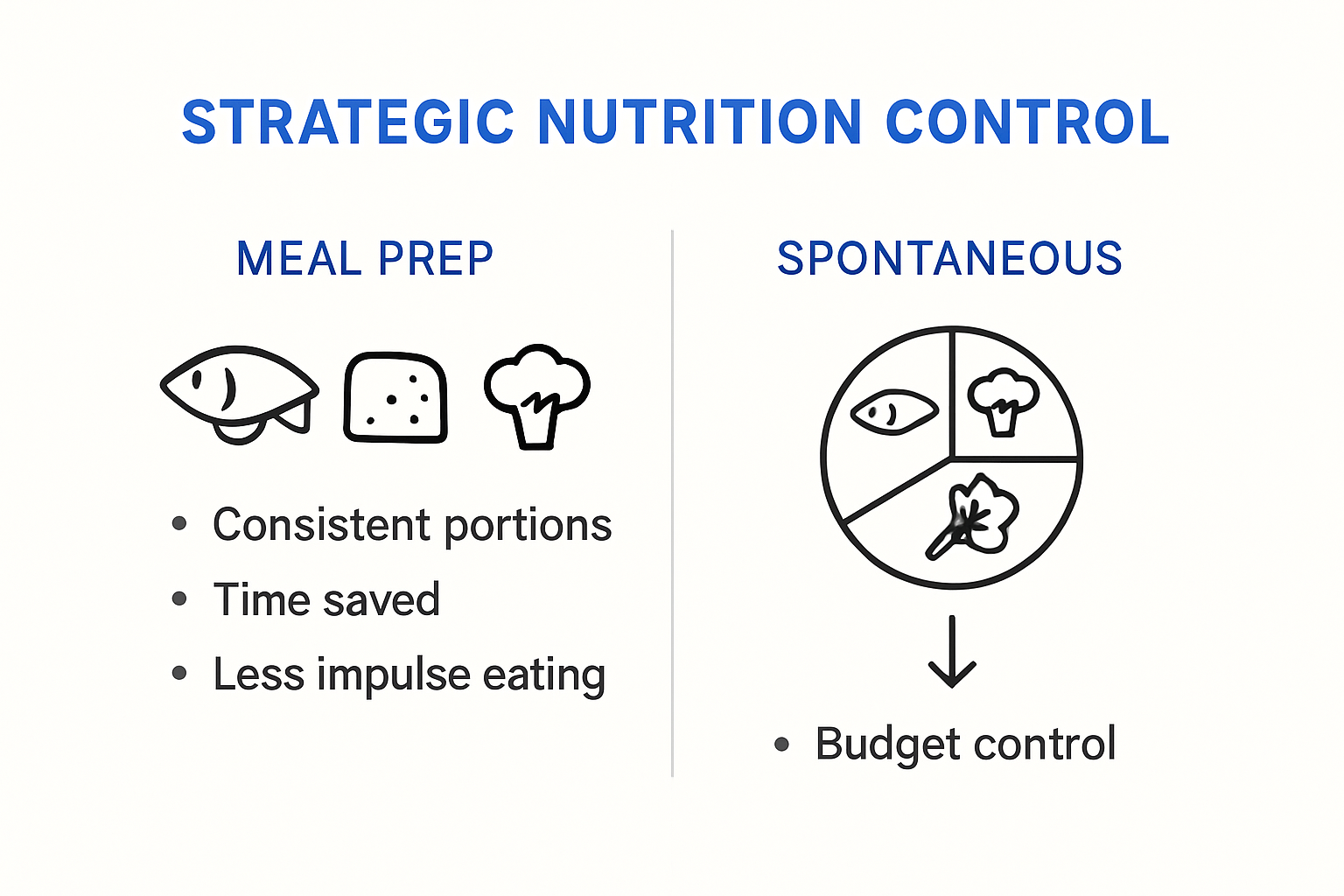
Meal preparation provides unprecedented control over nutritional intake. When individuals plan and prepare meals in advance, they eliminate spontaneous food choices that often derail weight loss efforts.
Research from the National Center for Biotechnology Information demonstrates that batch cooking allows individuals to maximize kitchen time while creating versatile meal components that support consistent healthy eating.
By prepping meals strategically, you can:
- Portion Management: Precisely measure ingredients and control serving sizes
- Nutrient Balance: Design meals with balanced macronutrient profiles
- Reduce Impulse Eating: Eliminate last-minute unhealthy food decisions
Psychological and Practical Benefits
According to the Harvard T.H. Chan School of Public Health, meal preparation is more than a nutritional strategy—it is a psychological approach to maintaining dietary discipline.
When nutritious meals are readily available, individuals are less likely to succumb to convenience foods or emotional eating patterns.
The practical benefits extend beyond weight management. Meal prep saves time, reduces food waste, and minimizes daily decision fatigue related to food choices.
By dedicating a few hours each week to preparing meals, individuals create a structured nutrition environment that supports their weight loss goals.
Economic and Health Advantages
The economic implications of meal preparation are significant. The Hunger Task Force highlights that planned meal preparation helps individuals stick to a budget while promoting healthier eating habits.
This approach not only supports weight loss but also cultivates long-term nutritional awareness.
Moreover, consistent meal preparation allows for gradual metabolic adaptations.
By consuming balanced, portion-controlled meals regularly, individuals can train their metabolism to function more efficiently, potentially accelerating weight loss results.
For those looking to dive deeper into strategic meal planning, check out our comprehensive guide on calorie tracking strategies that complement meal preparation techniques.
Effective meal prep transforms weight loss from a sporadic effort into a sustainable lifestyle approach.
By understanding and implementing these strategies, individuals can create a reliable framework for achieving and maintaining their health goals.
How to Start Meal Prep for Beginners?
Starting meal preparation can feel overwhelming for newcomers, but with the right approach, anyone can develop this transformative skill. The key is to begin simply and build confidence gradually.
According to the USDA’s MyPlate initiative, successful meal planning starts with understanding fundamental nutrition principles and creating a structured approach.
Essential Planning and Equipment
Before diving into meal prep, gather basic equipment that will streamline your process. Invest in quality storage containers with secure lids, measuring cups, a sharp chef’s knife, and cutting boards.
The Centers for Disease Control and Prevention recommends using tools like the MyPlate Plan to calculate your specific nutritional needs based on personal factors such as age, sex, height, weight, and physical activity level.
Key equipment for beginners includes:
Here’s a handy table summarizing the essential equipment for meal prep beginners, including brief explanations of their purpose:
| Equipment | Purpose |
|---|---|
| Meal Containers | Store and portion out prepared meals |
| Kitchen Scale | Measure ingredients and portion sizes |
| Slow Cooker or Instant Pot | Simplifies bulk and batch cooking |
| Food Thermometer | Ensures safe internal food temperatures |
| Measuring Cups | Helps with accurate ingredient portions |
| Chef’s Knife | Essential for efficient food preparation |
| Cutting Boards | Safe, clean surface for prepping food |
- Meal Containers: Glass or BPA-free plastic containers with compartments
- Kitchen Scale: For precise portion measurements
- Slow Cooker or Instant Pot: Simplifies batch cooking
- Food Thermometer: Ensures safe cooking temperatures
Strategic Meal Planning Techniques
Harvard Health emphasizes creating balanced plate compositions, recommending that half your plate consist of fruits and vegetables, a quarter with whole grains, and the remaining quarter with healthy proteins.
This approach provides a simple framework for nutritionally sound meal preparation.
Beginners should start with these strategic planning steps:
- Choose 2-3 recipes that share common ingredients
- Select recipes with similar cooking methods
- Prepare proteins and base ingredients in bulk
- Store meals in portioned containers
For individuals seeking more detailed guidance on creating a comprehensive nutrition strategy, explore our comprehensive weight loss nutrition planning resources.
Remember that meal prep is a skill that improves with practice. Start small, remain consistent, and gradually expand your repertoire.
By approaching meal preparation systematically and maintaining flexibility, beginners can transform their nutrition and support their weight loss journey effectively.
Best Foods and Recipes for Meal Prep
Choosing the right foods for meal preparation can significantly impact weight loss success.
Research from the International Journal of Behavioral Nutrition and Physical Activity demonstrates that strategic food selection during meal prep directly correlates with healthier diet outcomes and reduced obesity risk.
Nutrient-Dense Protein Sources
Protein plays a crucial role in weight loss meal preparation. Lean protein sources help maintain muscle mass, increase satiety, and support metabolic function. Optimal protein choices include:
- Chicken Breast: Low in fat, high in protein
- Lean Ground Turkey: Versatile for multiple recipes
- Eggs: Complete protein with essential nutrients
- Canned Tuna: Convenient and budget-friendly
- Tofu: Plant-based protein for vegetarian options
Preparing these proteins in bulk allows for quick meal assembly throughout the week. Grilling, baking, or slow-cooking can help maintain flavor and nutritional integrity.
Complex Carbohydrates and Vegetables
According to the Harvard T.H. Chan School of Public Health, half your plate should consist of vegetables and whole grains. Complex carbohydrates provide sustained energy and support weight loss efforts.
Recommended options include:
- Quinoa: Complete protein with complex carbohydrates
- Sweet Potatoes: Rich in fiber and nutrients
- Brown Rice: Whole grain with steady energy release
- Roasted Vegetables: Broccoli, cauliflower, Brussels sprouts
- Zucchini Noodles: Low-calorie pasta alternative
Sample Meal Prep Recipes
Combining these ingredients creates nutritious, weight-loss-friendly meals. Here are three simple recipes to get started:
- Chicken and Quinoa Power Bowl
- Grilled chicken breast
- Roasted vegetables
- Quinoa base
- Lemon-herb dressing
- Turkey and Sweet Potato Meal Prep
- Lean ground turkey
- Diced sweet potatoes
- Steamed green beans
- Herbs and spices
- Vegetarian Tofu Stir-Fry
- Firm tofu
- Mixed vegetables
- Brown rice
- Low-sodium soy sauce
For additional inspiration on creating delicious weight loss meals, check out our smoothie recipe collection that can complement your meal prep strategy.
Remember that variety is key to maintaining motivation and nutritional balance. Rotate proteins, experiment with different vegetables, and keep your meal prep interesting and enjoyable.
Practical Tips to Stay on Track
Staying committed to meal preparation and weight loss requires more than just good intentions.
Developing sustainable strategies and maintaining motivation are crucial for long-term success.
The journey involves creating habits that support your health goals while remaining flexible and kind to yourself.
Mental and Emotional Strategies:
Successful weight loss is as much a mental process as a physical one. Developing a positive mindset and creating supportive systems can significantly impact your ability to stay consistent.
Start by setting realistic expectations and understanding that progress is not always linear.
Key mental strategies include:
- Positive Self-Talk: Replace critical thoughts with encouraging statements
- Visualization: Imagine yourself achieving your health goals
- Accountability: Share your journey with supportive friends or family
- Stress Management: Incorporate relaxation techniques like meditation or deep breathing
Tracking and Measurement Techniques:
To effectively monitor your progress, implement multiple tracking methods beyond just weight.
Measuring body composition, taking progress photos, and monitoring energy levels provide a more comprehensive view of your health transformation.
Recommended tracking tools:
Below is a comparison table illustrating different tracking and measurement methods for monitoring weight loss progress, summarizing their benefits and focus areas:
| Tracking Method | What It Measures | Primary Benefit |
|---|---|---|
| Body Measurements | Circumference changes | Shows changes not reflected on the scale |
| Progress Photos | Visual transformation | Provides motivation and objective progress |
| Energy/Mood Journal | Daily feelings and energy | Tracks improvements in well-being |
| Fitness Metrics | Strength/endurance progress | Highlights physical performance gains |
| Weekly Weigh-Ins | Body weight | Tracks trends but may fluctuate |
- Body measurements
- Progress photographs
- Energy and mood journals
- Fitness performance metrics
- Weekly weigh-ins
Overcoming Common Challenges
Meal prep and weight loss journeys inevitably encounter obstacles. Anticipating and preparing for potential challenges can help maintain momentum. Common barriers include time constraints, motivation dips, and social pressures.
Strategies to overcome these challenges:
- Batch cook during less busy times
- Prepare flexible meals that can be easily modified
- Learn quick 15-minute meal prep techniques
- Create a supportive environment at home
Understanding how to calculate and maintain a calorie deficit can provide additional insights into managing your weight loss journey effectively.
Remember that consistency trumps perfection. Small, sustainable changes create lasting results.
Be patient with yourself, celebrate minor victories, and view setbacks as learning opportunities rather than failures.
Your meal prep journey is unique, and what works best is the approach you can maintain long-term.
Frequently Asked Questions
What is meal prep and how does it aid in weight loss?
Meal prep involves planning and preparing meals in advance, which helps control nutritional intake, manage portion sizes, and reduce impulsive eating, all of which are key to successful weight loss.
What are some essential tools for beginners starting meal prep?
Essential tools for meal prep include meal containers, a kitchen scale for measuring portions, a slow cooker or Instant Pot for batch cooking, measuring cups, and a chef’s knife with cutting boards for food preparation.
How can I choose the right foods for meal prep?
Opt for nutrient-dense foods such as lean proteins (like chicken breast and tofu), complex carbohydrates (like quinoa and sweet potatoes), and a variety of vegetables to ensure balanced and healthy meals that support weight loss.
What strategies can help me stay on track with meal prepping?
To stay on track, set realistic goals, practice positive self-talk, keep a food journal to monitor energy levels and mood, and prepare meals during less busy times to overcome common challenges in meal prepping.
Ready to Make Your Weight Loss Meal Prep Effortless?
If you are tired of feeling overwhelmed by the stress of daily food decisions and struggling to stick with a nutritious routine, you are not alone.
Taking control of portion sizes, ingredients, and your weekly plan can be a game changer.
When you build healthy habits through meal prep, reaching your weight loss goals becomes so much easier.
Find step-by-step plans, sample recipes, and practical solutions in our Meal Planning section. We help you move from guesswork to confidence in your kitchen and your health routine.
Start now with expert tips, real-life guidance, and meal prep resources designed for those who want simplicity and results.
Make your next healthy week ahead easier by exploring leanandfit.info for more action-ready ideas and advice.
Take the first step today and discover how easy it can be to make meal prep work for your life and weight loss success.
Recommended:
- 10 Delicious Weight Loss Smoothie Recipes for Healthy Results – LeanAndFit
- Are Healthy Smoothie Recipes for Weight Loss Actually Making You Gain Weight? – LeanAndFit
- How Low-Carb Diets Promote Fat Loss? – LeanAndFit
- Why Trust LeanAndFit.info?
- For educational purposes only
- How to Calculate Your Calorie Deficit for Weight Loss? – LeanAndFit