

Most American adults who are struggling with obesity do not recognize the potential benefits of good sleep in managing their weight loss.
Although diet and exercise are the most prominent factors in this process, healthy sleep patterns can profoundly affect metabolism, reduce appetite, and control hunger hormones.
Moreover, lack of sleep could sabotage everyone’s diet and lead to weight gain with an increased risk by 38 percent.
Still wondering why sleep matters for weight loss???
The article below will demonstrate how to use sleep as an ally in the fight against obesity and will provide some helpful suggestions.
Table of Contents
- What Healthy Sleep Really Means
- Sleep’s Impact on Hunger and Metabolism
- Sleep Patterns and Weight Gain Risks
- How Sleep Affects Emotional Eating
- Making Sleep a Weight Loss Priority
Key Takeaways
| Point | Details |
|---|---|
| Adequate Sleep Duration | Aim for 7-9 hours of sleep to support hormonal balance and metabolic health. |
| Consistent Sleep Patterns | Establish a regular sleep schedule to align with circadian rhythms and reduce weight gain risks. |
| Impact on Emotional Eating | Improve sleep quality to lower stress and reduce cravings for unhealthy foods during emotional moments. |
| Sleep Environment | Optimize your bedroom for darkness, quiet, and comfort to promote restorative sleep beneficial for weight loss. |
What Healthy Sleep Really Means?
Healthy sleep is a biological process during which our brain and body perform numerous functions in order to restore and renew. Researchers have identified the unique phenomenon of sleep as an altered state of consciousness with vital importance for the human being.
Therefore, healthy sleep comprises several interrelated aspects that guarantee the best rest for the body and mind.
Primarily, it is characterized by adequate quantity of hours of sleep, which for most adults may vary from 7 to 9 hours. Moreover, the quality of sleep is no less important, meaning that a person should not only spend enough time sleeping but also have undisturbed and deep sleep cycles.
Healthy sleep provides vital functions for the normal work of the brain and body. A sufficient amount of rest allows the brain to perform its daily tasks, such as forming memories or getting rid of toxic proteins that accumulate in the body.
Furthermore, while we sleep, our immune system carries out its functions to ensure there are no illnesses or inflammations in the body.
In addition, sleep plays an important role in maintaining hormonal balance and normalizing the action of hormones responsible for body weight regulation, as well as the proper functioning of the metabolism.
On the other hand, inadequate or disturbed sleep may lead to increased levels of hunger hormones, hence to overweight or diabetes.
Pro Tip: I suggest keeping a sleep diary for a week, thus recording how many hours of sleep you get and how rested you feel after that sleep.
Here is a summary of how healthy sleep supports metabolic wellness:
| Sleep Dimension | Main Benefit | Health Impact |
|---|---|---|
| Consistent duration (7-9h) | Supports full sleep cycles | Better hormone regulation |
| Uninterrupted sleep | Enables restorative stages | Stronger immune function |
| Proper sleep timing | Aligns with circadian rhythm | Healthier metabolism |
| Quality pre-bed routine | Promotes deeper sleep | Reduced inflammation |
Sleep’s Impact on Hunger and Metabolism
The connection between sleep and metabolism is quite complex.
Sleep deprivation affects the way our bodies store fat and work with it; which may have unwanted consequences for us. Leptin and gherelin are two hunger hormones that are regulated in the human body during the night.
The lack of quality sleep will increase the level of ghrelin and decrease the level of leptin. That means that your body is in a constant state of hunger and you eat more food as a consequence.
You will also experience cravings for unhealthy carbohydrates and sugars. A condition like this makes it very difficult to be in the fat burning state necessary for weight loss.
Metabolism is another reason to get enough sleep.
The metabolism changes when you do not sleep enough, increasing levels of insulin, quickly breaking down lipids in the blood, and changing the way that you burn fat.
If you do not get enough sleep on a regular basis, you can not only change the way that your body burns and stores fat but also slows down your metabolize rate. This can make weight loss much harder and can lead to obesity and many diseases that are associated with it.
Get enough sleep and you can help to control your weight.
A good recommendation for a majority of people is 7-9 hours per night, and can aid in balancing out the hunger hormones that I mentioned above.
Sleep Patterns and Weight Gain Risks
The timing of sleep plays a critical role in weight control – going to bed too late at night can raise obesity risk by 20-38% for people who habitually hit the pillow after midnight, compared to those getting healthy amounts of shuteye.
Circadian rhythm disruptions have been shown to cause serious metabolic problems in the body, contributing to weight gain. Irregular sleep schedules lead to higher stress levels in the body, increasing one’s risk for obesity.
Even with a healthy diet, poor quality and timing of sleep could still lead to weight gain.
In addition to bedtime, time of eating in relation to sleep can also have an adverse effect on weight control. Late-night meals have been shown to raise hunger hormones and decrease the body’s ability to burn calories. Studies show that eating late at night promotes weight gain by altering fat cell mechanisms – making it harder to lose weight and easier to gain.
Eating while the body is asleep can cause metabolic confusion, making it difficult for the body to properly metabolize food – the body burns calories most efficiently during daylight hours.
This comparison highlights effects of adequate vs. poor sleep on weight and metabolism:
| Aspect | Adequate Sleep | Poor Sleep |
|---|---|---|
| Hunger Hormones | Balanced ghrelin/leptin | Increased appetite |
| Fat Storage | Reduced tendencies | Encouraged, especially abdominal |
| Metabolic Rate | Stable or improved | Slower, promotes weight gain |
| Food Choices | Healthier selection | More cravings, high-carb foods |
Pro tip: Aim to establish a consistent sleep schedule with a bedtime before 11 PM and avoid eating meals within three hours of going to sleep to support your metabolic health and weight loss goals.
How Sleep Affects Emotional Eating?
Emotional eating is a phenomenon in which a person eats due to emotional pressure. It has a close connection to the person’s sleep schedule and stress levels.
In particular, disrupted sleep patterns can affect the brain’s reward system and increase the risk of developing emotional eating. When a person does not get enough sleep, their stress levels are more likely to be high.
As a result, the body might crave carbohydrates and calories to cope with the negative feelings. Therefore, sleep deprivation can lead to frequent emotional eating episodes and subsequent weight gain due to unhealthy eating habits.

The connection between sleep and emotional eating goes beyond hormones.
Lack of sleep reduces the activity of the prefrontal cortex, therefore hindering impulse control and leading to poor decision-making. Without enough sleep, the brain is unable to distinguish between emotional and physical hunger, resulting in people giving in to cravings to cope with negative emotions.
As a result, sleep-deprived and stressed individuals have a considerably high possibility of emotional eating.
Pro Tip: Therefore, it is essential to adopt healthy lifestyle habits, for instance, a regular sleeping pattern and use other relaxation techniques to deal with stressors in day-to-day life.
Making Sleep a Weight Loss Priority
A key part of being succesful about losing weight is being aware and making decisions about optimal ways to promote healthy sleeping patterns.
Thinking of sleep as a crucial element to a good weight loss program can change a person’s sleeping habits for the better.
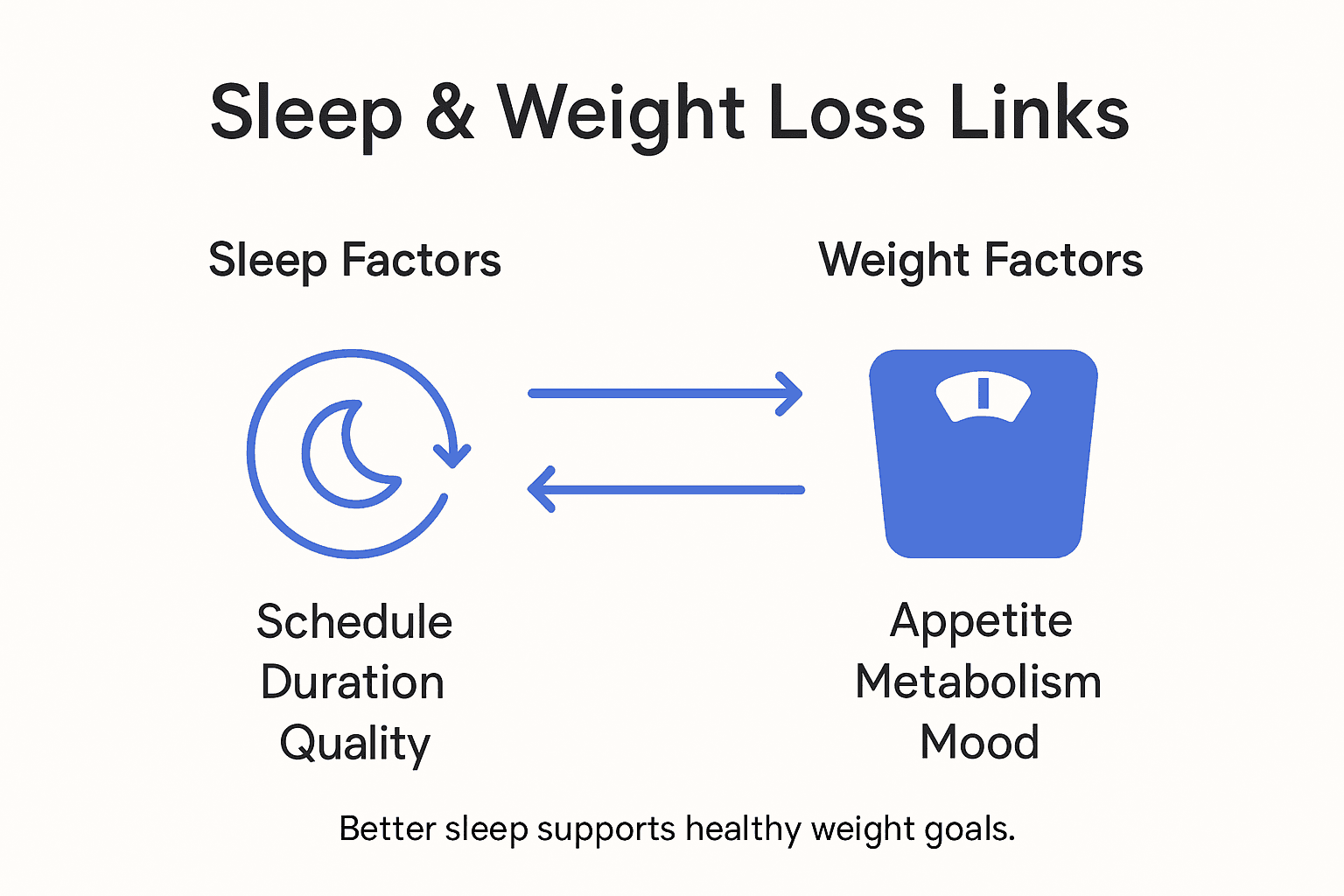
Creating a sleep-conducive environment is a process that demands involvement and dedication. It entails developing a relaxing bedtime ritual, sticking to it regardless of whether it is a weekday or weekend, and being as disciplined as with your diet and exercise regimen.
The sleep-conducive environment can also be created by setting a regular sleeping schedule, establishing a relaxing bedtime routine, limiting electronics use before bedtime, and making the bedroom cool, dark, and quiet.
The value of quality sleep extends beyond physical wellbeing.
The better you sleep, the easier it is for your body to burn calories and to balance out hunger and satiety hormones. It also plays a significant role in the metabolic regulation, so it is positively correlated with healthy weight and normal weight gain.
You can think of sleep as a calorie-burning period your body needs in order to function optimally and be healthy. Therefore, changing your attitude towards sleep can have a beneficial effect on your approach to weight loss.
A helpful hint in this regard is to set an alarm clock so you will get enough sleep every night.
Pro Tip: This way you can also establish a regular sleep pattern conducive to losing weight.
Unlock Your Weight Loss Potential by Mastering Sleep
The article discusses how lack of sleep negatively impacts hormone levels and the metabolism process, as well as causing emotional eating, which can adversely affect an individual’s weight loss plan.
People who are experiencing poor sleep patterns or prolonged sleep deprivation should take immediate action to reverse the situation.
Interpreting sleep cues and managing them effectively can help improve metabolism and reduce cravings.
Gain valuable insight into the best practices for managing sleep with expert-approved Sleep Management – LeanAndFit today and say goodbye to poor sleep, for good. If you are experiencing poor health due to poor sleep, you should not miss this opportunity.
Get the resources you need to manage sleep at LeanAndFit.info now and improve your sleep, tonight.
Frequently Asked Questions:
Q-1. Can losing sleep make a calorie deficit feel harder even if my diet has not changed?
A-1. Definitely, when you restrict your sleep, you tend to feel hungrier and it becomes progressively harder to control your diet. Meta-analysis of randomized trials, for example, has associated sleep restriction with increased subjective hunger and an average increase in the amount of calories eaten per day by about 253.
Q-2. Why can one short night of sleep change tomorrow’s food decisions from today’s?
A-2. A lack of sleep can affect hunger control and the way the brain responds to food. In experimental studies, sleep deprivation has been associated with increased hunger and a preference for calorie-dense foods. Notably, the restricted group was more likely to snack on the calorically-dense foods the following afternoon.
Q-3. Could sleeping longer improve weight-loss stickability without burning a single additional calorie?
A-3. It definitely can since sleep supports healthy behaviors that are unrelated to the calorie-burning hormonal pathways. During the periods of rest, the body focuses on regulating appetite, being physically strong and active during the day to avoid a sedentary lifestyle, and exercising regular control over the diet. Sleeping well, therefore, contributes to a healthy-weight program that includes eating healthy foods, exercising, and managing stress.
Q-4. What does one late bedtime have to do with weight loss if I still get the same number of hours?
A-4. Although the recommended number of hours is associated with a decreased risk of obesity, individual variations in the effect of loss of sleep on body weight may exist. There is, however, insufficient research to say that going to bed late at night causes weight gain. Instead of focusing on late bedtime, individuals should invest more effort into obtaining adequate amounts of restful and reparative sleep every day.
Q-5. Can sleep deprivation quietly increase calories without making me feel hungrier?
A-5. Yes, it can since the body appears to consume more energy during the periods of restricted or fragmented sleep. According to an example research study that analyzed the effects of eight nights of restricted sleep, there was a significant increase in total energy intake and activity energy expenditure in the restricted group as compared to the control group. Specifically, the study noted a significant difference of about 677 calories per night between the two groups.
Q-6. Why might poor sleep make a weight-loss workout feel harder even if the exercise has not changed?
A-6. Loss of sleep results in impaired physical and mental performance, reduced energy, and focus and decreased muscle power. These factors have a direct impact on the weight loss outcomes since the main challenge in a successful weight-loss workout is adherence to a long-term consistent program of physical exercises.
Q-7. Can sleeping only five or six hours a night sabotage the “eat less” component of a weight-loss intervention?
A-7. It can for the reason that multiple clinical observations associate insufficient sleep with increased hunger, appetite, food intake, and eating portions. In addition, observational studies reveal a link between a lack of sleep and higher BMIs and waist girths. At the same time, the fact that the cross-sectional studies observed a connection does not mean that insomnia is the sole contributor to abdominal obesity and overweight.
Q-8. Is sleep a weight-loss tool even if I never wake up feeling completely refreshed?
A-8. The importance of restful and sound sleep depends on its quality and duration. For instance, it is typical for most adults to feel moderately rested after at least seven hours of sleep with neither frequent nor prolonged waking up and difficulty falling asleep. If these irregularities persist, consulting a healthcare professional is the best option.
Q-9. Could fixing my sleep schedule help make healthy eating easier without changing my favorite foods?
A-9. Improving the eating pattern is a habit-forming behavior that requires a long-term approach. Since sleep restriction has been associated with increased total energy intake and heightened appetite, controlling the sleep schedule could help eat right as a person will be able to manage cravings for calorie-dense foods and avoid impulsive eating.
Q-10. Why should sleep be a part of a weight-loss intervention instead of leaving it for last?
A-10. Sleep is an essential element in any obesity prevention program since it may reduce the risks of unhealthy eating and low physical activity levels and promote healthy stress management, eating patterns, and regular physical activity. According to the CDC, enough rest is among the vital components of a healthy lifestyle in weight management, alongside a well-balanced diet, physical activity, and stress control.
Recommended
- How Improving Sleep Duration Supports Weight Loss in Obesity? – LeanAndFit
- How Sleep and Weight Loss Are Connected: Science-Backed Facts – LeanAndFit
- How Consistent Sleep Schedules Regulate Appetite in Obese Individuals? – LeanAndFit
- Rol del sueño en el peso: impacto hormonal y hábitos – LeanAndFit
- https://leanandfit.info/how-sleep-deprivation-affects-ghrelin-and-leptin-levels/
- https://leanandfit.info/how-improving-sleep-duration-supports-weight-loss-in-obesity/
- Why Trust LeanAndFit.info?
- For educational purposes only