

In today’s fast-paced yet often monotonous environment, boredom has emerged as a significant trigger for mindless eating.
Many often wonder how boredom contributes to Mindless Eating Habits.
Many individuals turn to food not because of physical hunger but as a way to combat the discomfort of boredom.
This behavior is commonly associated with the consumption of calorie-dense, highly processed, and unhealthy foods, which provide immediate gratification but contribute to poor dietary habits and potential weight gain.
Research has shown that boredom activates the brain’s reward system, making individuals crave foods high in sugar and fat.
As per leanandfit.info research, “This cycle reinforces unhealthy eating patterns, leading to long-term health consequences such as obesity and metabolic disorders”.
Understanding the connection between boredom and eating is essential for breaking this cycle.
What Is Boredom-Induced Eating
This article delves into the psychological mechanisms that link boredom to eating, highlights scientific findings on the topic, and provides practical strategies to combat boredom-induced eating for better health and well-being.
In This Article
- Defining Boredom-Induced Eating
- Psychological Mechanisms Linking Boredom and Eating
- Role of Impulsivity and Self-Control
- Emotional Eating vs. Boredom-Induced Eating
- Impact of Boredom on Food Choices
- Strategies to Mitigate Boredom-Induced Eating
- FAQs
- Conclusion
Defining Boredom-Induced Eating
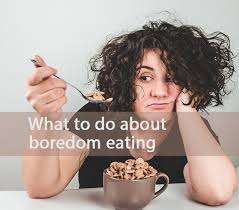
Boredom-induced eating is not about hunger; it is about filling the void when life feels like a dull rerun.
Instead of tackling the monotony with a hobby or a brisk walk, many of us turn to the snack drawer for a quick dopamine fix.
As per a study published in Appetite (2020), boredom often leads to overeating, with calorie-rich snacks like chips and cookies becoming the prime culprits.
Why?
Because they are easy, comforting, and require zero mental effort—exactly what boredom craves.
But here is the twist: this short-lived distraction comes at a long-term cost. Overeating in response to boredom often spirals into poor dietary habits and unnecessary weight gain.
It is like trying to fix a leaky faucet by pouring water into the sink—it does not solve the problem but adds to the mess.
Breaking the cycle requires swapping snack attacks for smarter, more engaging ways to tackle boredom.
Psychological Mechanisms Linking Boredom and Eating
Boredom is an emotional state marked by low arousal and difficulty maintaining focus.
When boredom strikes, eating often becomes a go-to solution, temporarily alleviating discomfort through sensory stimulation and a dopamine boost.
Dopamine, the brain’s “feel-good” neurotransmitter, is released when consuming food, especially indulgent options, creating a sense of reward and satisfaction.
As per a study published in the Journal of Health Psychology (2019), boredom amplifies cravings for “hedonic foods,” such as sweets and salty snacks, which provide immediate gratification.
These calorie-dense, nutrient-poor choices offer a quick escape from monotony but reinforce a habitual cycle of mindless eating.
Over time, this behavior can lead to overeating and poor dietary habits, often without addressing the underlying issue of boredom.
Breaking this cycle requires recognizing the emotional cues behind eating and replacing food with healthier, more engaging activities to combat boredom effectively.
Role of Impulsivity and Self-Control
Impulsivity is a key driver of boredom-induced eating, where the urge to eat stems from a lack of control rather than physical hunger.
Research published in Psychological Science (2021) highlights how boredom disrupts self-regulation, impairing an individual’s ability to resist impulsive behaviors, including overeating.
This response often involves reaching for calorie-dense, highly palatable foods that provide instant gratification, reinforcing a cycle of poor dietary habits.
The study further reveals that individuals with low self-control are especially susceptible to boredom-triggered eating.
Their struggle to delay gratification makes it difficult to resist the temporary pleasure food provides. Over time, this can lead to unhealthy weight gain and associated health risks.
Addressing boredom-induced eating requires strengthening self-control through mindful practices, such as recognizing emotional triggers, delaying immediate responses, and adopting healthier coping strategies like engaging in stimulating activities or opting for nutritious snack alternatives.
These steps are essential for breaking the cycle.

Emotional Eating vs. Boredom-Induced Eating
While emotional eating is often driven by stress, sadness, or anxiety, boredom-induced eating has a distinct trigger: the lack of engagement and stimulation.
Unlike emotional responses to negative events, boredom eating arises from the brain seeking activity or distraction.
However, both behaviors share a common outcome—reaching for energy-dense, nutrient-poor foods, such as sugary snacks, chips, or pastries.
As per a study in Nutrients (2021), boredom-induced eating closely aligns with emotional eating patterns, particularly in the preference for comfort foods high in sugar and fat.
For example, someone feeling stressed might grab a chocolate bar for its calming effect, while someone bored might choose the same snack out of sheer inactivity.
This behavior reinforces unhealthy habits, creating a cycle of mindless eating.
Recognizing the distinction and triggers between boredom and emotional eating is key to managing these behaviors effectively and fostering healthier dietary choices.
Impact of Boredom on Food Choices
Boredom does not just make you more likely to eat—it also impacts what you choose to eat. Instead of reaching for something wholesome, boredom tends to push people toward convenient, ready-to-eat fast food options.
According to a study in Frontiers in Psychology (2020), those feeling bored often lack the motivation to prepare nutritious meals, making processed and high-calorie snacks the go-to choice.
Think about it: how many times have you grabbed a bag of chips simply because cooking felt like too much effort?
During the COVID-19 pandemic, this behavior became even more noticeable.
A report in Nutrients (2021) found that boredom during lockdowns led to a surge in junk food consumption.
Stuck at home with limited activities, many turned to sugary and salty snacks for quick comfort. Binge eating can disrupt your metabolism permanently.
This highlights how boredom not only triggers mindless eating but also fosters poor dietary habits, creating a cycle that is hard to break.

Strategies to Mitigate Boredom Induced Eating
Boredom-induced eating can be managed through targeted strategies:
- Identify Triggers: As per a study in Eating Behaviors (2022), recognizing the specific situations or times when boredom leads to eating is a critical first step. Keeping a journal can help track patterns and identify triggers.
- Engage in Alternative Activities: Finding stimulating activities, such as exercising, reading, or pursuing a hobby, can redirect attention away from food. Research in Health Psychology (2021) shows that engaging in physical activity reduces the urge to eat out of boredom.
- Practice Mindful Eating: Mindful eating helps differentiate between physical hunger and boredom. As per a study in Appetite (2020), practicing mindfulness significantly reduces the frequency of boredom-induced snacking. Mindful eating controls your portion size without you trying too hard.
- Modify Your Environment: Keeping unhealthy snacks out of sight and stocking healthier options like fruits and vegetables can reduce impulsive eating. A study in Behavioral Nutrition (2021) demonstrated that altering food accessibility influences eating behaviors.
- Seek Professional Support: If boredom-induced eating becomes habitual and difficult to control, consulting with a therapist or dietitian can provide personalized guidance and behavioral interventions.
Freequently Asked Questions:
This FAQ is all about understanding how boredom quietly pushes you toward mindless eating habits.
We’ll explore those “I’m not hungry, but still eating” moments in a simple and relatable way.
If you’ve ever opened the fridge just because you had nothing else to do, this guide is for you.
Q-1: Why do I feel the urge to eat even when I’m not physically hungry?
A-1: This usually happens because your brain is looking for stimulation, not food.
When you’re bored, your mind craves something to engage with, and eating becomes an easy, instant solution.
Food provides a quick hit of pleasure, which temporarily fills that mental gap—even if your body doesn’t actually need energy.
Q-2: How does boredom trick my brain into thinking food is the answer?
A-2: Boredom lowers mental stimulation, and your brain starts searching for something rewarding.
Eating—especially snacks high in sugar or salt—releases dopamine, the “feel-good” chemical.
Over time, your brain learns to associate boredom with eating, turning it into a habit rather than a conscious choice.
Q-3: Why do I always reach for snacks and not full meals when I’m bored?
A-3: Snacks are quick, convenient, and require little effort.
When you’re bored, you’re usually not looking for nourishment—you’re looking for distraction.
Snacks provide fast satisfaction without the time or energy needed to prepare a proper meal.
Q-4: Can boredom eating become a daily habit without me noticing?
A-4: Yes, and it often happens quietly. If you repeatedly eat during moments of boredom, your brain starts to expect it.
Over time, it becomes automatic—like grabbing chips while watching TV or scrolling on your phone—without you even thinking about it.
Q-5: Why do I eat more when I’m scrolling on my phone or watching TV?
A-5: These activities reduce your awareness. When your attention is focused on a screen, you’re less mindful of how much you’re eating.
Boredom combined with distraction creates the perfect environment for overeating without realizing it.
Q-6: Does boredom eating affect weight gain even if I eat small amounts?
A-6: Yes, because it adds up over time. Even small, frequent snacks can increase your daily calorie intake significantly.
Since these calories are not driven by hunger, they often go beyond what your body needs, leading to gradual weight gain.
Q-7: Why do I crave unhealthy foods specifically when I’m bored?
A-7: Your brain seeks quick rewards during boredom, and unhealthy foods provide that faster than healthier options.
Sugary and salty foods trigger stronger pleasure responses, making them more appealing when you’re trying to escape a dull moment.
Q-8: How can I tell the difference between real hunger and boredom eating?
A-8: Real hunger builds gradually and can be satisfied with almost any food.
Boredom eating, on the other hand, is sudden and usually focused on specific cravings (like chips or sweets). If you’re only interested in certain foods, it is likely boredom, not hunger.
Q-9: What are simple ways to break the cycle of boredom eating?
A-9: Start by replacing the habit with other activities—like going for a short walk, drinking water, calling a friend, or doing something creative.
The goal is to give your brain the stimulation it’s seeking without turning to food every time.
Q-10: Can creating a routine help reduce mindless eating caused by boredom?
A-10: Absolutely. Having a structured day reduces idle time, which is when boredom eating usually happens.
Planning meals, scheduling activities, and staying engaged can help you stay more mindful of when and why you’re eating.
Bottom Line:
In simple terms, boredom doesn’t just make you feel restless—it can quietly reshape your eating habits without you realizing it.
By becoming more aware of these patterns and finding healthier ways to stay engaged, you can take back control and build a more mindful relationship with food. So prepare healthy meals to combat boredom.
Conclusion
Boredom-induced eating is like opening the fridge just to stare, hoping for excitement that is not there.
It is a common habit, driven by a lack of stimulation and the fleeting pleasure food provides.
Studies confirm that boredom nudges us toward calorie-packed, not-so-nutritious options—think chips, cookies, and anything that doesn’t require effort.
Breaking this cycle means outsmarting your boredom.
Start by spotting your triggers—are you eating because you are hungry, or because Netflix isn’t cutting it?
Replace snacks with activities that engage your mind, like picking up a book or taking a quick walk.
Practicing mindfulness also helps you pause before reaching for that extra slice of pizza.
As studies in Nutrients suggest, understanding why boredom drives eating is the first step.
Pair that awareness with healthier habits, and you will not only curb mindless munching but also build a better, more balanced relationship with food.
References: