

Most of American adults are consuming way too much sugar in their diet. Studies show that the average intake of saccharose is almost twice higher than what is recommended.
High intake of sugar may lead to feeling tired, bad mood, weight gain that is hard to get rid of and numerous other issues. The key to stopping cravings is understanding what causes them.
So, you need to learn how to curb sugar cravings naturally.
This short guide is going to help you identify the hidden reasons behind your love for sweets and show how to go on a diet that is actually working.
Table of Contents
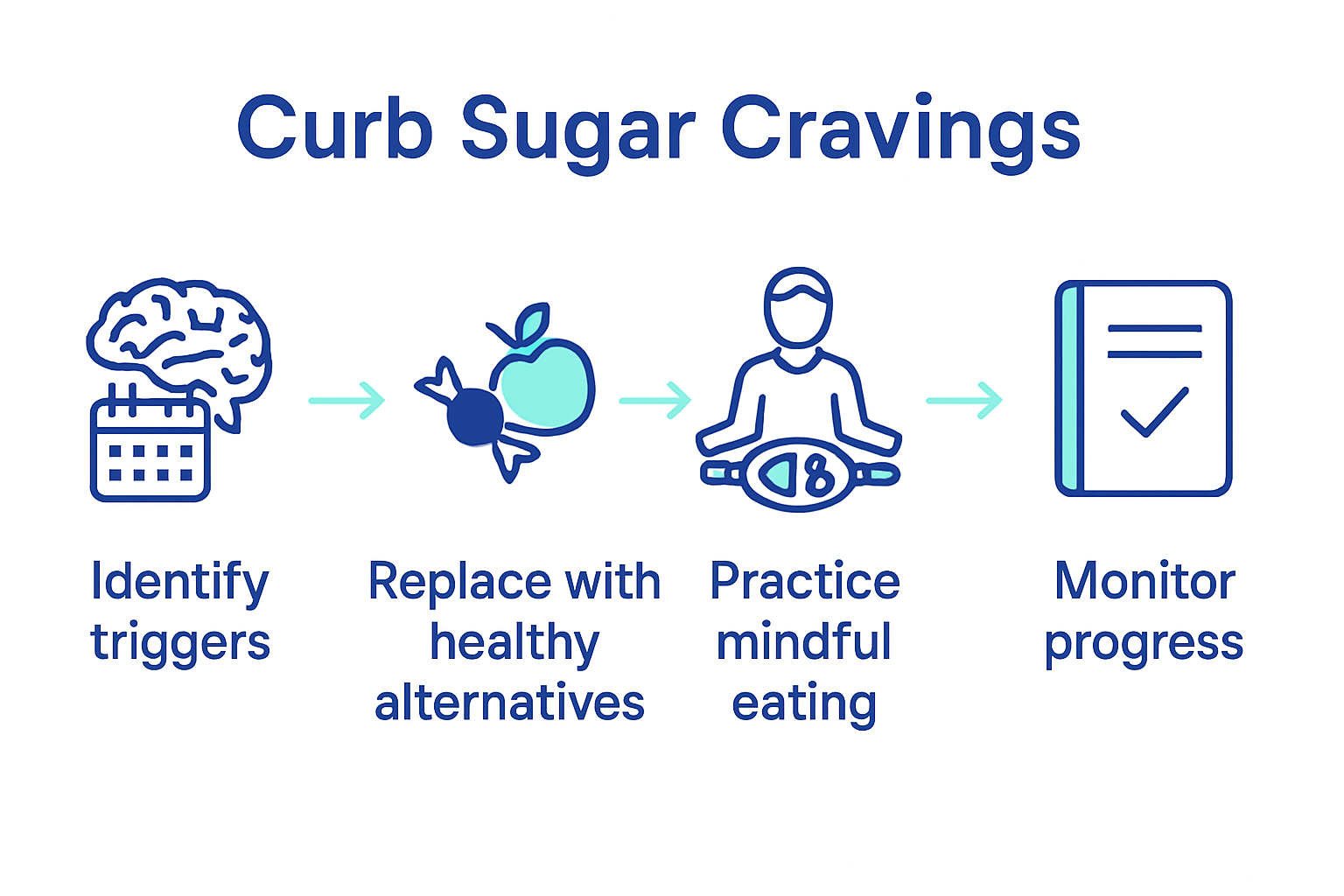
- Step 1: Identify Main Triggers For Sugar Cravings
- Step 2: Replace Sugary Foods With Healthy Alternatives
- Step 3: Balance Meals To Stabilize Blood Sugar
- Step 4: Develop Mindful Eating Habits
- Step 5: Monitor Progress And Adjust Strategies
Quick Summary
| Key Insight | Explanation |
|---|---|
| 1. Identify triggers for cravings | Recognize emotional and physiological triggers like stress, sleep deprivation, and hormonal changes influencing sugar cravings. |
| 2. Replace sugary foods with healthy options | Swap high-sugar items for nutritious alternatives such as fruits, yogurt, and whole grains to satisfy cravings. |
| 3. Balance meals for stable blood sugar | Create meals with protein, healthy fats, and complex carbs to maintain steady energy and reduce sugar cravings. |
| 4. Practice mindful eating | Slow down and focus on your eating experience to enhance awareness and reduce unconscious snacking on sweets. |
| 5. Monitor progress and adapt strategies | Keep track of your sugar intake and adjust your strategies based on observations to optimize your journey towards reducing cravings. |
Step 1: Identify Main Triggers for Sugar Cravings
According to RIVM, sugar cravings are complex responses involving multiple physiological and psychological factors.
Decoding your sugar cravings begins by learning about their underlying reasons. Knowing what causes them can help you overcome cravings and lose weight.
I discovered many interesting facts that can explain your sweet tooth. According to Times of India , there are several common triggers for sugar cravings.
Stress is often a hidden cause of sweet tooth.
When you experience stress, your body generates more cortisol, which increases blood pressure and prompts your brain to crave sweet, salty, or fatty foods.
Another cause is lack of sleep.
When you do not get enough rest, you feel tired, and your body needs more glucose to regain energy. Moreover, female hormones, especially those responsible for menopause or period pain, can also trigger sugar cravings.
To combat sugar cravings, you may want to keep a ‘craving journal. By writing down when you feel the need to eat something sweet, you are more likely to gain insight into your condition and notice patterns.
For instance, you may find that your cravings emerge when you are stressed or tired. This information will help you create a personalized action plan to stop sugar cravings.
Step 2: Replace Sugary Foods with Healthy Alternatives
Successfully overcoming cravings for sweets can be achieved through the replacement of the consumed products with analogs. The blog of the Institute of Blogging Imperial offers several options for changing dietary habits.
First, it is necessary to eliminate those sweets that harm the body and replace them with those that will satisfy the craving for sweetness. For example, sweet soda can be replaced with sparkling water, in which fruits have been crushed. Sweets can be replaced with frozen grapes, berries or other fruits.
In addition, sweet pastries can be replaced with banana bread, protein-rich dishes, air-fried meat or fish. Baked goods can also be replaced with protein-rich Greek yogurt with cinnamon.
A breakthrough approach comes from arXiv research using smart nudging techniques. By strategically positioning healthier food options and making them more visually appealing, you can train your brain to prefer nutritious alternatives.
The key is gradual replacement and creating an environment that supports your health goals. Each small substitution builds momentum toward lasting dietary transformation.

Step 3: Balance Meals to Stabilize Blood Sugar
Stabilizing blood sugar is the key to stop sugar cravings and losing weight. RIVM researchers have discovered that with the right food combination it will be possible to reduce sudden cravings for sugar and avoid blood sugar spikes.
Proteins, healthy fats and complex carbohydrates are the major building blocks for healthy meals that will reduce blood sugar levels and curb cravings.
Adding foods such as chicken, fish, and tofu to your meals can help satisfy hunger and control appetite. On the other hand, healthy fats such as avocado, nuts, and olive oil will slow down the digestion process thus reducing spikes in blood sugar.
Meanwhile, the complex carbohydrates in wholegrain bread and sweet potatoes can provide long-lasting energy without sending your blood sugar into a frenzy. Times of India journal has an interesting article on how to deal with sugar cravings.
The easiest way to create meals that will reduce blood sugar levels is to meal prep with portioned healthy fats, protein, carbs in ratios of 40:30:30. This type of meal prep will provide a satisfying blend of flavors without making you feel overly full.
On the other hand, portion control will make sure that there is no sudden drop in blood sugar levels as well as eliminate cravings for sugar.
Step 4: Develop Mindful Eating Habits
Mindful eating offers you a new way to think about the food you eat that can help you lose weight and lower your sugar cravings. According to the RIVM, mindless eating can be counteracted through conscious eating.
To start eating consciously you will have to slow down with eating, ideally not eating while watching TV or using your phone. Try to take small bites and chew them properly. Focus on the flavors and what your body is telling you. According to the Times of India, it’s also a good idea to do some breathing exercises between bites.
A good exercise to try would be the 15 minute exercise. Before you reach for that piece of cake, wait 15 minutes and ask yourself if you’re really hungry or if it’s your emotions that are longing for some sweets.
By consciously eating, you can lower your chance of mindless eating and create a healthier relationship with food.
Step 5: Monitor Progress and Adjust Strategies
To lose weight, you have to track your progress and make changes to your strategies of cutting down on sugar. According to the article from arXiv, the progress of restricting sugar can be improved by personalizing tracking methods and utilizing smart technology.
You may develop a tracking system that helps you recognize your patterns and make modifications to your strategies as you go along. The tracking system may involve progress monitoring, weighing, and recording all items and ingredients with sugar. You can also note down your emotions and feelings, level of satisfaction with the changes, and cravings.
The blog, Blogs Imperial, recommends an 8-week intervention for analyzing progress through records you make of your progress monitoring. You can also modify your strategies if you detect any patterns with your mood, activities, and progress after 3 weeks of following the diet plan.
Finally, you should remain flexible with your strategies and goals when dealing with a persistent issue like sugar addiction. Note that your body will be giving you signals on how to proceed as you continue tracking your progress.
Frequently Asked Questions:
Q-1: How Can I Stop Craving Sugar Naturally?
A-1: Eat regular meals and combine them with protein plus fiber to reduce sugar cravings.
Americans typically consume high amounts of added sugar compared to recommended levels.
The American Heart Association recommends a maximum of to ≤9 teaspoons for men and 6 teaspoons for women
Ingesting high quantities of protein alongside a balanced, healthy diet reduces sweet cravings.
Consuming 20-30 g of protein combined with 1-3 fiber-grams daily lowers people’s desire for sweets within 7-14 days.
Q-2: What Are The Best Natural Remedies for Reducing Sugar Cravings?
A-2: Prioritize highly hydrating and appetite-suppressing water-rich foods including fruits, vegetables. Also, take regular and good-quality sleep.
In a recent study, sugar addicts reported eating more while sleeping less than 6 hours per night.
Moreover, water deprivation causes sugar cravings as people mistake its symptoms for hunger pains.
Taking cinnamon, cocoa, and nuts regularly also suppresses the urge for candies or sweets.
The NIH recommended adequate sleep duration among adults who struggle with sweet urges.
Q-3: Why Do People Crave Sugar And How To Cure It?
A-3: People become addicted to sweets by consuming them consistently for a prolonged period. Moreover, an unbalanced diet lacks satiety that prompts more intake leading to overweight.
In the U.S., 42% of the population struggles with obesity levels due to the high percentage of added sugars. Hence, people should incorporate whole foods, such as eggs and yogurt, in their diets.
The CDC indicates that what people feed their bodies influences their weight and body mass.
Additionally, breaking away from the cycle of craving involves cutting away junk food from one’s reach.
Q-4: What Foods Lower Cravings for Sugar and Aid Healthy Weight Loss?
A-4: Make sure that a minimum of 10 % of the daily caloric intake consists of proteins found in dairy products.
Males weigh over females in their muscle mass composition when measuring the ideal quantity of proteins needed. Besides, fiber-rich wholegrains and healthy fats promote satiety.
American people eat roughly 15 g of fiber per 2,000-calorie meal which matters lower than the recommended normal level.
The USDA highly encourages a well-balanced diet to promote proper nutrition.
Q-5: What Is The Quickest Way To Balance Blood Sugar And Craving For Sugar?
A-5: Adopt healthier eating habits such as partitioning plates into halves of non-starchy vegetables, 25% proteins, 25% consists of carbohydrates, and healthy fats. Avoid sugar-sweetened drinks that imbalance the blood glucose levels.
Instead of carbonated beverages, drink some plain seltzer that refreshes the body without calories.
Even a brisk walking exercise can reduce post-meal blood sugar spikes.
The American Diabetic Association advises dividing daily carbohydrates and exercising more.
Q-6: What Are Some Natural Remedies Or Solutions That Helps To Curb Sugar Cravings And Emotional Eating?
A-6: Pay attention to emotional cues that make it hard to stop craving sugar. For example, individuals sometimes munch on candies or desserts due to boredom, sadness, or depression.
Learning to pay adequate attention to body signals helps in detecting the actual source of cravings.
Moreover, the most successful way to stop sugar cravings is through a ‘if-then’ plan that prepares people for alternative options to sweet treats.
Mayo Clinic indicates a close connection between emotional eating and stress as emotions like anxiety stimulate the production of more cortisol which leads to sweet cravings.
Q-7: How To Lose Weight Without Getting Rid Of Cravings Completely? Can I Stop Craving Sugar Naturally?
A-7: A good strategy when we want to stop craving sweets is to slowly cut down on the quantity, which might have been the most effective way.
For instance, instead of eating cakes and pastries for dessert during parties, eating an apple or banana with peanut butter suppresses the urge for candy after meals.
A gradual decrease over 2-3 weeks offers numerous health benefits with no major side effects during withdrawal.
The Harvard school of medicine suggests cutting off no more than 50% of added sugars to ease discomfort.
Q-8: Does High-Protein-Diet Prevent Cravings for Sweets?
A-8: When people eat foods with proteins, it suppresses hunger through satiety hormones.
They also avoid late-night snacking as it is not necessary. However, men should consider eating sufficient amounts of this nutrient.
An individual who weighs 65 Kg should take more than 160 g of protein per day.
ACS M supports that a high-protein diet is healthiest and more resistant to obesity development.
Q-9: How Does Adequate Fiber Prevent Sweet Food Craving And Appetite?
A-9: Carbohydrates present in whole-foods prevent sugar cravings by fueling bacteria that manufacture appetite-regulating hormones.
Foods consist of at least 3 g or more of dietary fibers that people can add to their plates for healthy digestion. Moreover, increased fiber intake is good for the heart.
The Cleveland clinic recommends a high-fiber diet that individuals should adopt after stopping eating artificial sweets. In addition, fiber intake reduces overall daily calories leading to weight loss.
Q-10: What Are Some Everyday Habits To Stop Craving Sugar and Increase Metabolism?
A-10: Having breakfast consisting of proteins boosts the body to release the hormone that suppresses appetites.
Hydration is also vital in avoiding excessive calorie intake. It is worth noting that more than 60% of the American diet consists of highly processed foods that increase chances of gaining weight.
People should stock their plates with more healthy snacks than candy wrappers for at least several weeks.
Moreover, adequate exercise aids in healthy metabolism and weight loss.
The WHO indicates that a physically active lifestyle improves health over time while limiting ultra-processed foods.
Q-11: Can Stress And Hormones Induce Sugar Cravings? How Do I Deal With It?
A-11: Stress increases cortisol levels which cause cravings for sweet foods. In female bodies, estrogen fluctuation throughout the menstrual cycle provokes sugar urges.
Such individuals can take short walks, eat some nuts, or engage in a hobby. At least 5-10 minutes of exercising reduces stress levels that otherwise bring about cravings.
NIH acknowledges that when people lack enough sleep, they experience high-cholesterol food desires.
This craving only disappears as soon as they rest adequately during the night.
Q-12: What Are Some Highly Suggested Alternatives To Using Sugar?
A-12: Individuals should try eating whole foods before opting for natural sweeteners.
The best substitute for table sugar is to eat the fruits themselves. For drinks, beverages sweetened with Stevia or Monk Fruit extracts offer the best option.
A good idea would be to cut down on the intake of sucrose rather than completely removing it, over a period of 2-3 weeks.
The U.S.Department of Agricuture encourages the replacement of refined carbohydrates to avoid chronic illnesses.
Q-13: Can You ReTrain Your Taste Buds To Stop Craving Sugar?
A-13: The simplest solution to reducing sugar cravings is to decrease the intake of artificial sweeteners or sucrose.
Under normal circumstances, most people can notice changes in their preferences over a period of 3-5 weeks.
They should try drinking water and switch to sugar-free soda during these cravings rather than eating sweets.
The AHA advises having less than 36 g of added sugars per day for men and 25 g for women.
Q-14: What Drinks Can I Take To Immediately Stop Cravings for Sugar?
A-14: When the urge for sweet things appears, people can drink some cool water or carbonated drinks, plain tea or even coffee if it does not induce heartburn.
Also, protein shakes help satiate the stomach longer and reduce thoughts towards eating candies.
When one replaces one sweetened beverage with another unsweetened drink, it saves 150-empty calories per day.
CDC suggests decreasing the intake of caloric beverages for the prevention of chronic diseases.
Q-15: What Are The Best And Most Efficient Ways To Stop Craving For Sugar To Lose Weight And Reduce Emotional Eating? Are There Scientific Backings To Such Approaches?
A-15: The most effective approach to reducing emotional eating habits and lowering craving sugar is to combine the various methods.
For instance, eating healthy and more balanced provides satisfactory nutrients that reduce urge for sweets in the short term, together with a long-term perspective.
Studies advise exercising and engaging more in emotional regulation activities such as yoga, meditation, or journaling, amongst other.
Over time such practices reduce more than 10% of the average calorie intake daily and lead to desirable weight loss over time.