
Over 60 percent of american adults are seeking diets that will help them achieve lasting health and weight management, however there is a great amount of confusion when it comes to high protein diets.
There are often stories going viral, discussing either the positive or negative effects of protein on the human body, making it difficult to distinguish between the two. So understanding high protein diet benefits is vital for your health.
Understanding the science behind them can help you learn what you should and shouldn’t be doing when it comes to high protein diets and debunk some of the most popular myths surrounding them.
Table of Contents
- Defining a High Protein Diet and Common Myths
- Types of High Protein Diets Explained
- How High Protein Diets Promote Weight Loss
- Muscle Building and Metabolic Health Effects
- Potential Risks and Safety Considerations
- Comparing High Protein Diets With Alternatives
Key Takeaways
| Point | Details |
|---|---|
| High Protein Diet Definition | A high protein diet typically requires 20% to 35% of daily calories from protein sources, promoting overall muscle maintenance and metabolic function. |
| Myths and Misconceptions | Contrary to common beliefs, significant protein intake can come from plant sources, not solely animal products. |
| Weight Loss Mechanisms | High protein diets improve body composition by increasing satiety and thermogenesis, leading to sustainable fat reduction. |
| Safety Considerations | Consulting healthcare professionals is crucial to manage potential risks associated with excessive protein intake and maintain nutritional balance. |
Defining a High Protein Diet and Common Myths
A high protein diet is a nutritional program that is aimed at increasing the amount of protein in one’s daily diet. This diet involves eating foods that provide between 20 and 35% protein per day.
High-protein diets encourage the consumption of foods such as legumes, lean meat, fish, eggs, and dairy products.
The role of proteins in the body needs to be understood since they are essential nutrients.
There are some common high protein diet myths that people blindly believe in. Some of these myths have been debunked by science. For example, anyone can eat proteins from plants and not just from animal flesh.
A high protein diet contains a variety of foods that provide the necessary nutrients needed by the body. Therefore, it should not be assumed that to have a high protein diet one needs to eat a lot of meat.
It is essential to comprehend the different facts about proteins. There are many health benefits of a high protein diet. However, a high protein diet can also be harmful to the body.
For example, eating too much protein can be unhealthy for some people. The key issue is that people need to balance their dietary intake depending on their metabolic needs.
Although proteins are necessary nutrients that the body requires, too much of them can be detrimental to health.
To this end, there is a need to consider various facts about high protein diets to ensure that the dietary changes that people make are healthy.
Some of the facts that people should consider when starting a high protein diet include the following:
• In case there are any underlying conditions it is essential to consult a doctor before making any dietary changes
• It is necessary to eat lean meat.
• One should consider eating a variety of foods to ensure a balance in the nutrients that one is getting.
• In addition, people should pay attention to how their bodies react to different foods.
• Lastly, people should avoid overeating and should not take a restrictive diet.
Types of High Protein Diets Explained
High protein diets can be of several types. They are all different, although they have the same purpose – losing weight.
They might differ in the way of proceeding, products allowed to use, and nutrition principles.
It is important to understand the differences between high protein diets in order to choose the most suitable one and achieve the goal of losing excess weight.
There are more options for a high-protein diet than a person might expect.
Some diets allow eating more meat and eggs, while others require including more healthy food in the daily diet.
There are also diets that have certain peculiarities and rules, like the Dukan Diet which has 4 stages and allows eating specific products on each stage in order to lose weight.
The Stillman Diet is another example of a productive high-protein diet. It requires decreasing the number of carbohydrates consumed and eating lean meat and drinking a lot of water. Moreover, there are different kinds of high-protein diets that have a lot of similarities and allow choosing preferred products within the diet.
The most known examples are a keto diet, paleo diet, a zone diet, etc.
High-protein breakfast is a good start to build up a solid high protein meal plan. Now people who want to go on a high-protein diet know what options they have and can make the right choice depending on their preferences and needs.
The most important things to consider before making a choice and building the diet plan are current health issues, body type, weight loss goals, and preferred food.
How High Protein Diets Promote Weight Loss?
High protein diets represent a strategic nutritional approach to weight management that goes beyond traditional calorie restriction.
Clinical research demonstrates that increasing protein intake can significantly impact body composition, reducing fat mass while preserving lean muscle tissue.
This metabolic advantage makes high protein diets different from the traditional methods of weight loss, providing a more complex way of moderate fat reduction.
The ways of high protein weight loss can be various, as they are connected with the metabolic processes.
The consumption of protein-rich foods leads to the production of gastrointestinal hormones, which are responsible for the feeling of fullness and increase the diet-induced thermogenesis.
As a result, one can burn more calories during digestion processes, which will contribute to a better weight loss outcome.
Protein foods for weight loss are the essential part of any balanced diet, helping to maintain the proper function of the human body.
High protein nutrition benefits weight loss in other ways as well.
The studies on the effects of high protein diet on glucose tolerance have shown that it might have positive results on patients with impaired glucose regulation.
Proteins help to maintain satiety and provide a person with energy throughout the day, preventing overeating and unnecessary calorie consumption.
The main principles of high protein diet, helping to lose weight include choosing the right kinds of protein, eating them in the proper amount, combining protein-rich foods with exercise, measuring the daily calorie intake and maintaining a healthy balanced diet.
Muscle Building and Metabolic Health Effects
High protein diets are an important feature of muscle growth and metabolism. They provide a wide range of benefits beyond basic nutrition.
Research into the links between protein and metabolism provides a detailed insight into the ways that a good diet can improve the body.
Muscles are an active part of the body’s metabolism, and they respond to increases in protein by initiating a number of beneficial changes.

Metabolic processes triggered by the utilization of high-protein diets contain numerous beneficial aspects. Resistance exercises and the consumption of protein increase the process of muscle protein synthesis, contributing to an enhanced resting metabolic rate.
As a result of the introduction of a protein-rich diet, the body’s ability to maintain muscle tissue, which is constantly burned, is improved, thus increasing muscle mass.
This effect is beneficial for those who want to achieve weight loss or improve their body structure.
High-protein diets play an important role in metabolic health.
A study conducted to monitor blood sugar levels indicates an increase in effectiveness against the background of the use of such a diet among patients diagnosed with metabolic syndrome.
Proteins are beneficial for regulating blood sugar levels and insulin production; therefore, they are helpful in the prevention and control of type 2 diabetes.
A number of useful effects of increasing the share of protein in the daily diet of a person were presented.
In addition, practical recommendations for implementing this type of dietary changes were given. These include the choice of natural products, the use of protein before workouts, the constant presence of protein in the daily diet, consistent training, and monitoring of the state of metabolism.
Potential Risks and Safety Considerations
Although high protein diets have many health benefits, they can also present potential risks and safety concerns. Research reveals that scientific understanding of protein’s effects on the human body is not as clear cut as previously believed.
There are a number of different potential risks and safety concerns that should be thoroughly considered before embarking on a high-protein diet.
Numerous studies exploring the potential risks and safety concerns associated with high protein diets have been carried out.
These studies strongly indicate that high protein diets can pose potential health risks and safety concerns for the kidneys, liver, and cardiovascular system.
Those with preexisting conditions should carefully consider the potential risks and safety concerns associated with high protein diets and consult with their doctor regarding the most appropriate method of maintaining a healthy and well rounded diet.
In addition to general health concerns, those considering a high protein diet should be mindful of the potential risks and safety concerns associated with nutritional imbalances.
High protein diets run the risk of creating nutritional deficiencies in other food groups. High carbohydrate, high fiber, and nutrient dense foods such as fruits, vegetables, and whole grains are often consumed in inadequate amounts on a high protein diet.
Nutritional imbalances created by high protein diets should be avoided, as they can be detrimental to one’s health. Those considering a high protein diet should consult with a professional to ensure that they create a balanced diet that adequately provides their body with all of the nutrients that it needs to function at its best.
Those considering a high protein diet should be mindful of the following potential safety concerns and take them into consideration before beginning the diet:
- Seeking the advice of a medical professional prior to beginning a high protein diet
- Consuming a variety of protein sources
- Monitoring personal health
- Maintaining a balanced diet
- Drinking plenty of water
- Undergoing regular medical check ups
- Regulating protein consumption based on personal health needs
Comparing High Protein Diets With Alternatives
Nutritional approaches vary widely in their philosophy, methodology, and potential health outcomes, with high protein diets representing just one strategic framework for dietary management.
Unlike traditional weight loss strategies, high protein nutrition emphasizes macronutrient composition and metabolic optimization rather than simple calorie restriction.
This nuanced approach distinguishes protein-focused diets from more conventional eating plans that might rely solely on reducing overall food intake.
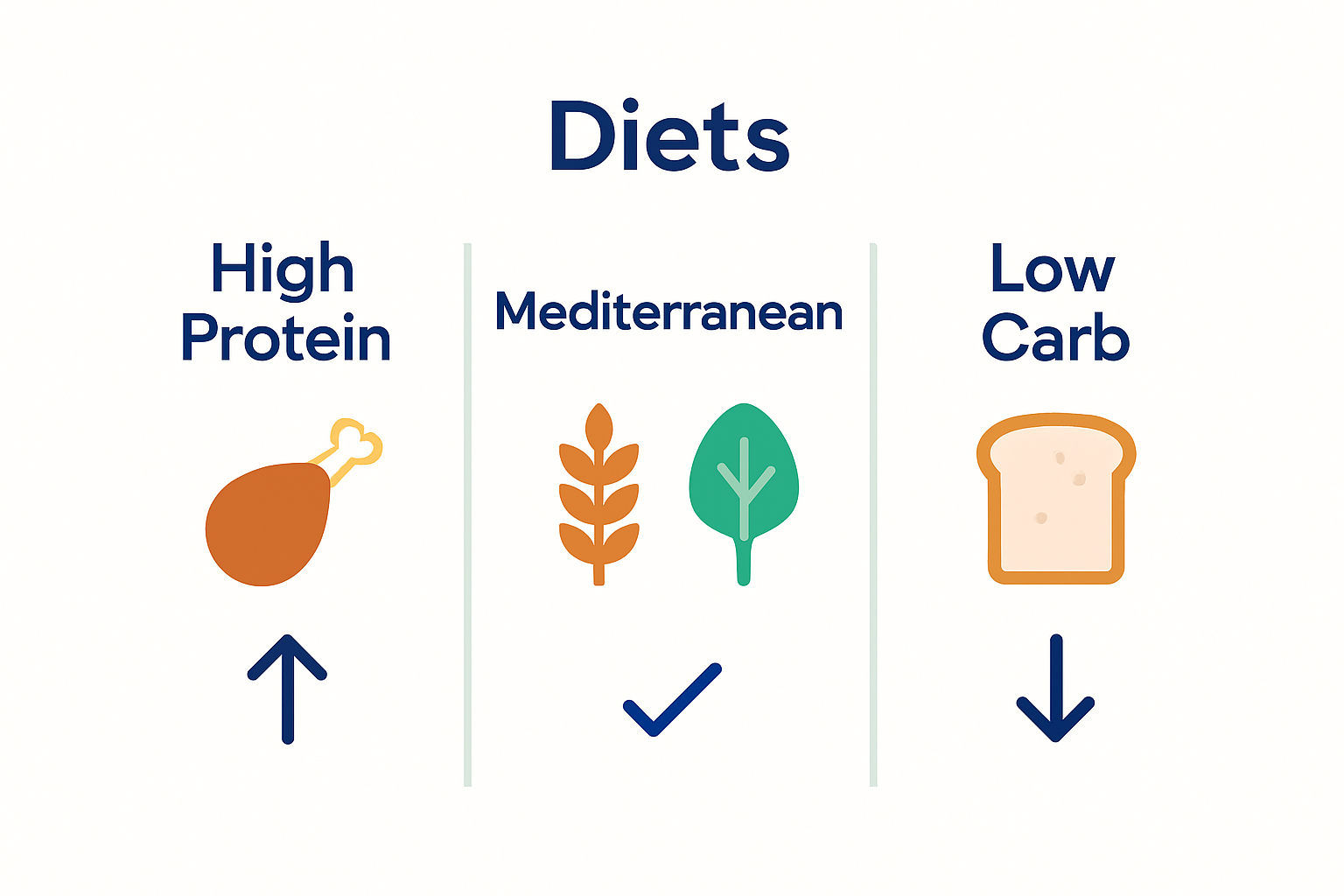
Specialized diet strategies like the Protein Power diet demonstrate the diverse landscape of nutritional interventions. Some alternative methods, such as the famous Scarsdale Diet, imply extreme limitation of calories intake and a rational choice of foods to lose weight.
High-protein diets are characterized by the care for the quality of proteins, their caloric content, and the intensity of their consumption, while other principles, such as restriction, are not compulsory and may be even dangerous for health.
Therefore, the description of diets that presuppose the ingestion of a certain number of calories and the use of particular foods differs from the characteristics of the alternatives in multiple aspects.
Diet products for healthy weight loss are essential for both types of the diets, but animal proteins help to maintain the muscle mass in people on calorie-restricted nutrition, which is usually the main difference between low-calorie diets and high-protein ones.
The extreme methods, such as low-fat, low-carb, or low-calorie diets, allow to lose weight rapidly but they fail to maintain the results because of the failure to provide the body with all nutrients; thus, they are usually not considered as the best way to lose weight.
However, some factors are crucial for the comparison of diets and should be taken into consideration when choosing the method of weight loss:
1. The effect on the metabolism;
2. The possibility of maintenance of the result;
3. The caloric content of the diet and the balance of nutrients;
4. The risk of health issues;
5. The response of the human body;
6. The complexity of following the diet;
7. The level of scientific proof of the method’s effectiveness.
Frequently Asked Questions:
A high protein diet is not only useful in terms of gaining muscle mass, but it also helps to achieve the state of balanced nutrition in a more efficient manner. It creates a nutritious and well-rounded flow of food into the human body
Protein is beneficial because of its vast range of effects, starting with a sense of satisfaction after eating and going down to the improved metabolism.
Incorporating it into the daily diet can help in making small, yet effective changes and hence, contribute to a more wholesome lifestyle with ease.
Q-1: Why does the high-protein diet create such a feeling of mental satisfaction when you haven’t eaten a lot yet?
A-1: This phenomenon is explained by the fact that protein intake triggers the release of certain hormones that are responsible for the feeling of satiety. This feeling can come from nowhere and, in fact, is only a result of complex biochemical processes triggered by eating a meal high in protein.
Therefore, the process of thinking about food and eating is interrupted by the sensation of being full that protein provides. This, in turn, results in a conscious decision to stop eating. And the state of satisfaction replaces potential cravings.
Q-2: Can I improve my metabolic rate on a high-protein diet without making a huge effort?
A-2: Indeed, one can make small and effortless changes towards a healthier lifestyle. For instance, a high-protein diet will improve the metabolic rate almost imperceptibly.
The process is absolutely safe and free since no additional effort is required from the person who decides to incorporate more protein into their diet. However, the results of such dietary changes can be pretty significant over time.
Q-3:Why does a high-protein diet help to reshape the body?
A-3: As we already mentioned, protein intake can have a positive impact on muscle tissue and weight loss. Thus, a high-protein diet helps to reshape the body by assisting in the process of weight loss.
The diet also aids in preventing the loss of lean muscle tissue, which, in turn, makes the body more toned and hence more attractive. So, the high-protein diet allows a person to not only lose weight but to improve their body composition as well.
Q-4: Can a high-protein diet help reduce cravings, particularly at night?
A-4: One of the peculiarities of a high-protein diet is that it helps to resist cravings in situations when a person doesn’t really want to eat yet. So, in that case, one can either delay the meal or substitute it for a much healthier alternative.
Proteins help to keep the body’s sugar levels stable. Therefore, a high-protein diet helps to reduce cravings both at night and during the day.
Q-5: Can a high-protein diet affect the body’s response to stress?
A-5: Indeed, it can, since it helps to keep the body in an optimal condition and helps it resist external and internal stress factors. A high-protein diet assists the body in the synthesis of new hormones and molecules needed for the normal functioning of the body.
When the body cannot resist external stresses, its internal mechanisms help it to cope with the harmful effects of the environment. Thus, the high-protein diet supports the activity of the body’s own stress resistance mechanisms.
Q-6: Why does a high-protein diet help when there is not enough caloric intake? Why is there no feeling of fatigue?
A-6: The high-protein diet helps to prevent the dangerous drops of blood sugar, replacing them with periods of stable energy. So, the feeling of fatigue and the need for more calories are prevented. The high-protein diet forms the basis for a healthier and more balanced flow of calories into the body.
As a result, the energy level remains the same throughout the day, without any painful fluctuations in fatigue throughout the day.
Recommended
- The Essential Guide to the Importance of Protein Intake – LeanAndFit
- 7 Best Protein Sources for Weight Loss and Healthy Living – LeanAndFit
- 8 Best Protein Sources for Healthy Weight Loss Success – LeanAndFit
- 7 Best Protein Sources for Healthy Weight Loss Success – LeanAndFit
- GREEN VEGETABLE PROTEINS’ IMPORTANCE TO YOU VOCAL HEALTH – TMRG Solutions
- Complete Guide to Protein Source for Dogs
- Why Trust LeanAndFit.info?
- For educational purposes only