
Over eight out of ten American adults attempt to lose weight every year. However, many of these people have difficulty finding the right approach for them.
With fads and new technology constantly arising, the actions taken to monitor and assess diets are what set apart those who only lose a few pounds from those who permanently drop weight.
The following information will help provide insight on methods that have been proven effective for American’s to remain on track and to help them make tracking food easier and more accurate.
Basically, you learn how to track food intake naturally.
Table of Contents
- Step 1: Set Up A Food Tracking Method
- Step 2: Log Daily Meals Consistently
- Step 3: Review And Categorize Intake
- Step 4: Analyze Patterns And Adjust Habits
- Step 5: Monitor Progress Toward Goals
Quick Summary
| Main Insight | Explanation |
|---|---|
| 1. Select a sustainable tracking method | Choose a food tracking approach that fits seamlessly into your daily life, whether it’s a digital app or a paper journal. |
| 2. Consistently log your meals | Record every item you consume accurately and honestly, aiming for five or more days of tracking each week. |
| 3. Categorize your food intake | Organize your logged meals into categories to identify nutritional patterns and make improvements in your diet. |
| 4. Analyze patterns for better choices | Examine your eating behaviors to spot triggers for unhealthy choices, allowing for more intentional eating habits. |
| 5. Monitor diverse progress indicators | Track various metrics such as body measurements and energy levels, not just weight, to assess your overall health improvements. |
Step 1: Set Up a Food Tracking Method
Creating a system for tracking foods is the first step in learning how to lose weight successfully. Studies have shown that maintaining a food log is an essential method for long-term weight management.
First, you should pick a tracking method that you know you will stick to
There are numerous digital applications that allow the easy tracking of food consumption. Alternatively, you may prefer the old-fashioned method of using a paper diary. It has been proven that choosing the right strategy might increase the odds of weight loss.
Here are some tracking techniques you may want to consider:
- Use a barcode scanner application
- have a food diary notebook in the kitchen area
- snap a picture of every meal,
- or set daily reminders as a prompt to log.
All things considered, the essential point is to find a method that is right for you. Logging food has been found to be an effective tool in weight management and changing the way you track your diet can make all the difference.
Choose a tracking strategy that is right for you and that you know you will maintain on a long-term basis. Now that you have set up a system for logging your food, it’s time to learn how to use it correctly and set yourself up for success in your weight loss journey.
Step 2: Log Daily Meals Consistently
Keeping an accurate log of everything you eat is vital to any successful weight loss endeavor. Maintaining a food log can make all the difference in the world when it comes to tracking your weight loss.
How To Make A Good Daily Food Log
In order for you to make an accurate log, here are some things you will need to do:
Record everything you eat with absolute honesty and precision
Studies have shown that those who have kept track of their daily dietary intake five or more days a week have been proven to lose more weight
Write down the following:
- What and how much you ate
- How many calories were in what you ate
- The exact time you ate
- Macronutrient levels (Proteins, Carbohydrates, Fats)
- How hungry you were before you ate and how hungry you were after you ate
When considering how to make a good daily food log, remember to write your entries down as soon as you finish eating for maximum accuracy.
Having a meal plan can help you keep track of your food easier and can make sure you have everything you need to put together a good daily food log.

As you develop this habit, you will create a powerful tool for understanding your eating patterns and making informed nutritional choices that support your weight loss goals.
Step 3: Review and Categorize Intake
Reviewing and categorizing your food intake is an important exercise that helps understand what one eats and how they can improve their habits to begin losing weight. Modern technology allows people to track their diet and nutrition digitally and efficiently.
First, it is essential to sort the meals and mark them according to their type: proteins, complex carbohydrates, vegetables, fruits, and other foods. It is possible to sort this data and monitor what and when you eat using mobile technologies.
The following factors are worth paying attention when reviewing and categorizing one’s food intake:
- The balance of the main components (proteins, carbohydrates, fats)
- Nutritional content of each dish
- Calorie content in portions of different food items
- Food items that need to be limited or excluded
- Emotional eating triggers
When sorted out, these factors will allow you to see the balance and nutritional content of each meal. In addition, this will help identify which foods in your diet are most beneficial for weight loss and which are the opposite.
It will also become clear how much of a particular product is needed to get the required number of calories and maintain a healthy balance of food groups per day. Thus, tracking and categorizing your diet will help you see the big picture and make the right choices.
Step 4: Analyze Patterns and Adjust Habits
Interpretation of the dietary data is the key to weight loss success. Modern electronic food diaries with immediate analysis feedback are the instruments which allow addressing the issue.
First, it is essential to analyze the existing food patterns for possible changes. Some people tend to eat more when they experience certain emotions, such as sadness, stress, or boredom, or at particular times of a day. Lifestyle change programs often recommend staging events around problem triggers.
Consider this review strategy and prioritize the items below:
- Ask yourself if there are any emotional eating triggers
- Track stress-related eating patterns
- Define if you tend to overeat at certain times of a day
- Portion size assessment
- Count how often you eat healthy and unhealthy foods
After the weak spots in your dietary habits are identified and analyzed, address them one by one, replacing bad patterns with healthier alternatives in terms of lifestyle change. Such gradual improvements will have a beneficial impact on your weight.
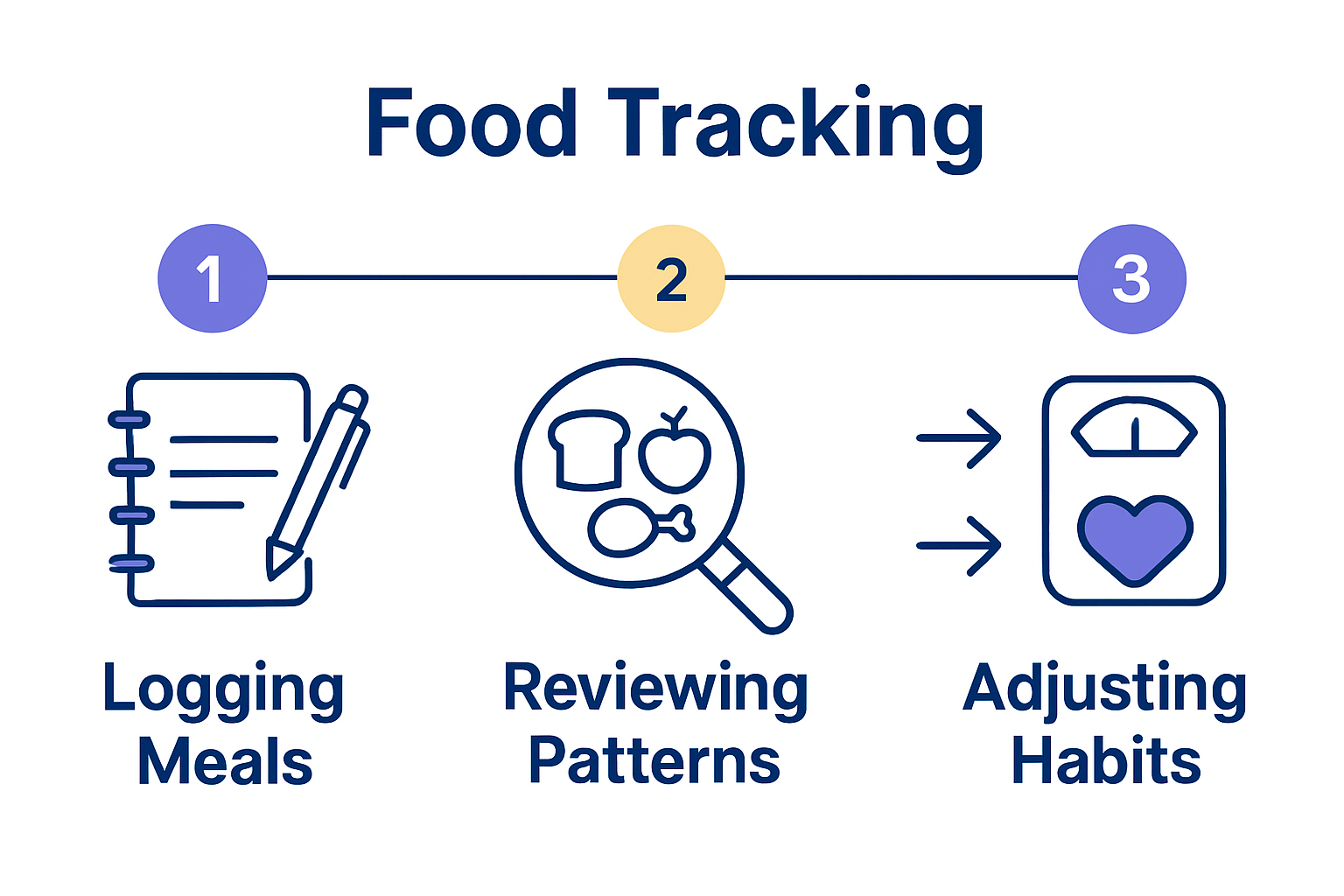
Your task is to reshape your relationship with food in order to lose weight.
By analyzing your patterns of consumption, you will be able to arrive at a personal strategy for weight loss.
Step 5: Monitor Progress Toward Goals
Tracking progress in your quest to lose weight should not be done by only using a scale. The guidelines for maintaining a healthy weight state that one should monitor their progress in a variety of ways, instead of only using the number on the scale
Create a list of things that you can do to monitor your progress
Methods of self monitoring of diet advise to keep track of other things in addition to the number on the scale.
You can track items such as:
- Body measurements
- Photos
- How you feel
- Clothes that fit
- Physical performance
- Resting heart rate
- How well you sleep
Set up goals to check your progress every two to four weeks. A fitness tracker can help you measure your progress in many ways, besides only the number on the scale. The guidelines for maintaining a healthy weight recommend that you look for ways to measure your progress, besides how much you weigh.
The changes in your body can appear at different times and sometimes there may be weeks that go by with little or no changes. However, it is important to continue to try and stay healthy and fit.
Take Control of Your Weight Loss Journey with Mindful and Conscious Eating
Tracking your food intake naturally is a huge part of effective weight loss but it can be disheartening.
If you are having trouble with meal logging and understanding your eating patterns, you are not alone.
Many find that developing healthy habits around food tracking, recognizing emotional eating triggers and analyzing their eating patterns helps them achieve their goals.
The key is to develop a system that works for you and helps you to make educated nutritional choices.
Discover how to make food tracking and mindful eating work for you by learning expert tips and lifestyle changes at Mindful Eating – LeanAndFit.
Learn how to adopt Conscious Eating – LeanAndFit habits that will help guide you through a new relationship with food. Start small and develop healthy daily habits that will assist you in taking charge of your weight loss and overall health.
Visit leanandfit.info today to access trusted resources, meal planning guides, and motivational insights that can help you achieve natural and sustainable weight management results.
Frequently Asked Questions
- Master Weight Loss Journaling: Transform Your Health Journey – LeanAndFit
- How to Maintain Weight Loss: Sustainable Strategies Revealed – LeanAndFit
- Master Mindful Eating Practices for Weight Loss Success – LeanAndFit
- Weekly Meal Planning Tips for Weight Loss Success – LeanAndFit
- Grain-Free Dog Food for Weight Loss | Low-Fat & Vet-Approved
- Why Trust LeanAndFit.info?
- For educational purposes only