

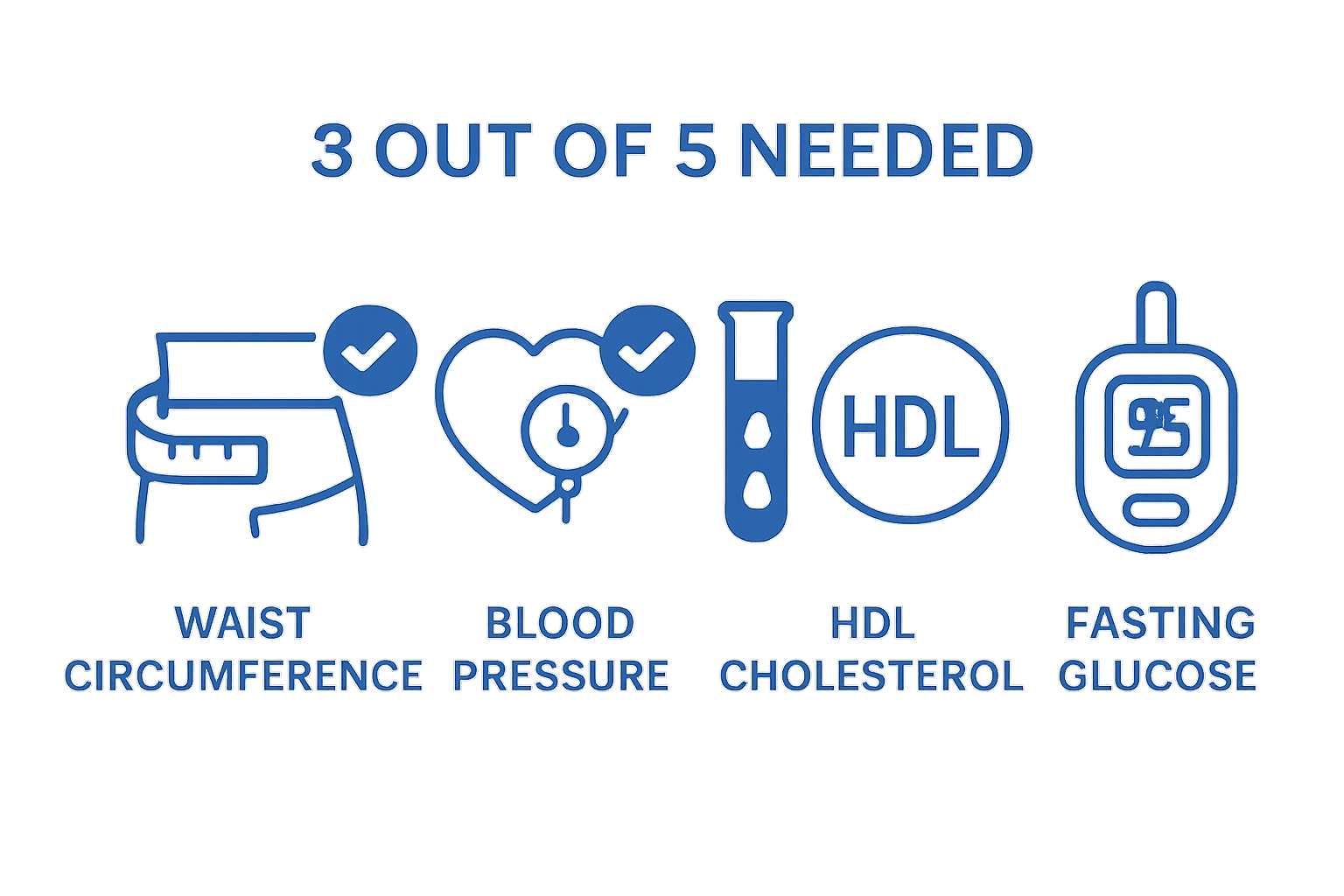
Metabolic syndrome is diagnosed when a person meets at least three of five commonly used criteria: increased waist circumference, elevated blood pressure, high triglycerides, low HDL cholesterol, and elevated fasting blood glucose.
These risk factors can occur together and increase the risk of type 2 diabetes and cardiovascular disease.
However, identifying these risk factors provides an opportunity to improve them.
Appropriate lifestyle changes, regular monitoring, and medical treatment when needed can help manage metabolic syndrome and reduce long-term health risks.
What Is Metabolic Syndrome?
Metabolic syndrome is diagnosed when a person has three or more of five related risk factors that involve measuring waist circumference, taking blood pressure, and conducting blood tests to measure triglycerides, HDL cholesterol, and fasting blood glucose levels.
The key factors are associated with regulation of blood sugar levels, fat metabolism, and cardiovascular activity. The syndrome involves the interactions of physiological systems, and insulin resistance and abdominal obesity are common abnormalities that contribute to it, although it can also be caused by genetic, medical, environmental, and lifestyle factors.
Having just one abnormal factor is not enough to diagnose metabolic syndrome. However, it may still require clinical evaluation.
What Are the Five Diagnostic Criteria for Metabolic Syndrome?
Health care professionals typically evaluate five measurements. According to commonly used adult criteria, people have metabolic syndrome when they have at least three of the five.
Increased Waist Circumference
A larger waist circumference may indicate excess abdominal fat, which is associated with insulin resistance and cardiovascular risk.
Common US thresholds are:
Men: waist circumference greater than 40 inches (102 cm).
Women: waist circumference greater than 35 inches (88 cm).
These cutoffs do not apply to everyone. Health care professionals may use different thresholds depending on the patient’s ethnicity and the diagnostic criteria that they follow.
Blood Pressure
Blood pressure of 130/85 mmHg or higher is one of the commonly used criteria. A history of treatment for high blood pressure may also be considered when applying the diagnostic criteria.
High blood pressure often causes no noticeable symptoms, which is why routine measurement is important.
High Triglycerides
Triglycerides are a type of fat in the blood. 150 mg/dL or higher is a commonly used threshold.
High triglycerides can be a part of other metabolic abnormalities and increase the risk of heart disease.
Low HDL Cholesterol
HDL cholesterol is often called “good” cholesterol because it carries cholesterol away from tissues to the liver.
Common thresholds are:
Men: HDL cholesterol below 40 mg/dL.
Women: HDL cholesterol below 50 mg/dL.
A clinician will also look at the full lipid profile and whether the person is already being treated.
Elevated Fasting Blood Glucose
Fasting blood glucose of 100 mg/dL or higher is a commonly used criterion. This range also includes prediabetes, but that diagnosis is not the same as metabolic syndrome.
A health care professional will also consider whether the person takes medication to reduce blood glucose levels.
For more detail, read about the link between obesity and decreased HDL cholesterol.
Important: the values are screening and diagnostic criteria, but they are not a substitute for a medical assessment. Do not try to diagnose yourself based on a single test result or a waist measurement.
What Are the Symptoms of Metabolic Syndrome?
Metabolic syndrome often does not exhibit any symptoms or signs. A person may have high blood pressure, triglycerides, blood sugar, or low HDL levels, but still feel well.
They may have a larger waist circumference than normal, but it cannot be diagnosed based on this symptom alone.
Fatigue, lack of weight loss success, and cravings are sometimes linked to it, but are not considered to be diagnostic criteria, and can have many causes.
Since it can have few or no symptoms that are easily noticeable, it is important to go to regular screenings and have blood tests done, especially for those with risk factors.
What Causes Metabolic Syndrome?
There is more than one reason. Metabolic syndrome arises due to the interaction of several factors. However, the impact of any particular factor may vary from person to person.
Insulin Resistance
Insulin is a hormone that helps glucose move from the bloodstream into cells, where it can be used for energy. When cells become less responsive to insulin, the pancreas may produce more insulin to help maintain normal blood glucose levels. Over time, blood glucose can rise if the body cannot compensate adequately.
Insulin resistance is commonly associated with metabolic syndrome, but it is not one of the five standard diagnostic criteria.
Learn more about how obesity causes hyperinsulinemia in our related guide.
Excess Fat around the Belly
Excess abdominal fat is associated with reduced insulin sensitivity, abnormal blood lipid levels, and changes in inflammatory processes.
A person’s weight is not the sole indicator of their metabolic health. A healthcare provider evaluates a person’s metabolic health based on waist circumference, blood pressure, blood tests, family history, and more.
Lack of Physical Activity and Unhealthy Eating Patterns
Not getting enough exercise and consuming more energy than the body uses over time can contribute to weight gain and several risk factors for metabolic syndrome.
At the same time, being inactive or chronically consuming more calories than burned is not the only reason for developing the condition. Genetic predisposition, aging, sleeping patterns, certain medications, and a lot of other factors can contribute to the development of metabolic syndrome.
Genetics, Aging, Medications, and other Conditions
Having a close relative with type 2 diabetes or cardiovascular disease raises the risk of developing metabolic syndrome. The risk of metabolic syndrome generally increases with age.
Certain medications can affect body weight, blood pressure, or blood glucose and lipid levels. A healthcare professional can review a person’s medical and family history, along with their medications, to identify relevant risk factors.
Learn more about how prolonged sitting impacts metabolic health and why regular movement matters.
Why Does Metabolic Syndrome Matter?
Metabolic syndrome matters because several risk factors occurring together can increase the likelihood of developing serious health conditions.
Having several metabolic risk factors together is associated with a higher risk of:
Type 2 diabetes – due to reduced insulin activity and increased blood sugar levels.
Heart disease – high blood pressure and abnormal blood lipid levels contribute to cardiovascular risk. When these factors occur alongside other metabolic abnormalities, the overall risk may be higher.
Stroke – high blood pressure increases the risk of stroke.
Kidney disease: High blood pressure and diabetes can damage the kidneys over time and increase the risk of chronic kidney disease.
Metabolic dysfunction-associated steatotic liver disease (MASLD) – a condition previously known as nonalcoholic fatty liver disease (NAFLD), which is characterized by the accumulation of fat in the liver cells and is associated with metabolic syndrome.
However, metabolic syndrome does not mean that a person will necessarily have all the listed complications. It only indicates the need for monitoring and measures to prevent disease.
How Is Metabolic Syndrome Diagnosed?
A healthcare professional evaluates medical history, family history, physical measurements, and laboratory results.
An evaluation may include:
- Waist circumference.
- Blood pressure.
- A fasting blood glucose.
- Triglycerides and HDL cholesterol.
- Review of medications and other medical conditions.
The healthcare professional may perform additional tests to help diagnose diabetes, assess the risk for cardiovascular disease, and evaluate other health problems.
Metabolic syndrome is not diagnosed on the basis of symptoms. A single abnormal laboratory finding does not confirm the diagnosis.
If you have multiple risk factors for metabolic syndrome, talk to your healthcare professional about them. Don’t wait until you have symptoms.
How Is Metabolic Syndrome Treated?
Treatment focuses on managing individual risk factors and reducing the likelihood of future complications.
Enhance the quality of the diet
A balanced dietary pattern can help improve blood pressure, blood glucose, and cholesterol levels.
Some adjustments may involve:
- Consuming more vegetables and fruits.
- Eating more beans, lentils, whole grains, and other high-fiber foods.
- Adding lean meat and other low-fat dairy products to the diet.
- Opting for unsaturated fats as much as possible.
- Reducing the amount of refined sugars, processed foods, and sodium.
Portion sizes and overall energy intake should be adjusted to individual needs
It is important to note that there is no particular product that can help cure metabolic syndrome. The emphasis should be on the quality of the diet, not on individual components.
For related guidance, see how processed foods contribute to weight gain.
Encourage physical activity
Regular physical activity can support weight management, blood pressure control, and cardiovascular health. Many adults should aim for at least 150 minutes of moderate-intensity aerobic activity per week, adjusted to their abilities and medical circumstances. Strength training can also be beneficial.
Walking, running, swimming, and biking are some examples of aerobic activities that can be performed regularly. People with health conditions or those who have not been physically active for a long time should consult their healthcare professional before starting a new exercise routine.
Making adjustments to the weight, if needed
People with excess body fat may benefit from weight management. The approach should be individualized, sustainable, and avoid extreme weight-loss measures.
Altering the waist size and body weight in accordance with recommendations and laboratory tests can reduce the risk of many conditions. However, it is important to note that changes in the body should be examined by a healthcare professional.
Pay attention to sleep patterns and reduce stress levels
Irregular sleeping patterns and extreme stress levels may disrupt normal metabolism and worsen health indicators. Addressing sleep problems and managing stress can complement other healthy lifestyle measures.
However, a person should not attempt to address these issues as the sole problems in metabolic syndrome. If irregular sleeping patterns persist, a person should consult a healthcare professional.
A more detailed guide to sleep deprivation effects and chronic stress management can be found in our article on how chronic stress impacts cortisol levels and weight gain.
Consider medications, if needed
Lifestyle adjustments are essential but may not be enough in certain cases. A healthcare professional may prescribe medications tailored to the person’s specific conditions and risk factors to reduce blood pressure and cholesterol and reduce blood sugar levels. The choice of medication depends on the individual’s measurements, medical history, and diagnosed conditions.
Do not change or stop prescribed medication without consulting your healthcare professional, even if your test results improve.
Can Metabolic Syndrome Be Reversed?
Metabolic risk factors can be improved, and some people may eventually no longer meet the diagnostic criteria. However, it is essential to understand that the situation may not always be entirely resolved.
Dietary changes, regular physical activity, appropriate weight management, and prescribed treatment can improve relevant measurements.
It is also vital to note that even if the values have returned to normal, the regular check-ups with healthcare providers are still needed since blood pressure, blood sugar, and cholesterol levels can change.
The main goal is to improve overall health and reduce long-term risks rather than promise complete or permanent reversal.
When Should You Speak With a Healthcare Professional?
Plan a routine assessment if you have multiple metabolic risk factors, a family history of type 2 diabetes or cardiovascular disease, or concerns about blood pressure, blood sugar, cholesterol, or abdominal fat.
Consult a medical professional about abnormal levels even if you feel fine. A healthcare professional can explain the results and recommend an appropriate plan.
A sudden occurrence of chest pain, weakness, speech difficulties, or severe shortness of breath requires emergency care instead of a routine metabolic screening.

Frequently Asked Questions:
What is metabolic syndrome in simple terms?
It is a set of factors that raise the risk of diabetes and heart diseases, such as large waist circumference, high blood pressure, high blood lipids, and high blood sugar.
What are the 5 diagnostic criteria of metabolic syndrome?
The five criteria are increased waist circumference, elevated blood pressure, high triglycerides, low HDL cholesterol, and elevated fasting blood glucose. Under commonly used adult criteria, at least three of these five criteria must be met for a diagnosis.
Can you have metabolic syndrome and not know it?
Yes. Many people have no obvious symptoms because high blood pressure and abnormal blood lipid levels can go unnoticed. Measurements and blood tests are needed to assess the relevant risk factors.
Is metabolic syndrome the same as diabetes?
No. Metabolic syndrome is a combination of risk factors involving waist circumference, blood pressure, blood lipids, and blood glucose. Diabetes is a separate medical diagnosis. Elevated blood glucose can be one component of metabolic syndrome, and having metabolic syndrome increases the risk of developing type 2 diabetes.
Do all people with fat around their waist have metabolic syndrome?
No. Waist circumference is only one of the five diagnostic criteria. A diagnosis generally requires at least three criteria, assessed using appropriate measurements and clinical guidance.
Can a change in diet and exercise help treat metabolic syndrome?
Yes. Appropriate dietary changes and regular physical activity can improve several metabolic risk factors. Some people also need medication and ongoing medical monitoring.
Can you reduce your risk of metabolic syndrome?
Regular physical activity, a balanced dietary pattern, avoiding tobacco, adequate sleep, and management of relevant medical conditions may help reduce risk. However, genetics, age, and other factors also influence whether metabolic syndrome develops.
The Bottom Line
Metabolic syndrome is a combination of five related risk factors that can contribute to the development of type 2 diabetes, cardiovascular disease, and stroke.
Due to the asymptomatic nature of most of the abnormal readings, proper measurements, blood tests, and check-ups are essential.
The condition can be controlled through a proper diet, regular exercise, maintenance of a healthy weight, and, if needed, medication.
Instead of thinking about a complete overhaul of your metabolism, it is better to focus on addressing the particular risks you have and developing a personalized health plan in cooperation with your doctor.
References:
- NHLBI — What Is Metabolic Syndrome?
- NHLBI — Metabolic Syndrome Diagnosis
- NHLBI — Causes and Risk Factors
- NHLBI — Symptoms of Metabolic Syndrome
- American Heart Association — Symptoms and Diagnosis of Metabolic Syndrome
- MedlinePlus — Metabolic Syndrome