

Low carb diets have shot up in popularity for people wanting real results on the scale and in their bloodwork.
Get this.
Cutting your carbs to below 130 grams a day can actually push your body into burning more fat for fuel instead of sugar.
Most assume weight loss is only about calories but this flips the script and shows how simply changing what you eat can reset your metabolism in surprising ways.
Table of Contents
- What Is A Low Carb Diet And How Does It Work?
- Why Low Carb Diets Matter For Weight Loss And Health
- Key Concepts Behind Low Carb Diets: Carbs, Proteins, And Fats
- The Science Of Low Carb Diets: Metabolism And Energy Use
- Real-World Applications: Health Benefits And Considerations
Quick Summary
| Takeaway | Explanation |
|---|---|
| Limit carbs to less than 130 grams daily | This reduction shifts the body’s energy source from carbohydrates to fat, promoting fat utilization for energy. |
| Emphasize proteins and healthy fats | Increasing these macronutrients supports metabolic health and enhances feelings of fullness, helping with weight management. |
| Experience improved insulin sensitivity | Lower carb intake can stabilize blood sugar levels and reduce insulin resistance, benefiting those with metabolic issues. |
| Monitor health markers continuously | Regularly check cholesterol levels and nutrient balance to ensure a holistic approach to low carb dieting. |
| Consult with health professionals | Personalized guidance from healthcare providers helps tailor the diet for individual needs and metabolic responses. |
What is a Low Carb Diet and How Does it Work?
A low carb diet represents a strategic nutritional approach that fundamentally transforms how the human body processes energy by significantly reducing carbohydrate intake.
Unlike traditional diets that rely heavily on carbohydrates, this nutritional strategy shifts the body’s primary metabolic pathway toward fat utilization.
Understanding Carbohydrate Reduction:
At its core, a low carb diet involves limiting daily carbohydrate consumption to typically less than 130 grams.
This substantial reduction triggers critical metabolic changes within the body.
By minimizing carbohydrate intake, individuals force their metabolic system to adapt and seek alternative energy sources.
Key characteristics of a low carb diet include:
- Reducing bread, pasta, sugars, and starchy vegetables
- Increasing protein and healthy fat consumption
- Encouraging whole food selections over processed options
The Metabolic Mechanism:
When carbohydrate intake drops significantly, the body enters a metabolic state called ketosis.
According to Harvard T.H. Chan School of Public Health, this process compels the body to burn stored fat as its primary energy source instead of glucose from carbohydrates.
The metabolic transition occurs through several physiological adaptations:
- Insulin levels decrease, reducing fat storage
- Fat breakdown accelerates for energy production
- Hunger signals become more regulated
By strategically manipulating macronutrient intake, individuals can potentially improve metabolic health, support weight management, and experience enhanced energy stability.
The low carb diet approach offers a scientifically supported method for reimagining nutritional strategies and personal wellness.
Here is a breakdown of how the major macronutrients function in a low carb diet compared to a traditional diet.
| Macronutrient | Traditional Diet Role | Low Carb Diet Role |
|---|---|---|
| Carbohydrates | Primary energy source (45-65% of calories) | Dramatically reduced; secondary or minimal energy source |
| Proteins | Moderate intake, mainly for maintenance | Emphasized for satiety and muscle support |
| Fats | Often limited due to calorie concerns | Primary energy source; focus on healthy fats |
| Energy Production | Relies on glucose from carbs | Relies on fat oxidation and ketone production |
| Food Selection | Grains, starchy foods, processed items | Whole foods, lean proteins, non-starchy veggies |
Why Low Carb Diets Matter for Weight Loss and Health?
Low carb diets extend far beyond simple weight management, representing a comprehensive nutritional strategy that addresses multiple aspects of metabolic health.
By fundamentally transforming how the body processes nutrients, these dietary approaches offer significant potential for improving overall wellness.
Metabolic Health and Weight Management:
The impact of low carb diets on metabolic processes is profound and multifaceted.
Reducing carbohydrate intake triggers a cascade of physiological responses that go well beyond caloric restriction.
Insulin regulation becomes a critical mechanism in this nutritional approach, with substantial implications for weight control and metabolic function.
Key metabolic benefits include:
- Reduced insulin resistance
- Enhanced fat burning capabilities
- Stabilized blood sugar levels
- Decreased inflammation markers
Long-Term Health Implications:
According to National Institutes of Health research, low carb diets demonstrate significant potential for improving cardiovascular and metabolic health markers.
The approach can lead to meaningful improvements in several critical health indicators.
Potential long-term health advantages encompass:
- Improved cholesterol profiles
- Better management of type 2 diabetes risk
- Potential reduction in cardiovascular disease markers
- Enhanced neurological function
By strategically limiting carbohydrate intake, individuals can potentially reset metabolic processes, improve energy utilization, and support comprehensive health optimization.
The low carb approach represents more than a diet trend it is a scientifically informed nutritional strategy aimed at fundamental metabolic wellness.
This table summarizes the main physiological changes and health markers impacted by following a low carb diet over time.
| Health Marker | Low Carb Diet Impact |
|---|---|
| Insulin Sensitivity | Improved insulin response and regulation |
| Blood Sugar Stability | Reduced glucose fluctuations |
| Fat Burning (Oxidation) | Increased fat utilization for energy |
| Cholesterol Profile | Potential improvements in HDL, LDL, and triglycerides |
| Inflammation Markers | Decreased inflammatory responses |
| Weight Management | Enhanced satiety and fat loss mechanisms |
| Neurological Function | Potential enhancement via stable ketone supply |
Key Concepts Behind Low Carb Diets: Carbs, Proteins, and Fats
Low carb diets represent a nuanced approach to nutrition that requires a deep understanding of macronutrient interactions and their metabolic impacts.
By strategically balancing carbohydrates, proteins, and fats, individuals can optimize their dietary strategy for enhanced health and weight management.
Macronutrient Composition:
In a low carb diet, the traditional nutritional pyramid undergoes a significant transformation.
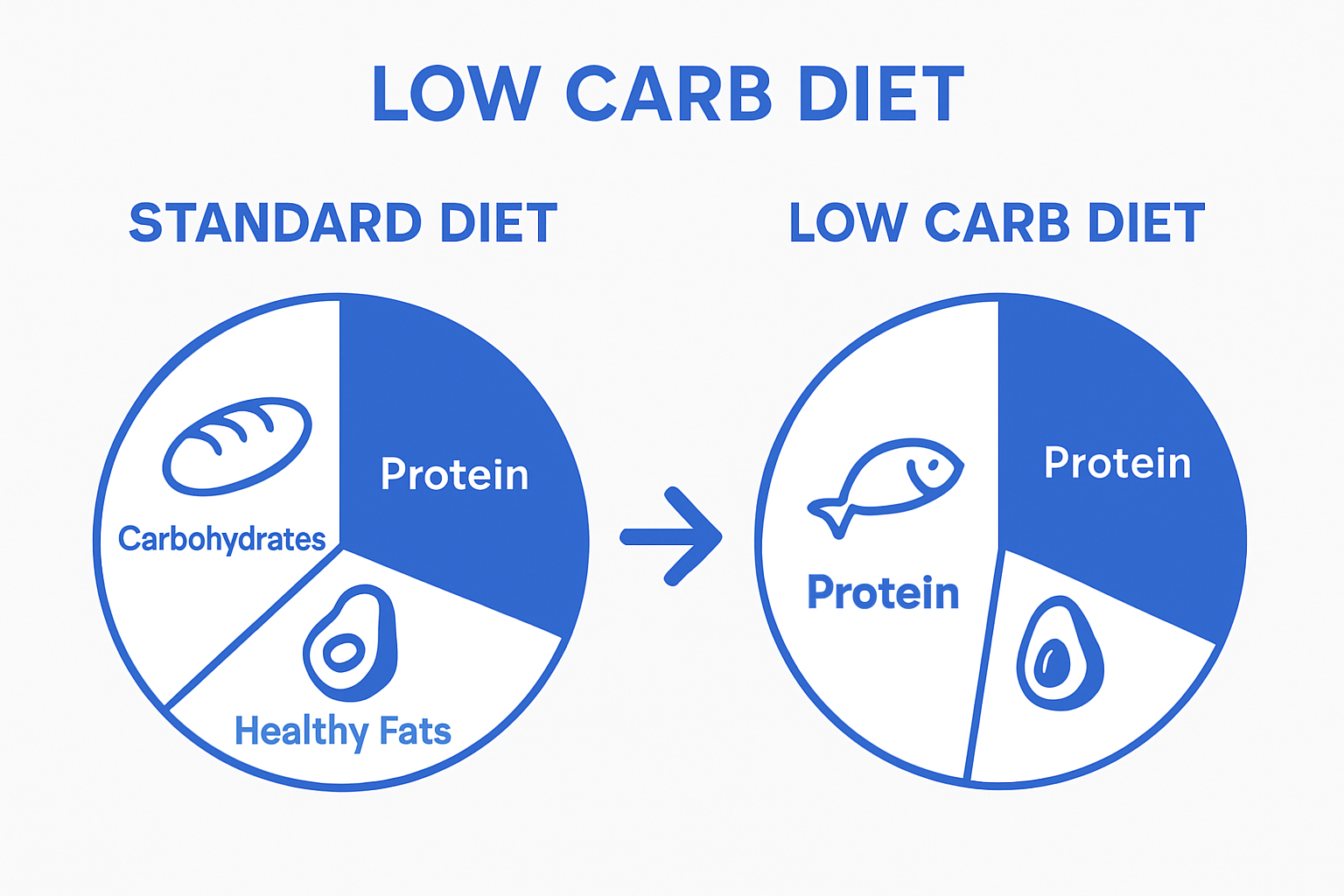 Carbohydrate intake is dramatically reduced, while protein and fat consumption are proportionally increased. This shift fundamentally alters how the body generates and utilizes energy.
Key macronutrient characteristics include:
- Carbohydrates reduced to 50-130 grams daily
- Protein intake moderate and carefully selected
- Emphasis on high-quality, healthy fat sources
- Prioritization of nutrient-dense whole foods
Metabolic Energy Pathways:
Carbohydrates traditionally serve as the body’s primary energy source.
However, in a low carb diet, the metabolic machinery shifts toward fat utilization.
According to Harvard T.H. Chan School of Public Health, this metabolic adaptation involves complex biochemical processes that transform how energy is processed and stored.
Critical metabolic adaptations include:
- Reduced glucose dependency
- Increased fat oxidation
- Enhanced metabolic flexibility
- Improved insulin sensitivity
By understanding these intricate macronutrient interactions, individuals can craft a nutritional approach that goes beyond simple calorie counting.
The low carb diet emerges as a sophisticated strategy for metabolic optimization, focusing on quality and biochemical impact rather than quantity alone.
The Science of Low Carb Diets: Metabolism and Energy Use
Low carb diets represent a sophisticated metabolic intervention that fundamentally transforms how the human body processes and utilizes energy.
Unlike traditional dietary approaches, this nutritional strategy triggers complex biochemical adaptations that reshape metabolic functioning at a cellular level.
Metabolic Switching Mechanisms:
When carbohydrate intake is substantially reduced, the body initiates a profound metabolic reprogramming.
The traditional glucose-dependent energy system transitions to an alternative pathway that prioritizes fat metabolism.
This transformation involves intricate hormonal and enzymatic changes that fundamentally alter how cells generate and consume energy.
Key metabolic switching processes include:
- Reduction of insulin secretion
- Activation of fat-burning enzymes
- Increased ketone body production
- Enhanced mitochondrial efficiency
Energy Production Pathways:
According to research published in Nutrients, the low carb diet induces a state of nutritional ketosis.
In this metabolic condition, the body shifts from glucose to fat as its primary energy source.
Ketone bodies become the alternative fuel, providing energy to critical organs including the brain, heart, and muscles.
Significant energy production transformations include:
- Decreased reliance on glucose metabolism
- Increased fatty acid oxidation
- More stable energy release
- Reduced metabolic inflammation
By understanding these intricate metabolic mechanisms, individuals can appreciate low carb diets as more than a weight loss strategy.
This approach represents a comprehensive metabolic intervention that optimizes energy utilization, potentially improving overall physiological performance and metabolic health.
Real-World Applications: Health Benefits and Considerations
Low carb diets extend beyond theoretical concepts, offering tangible health benefits that address multiple physiological systems.
By understanding their practical applications, individuals can make informed decisions about implementing this nutritional approach in their daily lives.
Metabolic Health Improvements:
The impact of low carb diets on metabolic functioning is substantial and multifaceted.
Blood sugar regulation becomes a primary advantage, with significant implications for individuals struggling with insulin resistance and type 2 diabetes.
This dietary strategy provides a targeted intervention for metabolic dysfunction.
Key metabolic health benefits include:
- Enhanced insulin sensitivity
- Reduced blood glucose fluctuations
- Improved lipid profile management
- Decreased inflammation markers
Cardiovascular and Long-Term Health Considerations
According to research from the National Institutes of Health, low carb diets demonstrate potential for comprehensive health optimization.
While presenting numerous advantages, these dietary approaches also require careful implementation and professional medical guidance.
Important health considerations include:
- Potential initial cholesterol level variations
- Need for balanced nutrient intake
- Individual metabolic differences
- Importance of protein and fat quality
By approaching low carb diets with informed strategy and professional supervision, individuals can leverage this nutritional method as a powerful tool for metabolic health optimization.
 The key lies in personalized implementation, consistent monitoring, and holistic understanding of individual physiological responses.
Ready to Make Sense of Low Carb for Real Health Results?
Are you determined to escape endless confusion about which diet works for long-term weight management?
If you have struggled to balance carbs, fats, and proteins or felt discouraged by slow progress, you are not alone.
The article “Understanding Low Carb Diet Basics for Better Health” explains the science of low carb eating and highlights the real pain points many face—constant cravings, unstable energy, and uncertainty about the best food choices.
If you want to turn that knowledge into effective action, it is time to take the next step with practical support and clear guidance.
Start your transformation today by exploring Lean and Fit for expert advice, proven strategies, and real solutions tailored to your lifestyle. Dive into easy recipe ideas, discover natural weight loss techniques, and avoid common dieting pitfalls.
If you are ready for a simpler and more sustainable path to better health, get started with Lean and Fit now. Your journey to lasting wellness and confidence can begin today.
Frequently Asked Questions:
Low-carb diets can feel confusing at first, but understanding the basics makes it much easier to follow and benefit from. This FAQ breaks down how cutting carbs affects your body, helping you make smarter, healthier food choices every day.