
Nearly two out of every three adults struggle with unwanted weight, according to recent health research.
Many people wish for change but do not know where to begin. The right plan makes the process much less intimidating and sets you up for lasting results.
With guidance on proven diet principles, exercise routines, and overcoming common hurdles, you can start building healthy habits that actually fit your life.
Table of Contents
- What Is Weight Loss for Beginners?
- Types of Weight Loss Approaches Explained
- Essential Diet Principles and Meal Planning
- Effective Exercise Routines for Starters
- Overcoming Common Pitfalls and Plateaus
Key Takeaways
| Point | Details |
|---|---|
| Sustainable Weight Loss | Successful weight loss involves gradual lifestyle changes, including a sustained calorie deficit through diet and exercise. |
| Personalized Approach | Choose a weight loss strategy that aligns with individual needs, health status, and personal goals. |
| Effective Meal Planning | Focus on portion control, balanced nutrition, and whole foods to support your weight loss journey. |
| Exercise Consistency | Aim for regular, moderate physical activity while gradually increasing intensity to enhance overall health. |
What Is Weight Loss for Beginners?
Weight loss for beginners is a structured approach to reducing body weight through intentional lifestyle modifications.
According to the National Heart, Lung, and Blood Institute, weight loss involves reducing body weight through a combination of dietary changes, increased physical activity, and behavior modification with the ultimate goal of achieving a gradual and sustainable reduction in weight to improve overall health.
For someone just starting their weight loss journey, the process can seem overwhelming. However, the core principles remain straightforward: create a consistent calorie deficit by consuming fewer calories than your body burns.
This means making strategic dietary choices and incorporating regular physical activity.
As research from the National Center for Biotechnology Information suggests, effective weight loss for beginners includes:
- Adopting a low-calorie diet
- Engaging in regular physical activity
- Implementing behavioral strategies to modify eating and exercise habits
Successful weight loss isn’t about drastic measures or quick fixes. It’s a gradual process of making sustainable lifestyle changes. This means learning to make healthier food choices, understanding portion control, developing consistent exercise habits, and building a supportive mindset. Setting realistic weight loss goals can help maintain motivation and track progress effectively.
Remember, every individual’s weight loss journey is unique, and what works for one person might not work exactly the same for another. The key is patience, consistency, and a commitment to long-term health and wellness.
Types of Weight Loss Approaches Explained
Weight loss is not a one-size-fits-all journey, and research from the National Center for Biotechnology Information reveals multiple approaches to achieving weight reduction.
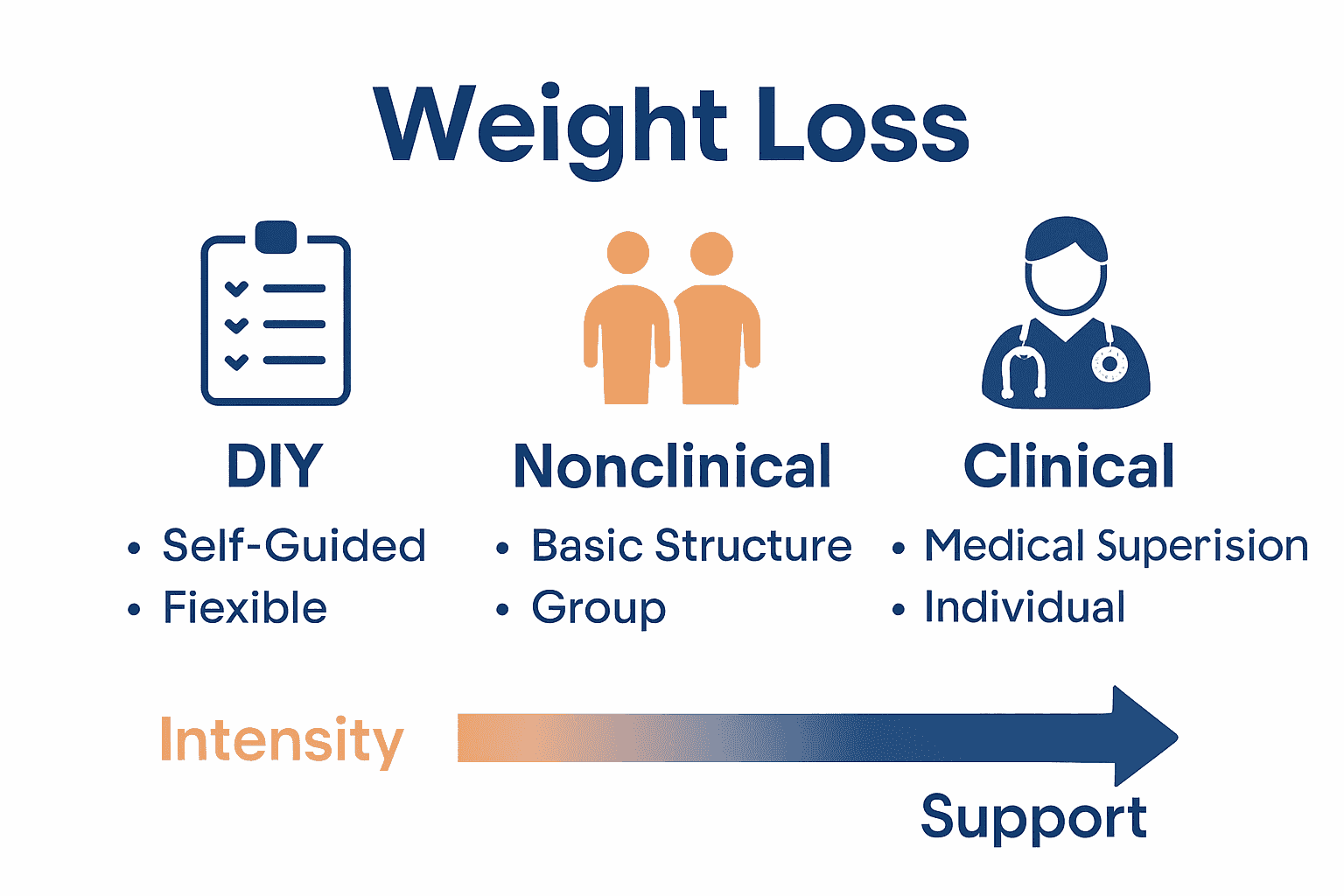
According to their research, weight loss strategies can be broadly categorized into three main types: do-it-yourself programs, nonclinical programs, and clinical programs, each varying in intensity, cost, and healthcare provider involvement.
The most common weight loss strategies encompass a range of interventions tailored to individual needs and health conditions. As highlighted by NCBI research, these strategies typically include:
Here’s a comparison of common weight loss strategies for beginners:
| Approach | Key Features | Typical Involvement |
|---|---|---|
| Dietary Therapy | Calorie control Nutrition focus |
Self-directed Dietitian |
| Physical Activity | Structured exercise plans Endurance and strength |
Self-directed Fitness coach |
| Behavior Therapy | Habit modification Counseling |
Therapist Support groups |
| Pharmacotherapy | Prescription medications | Physician-supervised |
| Surgical Interventions | Medical procedures High impact |
Specialist Clinical team |
- Dietary Therapy: Focused on nutritional modifications and calorie control
- Physical Activity: Structured exercise and movement plans
- Behavior Therapy: Psychological strategies to modify eating habits
- Pharmacotherapy: Medical interventions using weight loss medications
- Surgical Interventions: Medical procedures for significant weight reduction
Choosing the right approach depends on individual factors like current health status, personal goals, and physical capabilities.
Understanding evidence-based weight loss strategies can help you make informed decisions about your weight loss journey. While some people might find success with diet and exercise alone, others may require more comprehensive medical support.
 The key is to consult healthcare professionals, understand your unique body’s needs, and develop a personalized plan that is sustainable, healthy, and aligned with your long-term wellness goals.
Essential Diet Principles and Meal Planning
Successful weight loss begins with understanding fundamental diet principles.
According to research from the National Center for Biotechnology Information, effective diet strategies revolve around creating a caloric deficit through reduced calorie intake while emphasizing nutrient-dense foods that provide maximum nutritional value.
Meal planning is crucial in achieving sustainable weight loss.
As highlighted by NCBI research, a well-structured meal plan should focus on:
- Portion Control: Managing serving sizes to regulate calorie intake
- Balanced Nutrition: Incorporating diverse food groups
- Whole Foods: Prioritizing fruits, vegetables, whole grains, and lean proteins
- Healthy Fats: Including nutritious fat sources in moderation
- Limiting Processed Foods: Reducing high-calorie and nutrient-poor options
Navigating dietary changes can feel overwhelming, which is why mastering balanced meal planning becomes a game-changer for many individuals. The key is developing a personalized approach that feels sustainable, enjoyable, and aligned with your individual health goals.
Remember, a successful diet isn’t about restriction but about making informed, nutritious choices that fuel your body and support your weight loss journey. Start small, be consistent, and focus on progress over perfection.

Effective Exercise Routines for Starters
Starting an exercise routine can feel intimidating, but research provides clear guidance for beginners.
According to the National Center for Biotechnology Information, newcomers should aim for moderate-intensity physical activity lasting 30 to 45 minutes, 3 to 5 days per week.
The key is gradual progression, allowing your body to adapt and build strength without risking injury or overwhelming yourself.
A comprehensive weight loss exercise approach combines different types of activities. NCBI research recommends incorporating both aerobic and strength training to enhance weight loss and overall health.
Ideal beginner-friendly activities include:
- Walking: Low-impact cardiovascular exercise
- Swimming: Full-body workout with minimal joint stress
- Cycling: Gentle on joints, excellent for building endurance
- Light Resistance Training: Using bodyweight or light weights
- Yoga: Improves flexibility and builds core strength
Starting with cardio intervals can help beginners build confidence and gradually increase workout intensity. Remember, consistency trumps intensity when you’re just starting.
Listen to your body, start slow, and progressively challenge yourself. The most effective exercise routine is one you enjoy and can maintain long-term. Don’t get discouraged by setbacks—every workout is a step toward your health and fitness goals.
Overcoming Common Pitfalls and Plateaus
Weight loss journeys are rarely linear, and understanding potential challenges is crucial for long-term success.
According to the National Center for Biotechnology Information, individuals experiencing weight loss plateaus should proactively reassess their diet and exercise routines, potentially increasing physical activity and seeking professional support to break through stagnation.
Research highlights several common pitfalls that can derail weight loss progress.
As NCBI studies indicate, these typically include:
- Unrealistic Expectations: Setting overly ambitious goals
- Inconsistent Routines: Irregular diet and exercise patterns
- Metabolic Adaptation: Body adjusting to decreased calorie intake
- Psychological Barriers: Motivation fluctuations and emotional eating
- Inadequate Tracking: Not monitoring progress systematically
Overcoming weight loss plateaus naturally requires a strategic and patient approach. Remember that plateaus are normal and not a sign of failure. Focus on small, sustainable adjustments rather than drastic changes.
This might mean slightly modifying your calorie intake, introducing new workout variations, or addressing underlying lifestyle factors. Stay consistent, be kind to yourself, and understand that weight loss is a journey with inevitable ups and downs.
Take Control of Your Weight Loss Journey with Proven Lifestyle Changes
Embarking on your weight loss journey can feel overwhelming with so many options and setbacks like plateaus and inconsistent progress.
This guide breaks down the core challenge beginners face: creating a sustainable calorie deficit through diet, exercise, and behavior modification.
If you want to conquer these obstacles and embrace lasting health improvements, understanding effective lifestyle changes is the key.
Discover expert-backed strategies and practical tips that fuel your success at Lifestyle Changes – LeanAndFit.
Learn how to master portion control, develop balanced meal plans, and maintain motivation through realistic goal-setting. Start making meaningful progress today by visiting Calorie Deficit – LeanAndFit and explore actionable methods that fit your unique needs.
Ready to take the next step toward a healthier you Visit leanandfit.info now and transform your weight loss goals into lasting results.
Frequently Asked Questions
Complete guide to weight loss for beginners is not about perfection or extreme effort—it is about understanding how your body and habits work together.
Weight loss becomes easier when you focus on small, realistic changes instead of quick fixes.
By building consistent routines, eating balanced meals, and supporting your body with sleep and movement, you create a system that works long term.
The journey may start slowly, but with steady habits, the results become both visible and sustainable over time.
Q-1: If weight loss is just “calories in vs calories out,” why do beginners still struggle so much?
A-1: In theory, it sounds simple, but in real life, it’s more complicated. Beginners don’t just deal with calories—they deal with habits, emotions, routines, and misinformation.
Stress eating, irregular meals, sleep issues, and low activity levels all interfere with consistency. Even small mistakes, like underestimating portions or skipping meals and overeating later, can slow progress.
So while the principle is simple, execution depends on behavior, not math alone. That’s why building structure matters more than chasing perfection.
Q-2: Why does weight drop quickly at the start and then slow down suddenly?
A-2: The early drop is often water weight, not pure fat loss. When you reduce processed foods or carbs, your body releases stored glycogen, which holds water. That creates a quick drop on the scale.
After that, fat loss begins, which is slower and steadier. Many beginners think progress has stopped, but in reality, the body has simply shifted into a more realistic pace. Understanding this helps avoid frustration and keeps expectations grounded.
Q-3: Can you lose weight without exercising as a beginner?
A-3: Yes, but exercise makes the process healthier and more sustainable. Weight loss mainly depends on creating a calorie deficit, which can be achieved through diet changes alone.
However, exercise improves metabolism, preserves muscle, and boosts mood.
Even simple movement like walking or light home workouts can make a big difference. Think of diet as the foundation and exercise as the reinforcement that makes results stronger and longer-lasting.
Q-4: Why do beginners often regain weight after initial success?
A-4: This usually happens because the initial approach is too strict or temporary. Crash diets or extreme restrictions are hard to maintain, so once normal eating resumes, weight comes back.
Another reason is lack of habit formation—short-term efforts don’t create long-term behavior change. Sustainable weight loss comes from gradual adjustments, not drastic overhauls. If the method cannot be maintained for months, it is unlikely to work long term.
Q-5: How important is meal timing compared to what you eat?
A-5: What you eat matters more than when you eat, but timing can still influence results. Irregular eating patterns often lead to overeating later in the day. For beginners, having consistent meal times helps control hunger and prevents impulsive snacking.
Skipping meals can backfire by increasing cravings. The goal is stability—keeping your body in a predictable rhythm so it can better regulate appetite and energy levels.
Q-6: Why do beginners feel hungry even after eating “healthy” meals?
A-6: This often happens when meals lack balance. A plate filled only with vegetables or low-calorie foods may not provide enough protein, fats, or fiber to keep you full. Hunger is not just about calories—it is about nutrients that signal satisfaction.
Adding protein sources like eggs, lentils, or chicken and healthy fats like nuts or olive oil helps extend fullness. It’s not about eating less, but eating smarter combinations.
Q-7: Can sleep and stress really affect weight loss more than diet sometimes?
A-7: Yes, surprisingly they can play a major role. Poor sleep disrupts hunger hormones, making you crave high-calorie foods. Stress increases cortisol levels, which can lead to emotional eating and fat storage around the abdomen.
Even with a good diet, these factors can slow progress. Beginners often overlook recovery, but good sleep and stress management are just as important as food choices for consistent weight loss.
Q-8: What is the simplest sustainable strategy for beginners who feel overwhelmed?
A-8: Start with three basic habits: drink more water, move daily, and include protein in every meal. These three actions alone can create noticeable changes without overwhelming you.
Once they become routine, you can gradually add more structure like portion control or workout plans. The key is simplicity—complex plans often fail, while simple habits stick. Progress builds naturally when the foundation is strong and consistent.