

Meditation is more than just sitting quietly with your eyes closed and slowing your breath.
Clinical studies show that mindfulness techniques can improve weight loss outcomes and even lower your stress hormones like cortisol. Most people think dropping pounds is all about diet and cardio sweat.
The real shift happens when you turn your attention inward and start to rewire the way your mind relates to food and habits.
Table of Contents
- What Is Meditation For Weight Loss?
- Why Does Meditation Matter For Weight Management?
- How Meditation Influences Weight Loss Mechanisms
- Key Concepts Behind Meditation And Weight Control
- Real-World Applications Of Meditation For Weight Loss
Quick Summary
| Takeaway | Explanation |
|---|---|
| Meditation enhances emotional awareness | It helps identify emotions that lead to stress eating, enabling better food choices. |
| Mindfulness aids impulse control | Practicing meditation improves self-regulation, allowing individuals to resist unhealthy eating habits. |
| Meditation reduces stress-related weight gain | Lower cortisol levels from meditation can prevent fat storage in the abdomen and enhance metabolism. |
| Develop interoceptive awareness | Understand the difference between physical hunger and emotional eating triggers, promoting mindful consumption. |
| Assess technology for support | Utilize apps and digital resources for guided meditation to maintain consistency and motivation in weight loss efforts. |
What is Meditation for Weight Loss?
Meditation for weight loss represents a holistic approach that integrates mental wellness with physical transformation, focusing on how mindfulness practices can positively influence eating behaviors and metabolism.
Mindful eating research suggests that meditation goes far beyond traditional weight loss techniques by addressing psychological factors that contribute to weight gain.
Understanding the Mental Connection
At its core, meditation for weight loss leverages the powerful mind body connection to transform how individuals relate to food and their bodies.
This approach recognizes that weight management is not just about calories and exercise, but also about understanding emotional triggers, stress responses, and unconscious eating patterns.
Below is a table comparing key mental and physiological mechanisms by which meditation supports weight loss, helping clarify their distinct functions within the process.
| Mechanism | Description | Impact on Weight Management |
|---|---|---|
| Emotional Awareness | Recognizing and processing emotions that trigger stress eating | Reduces impulsive and emotional eating |
| Impulse Control | Enhances self-regulation around food choices | Helps resist unhealthy habits |
| Stress Reduction | Lowers cortisol levels associated with abdominal fat storage | Minimizes stress-induced weight gain |
| Interoceptive Awareness | Differentiates between physical hunger and emotional eating triggers | Promotes mindful, intentional eating |
| Neuroplasticity | Rewires neural pathways related to eating behaviors | Supports long-term behavioral change |
Key mental mechanisms in meditation for weight loss include:
- Emotional Awareness: Identifying and processing emotions that trigger stress eating
- Impulse Control: Developing greater self regulation around food choices
- Stress Reduction: Minimizing cortisol levels that contribute to weight retention
Neurological and Physiological Benefits
Meditation actively influences biological processes related to weight management. By practicing mindfulness, individuals can potentially:
- Reduce cortisol levels, which are associated with abdominal fat storage
- Improve insulin sensitivity and metabolic functioning
- Enhance interoceptive awareness about genuine hunger versus emotional eating
For those interested in exploring this approach further, our guide on mindful eating techniques provides deeper insights into practical implementation.
Meditation for weight loss is not a magic solution, but a scientifically supported strategy that empowers individuals to develop a healthier relationship with food and their bodies.
Why Does Meditation Matter for Weight Management?
Meditation transforms weight management from a purely physical challenge into a comprehensive mind body wellness strategy.
Research demonstrates that successful weight loss extends far beyond caloric restriction and exercise, requiring profound psychological and emotional transformation.
Psychological Barriers to Weight Loss
Most traditional weight loss approaches overlook critical psychological factors that sabotage long term success. Meditation addresses these underlying emotional patterns by providing tools to recognize and interrupt destructive behavioral cycles.
Individuals often struggle with weight due to:
- Stress induced eating
- Emotional comfort seeking through food
- Unconscious negative self perception
- Lack of mindful awareness about hunger signals
Neurobiological Impact of Meditation
Meditation directly influences neurological processes that regulate metabolism, appetite, and stress response.
By practicing mindfulness, individuals can:
- Reduce cortisol levels that contribute to abdominal fat storage
- Improve insulin sensitivity
- Enhance interoceptive awareness about genuine physiological hunger
- Develop more balanced emotional regulation
Long Term Behavioral Transformation
Beyond immediate physiological benefits, our guide on stress reduction techniques highlights meditation’s role in creating sustainable lifestyle changes. Meditation teaches practitioners to approach weight management with compassion, patience, and self understanding, moving away from punitive diet culture towards holistic personal wellness.
How Meditation Influences Weight Loss Mechanisms
Meditation is not just a mental exercise but a powerful physiological intervention that directly impacts metabolic processes and weight management. Scientific research reveals complex neurological and hormonal mechanisms through which mindfulness practices can significantly influence body weight and composition.
Hormonal Regulation and Stress Response
Meditation plays a critical role in modulating hormonal systems that directly affect weight. By reducing stress and lowering cortisol levels, meditation interrupts the biochemical cascade that leads to weight gain.
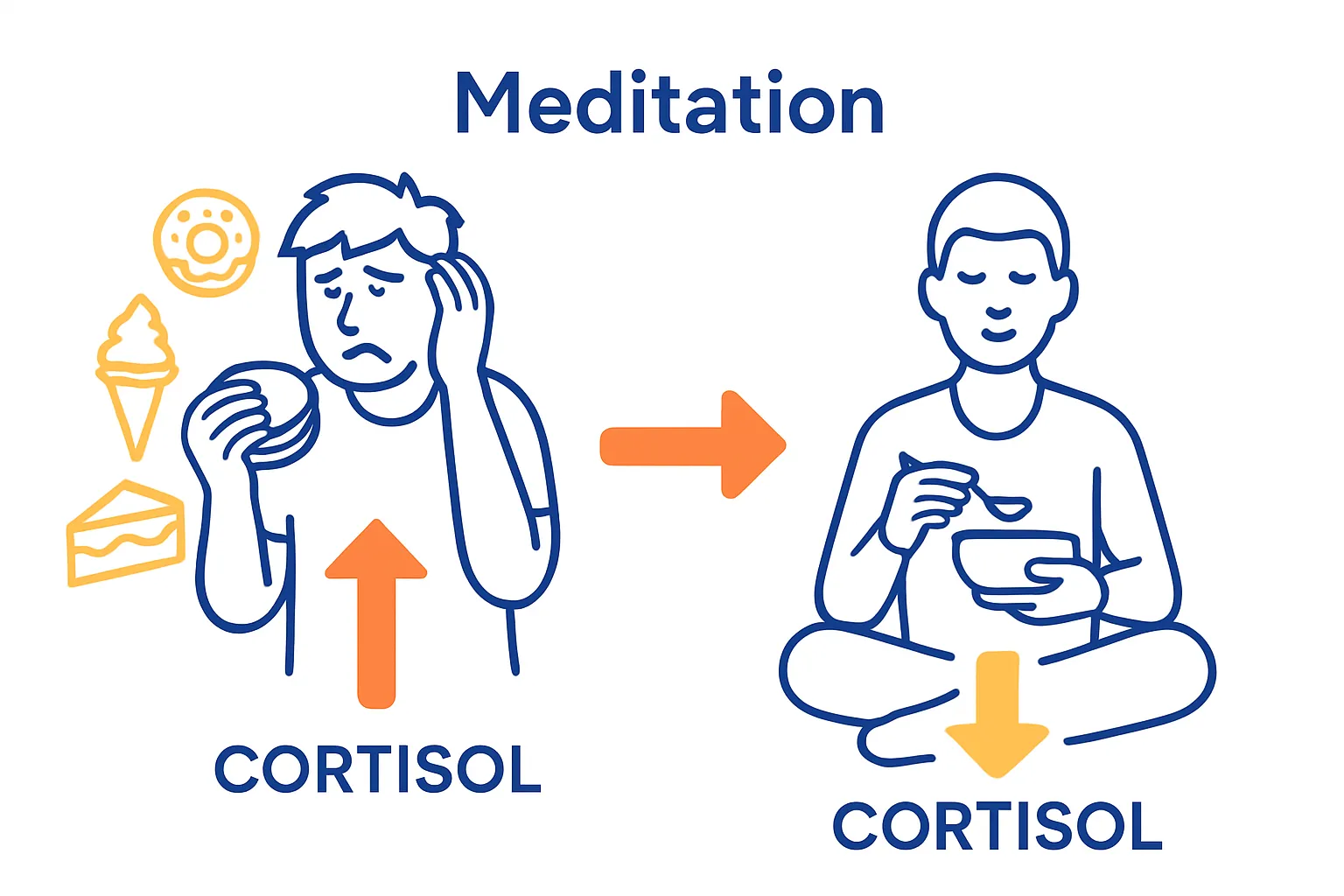 Specifically, meditation influences:
- Cortisol production, which is linked to abdominal fat storage
- Insulin sensitivity and glucose metabolism
- Appetite regulation hormones like ghrelin and leptin
Neuroplasticity and Behavioral Modification
Beyond hormonal changes, meditation restructures neural pathways associated with eating behaviors. This neuroplastic transformation helps individuals develop more conscious and intentional relationships with food.
Key neurological shifts include:
- Enhanced prefrontal cortex activity for better impulse control
- Reduced reactivity in the brain’s reward centers
- Improved emotional regulation and stress management
Metabolic Efficiency and Energy Balance
Our comprehensive guide on stress reduction further explores how meditation optimizes metabolic processes. By promoting a state of physiological balance, meditation helps the body more efficiently convert nutrients, regulate energy expenditure, and maintain a healthy metabolic rate.
The practice essentially transforms the body’s internal environment, making weight management a more natural and sustainable process.
Key Concepts Behind Meditation and Weight Control
Meditation transcends traditional weight loss strategies by targeting the psychological root causes of weight management challenges. Research indicates that successful weight control requires more than physical interventions, demanding a comprehensive approach that integrates mental and emotional wellness.
Awareness and Intentional Eating
At the core of meditation weight control techniques is developing profound interoceptive awareness. This means cultivating a deep understanding of bodily sensations, hunger signals, and emotional triggers that influence eating behaviors. Practitioners learn to distinguish between:
- Physical hunger versus emotional hunger
- Automatic eating patterns versus conscious food choices
- Stress induced consumption versus genuine nutritional needs
Emotional Decoupling and Self Regulation
Meditation provides powerful tools for emotional self regulation, helping individuals interrupt automatic behavioral patterns.
By practicing mindfulness, people develop the capacity to:
- Observe emotional states without immediate reaction
- Create space between emotional triggers and food responses
- Develop non judgmental awareness of eating habits
- Reduce impulsive and comfort eating tendencies
Neurological Reprogramming
Our guide on mindful eating practices explores how meditation systematically rewires neural pathways associated with eating behaviors. This neurological transformation enables practitioners to shift from reactive, unconscious eating to intentional, balanced nutrition.
The practice essentially retrains the brain to approach food as a source of nourishment rather than emotional comfort or stress management.

Real-World Applications of Meditation for Weight Loss
Transforming weight loss from a theoretical concept to practical daily practice requires strategic implementation of meditation techniques. Clinical studies demonstrate that integrating mindfulness into weight management programs can produce meaningful and sustainable results.
Structured Meditation Practices
Practical meditation approaches for weight loss involve systematic techniques designed to interrupt automatic eating patterns and enhance self awareness.
Individuals can implement specific strategies such as:
This table summarizes the main types of structured meditation techniques used for weight loss and illustrates their core purpose in supporting mindful eating and behavioral change.
| Meditation Technique | Purpose/Benefit |
|---|---|
| Mindfulness Meditation Sessions | Increase self-awareness and present-moment focus |
| Body Scan Before/After Meals | Cultivate awareness of hunger and fullness cues |
| Breathing Exercises | Manage stress and reduce emotional eating triggers |
| Guided Visualization | Reinforce healthy eating behaviors and motivation |
| Daily Practice Routine | Build long-term consistency and habit formation |
- Daily 10-15 minute mindfulness meditation sessions
- Body scan techniques before and after meals
- Breathing exercises to manage stress and emotional eating triggers
- Guided visualizations focused on healthy eating behaviors
Behavioral Intervention Strategies
Meditation serves as a powerful behavioral intervention tool that helps individuals develop more intentional relationships with food.
Practical applications include:
- Mindful eating practices like slow, deliberate consumption
- Emotional state recognition before initiating eating
- Creating mental pause between emotional triggers and food responses
- Developing non judgmental awareness of dietary habits
Technology and Meditation Integration
Our comprehensive guide on mindful eating practices explores how modern technology can support meditation weight loss efforts.
Digital platforms now offer guided meditation apps, virtual coaching, and tracking systems that make implementing mindfulness techniques more accessible and structured.
These technological tools help individuals maintain consistent practice, monitor progress, and stay motivated throughout their weight management journey.
Ready to Break Free from Stress Eating and Unhealthy Habits?
Have you ever noticed how emotional triggers and stress keep sabotaging your weight loss journey? If you relate to the struggle of unconscious eating or find yourself reaching for food when feeling overwhelmed, meditation can be the missing link.
At LeanAndFit.info, we shine a light on how mindfulness practices and stress reduction can empower you to reclaim control over your habits.
Dive deeper into proven techniques and practical tips with our Stress Reduction and Mindful Eating guides.
Find clear answers and fresh motivation to rewrite your weight loss story today.
Frequently Asked Questions:
Meditation is not a magic shortcut for weight loss, but it is a powerful internal tool that makes everything else easier.
It helps you understand your body, control your impulses, and build a healthier relationship with food. Instead of forcing discipline, meditation creates it naturally.
In a world full of quick fixes, this approach feels slower—but it is sustainable, gentle, and deeply effective.
And honestly, that’s what real weight loss should feel like.
Q-1: Can meditation change the way your brain reacts to food temptations?
A-1: Absolutely, and this is where meditation becomes quietly powerful. When you meditate regularly, you train your brain to pause before reacting. That pause is gold when it comes to food cravings.
Instead of instantly reaching for chips or मिठाई, your mind starts asking, “Do I really need this?” Meditation strengthens the prefrontal cortex—the decision-making part of your brain—while calming the impulsive, reward-seeking areas.
Over time, you don’t just resist temptations; you understand them. You begin to notice emotional triggers like boredom, stress, or even celebration eating. This awareness doesn’t feel restrictive—it feels freeing.
You’re no longer controlled by cravings; you’re observing them like passing clouds.
Q-2: Why do some people lose weight without changing their diet once they start meditating?
A-2: It sounds magical, but it’s actually very logical. Meditation reduces stress, and stress is a major driver of weight gain.
When you’re stressed, your body releases cortisol, a hormone that increases appetite and encourages fat storage—especially around the belly. Meditation lowers cortisol levels, which naturally reduces stress eating.
Also, people who meditate tend to eat more slowly and mindfully. They notice fullness cues better and stop overeating without trying too hard. So even if the “diet” doesn’t change on paper, behavior changes internally.
It is like fixing the root instead of trimming the leaves.
Q-3: Can meditation help you break late-night snacking habits?
A-3: Yes, and in a surprisingly gentle way. Late-night snacking is often less about hunger and more about habit or emotional comfort. Meditation helps you sit with that urge instead of reacting instantly.
Imagine it like this: instead of automatically opening the fridge, you pause, breathe, and observe the urge. Within a few minutes, the intensity fades. Meditation teaches you that cravings are temporary—they rise, peak, and fall.
Once you experience this a few times, you gain confidence in your ability to “ride out” the urge.
That is when late-night snacking starts losing its grip on you.
Q-4: Does meditation improve digestion in a way that supports weight loss?
A-4: Yes, and this is often overlooked.
Meditation activates the parasympathetic nervous system—also known as the “rest and digest” mode. When you’re relaxed, your body digests food more efficiently, absorbs nutrients better, and reduces bloating.
On the flip side, when you’re stressed, digestion slows down, leading to discomfort and poor nutrient utilization.
Better digestion doesn’t directly burn fat, but it supports overall metabolic health.
When your body functions smoothly, weight loss becomes a natural outcome rather than a constant struggle.
Q-5: How does meditation affect emotional eating patterns?
A-5: Meditation shines brightest here.
Emotional eating is often an automatic response to feelings like stress, sadness, or even happiness. Meditation creates awareness of these emotions without judgment. Instead of suppressing or escaping feelings through food, you learn to experience them fully.
It is like sitting with a friend instead of running away from them.
Over time, this reduces the need to use food as a coping mechanism. You still enjoy food, but it’s no longer your emotional crutch. This shift alone can dramatically impact weight loss.
Q-6: Can just 5–10 minutes of meditation a day make a difference?
A-6: Yes, consistency matters more than duration. Even 5–10 minutes daily can rewire your mental habits over time. Think of meditation like brushing your teeth—it is a small daily act with long-term benefits.
Short sessions are easier to stick with, which makes them more effective in the long run. These few minutes help you reset your mind, reduce stress, and stay aware of your eating choices throughout the day.
The key is not intensity but regularity. Small steps, done daily, create big changes.
Q-7: Why do some people feel more in control of their portions after meditating?
A-7: Meditation enhances mindfulness, which directly affects how you eat. When you’re mindful, you notice the taste, texture, and satisfaction of food more deeply.
This naturally slows down your eating pace. And here is the interesting part—your brain needs about 20 minutes to register fullness. When you eat slowly, you give your body time to send those signals.
As a result, you feel satisfied with smaller portions. It is not about forcing control; it is about understanding your body’s signals better.
Q-8: Can meditation indirectly improve workout consistency and support weight loss?
A-8: Yes, in a very practical way. Meditation improves focus, discipline, and mental clarity.
These qualities spill over into other areas of life, including exercise. When your mind is calmer, you’re less likely to skip workouts due to stress or lack of motivation.
Meditation also reduces mental fatigue, making it easier to stay consistent with your fitness routine. It doesn’t replace exercise, but it strengthens your commitment to it.
Think of it as building the mental foundation for physical consistency.
Q-9: What is the simplest way to start meditation specifically for weight loss benefits?
A-9: Start simple—no fancy techniques needed.
Sit comfortably, close your eyes, and focus on your breath. Inhale slowly, exhale slowly, and just observe. When thoughts about food, cravings, or stress come up, don’t fight them.
Just notice and return to your breath. You can also practice mindful eating—before a meal, take a moment to pause and appreciate your food. This small habit can transform how you eat.
The goal is not perfection but awareness.
Over time, this awareness becomes your biggest ally in weight loss.
Recommended:
- How Guided Meditation Reduces Stress to Aid Weight Loss? – LeanAndFit
- Master Mindful Eating Practices for Weight Loss Success – LeanAndFit
- For educational purposes only
- Why Trust LeanAndFit.info?
- How Mindful Eating Helps Control Portion Sizes in Obesity Treatment? – LeanAndFit
- Top Healthy Weight Loss Tips for Lasting Results – LeanAndFit