

Did you know that over 650 million adults worldwide are classified as obese according to the World Health Organization?
The science behind weight gain reaches well beyond calories and exercise routines.
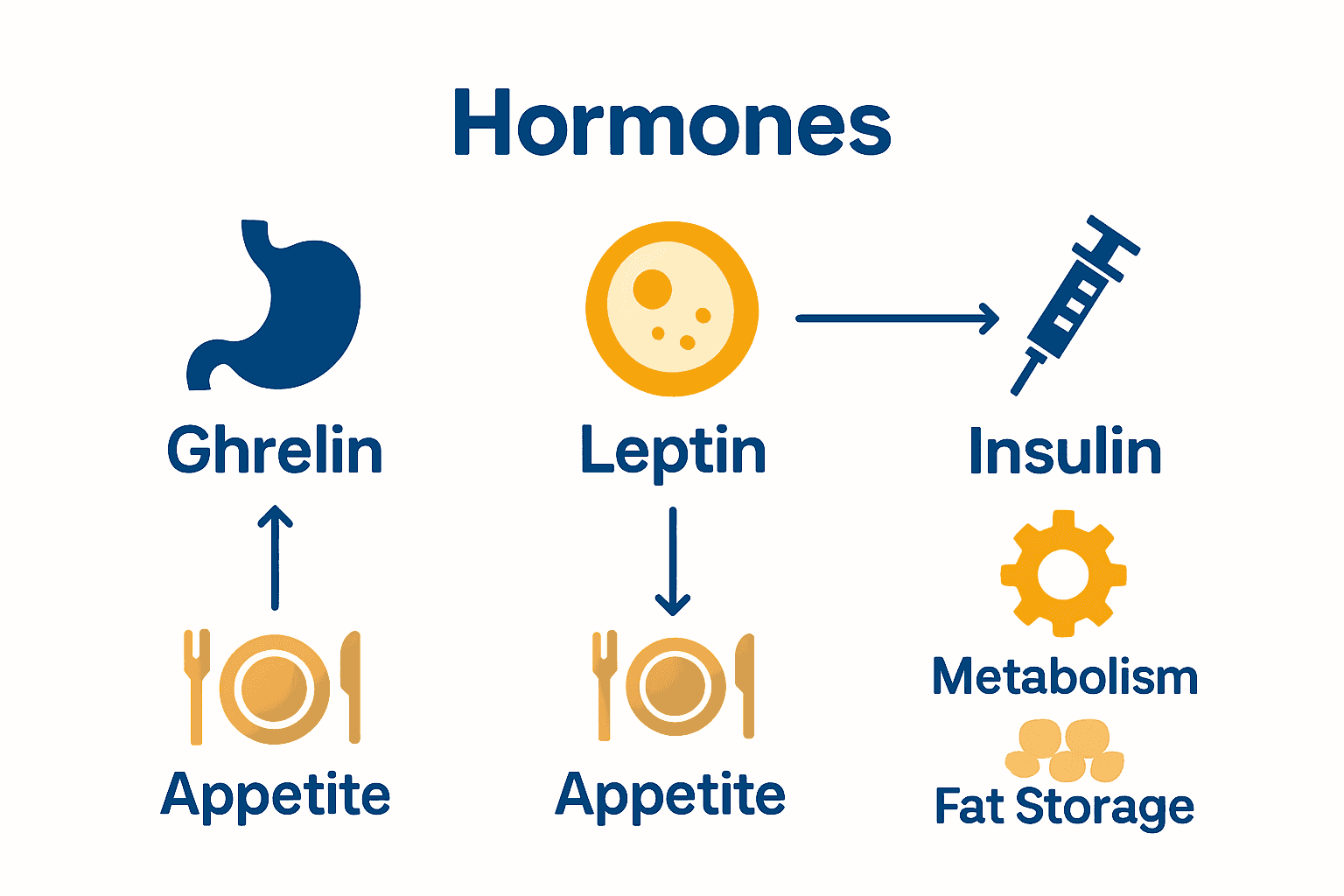
Hormones act as powerful messengers, shaping appetite, metabolism, and fat storage in ways most people never realize. Gaining clarity on hormones that affect weight is essential.
Also learn how these chemical signals guide your body can help you rethink stubborn weight struggles and find smarter solutions.
Key Takeaways
| Point | Details |
|---|---|
| Complexity of Weight Management | Weight management is influenced by a network of hormones that regulate metabolism, appetite, and fat storage, making it more than just calories in versus calories out. |
| Key Hormones | Hormones such as ghrelin, leptin, and insulin play critical roles in hunger and metabolism, and their interactions are crucial for effective weight management strategies. |
| Impact of Hormonal Imbalances | Hormonal imbalances can disrupt metabolic processes, contributing to weight gain and complicating weight loss efforts, especially in women. |
| Lifestyle Strategies for Balance | Healthy nutrition, regular physical activity, and good sleep are essential lifestyle choices to balance hormones and support sustainable weight management. |
Table of Contents
- Defining Weight-Related Hormones And Misconceptions
- Major Hormones Influencing Weight Management
- How Hormones Affect Metabolism And Appetite
- Hormonal Imbalances And Weight Gain Risks
- Safe Strategies For Balancing Weight Hormones
Defining Weight-Related Hormones And Misconceptions
Weight management is far more complex than simply counting calories or exercising. Hormones play a critical role in regulating body weight, functioning as sophisticated chemical messengers that control metabolism, appetite, and fat storage.
Learn more about hormonal imbalances that impact weight and understand how these intricate systems work together.
According to research published in PubMed, obesity emerges from complex neurohormonal controls involving multiple hormone sources – including adipose tissue, endocrine glands, and enteroendocrine cells.
These hormones interact through sophisticated networks involving the vagus nerve, brainstem, and hypothalamus to regulate critical functions like:
- Appetite control
- Body composition management
- Glucose metabolism
- Energy expenditure
- Fat storage mechanisms
Contrary to popular belief, weight isn’t just about a single “fat-burning” or “hunger” hormone. As highlighted by medical experts, hormonal interactions are nuanced and interconnected.
Hormones like insulin, leptin, ghrelin, cortisol, and thyroid hormones work in delicate balance, influencing everything from hunger signals to metabolic rate. A disruption in one hormone can trigger cascading effects across your entire metabolic system.
Understanding these hormonal dynamics demystifies weight management, revealing it as a complex biological process rather than a simple mathematical equation of calories in versus calories out.
By recognizing how hormones influence your body’s weight regulation, you can develop more targeted and effective strategies for sustainable health and fitness.
Major Hormones Influencing Weight Management
Hormones are the body’s intricate chemical messengers that play a pivotal role in weight management, acting like a complex internal communication network. Discover how hormonal therapy can regulate critical metabolic processes and understand the nuanced interactions that influence body weight.
Recent scientific research highlights several key hormones that significantly impact weight regulation. According to a recent review, gut hormones are particularly crucial in this process.
These hormones can be categorized into two primary types:
- Orexigenic Hormones (appetite-stimulating)
- Ghrelin: Signals hunger
- Asprosin: Promotes food intake and weight gain
- Anorexigenic Hormones (appetite-suppressing)
- GLP-1
- GIP
- CCK
- PYY
- Oxyntomodulin
Interestingly, researchers have uncovered fascinating insights about specific hormones like asprosin.
This orexigenic hormone activates AgRP neurons and promotes appetite by interacting with the PTPRD receptor, demonstrating a direct mechanism for increasing food intake and body weight.
Such discoveries are revolutionizing our understanding of metabolic processes.

The complexity of hormonal interactions means that weight management isn’t simply about calories, but about understanding these intricate biological signals. Emerging research suggests that targeted hormonal therapies could offer promising approaches to managing weight more effectively, moving beyond traditional diet and exercise strategies.
Here’s a summary of major hormones involved in weight regulation:
| Hormone | Type | Main Effect on Weight |
|---|---|---|
| Ghrelin | Orexigenic | Increases appetite |
| Asprosin | Orexigenic | Promotes food intake |
| GLP-1 | Anorexigenic | Reduces appetite |
| GIP | Anorexigenic | Reduces appetite |
| CCK | Anorexigenic | Signals fullness |
| PYY | Anorexigenic | Decreases appetite |
| Oxyntomodulin | Anorexigenic | Suppresses hunger |
How Hormones Affect Metabolism And Appetite?
Metabolism and appetite are not simply mechanical processes, but intricate biological interactions controlled by a sophisticated network of hormonal signals.
Learn more about how appetite suppressants influence these complex systems and understand the delicate balance that determines your body weight.
Research reveals a complex interplay of hormones that regulate hunger and metabolic processes.
According to detailed studies, key hormones involved in this regulation include:
- Hunger-Stimulating Hormones
- Ghrelin: Primary “hunger hormone”
- Motilin: Stimulates digestive processes
- NPY and AgRP: Neurological hunger signals
- Appetite-Suppressing Hormones
- CCK: Signals fullness after eating
- GLP-1: Reduces food intake
- PYY: Decreases appetite
- Leptin: Regulates energy balance
- Insulin: Controls blood sugar and metabolism
Interestingly, research on bariatric surgery has provided profound insights into hormonal dynamics.
After such procedures, significant hormonal shifts occur – levels of appetite-suppressing hormones like GLP-1, PYY, and CCK increase, while hunger-promoting hormones like leptin and ghrelin decrease. This demonstrates how precise hormonal balance can dramatically impact metabolism and weight management.
Understanding these hormonal interactions reveals that weight management is far more nuanced than simple calorie counting.
Your body’s metabolic processes are a dynamic system where hormones act as critical messengers, constantly communicating and adjusting to maintain energy homeostasis. By recognizing these intricate biological mechanisms, individuals can develop more targeted approaches to managing weight and metabolic health.
Hormonal Imbalances And Weight Gain Risks
Hormonal imbalances can silently sabotage weight management efforts, creating a complex metabolic environment that promotes weight gain. Discover how thyroid hormone deficiencies can dramatically impact your metabolism and understand the hidden risks lurking in your hormonal system.
Research reveals multiple hormonal pathways that can contribute to unexpected weight gain. For women, this risk is particularly pronounced. Studies have shown that hormonal imbalances such as:
- Metabolic Disruptors
- Hyperandrogenism
- Insulin resistance
- Female obesity-related secondary hypogonadism
- Key Hormones Affecting Weight
- Cortisol (stress hormone)
- Insulin
- Thyroid hormones
- Ghrelin
Chromic stress and hormonal dysfunction create a perfect storm for weight gain. Elevated cortisol levels, for instance, can increase appetite and promote fat storage, while disrupted insulin mechanisms can alter how your body processes and stores energy.
Thyroid hormone imbalances further complicate metabolic processes by slowing down your body’s natural energy-burning mechanisms.
Understanding these intricate hormonal interactions is crucial for effective weight management. Hormonal imbalances aren’t just minor fluctuations – they represent significant metabolic disruptions that can make weight loss incredibly challenging.
By recognizing these complex interactions, individuals can develop more targeted strategies that address the root hormonal causes of weight gain, moving beyond traditional diet and exercise approaches.
Safe Strategies For Balancing Weight Hormones
Hormonal balance is not a mysterious process, but a series of intentional lifestyle choices that can dramatically influence your metabolic health. Check out our top healthy weight loss tips for sustainable results and learn how small changes can make a significant impact on your hormonal environment.
According to the American Hospital Association, several key lifestyle strategies can help restore hormonal equilibrium and support weight management:
- Nutrition Strategies
- Consume whole food meals
- Include balanced macronutrients
- Focus on fiber, protein, and healthy fats
- Suppress ghrelin
- Increase GLP-1 production
- Supportive Lifestyle Practices
- Regular physical activity
- Stress management techniques
- Prioritize quality sleep
- Potential supplements
- Omega-3
- Vitamin D
- Magnesium
Exercise plays a critical role in hormonal regulation. By improving insulin sensitivity and reducing cortisol levels, physical activity helps reset your body’s metabolic signals.
Regular workouts can help suppress appetite-stimulating hormones while enhancing hormones that promote fat burning and muscle maintenance.
Understanding and implementing these strategies transforms hormonal management from a complex medical challenge into an achievable daily practice.
By making deliberate, informed choices about nutrition, movement, and recovery, you can create a hormonal environment that supports healthy weight management and overall metabolic wellness.
Take Control of Your Weight By Balancing Your Hormones
Struggling with unexplained weight gain or constant hunger despite your best efforts?
The article “Hormones That Affect Weight: Complete Guide” explained how complex hormonal imbalances can undermine even the most disciplined diet and exercise plans. If you feel trapped by persistent cravings, sluggish metabolism, or mood swings related to weight, it’s not your fault.
Hormonal signals like insulin, leptin, and cortisol can make weight management feel impossible without the right knowledge and support. Explore our resources on hormonal imbalances to uncover root causes and proven solutions.
Don’t let hidden hormonal factors hold you back from your health goals.
Visit leanandfit.info today for in-depth guides, real life success stories, and practical strategies designed to bring your hormones back into balance.
You can also learn more about how thyroid dysfunction impacts weight loss and discover step-by-step plans to reclaim your energy and confidence.
Start your journey now and experience the difference when you focus on what truly influences your weight.
Frequently Asked Questions:
Understanding hormones that affect weight can completely change the way you approach fitness and health.
Instead of blaming yourself for slow progress, you begin to see the bigger picture—your body is influenced by internal signals that go far beyond calories alone.
Hormones like insulin, cortisol, leptin, and thyroid hormones quietly shape your hunger, energy, and fat storage patterns every single day. The real solution lies in working with your body, not against it.
By focusing on balanced nutrition, quality sleep, stress management, and consistent daily habits, you create an environment where your hormones can function properly.
And when your hormones are in sync, weight loss becomes less of a struggle and more of a natural outcome.
Q-1: Why does my body hold onto weight even when I’m eating less and moving more?
A-1: This can feel incredibly frustrating, but hormones often play the hidden villain here. When you eat less, your body sometimes reacts by slowing down your metabolism to “save energy.”
Hormones like leptin (which controls fullness) drop, while ghrelin (your hunger hormone) rises.
This makes you feel hungrier and less satisfied. At the same time, stress hormones like cortisol can increase, encouraging fat storage—especially around the belly. So even though you’re doing “everything right,” your body might be working against you.
The key isn’t just eating less—it’s eating smart, sleeping well, and managing stress so your hormones don’t sabotage your efforts.
Q-2: Can poor sleep alone really cause weight gain through hormones?
A-2: Absolutely, and this surprises many people. When you don’t sleep enough, your hunger hormones go out of balance. Ghrelin increases (making you hungrier), while leptin decreases (making you feel less full).
On top of that, lack of sleep raises cortisol levels, which can lead to fat storage and cravings for sugary, high-calorie foods. It’s like your body is nudging you toward weight gain without you realizing it.
Even one or two nights of bad sleep can affect your appetite. So if weight loss feels stuck, improving sleep might be one of the simplest and most powerful fixes.
Q-3: Why do I crave sugar more during stressful days?
A-3: Stress and sugar cravings are closely linked through cortisol. When you’re stressed, your body releases cortisol to help you cope. But this hormone also increases your desire for quick energy—usually in the form of sugary or fatty foods.
It is your body’s way of preparing for a “fight or flight” situation, even if you’re just dealing with work pressure. Over time, repeated stress keeps cortisol levels high, leading to frequent cravings and weight gain.
Managing stress through simple habits like walking, deep breathing, or even talking to someone can help bring those cravings under control.
Q-4: Is it possible that my “healthy diet” is still confusing my hormones?
A-4: Yes, and this is more common than people think. Sometimes, diets that are too restrictive—like very low-carb or extremely low-fat diets—can disrupt hormone balance.
Your body needs a mix of nutrients to function properly. For example, healthy fats are important for hormone production, and carbs help regulate energy and mood.
If your diet lacks balance, your hormones may react by slowing metabolism or increasing hunger.
So instead of focusing on “perfect eating,” aim for balanced meals that include protein, healthy fats, and fiber-rich carbs.
Q-5: Why does belly fat seem harder to lose than fat in other areas?
A-5: Belly fat is strongly influenced by hormones, especially cortisol and insulin. High stress levels increase cortisol, which signals your body to store fat around the abdomen.
At the same time, poor diet and lifestyle habits can lead to insulin resistance, making it easier for your body to store fat rather than burn it. This combination makes belly fat stubborn.
The solution isn’t endless crunches—it’s managing stress, improving sleep, and eating foods that stabilize blood sugar, like whole grains, protein, and vegetables.
Q-6: Can hormonal imbalance make me feel tired even when I’m eating well?
A-6: Yes, hormones don’t just affect weight—they also impact energy levels. For example, thyroid hormones control how your body uses energy. If they’re not balanced, you may feel constantly tired or sluggish.
Similarly, insulin imbalances can cause energy crashes after meals, and high cortisol can leave you feeling drained over time. Even if your diet looks good on paper, your body might not be using that energy efficiently.
Listening to your body, managing stress, and getting regular check-ups can help identify and correct these imbalances.
Q-7: Why do I lose weight quickly at first, then suddenly hit a plateau?
A-7: This is your hormones adapting to change. In the beginning, your body responds quickly to new habits. But over time, it tries to maintain balance by adjusting hormones like leptin, ghrelin, and thyroid hormones.
This can slow your metabolism and increase hunger, leading to a plateau.
It is not failure—it is your body protecting itself. To move past it, small changes like adjusting calorie intake, adding strength training, or improving sleep can help reset the balance.
Q-8: Can simple daily habits really fix hormonal weight issues?
A-8: Yes, and this is the good news. You don’t always need extreme diets or complicated plans. Small, consistent habits can make a big difference.
Getting 7–8 hours of sleep, eating balanced meals, staying active, and managing stress can gradually bring your hormones back into balance.
Drinking enough water and avoiding overly processed foods also help.
Hormones respond best to consistency, not perfection. Over time, these simple changes can improve how your body manages weight naturally.
Recommended
- How Obesity Contributes to Hormonal Imbalances Linked to Depression? – LeanAndFit
- How Appetite Suppressants Affect Hormone Levels? – LeanAndFit
- Why Trust LeanAndFit.info?
- For educational purposes only
- How Sleep and Weight Loss Are Connected: Science-Backed Facts – LeanAndFit
- Hormonal Imbalance – LeanAndFit