

Most American diets are too good to be true, and more than 50 percent of Americans who go on a fad diet regain all the lost weight within a year.
Amidst the swirling information online, it can be hard to know what to believe. Dangers of fad diets are inevitable.
By informing yourself regarding the different trends and how they actually affect the body, you can prevent the majority of the common diet mistakes and safeguard your health.
Table of Contents
- Fad Diets Explained and Common Misconceptions
- Popular Types of Fad Diets Today
- Short-Term Results and Their Hidden Costs
- Long-Term Health Risks and Nutritional Deficiencies
- Safer Alternatives for Sustainable Weight Loss
Key Takeaways
| Point | Details |
|---|---|
| Fad Diets Often Promise Quick Results | These diets typically involve extreme restrictions but rarely lead to sustainable health or weight loss. |
| Nutritional Deficiencies Are Common | Short-term dieting can cause metabolic disruptions and significant nutritional gaps that negatively impact long-term health. |
| Personalized Strategies Are Essential | Sustainable weight management requires balanced nutrition, regular physical activity, and individual dietary plans tailored to metabolic needs. |
| Holistic Approaches Yield Better Outcomes | Prioritizing gradual lifestyle changes over quick fixes leads to meaningful and lasting health improvements. |
Fad Diets Explained and Common Misconceptions
Fad diets are characterized by the involvement of short-term and extreme measures aimed at losing weight rapidly.
However, they usually turn out to be ineffective beyond a few days and can lead to severe health issues. The majority of the myths regarding fad diets can be disproven.
A major element of fad diets is the recommendation to limit calorie intake or eliminate certain foods from the diet. They also tend to promote various “magic” solutions to rapidly and effortlessly lose weight.
The detox diet variations are generally safer, even though research findings indicate that they still pose serious health risks due to the induction of nutritional and metabolic imbalances.
The major misconceptions associated with fad diets are as follows:
1. Rapid weight loss leads to slimming down for good;
2. Elimination of certain foods from the diet results in lifelong health benefits;
3. A particular nutritional pattern is beneficial for everyone;
4. Quick and effortless solutions are more effective than developing healthier habits.
In order to lose weight, it is important to build a sustainable nutritional plan along with a healthier lifestyle in terms of physical activity.
Popular Types of Fad Diets Today
Fad diets come in all shapes and sizes, offering a variety of distinct yet outrageous methods for rapidly slimming down. The diet plans comparison highlights the most popular ones, which may leave a lasting negative impact on the body.
The most common type of fad diet is a strict diet that eliminates any certain foods from the diet plan. Two well-known examples of this kind are the Atkins diet and the Paleo diet.
As per the diet comparison, the first believes that low-carb consumption leads to rapid weight loss due to low blood sugar levels.
Meanwhile, the second is a return to nature type of diet that originated from the Stone Age, and involves the exclusion of any grain products and the consumption of only healthy foods.
The fad diets comparison shows that they all involve a strict limitation of certain food groups, promise rapid results, are not nutritionally balanced, and can cause lasting damage to the human metabolism.
In the 21st century, the diets become more and more outrageous, offering shocking advice wrapped in a scientific disguise.
Notable examples include juice cleanses, extreme keto diet practices, and borderline starvation like diet plans. Thus, even though some of them may actually deliver on their promises, they are not suitable for long-term weight loss due to the lack of proper nutrition. Instead, one should reach for a healthier option that would support the body rather than sabotage it.
Short-Term Results and Their Hidden Costs
Fad diets are an illusion of fast results and the promise of rapid, effortless weight loss, which, however, comes at a high cost to your metabolism. The question of why diets fail is an illusion of quick fixes and cheap, deceptive solutions.
The rapid initial weight loss due to the diets may cause serious negative side effects and changes to your body.

The most significant adverse effect is the metabolic adaptation that happens in the body. Extreme diets usually lead to rapid muscular atrophy since the body begins to burn fat tissues for energy. The metabolism slows down as a result of the decrease in muscle mass.
There is a dangerous vicious circle because the lower the metabolic rate is, the harder it becomes for the person to lose weight.
The drastic measures that are taken when someone tries to get into a diet do not produce favorable results.
A number of negative side effects that occur when a person tries to lose weight by extreme fasting or starving themselves include:
- Muscular atrophy
- Hormonal imbalance
- Low metabolic rate
- Malnutrition
- Increased chances of being obese since the body cannot control fat retention
People who need to achieve a better lifestyle should think of alternative ways of losing weight. It is important that they consult a physician regarding the best approach to losing weight. The health of these people should not be compromised in pursuit of the perfect body that is endorsed in society.
Long-Term Health Risks and Nutritional Deficiencies
Fad diets can be dangerous because drastic measures are taken to lose weight, resulting in the body being deprived of essential nutrients that it needs to function on a daily basis.
To maintain a healthy weight, it is important to understand the effects a diet consisting of extreme restrictions can have on the body.
Some of the consequences which result from continuous use of fad diets remain even after the dieting stops.
Consuming a diet that consists mainly of protein and negligible amounts of carbohydrates will result in a condition known as ketosis. Ketosis negatively affects the normal functioning of the heart and kidneys among other issues.
Dieting involves the elimination of certain food groups from one’s diet. The deficiency of nutrients that would have been provided by the eliminated food group causes adverse effects in the body.
The dangers of fad diets include:
- Heart problems
- Deficiency of minerals such as calcium which leads to osteoporosis
- Malfunctioning of the body metabolism, among other side effects
The best way to ensure health gains is by avoiding fad diets and consulting medical practitioners who provide nutritional guidance.
Safer Alternatives for Sustainable Weight Loss
Healthy weight management requires following a wholesome lifestyle to maintain an appropriate weight over a prolonged period of time.
Healthy weight loss tips suggest devising an appropriate strategy and remaining consistent in their implementation.
A combination of a healthy diet and increased levels of physical activity are the most crucial elements of this strategy, while a better understanding of one’s metabolism is also highly recommended.
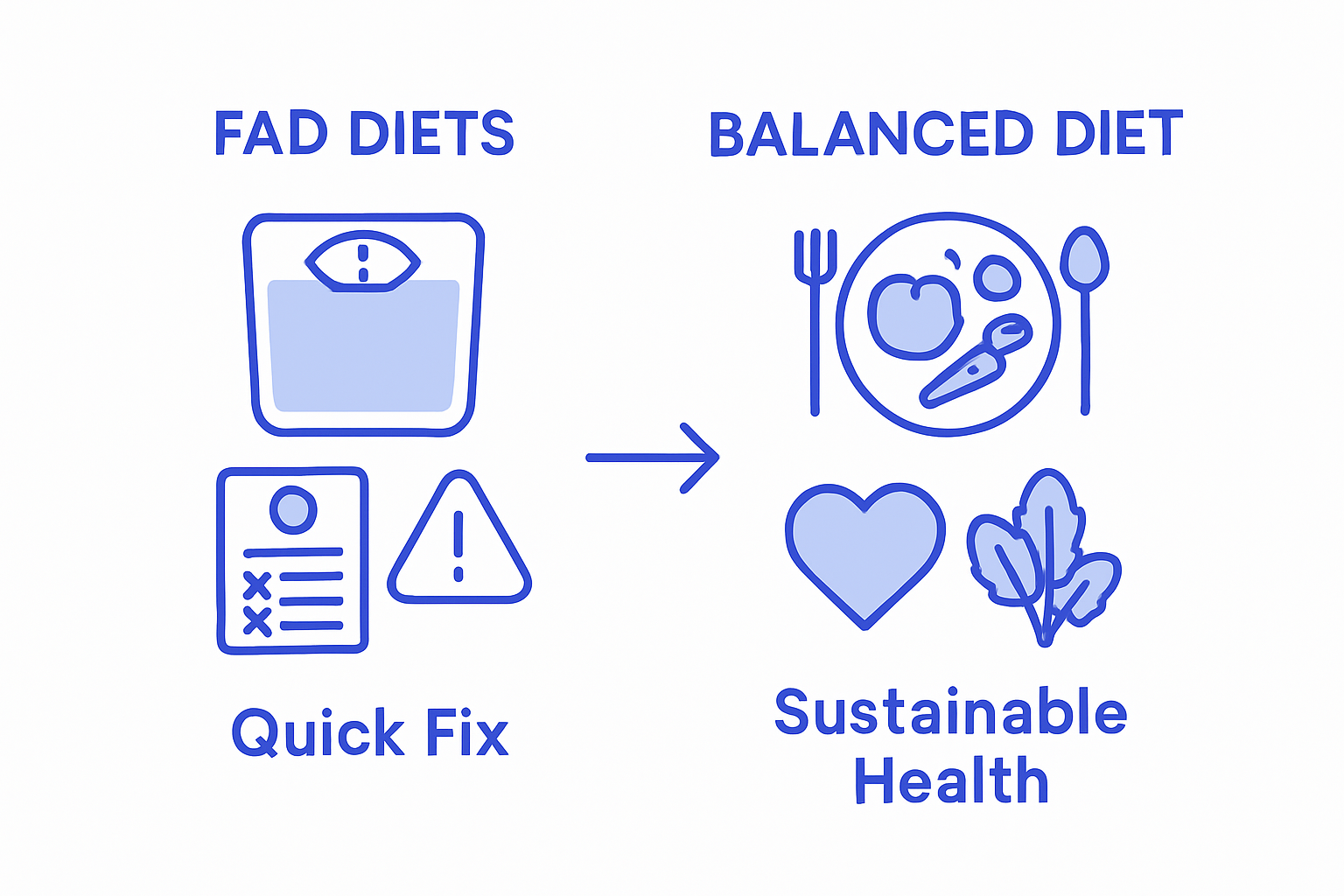
Nutritional specialists advise to apply integrated approaches to lose weight. The diet should be wholesome and include natural, less processed foods. A well-balanced diet that includes fresh fruit and vegetables in half of the meals is recommended.
In addition, it is important to do regular physical activities. This will activate the metabolism and help to lose weight.
The most important aspects of the strategy to lose weight are the following:
- Consume natural products
- Avoid overeating
- Do regular physical activities
- Count calories
- Develop a good eating routine
- Gain muscles
- Be attentive to the state of mind and health
People who want to lose weight should understand that there is no quick fix solution to achieve a toned body. A sustainable, individualized approach is the only right way to lose weight.
It is important to listen to the body, learn its needs, and be aware of the existing limitations and goals. That is why people with excess weight should consult health specialists, develop an appropriate diet, and obtain good results.
Take Control with Safer, Sustainable Weight Loss Methods
Struggling with the shortcomings of quick fad diets leaves you feeling frustrated. To eliminate the potential of hidden metabolic effects and nutrient deficiencies, it is time to invest in the proper tools and techniques to improve your quality of life.
Intermittent Fasting – LeanAndFit and Calorie Restriction – LeanAndFit are the perfect places to start learning about the necessary precautions and restrictions. Allowing yourself the freedom of choice grants a possibility to make the healthier decisions. You have options!
Turn to LeanAndFit.info and get the most out of your dietary and fitness decisions and transform your future lifestyle for the better.
Frequently Asked Questions:
Listed below are answers to the most sought after questions in fad diets and their effects on weight loss:
Q-1: Answer the following question: What are the dangers of fad diets for long-term health?
A-1: Though fad diets provide a fast track to weight loss, they can have adverse effects in the long run. Approximately 80% people tend to regain the lost weight within a year, which is why they might not be a sustainable option.
Within the United States, 42% of the population is obese, which is likely due to the many crash diets that are commonly practiced.
Long term risks might include: low immunity, hormone problems, and chronic diseases that come from malnutrition and irregular weight.
Q-2: Answer the following question: Why are fad diets harmful and not sustainable for weight loss?
A-2: Fad diets might include unhealthy restrictions, making them unsustainable and a turn-off for many people.
Almost half of all Americans are on a fad diet, although they do not yield significant results since the rules are too extreme.
Furthermore, they might cause exhaustion because certain diets lack vital nutrients, and lead to overeating as a result.
Q-3: Answer the following question: What health risks are associated with fad diets and extreme dieting?
A-3: Some health risks associated with fad diets and extreme dieting are cardiac issues, malnutrition, dehydration.
When someone starves themselves, their heart has to work harder, and metabolism can drop by as much as 15%. This might lead to obesity, since the person will have a lower caloric expenditure.
Q-4: Answer the following question: What are the short-term and long-term side effects of fad diets?
A-4: Short term effects include weight loss, tiredness, headaches, and irritability.
On the other hand, long term effects might include muscle atrophy, malnutrition, and obesity.
Muscle loss during a crash diet can be anywhere between 25% of body weight, and a lower metabolic rate makes it easier to gain weight.
According to statistics, 95% of the weight lost during a fad diet is regained within 5 years.
Q-5: Answer the following question: How do fad diets impact metabolism and muscle loss over time?
A-5: As has already been mentioned, fad diets can cause a significant decrease in metabolism.
The lower the metabolic rate, the easier it is to gain weight and the harder it becomes to lose weight. During a fast diet, the body’s natural defence mechanism is to lower the metabolic rate, so that the person can conserve as much energy as possible.
Muscle loss is another significant factor that contributes to a lower metabolic rate. It can range anywhere between 25% of lost weight, and is mostly caused by fast weight loss.
Q-6: Answer the following question: What nutritional deficiencies are associated with fad diets and extreme eating patterns?
A-6: Malnutrition risks are higher for people who go on fad diets, since they limit their food intake in unhealthy ways.
For example, some people avoid eating foods that have fats or carbohydrates, which is not good for the body.
About 30% of crash dieters suffer from malnutrition, which can limit their physical activity capabilities and stunt their growth if the malnutrition is severe.
Q-7: Answer the following question: Why are rapid weight loss diets bad for the body?
A-7: Rapid weight loss diets can strip the body of its necessary fluids and calories. Not only that, but they can be detrimental to the cardiovascular system and overall health.
Weight loss at a fast rate can also increase the chances of developing gallstones, which are caused by bile leaking out of the gallbladder. Studies show that when people lose more than two pounds per week, they are more prone to developing them.
It is not advisable to lose more than one or two pounds per week.
Recommended:
- Understanding the Side Effects of Rapid Weight Loss – LeanAndFit
- Detox Diets Explained: Pros, Cons, and Alternatives – LeanAndFit
- Why Diets Fail: Complete Guide to Lasting Success – LeanAndFit
- 7 Common Weight Loss Myths Debunked for Lasting Results – LeanAndFit
- Jak wprowadzić suplementy do diety krok po kroku bezpiecznie – Yawn Horses
- Hair Loss Diet: Foods and Tips for Stronger Hair in 2025 | MyHair
- Battle of the Agonists: Semaglutide vs. Tirzepatide vs. Retatrutide | Research Peptides & News | Area 15 Labs
- Why Trust LeanAndFit.info?
- For educational purposes only