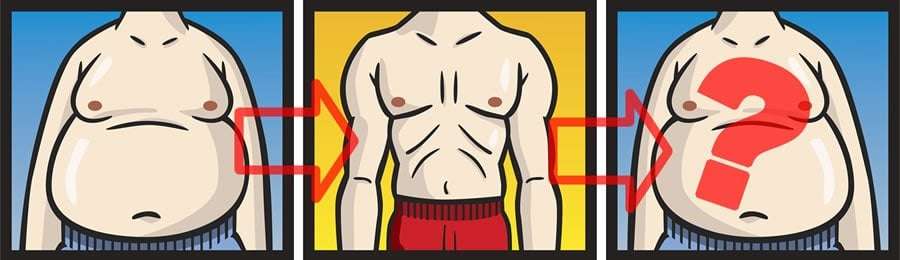
If you are trying to lose weight, it can be tempting to focus on how quickly the number on the scale is going down.
The faster you can lose those pounds, the better, right?
Not necessarily.
A sustainable weight loss rate is an important part of long-term weight management.
For many adults, a gradual loss of about 1 to 2 pounds per week is a reasonable general benchmark. According to the CDC, people who lose weight gradually and steadily at about this rate are more likely to keep the weight off than people who lose weight more quickly.
That does not mean everyone should aim to lose exactly 1 or 2 pounds every week. Your rate of weight loss can vary depending on factors such as your starting weight, health conditions, medications, eating pattern, physical activity, and other individual circumstances.
A healthy weight-loss plan should therefore focus on gradual, sustainable progress rather than trying to lose as much weight as possible as quickly as possible. The goal is to develop eating and lifestyle habits that you can maintain after the initial weight-loss period.
For a broader look at nutrition, physical activity, realistic goals, and long-term weight management, see our guide to evidence-based weight loss.
What the Evidence Says:
- For many adults, gradual weight loss of about 1–2 pounds per week is a commonly used benchmark, and the CDC says people losing weight at this pace are more likely to maintain their weight loss than those losing weight faster.
- There is no single weekly weight-loss target that applies to everyone.
- NIDDK gives losing 5% of starting body weight over 6 months as an example of an initial goal for some people.
- Weight loss can fluctuate because of changes in body water, glycogen, activity, eating behavior, and other factors.
- Medications, medical conditions, sleep, stress, genetics, family history, and environmental factors can influence weight management.
- Sustainable weight management generally combines healthy eating, physical activity, adequate sleep, stress management, and realistic goals.
Article Index
- What Is a Healthy Weight Loss Rate?
- How Much Weight Should You Lose Per Week?
- How Much Weight Loss Per Month Is Healthy?
- Is Losing 1 to 2 Pounds a Week Healthy?
- Why Is Gradual Weight Loss Recommended?
- Can You Lose Weight Too Quickly?
- What Factors Affect Your Weight Loss Rate?
- Can You Lose Weight Without Losing Muscle?
- How Much Weight Should You Aim to Lose Overall?
- How Does a Calorie Deficit Affect Weight Loss Rate?
- Do You Need to Count Calories to Lose Weight?
- Exercise and Healthy Weight Loss
- Sleep, Stress, Medications, and Health Conditions
- How to Create a Sustainable Weight Loss Plan
- How to Track Your Weight Loss Progress
- Frequently Asked Questions
- The Bottom Line
- References
What Is a Healthy Weight Loss Rate?
A healthy weight loss rate refers to how much weight a person loses over a specific period while still maintaining adequate nutrition and supporting overall health.
There is no single amount of weight loss that is appropriate or beneficial for every adult.
For many people, losing about 1 to 2 pounds per week is a reasonable general benchmark. According to the Centers for Disease Control and Prevention (CDC), people who lose weight gradually and consistently at about 1 to 2 pounds per week are more likely to keep the weight off than those who lose weight more quickly.
However, your rate of weight loss may be different at different stages of your journey.
For example, you may see a faster change on the scale during the first few weeks because of changes in body water and glycogen. Your weight may then fluctuate because of water retention and other short-term factors. Weight loss can also slow as your body weight decreases.
Your weight may therefore change from week to week, and even from day to day.
The more useful question is not simply, “How fast can I lose weight?”
It is, “What rate of weight loss is healthy and sustainable for me?”
A gradual approach can make it easier to maintain adequate nutrition, stay physically active, and develop habits that support long-term weight management.
| Weight-loss timeframe | General benchmark | Important consideration |
|---|---|---|
| Per week | About 1–2 lb for many adults | Not a requirement for everyone |
| 4 weeks | About 4–8 lb mathematically | Actual loss may vary |
| 6 months | About 5% of starting weight may be an initial goal for some people | Individual goals vary |
How Much Weight Loss Per Month Is Healthy?
If someone loses 1–2 pounds per week consistently, the mathematical equivalent would be about 4–8 pounds over four weeks.
This is, however, not a number that should be aimed for. Weight loss is rarely perfectly linear, and the amount of weight a person loses in a given month can vary considerably.
This is, however, not a number that should be aimed for.
The amount of weight you lose per month can vary significantly due to factors such as:
- Body water levels
- Glycogen stores
- Digestive system content
- Exercise and activity levels
- Food and fluid consumption
- Menstrual cycle and other short-term hormonal changes
- Medications and medical conditions can affect weight
For this reason, considering the trend over several weeks tends to be more informative than focusing on a single weigh-in.
Is Losing 1 to 2 Pounds a Week Healthy?
For many adults, losing 1 to 2 pounds per week is a reasonable rate of weight loss.
The CDC identifies gradual weight loss of about 1 to 2 pounds per week as a pace that is more likely to be maintained long term than faster weight loss.
However, it is not reasonable to expect everyone to lose that amount of weight every single week.
People with different starting weights can experience different rates of weight loss, so the same weekly target should not be assumed to apply equally to everyone.
People taking certain medications or with certain medical conditions might have different rates of weight loss entirely.
You should have reasonable expectations for how much you’ll be able to lose, rather than aiming for a certain number every week, and putting your health at risk.
Why Is Gradual Weight Loss Recommended?
Gradual weight loss can often be more easily incorporated into a sustainable lifestyle than highly restrictive approaches designed to produce very rapid results.
A sustainable weight-loss plan generally combines:
- A healthy eating pattern
- Appropriate calorie reduction
- Regular physical activity
- Adequate sleep
- Stress management
- Realistic goals
- Strategies for maintaining weight loss
The CDC recommends approaching healthy weight loss through healthy eating, regular physical activity, adequate sleep, and stress management.
NIDDK similarly emphasizes choosing a healthy eating plan that can be maintained over time and combining healthy eating with physical activity.
The objective is therefore not simply to lose weight quickly. It is to lose excess weight in a way that you can realistically maintain.
Can You Lose Weight Too Quickly?
A very low calorie diet or extremely aggressive weight loss regimen should not be assumed to be safe based on them producing fast results.
Extreme dieting can result in difficulty consuming enough nutrients and can increase hunger and fatigue and make the eating plan more difficult to maintain.
Rapid changes on the scale can also involve losses of body water and glycogen, rather than an equivalent amount of body fat.
People with obesity or certain medical conditions may sometimes lose weight more quickly under professional supervision.
A very low calorie diet or extremely aggressive weight loss regimen should not be assumed to be safe based on them producing fast results.
If you are considering a very restrictive diet, a rapid weight loss program, or making any other drastic reductions of calorie intake, speak to a qualified medical professional.
What Factors Affect Your Weight Loss Rate?
Your weight loss rate depends not only on the number of calories you eat.
NIDDK highlights numerous factors that can affect body weight, including lifestyle, sleep, medications, medical conditions, family history, genes, and environmental factors.
Factors affecting weight include the following:
Starting Body Weight:
A person’s starting body weight can influence how much energy their body uses each day.
As a result, two people who have similar dietary and activity routines may have differing rates of weight loss.
Age:
Energy needs and body composition can change with age, which may affect weight management.
Sex:
Sex is one of several factors that can influence estimated energy needs and body composition.
Physical Activity:
Walking, cycling, swimming, resistance training, and sports can contribute to physical fitness and increase energy expenditure.
Eating Pattern:
The amount and type of food and beverages you consume can affect your overall calorie intake and nutritional quality.
A nutritious diet consists of foods with healthy nutrients that satisfy a person’s requirements.
Sleep:
Healthy sleep habits can support weight management. Too little sleep may make it more difficult for some people to maintain healthy eating habits and regular physical activity.
Stress:
Stress can affect eating behavior, sleep, physical activity, and other factors involved in weight management.
Medications:
Some medications can affect body weight. If you suspect that a medication is affecting your weight, talk with your healthcare professional rather than stopping or changing the medication on your own.
Health Conditions:
Chronic illnesses are significant predictors of weight gain. Certain health conditions and medications can affect body weight or make weight loss more difficult. If you have a medical condition or take prescription medications and are concerned about your weight, a healthcare professional can help determine an appropriate approach.
Genetics and Family History:
Genes and family history can influence body weight and weight management. These factors are one reason why people can respond differently to similar eating and physical activity patterns.
Can You Lose Weight Without Losing Muscle?
Weight loss may involve loss of body fat, but it can also involve loss of lean tissue.
Weight loss can involve changes in body fat, lean tissue, body water, and other components. Although you cannot completely control which tissues are lost, preserving lean tissue can be important if your goal is to improve body composition.
Practical steps include:
- Eating a nutritious diet
- Consuming adequate protein
- Including resistance training
- Avoiding unnecessarily restrictive diets
- Maintaining regular physical activity
Resistance training can help support the preservation of lean tissue and muscle strength during weight loss.
However, there isn’t a one size fits all approach to how much protein you need or how much training you need.
Protein requirements vary between individuals and can be influenced by factors such as body size, age, lean mass, physical activity, overall health, and kidney function.
For this reason, it is better not to assume that a single rule of thumb—such as consuming a specific number of grams of protein per pound of body weight—is appropriate for everyone.
How Much Weight Should You Aim to Lose Overall
Instead of trying to lose a certain amount of weight each week, set a long-term goal.
NIDDK notes that losing 5% of starting body weight over 6 months may be a good initial goal for some people.
For example, if you weigh 200 pounds:
- 5% weight loss = 10 pounds
- 10% weight loss = 20 pounds
Therefore, a 5–10% reduction in your weight would be about 10–20 pounds.
These are just examples.
Your individual goal should consider many things such as your body weight, health, medications, age, physical activity level, and lifestyle.
Even a modest amount of weight loss can provide health benefits for some people with overweight or obesity.
How Does a Calorie Deficit Affect Weight Loss Rate
A calorie deficit is a state in which the body uses more energy than it receives from food and beverages over time.
The body can then draw on stored energy to help meet its energy needs.
Although it is an essential principle in weight loss, a calorie deficit that is too large is not necessarily ideal.
A healthy calorie deficit should be large enough to allow you to consume plenty of nutritious foods and adhere to the diet in the long term.
For example, you can create a calorie deficit by:
- Eating appropriate portions
- Choosing more nutrient-dense foods
- Limiting calorie-dense snacks
- Reducing sugary beverages
- Planning meals in a way that helps you manage hunger
- Increasing physical activity
- Combining modest dietary changes with regular activity
There is no one-size-fits-all calorie deficit.
If you want to understand this principle in more detail, see our guide to understanding calorie deficit.
Do You Need to Count Calories to Lose Weight?
No.
Using a calorie tracker can help some individuals since it provides details on the nutritional components of foods and beverages. However, it should not be the only tool for regulating calorie intake.
NIDDK advocates for a healthy eating pattern that one can adhere to with minimal difficulty.
Some people may choose to do it by monitoring what and how much they eat and drink, for instance:
- Keeping portions in check
- Having a healthy eating schedule
- Consuming more vegetables, fruits, and whole grains
- Eating more protein-rich foods
- Having fewer high-calorie drinks
- Listening to your body’s hunger and satiety cues
- Getting more physical activity
The best eating pattern is one that provides adequate nutrition, fits your preferences and health needs, and is realistic enough to maintain over time.
Exercise and Healthy Weight Loss
Physical activity is an important component of healthy weight management, although exercise is not solely a means of “burning off” food.
For generally healthy adults, federal physical activity guidance recommends at least 150 minutes of moderate-intensity aerobic activity per week, along with muscle-strengthening activities on 2 or more days per week.
NIDDK recommends regular physical activity as part of a healthy approach to weight management. Physical activity can increase energy expenditure, support physical fitness, and help with maintaining weight loss.
Some examples of moderate intensity physical activity are:
- Brisk walking
- Biking
- Dancing
- Swimming
- Recreational activities that make one breathe harder and faster
Strength training can help maintain muscle strength and physical function during weight loss.
People who are new to exercising should begin at a level appropriate for their current level of health and fitness and gradually go up.
Before starting any physical activity programs, those with chronic diseases or concerns about physical activity should consult their health care professional.
Sleep, Stress, Medications, and Health Conditions
Healthy weight management is not just about eating right and exercising.
The CDC notes other influences on weight management, including medications, medical conditions such as PCOS, stress, genes, hormones, the environment, and age.
This is important because slower weight loss is not necessarily a sign that your efforts are failing.
Someone might be following a generally healthy eating pattern and exercising regularly but still lose weight more slowly than expected due to medication use, a medical condition, a change in exercise, or another individual circumstance.
If your weight is fluctuating unexpectedly, you are not seeing the results you expect in spite of diligent dieting and exercising, or you suspect a medical issue is interfering with your own weight loss efforts, speak with a medical professional.
How to Create a Sustainable Weight Loss Plan
A sustainable weight-loss plan does not need to be complicated.
- Set a realistic goal
Instead of focusing only on fast weight loss, set a sustainable goal for the long term.
NIDDK notes that losing 5% of starting body weight over 6 months may be a reasonable initial goal for some people.
- Choose a diet that you can stick to
Focus on filling your plate with:
- vegetables
- whole fruits
- whole grains
- beans and legumes
- nuts and seeds
- proteins
- appropriate dairy products or substitutes
NIDDK recommends a healthy eating pattern that provides a variety of nutritious foods while helping you manage overall calorie intake.
A diet that includes fiber-rich foods can also help support a nutritious and satisfying eating pattern, so you may want to learn more about fiber for weight loss (https://leanandfit.info/understanding-fiber-for-weight-loss/).
- Create a calorie deficit
Although a calorie deficit is essential for weight loss, a person should not try to limit their food intake as much as they can.
Rather, they should go for subtle changes and an active lifestyle.
- Get enough exercise
It is essential to pick an activity that one enjoys and that is easy to incorporate into the daily routine.
A person should not feel pressured to go to the gym 5 days a week. A walk is usually a good place to start, and one can add other aerobics and resistance training if they feel up to it.
If you prefer exercising at home, you can explore our guide to home workouts for weight loss (https://leanandfit.info/full-body-home-workout-effective-weight-loss/) for practical ideas that can be adapted to your fitness level.
- Maintain muscle
Resistance training can help support muscle strength and lean tissue during weight loss.
- Get enough sleep
Good sleeping habits are important for everyone, but they are especially good for people attempting to lose weight.
They aid in developing and maintaining a healthy lifestyle.
- Deal with stress
Stress can affect eating behavior, sleep, physical activity, and other factors involved in weight management.
The key to losing weight and keeping it off lies in small, sustainable changes.
A person may want to try numerous stress-management activities to see which ones help them the most.
These may include physical activity, such as walking, meditation, talking with friends, pursuing hobbies, and other healthy distractions.
- Stay flexible
Life circumstances change, so do your weight-loss plans.
Missing a workout or eating more than planned at one meal does not mean your weight-loss plan has failed. The important thing is to return to your usual healthy habits rather than abandoning the plan altogether.
How to Track Your Weight Loss Progress
The scale can be useful, but it should not be the only measure of progress.
Consider monitoring:
- Body weight trends
- Waist circumference
- How clothing fits
- Physical activity
- Strength and physical function
- Eating habits
- Consistency with your plan
Daily body weight may vary depending on several factors, such as water retention, food, sodium, bowel movements, or other reasons.
Therefore, it may be effective to evaluate the trend over several weeks rather than focusing on a single day’s weight.A temporary plateau does not necessarily mean that body-fat loss has stopped.
As body weight decreases, the body generally requires less energy than it did at a higher weight. Changes in physical activity, eating behavior, appetite, and other physiological factors can also affect the rate of weight loss.
As body weight decreases, the body generally requires less energy to maintain the lower weight. This is one reason weight loss may slow over time.
When Should You Talk With a Healthcare Professional
Speaking with a healthcare professional may be especially helpful if:
- you have obesity or chronic weight issues
- you are on medications that could cause weight gain
- you have diabetes, heart disease, high blood pressure, or another condition
- you are following a very low-calorie diet
- you are experiencing unexpected weight loss
- you have difficulties maintaining your weight
- you are considering using a prescription drug for weight loss
- you are thinking about undergoing metabolic or bariatric surgery
- you are wondering how fast you should be losing weight.
According to NIDDK, overweight and obesity treatment could include lifestyle changes, and for certain patients, it could also include medications or surgeries. However, such procedures are only recommended after a thorough examination by a healthcare provider.
Frequently Asked Questions:
Q1. What is a healthy weight loss rate per week for adults?
For many adults, about 1 to 2 pounds per week is a generally accepted healthy rate of weight loss. The CDC says that people who lose about 1–2 pounds per week gradually are more likely to maintain their weight loss than people who lose weight more quickly.
However, this is a general target and not a mandatory requirement. Your own healthy rate could vary depending on other factors like your starting weight, health, medications, activity level, and more.
Q2. How much weight loss per month is safe and sustainable?
If the average rate per week is 1–2 pounds, that would equal up to about 4–8 pounds for a month.
But how much you lose per month can largely vary. Your weight loss is seldom a linear slope, and changes in body water can influence the scale’s reading during the time.
Q3. What is the recommended weight loss rate by doctors?
There is no single weekly rate that doctors recommend for every person. However, a gradual loss of about 1–2 pounds per week is commonly used as a general benchmark. The CDC notes that people who lose weight gradually at about this pace are more likely to keep it off than those who lose weight more quickly.
Q4. Is 1% of body weight per week a safe weight loss rate?
While using a percentage can help understand how one’s loss compares to the starting weight, there is no general rule of thumb that dictates the percentage of one’s body weight that they should lose.
A healthcare professional can help you determine an appropriate goal based on your health, medications, starting weight, and other circumstances.
Q5. How fast can you lose weight without losing muscle?
There is no exact target per week that indicates that you will not lose muscle.
Adequate nutrition, sufficient protein, and resistance training can help support the preservation of lean tissue during weight loss.
Do not expect that you will automatically reap better health benefits just by fast-tracking your weight loss.
If you’re deciding how to structure your workouts, our guide to cardio vs. strength training explains how different forms of exercise can fit into a weight-management plan.
Q6. What do CDC guidelines say about healthy weight loss per week?
The CDC identifies gradual weight loss of about 1–2 pounds per week as a reasonable general benchmark and notes that people who lose weight gradually are more likely to maintain their weight loss than those who lose weight more quickly. This is a general benchmark, not a requirement for every individual.
Q7. Is losing 2 pounds a week healthy or too fast?
For many adults, 2 pounds per week is the top-end of the healthy rate for gradual loss.
But this may not be a good target for some. Your own healthy rate is dependent on a variety of variables including your starting weight, calorie requirements, health status, and more.
Q8. What is a healthy weight loss rate for someone with obesity?
There is no universally mandated weekly target. Your appropriate rate can depend on your starting weight, calorie needs, health conditions, medications, physical activity, and other individual factors.
NIDDK recommends consulting a healthcare professional to figure out a personal target weight and the timeframe for reaching it. They might suggest something like a 5% reduction in your starting weight in half a year as a good first step.
Q9. How can you calculate a safe weight loss rate based on calories?
There is no calorie-deficit formula that can guarantee a particular weekly rate of weight loss. As body weight decreases, the body generally uses fewer calories, and changes in activity, appetite, eating behavior, and other physiological factors can also affect the rate of weight loss. A calorie deficit should therefore be individualized rather than treated as a formula that guarantees the same amount of weight loss every week.
Q10. What is a realistic weight loss timeline for sustainable fat loss?
It depends on how much weight you need to lose and on factors such as your starting weight, health, medications, eating pattern, physical activity, and other individual circumstances.
Gradual weight loss over several months is generally more realistic than rushing to meet an aggressive deadline. Some people may be able to lose around 5% of their starting weight in half a year.
But the most important consideration for a realistic weight-loss plan should be if it is healthy enough to stick to for the long haul.
Q11. Can you lose weight faster at the beginning?
Yes. Your initial rate of weight loss can be higher than your later rate. You may find the scale shifting faster in the beginning weeks of your journey. Some of this early change may be due to shifts in body water and glycogen rather than an equivalent amount of body-fat loss.
As your weight decreases, the rate of loss will slow down. But that does not mean that you are not making progress or have hit a plateau.
Q12. Why has my weight loss slowed down?
There are different reasons why you might find yourself ‘stuck’ on the scale.
As you lose weight, your body generally requires less energy than it did at your previous weight. Changes in energy expenditure, physical activity, eating patterns, appetite, and other physiological factors can also affect the rate of weight loss.
The Bottom Line
Healthy weight loss is not about shedding the maximum number of pounds in the shortest possible time.
For many adults, gradually losing about 1 to 2 pounds per week is a reasonable general benchmark. The CDC reports that people who lose weight at this gradual pace are more likely to maintain their weight loss than those who lose weight more quickly.
However, your appropriate rate may be different. Starting weight, health conditions, medications, physical activity, eating patterns, sleep, stress, and other individual factors can all influence how quickly your weight changes.
A sustainable approach focuses on an appropriate calorie deficit, nutritious food choices, regular physical activity, adequate sleep, stress management, and realistic expectations.
Rather than chasing dramatic changes on the scale, focus on habits you can maintain over the long term.
The goal of healthy weight loss is not simply to reach a lower number on the scale. It is to improve your health while building habits that support a healthy weight and a better quality of life over time.
References
- Centers for Disease Control and Prevention (CDC) — Steps for Losing Weight
https://www.cdc.gov/healthy-weight-growth/losing-weight/index.html - National Institute of Diabetes and Digestive and Kidney Diseases (NIDDK) — Eating & Physical Activity to Lose or Maintain Weight
https://www.niddk.nih.gov/health-information/weight-management/adult-overweight-obesity/eating-physical-activity - National Institute of Diabetes and Digestive and Kidney Diseases (NIDDK) — Treatment for Overweight & Obesity
https://www.niddk.nih.gov/health-information/weight-management/adult-overweight-obesity/treatment - National Institute of Diabetes and Digestive and Kidney Diseases (NIDDK) — Choosing a Safe & Successful Weight-Loss Program
https://www.niddk.nih.gov/health-information/weight-management/choosing-a-safe-successful-weight-loss-program - National Institute of Diabetes and Digestive and Kidney Diseases (NIDDK) — Factors Affecting Weight & Health
https://www.niddk.nih.gov/health-information/weight-management/adult-overweight-obesity/factors-affecting-weight-health - National Institute of Diabetes and Digestive and Kidney Diseases (NIDDK) — Health Tips for Adults
https://www.niddk.nih.gov/health-information/weight-management/healthy-eating-physical-activity-for-life/health-tips-for-adults - National Institute of Diabetes and Digestive and Kidney Diseases (NIDDK) — Prescription Medications to Treat Overweight & Obesity
https://www.niddk.nih.gov/health-information/weight-management/prescription-medications-treat-overweight-obesity - For educational purposes only
- Why Trust LeanAndFit.info?
(Date Last Revised: 11th September 2026)