

More than 80 percent of adults fail to stick to a regular workout regime due to their lack of information on the role of cardio and strength-training.
Therefore, if one wants to achieve the best results from their workout, it is essential that they learn the key differences between these two types of exercises.
One will be able to accomplish their goals, whether they are weight loss, increasing muscle mass, or improving the health of their heart, while avoiding several serious mistakes by learning how to combine cardio and strength-training.
Table of Contents
- Defining Cardio and Strength Training Types
- Health Benefits and Scientific Evidence
- Weight Loss, Fat Loss, and Muscle Gain
- Common Misconceptions and Mistakes
- Choosing the Right Approach for Your Goals
Key Takeaways
| Point | Details |
|---|---|
| Cardio vs. Strength Training | Cardio improves cardiovascular health, while strength training builds muscle and boosts metabolism; both should be integrated for a balanced workout program. |
| Health Benefits of Combination | Engaging in both cardio and strength exercises leads to greater health improvements, including reduced risk of chronic diseases and enhanced overall fitness. |
| Goal-Specific Strategies | Tailor your exercise routine to your personal health goals, whether it’s weight loss, muscle gain, or overall wellness, using a mix of both cardio and strength training. |
| Avoiding Common Misconceptions | Understand that more exercise isn’t always better; prioritize quality, technique, and recovery over sheer volume for optimal results. |
Defining Cardio and Strength Training Types
When it comes to working out, knowing how to separate the most basic principles of fitness can make all the difference when it comes to designing a proper exercise program.
As Illinois CMS explains, ‘cardiovascular exercises are any physical activities that raise your heart rate, like running, bicycling, and swimming’.
Cardio Explained
Cardio exercises are designed to elevate your heart rate and improve overall cardiovascular endurance. These activities primarily focus on large muscle groups and sustained movement.
As Golden Plains Extension highlights, cardio can include diverse activities like:
- Walking
- Running
- Cycling
- Dancing
- Swimming
- Jumping rope
Strength Training Breakdown
Strength training, in contrast, involves exercises that use resistance to build muscle strength and enhance overall muscle tone. These workouts can utilize various equipment or even bodyweight movements.
Key strength training methods include:
- Weightlifting
- Resistance band exercises
- Bodyweight movements (push-ups, squats)
- Machine-based resistance training
- Dumbbell and free weight exercises
While both cardio and strength training offer individual benefits, combining the two can be extremely beneficial towards improving your overall health, as well as your fitness level.
The most important thing is to find a balance that suites your fitness needs and goals.
7 key reasons to understand importance of strength training could be a valuable resource if you’d like to know why strength training should be incorporated into your fitness regimen.
Health Benefits and Scientific Evidence
Knowing the science and research behind cardio and resistance workouts can reveal so many health benefits that go beyond the physical fitness.
Harvard school of public health discovered that muscle building exercises which last for 30 to 60 minutes a week can reduce mortality risks by 10% to 20% and prevent deaths caused by cancer and heart diseases.
Comprehensive Health Impact
A lot of studies say you get better results doing a combination of different exercises rather than just one.
Harvard Health says that if you do three hour-long sessions of aerobic exercise and strength training each week, you’ll have a much lower risk of getting heart disease and issues relating to higher blood pressure and bad cholesterol.
Key Health Benefits
Both cardio and strength training offer unique health advantages:
Cardio Benefits:
- Improves heart health
- Boosts cardiovascular endurance
- Helps manage weight
- Reduces stress
- Increases overall energy levels
Strength Training Benefits:
- Builds lean muscle mass
- Increases metabolic rate
- Strengthens bones
- Improves joint flexibility
- Enhances overall body composition
By integrating both exercise types, individuals can create a holistic fitness strategy that addresses multiple aspects of physical health.
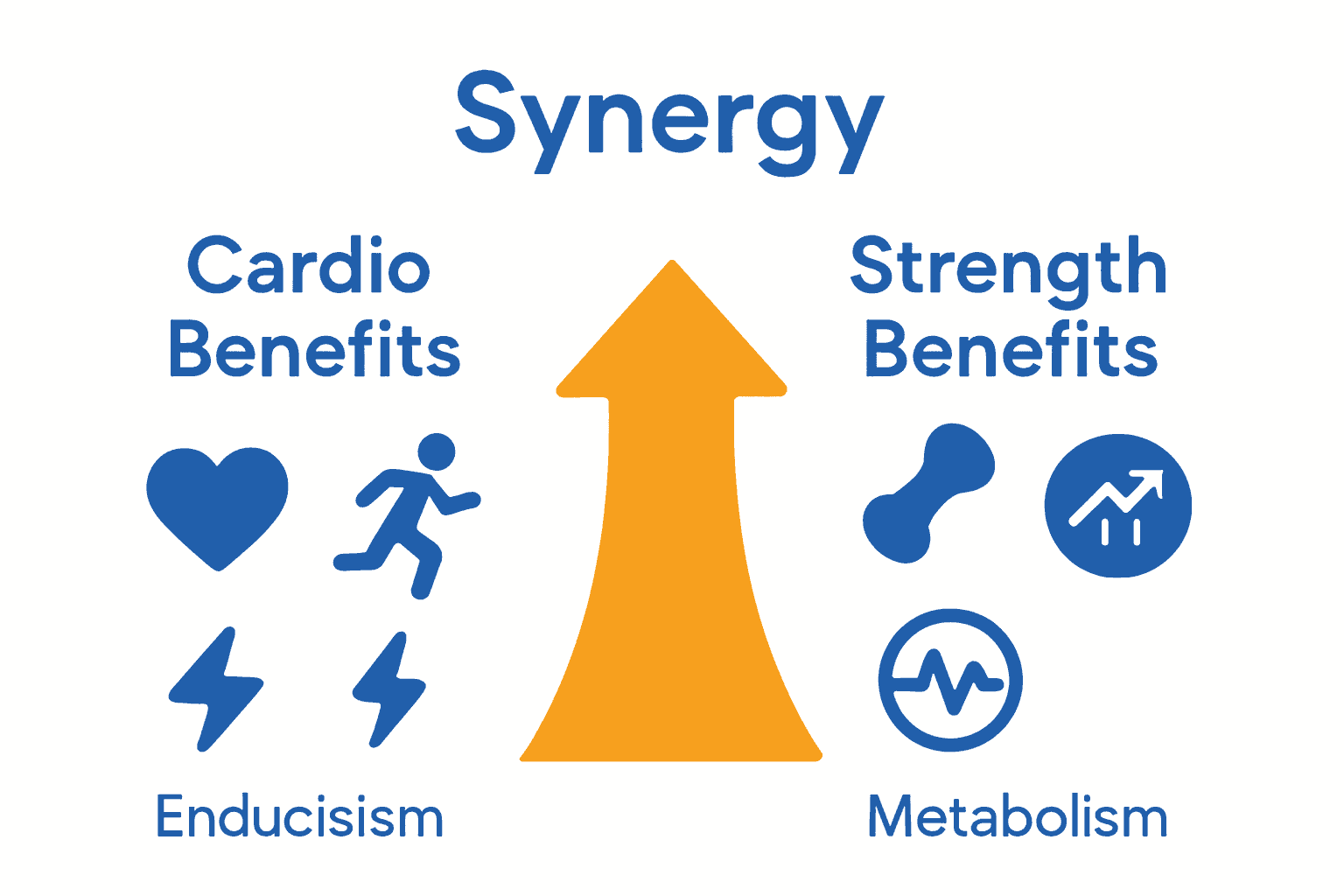 The synergy between cardio and strength training provides a powerful approach to long-term wellness.

Understanding Evidence Based Weight Loss for Success offers additional insights into how strategic exercise can support comprehensive health goals.
Weight Loss, Fat Loss, and Muscle Gain
Navigating the intricacies of the fitness world can be complicated.
You need to know how different types of training affect your weight loss and bodybuilding process.
According to the National Center for Biotechnology Information , strength training is associated with a decreased risk of various diseases, and you need at least 30-60 minutes of muscle-building activity per week.
The Science of Fat Loss and Muscle Development
Contrary to popular belief, weight loss is not only about burning more calories.
It’s actually about strategically gaining muscle that burn calories even at rest.
Gaining muscle improves the metabolism.
Strength training is an important activity that increases muscle mass, which then burns more calories.
Comparative Exercise Strategies
Research shows that the best results are achieved through a combination of methods.
National Center for Biotechnology Information states that performing both types of exercises is more effective and produces better results in decreasing blood pressure and improving the function of the cardiovascular system.
Key Strategies for Effective Weight Management:
- Prioritize resistance training to build lean muscle
- Incorporate high-intensity interval cardio
- Maintain a balanced, protein-rich diet
- Focus on progressive overload in strength training
- Track body composition, not just weight
Metabolic Optimization
Strength training is a great way to build muscle, but it can also help you burn fat. Gaining muscle mass improves your metabolism, which means that you can burn calories for a longer period of time, thus helping you to lose weight.
Understanding Building Muscle for Fat Loss could teach you new tricks regarding building muscle and losing fat.
Common Misconceptions and Mistakes
Many people tend to make mistakes when doing cardio and strength training.
According to National Center for Biotechnology Information, contrary to popular belief, strength training may actually have a negative effect. There may be a point where exercising stops being beneficial to your health and starts hurting it. This study suggests that more than 130-140 minutes of physical activity per week may be too much.
Overtraining and Misconception Pitfalls
Common Fitness Myths are often harmful to most people. Some people try to believe they can get good results by simply doing more exercises. On the contrary, people need to know that there are effective and ineffective ways of improving one’s fitness.
Balanced Approach Strategies
Research demonstrates that the concept of universal approaches to training is fundamentally wrong.
National Center for Biotechnology Information states that combined training does not necessarily superior to individual training, but the goals and preferences of each individual person should guide their choice of training.
Top Misconceptions to Avoid:
- Believing more exercise always equals better results
- Neglecting proper rest and recovery periods
- Ignoring individual body mechanics and limitations
- Comparing your fitness journey to others
- Expecting instant transformations
Practical Wisdom in Training
Successful fitness is about working smarter, not just harder, paying attention to how your body reacts to various types of exercises and giving it enough rest in between to allow it to recover and get stronger. It is also about getting to know your body, listening to its requirements, and treating it right.
Quality always outweighs quantity, both in matters of the heart and on a fitness path.
Understanding Common Weight Loss Mistakes can teach you a thing or two about the most common fitness-related failures and how to avoid them altogether, helping you design a successful personal fitness program that will help you achieve your goals.
Choosing the Right Approach for Your Goals
Choosing the right type of fitness is not a question of what everyone can do. It is more like a matter of what works best for you.
The National Center for Biotechnology Information published a study showing that resistance exercises are highly versatile for improving cardiovascular and endothelial functions, whether they are done alone or combined with aerobic exercises.
Personalized Fitness Mapping
Individual Goals are the factors that should determine the choice of an exercise. Such objectives may include weight loss, increasing muscle mass, improving overall health, and enhancing fitness.
Different people may choose different activities depending on their personal preferences, or one type of work may be more appropriate for a person’s health status.
Holistic Health Considerations
Comprehensive fitness is not a choice between the two, but the use of both to yield the best results.
According to the National Center for Biotechnology Information, a combination of aerobic and muscle building exercises lowers the risks of cardiometabolic diseases, depression, and obesity.
Goal-Specific Exercise Recommendations:
- Weight Loss: Combine high-intensity interval training with resistance exercises
- Muscle Gain: Prioritize progressive strength training
- Cardiovascular Health: Mix moderate cardio with resistance training
- Endurance Improvement: Focus on aerobic exercises with supplementary strength work
- Overall Wellness: Create a balanced routine incorporating both modalities
Strategic Approach Selection
The most effective fitness journey is one that evolves with your changing body, lifestyle, and goals
meaning that you have to periodically reevaluate your fitness program and become increasingly aware of your body’s needs and how to best address them.
It’s about consistency over intensity and finding what works best for you, rather than one-size-fits-all approaches.
How to Set Small Fitness Goals?
can help you get there by providing guidance on how to create a more structured, and therefore more motivating, fitness program that’ll help you achieve your specific goals
Unlock Your Best Fitness Balance Today
Struggling to choose between doing cardio and strength training?
If you want to get more energy, increase your muscle mass, and reduce fat all at the same time, then you need a personal trainer and to learn how to create a perfect plan for yourself.
You need to know how to properly combine training to achieve your goals and change your life for the better.
Get some great ideas and unique workouts for creating your perfect fitness plan.
Go to our Cardio intervals – LeanAndFit and Strength Training – LeanAndFit pages now.
Don’t wait any longer before you begin your journey to a healthier lifestyle. Find out what works for you and your personal needs at leanandfit.info. Start today!