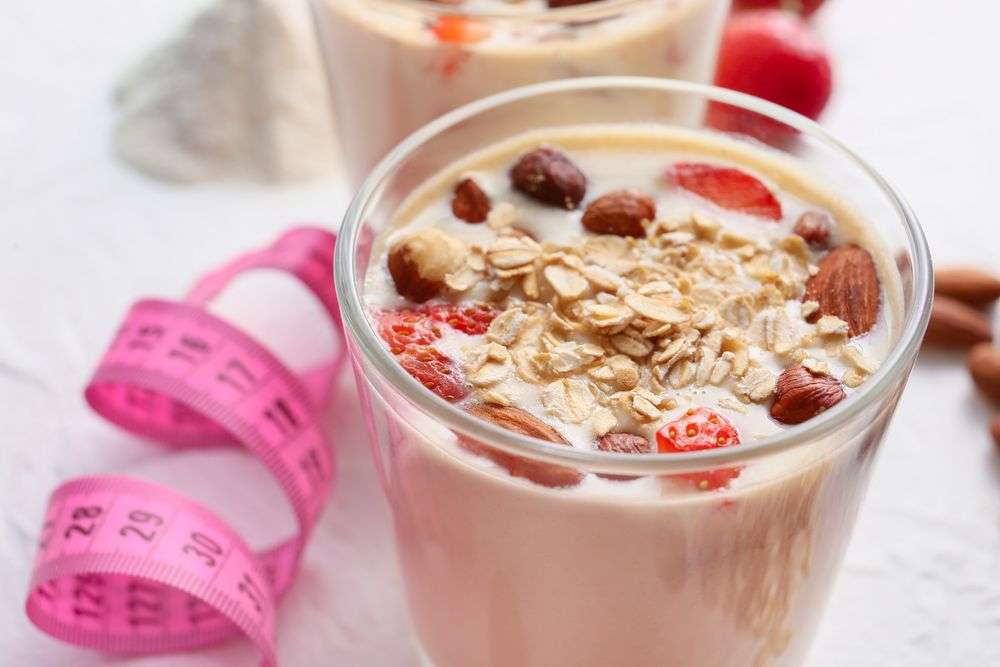

Most people on average consume too many calories but not enough nutritionally dense foods that are good for them.
By choosing to eat these types of food you will be getting plenty of the vitamins, minerals and antioxidants that your body needs to function at its best with no extra calories.
These little changes in your diet will have a huge impact on your overall health, such as increased energy levels, better control of your weight, and decreased risk of chronic disease.
See how easy it is to incorporate these healthy habits into your daily life to make your meals as nutritious as possible for a lifetime of wellness.
Table of Contents
- Defining Nutrient Dense Foods And Core Principles
- Major Categories Of Nutrient Dense Foods
- Essential Nutrients And Their Health Benefits
- Incorporating Nutrient Dense Foods Into Meals
- Common Pitfalls And Myths To Avoid
Key Takeaways
| Point | Details |
|---|---|
| Nutrient Density Principle | Focus on foods that provide high nutritional value with fewer calories to enhance overall health. |
| Diverse Food Categories | Incorporate a variety of nutrient-dense foods, including fruits, vegetables, lean proteins, and whole grains, for balanced nutrition. |
| Cooking and Preparation | Opt for cooking methods that maintain nutrient integrity and use minimal added sugars, fats, and sodium. |
| Awareness of Myths | Be cautious of misleading labels and preparation methods that can compromise the health benefits of seemingly healthy foods. |
Defining Nutrient Dense Foods and Core Principles
Nutrient-dense foods are wholesome ingredients with high levels of nutrients and relatively low calories.
According to the Dietary Guidelines, these are foods and drinks that supply essential nutrients and beneficial components in a variety of forms with few added sugars, saturated fats, and sodium.
The essence of the concept of nutrient density is that it is about the maximization of nutritional benefit during meals.
Foods that may be categorized as nutrient-dense include vegetables, fruits, whole grains, seafood, eggs, legumes, nuts (unsalted), and lean meats.
Key characteristics of nutrient-dense foods include:
- High vitamin and mineral content
- Low in added sugars
- Minimal saturated fat
- Low sodium levels
- Provide essential health-promoting compounds
As highlighted by Health.gov, meeting nutritional needs within energy requirements means deliberately choosing foods in their most nutrient-dense forms.
For example, fat free milk is a nutrient dense food because it provides similar amounts of nutrients as whole milk, but has fewer calories and less saturated fat.
The point of focusing on nutrient dense foods is to create a balanced, healthy diet that will give your body everything it needs to be the best it can be
Focus on nutrient dense foods and you’ll be well-fed and on your way to a healthier lifestyle.
Major Categories of Nutrient Dense Foods
Nutrient-dense foods are an essential component of a healthy diet, and familiarizing yourself with the types of nutrient-dense foods will help you to make healthy choices.
The Dietary Guidelines categorize nutrient-dense foods and the various types of food that they recommend.
The following nutrient-dense foods are divided into categories that provide a wealth of essential nutrients with little added sugars, saturated fats, and sodium:
Plant-Based Nutrient Powerhouses contain a variety of foods like vegetables and fruits that have many essential nutrients and fiber.
Other great sources of nutrients that can be easily added to your daily diet and are both simple and delicious to prepare are included in 10 Healthy Snack Ideas.
Animal-based nutrient-dense foods form another crucial category:
- Seafood (rich in omega-3 fatty acids)
- Eggs (complete protein source)
- Lean meats and poultry
- Low-fat dairy products
Legumes and proteins are another group of foods that are beneficial for the body.
These include beans, peas, lentils, unsalted nuts, and seeds. They are a rich source of protein, healthy fats, minerals, and complex carbohydrates. The products are beneficial for people who are on a vegetarian diet or want to include more vegetarian meals in their diet.
Proteins and legumes should be consumed as part of a balanced diet. A lot of different foods from different groups are necessary for the body to receive all the nutrients it requires.
It is important not to measure foods in calories but rather in nutrition and benefit for the body.
Essential Nutrients and Their Health Benefits
Knowing which nutrients are essential is vital in order to maintain health and wellbeing.
As recommended by the Dietary Guidelines, essential nutrients include vitamins, minerals, protein, carbohydrates, and fats. They all contribute to the normal functioning of the body, for example, vitamins and minerals support the immune system, keep the bones strong, muscles active, and carry oxygen around the body. Protein is important for building and repairing tissues, and for energy, while carbs are needed for fuel.
In turn, macronutrients are the nutrients that the body needs in the largest amount. There are three types of them, namely protein, carbohydrates, and fats. The first one is a building material for muscles, organs, skin, and hormones. Carbohydrates, in their turn, are necessary for supplying the body with energy, and fats are needed for hormone production and cell function.
In order to get advice on how to ensure the body gets all the nutrients it requires, one should check out 10 Essential Tips for Healthy Eating Habits.
Key essential nutrients and their primary health benefits include:
- Vitamins
- Vitamin D: Bone health and immune function
- Vitamin C: Immune support and skin health
- B Vitamins: Energy metabolism and nervous system
- Minerals
- Calcium: Bone and teeth strength
- Iron: Oxygen transportation
- Magnesium: Muscle and nerve function
Micronutrients, despite being needed in substantially lesser amounts than macronutrients, are equally important in maintaining overall health.
They constitute a wide variety of vitamins and minerals that are integral components in the prevention program for numerous diseases as well as normal body functions. Notably, one has to consume foods with micronutrients in appropriate ratios to ensure healthy living.
It is impossible to get every nutrient required by the body from a single type of food.
This is why a variety of nutrient-rich foods is indispensable in a balanced and healthy diet. By incorporating this knowledge into practice, one can guarantee the presence of all micronutrients necessary for health and disease prevention in the daily diet.
Incorporating Nutrient Dense Foods into Meals
Enhancing the nutritional value of the meals is a process that requires transformation of eating patterns and a thoughtful approach.
The dietary guidelines emphasize the importance of choosing a variety of nutrient-dense foods, including vegetables, fruits, whole grains, lean protein, and low-fat dairy, prepared with minimal amounts of added sugars, saturated fats, and sodium.
Moreover, there are some practical recommendations, collectively called Meal Composition Strategies, that could be used as a reference for enhancing the nutritional value of meals. They include filling half the plate with different colored vegetables and fruits, a quarter with lean meat, and a quarter with whole grains. Adding spinach to smoothies, berries to oatmeal, or almonds to the top of a salad are some examples of the strategy application.
To get more detailed information on the topic and expand the knowledge base, Master Balanced Meal Planning for Optimal Health and Weight Loss is a great source. It provides a more complex understanding of developing nutritious meals, following the dietary guidelines.
Practical tips for boosting nutrient density include:
- Protein Selection
- Choose lean meats, fish, and plant-based proteins
- Opt for grilled or baked preparations
- Dairy Choices
- Select fat-free milk and yogurt
- Use low-fat cheese sparingly
- Cooking Methods
- Steam vegetables instead of frying
- Use herbs for flavor instead of salt
- Smart Substitutions
- Replace refined grains with whole grains
- Use Greek yogurt instead of sour cream
The key to success is to keep being consistent and creative and experiment with different ingredients dense in nutrients and create different recipes. This way you are going to improve your health in no time.
Make sure that your meals are not only healthy but also tasty and full of flavor. It is a celebration of your own healthy lifestyle!

Common Pitfalls and Myths to Avoid
Finding nutritious foods to eat can prove to be a challenging task.
According to health.gov, people often consume nutrient-dense foods that actually aren’t healthy due to added sugars, starch, and solid fats making them unhealthy.
The article ‘Nutritional Deception Exposed’ states many of the popular myths regarding nutritious food items.
Many are under the impression that all variations of a food are healthy, however that is far from accurate. It depends on how the food is prepared, along with a variety of other factors, if the food will be dense with nutrients or not.
A pack of sweetened yogurt and regular cheese has more calories and saturated fat than a fat free yogurt and low fat cheese. The article ‘7 Common Weight Loss Myths Debunked’ can help you find more nutritional deception.
Common myths and pitfalls to be aware of include:
- Packaging Trap
- “Organic” doesn’t always mean nutrient-dense
- “Low-fat” often means high in sugar
- Preparation Misconceptions
- Frying negates nutritional benefits
- Overcooking destroys vital nutrients
- Portion Size Illusions
- Healthy foods still require portion control
- Large portions of “good” foods can lead to weight gain
- Supplement Fallacy
- Supplements cannot replace whole food nutrients
- Real food provides complex nutritional benefits
The process of learning what nutrient-rich foods are is full of valuable information. Pay attention to the marketing tactics which the manufacturers use, read the labels on food packages, and choose whole foods over processed ones.
Make sure to eat right and give yourself a chance to be healthy and energetic by making the right choices in terms of nutrition.
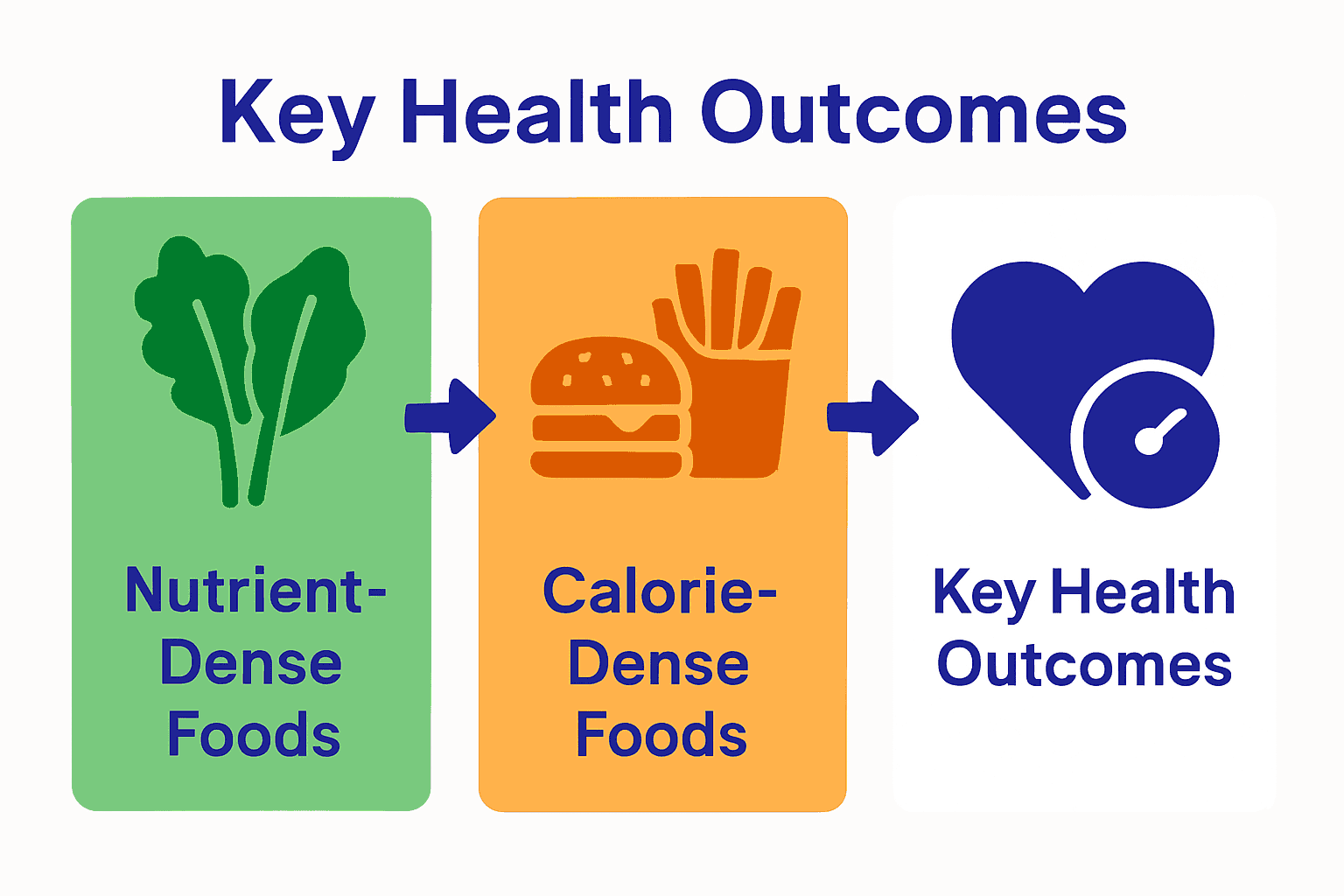
Unlock the Power of Nutrient-Dense Foods for Lasting Health
Balancing the amount of calories consumed and obtaining maximum levels of nutrition is a complicated issue. The concept of nutrient density plays an important role in nutrition because it helps individuals maintain a healthy and balanced diet that is low in calories and bad for the body.
Therefore, to maintain a healthy and balanced diet, it is important to learn how to eat nutrient-dense foods and limit highly processed ones.
We provide you with a comprehensive guide to learning how to achieve calorie restriction in your diet and ways to avoid the most harmful ingredients.
In addition, our article on Food Insecurity – LeanAndFit may be helpful if you have issues with accessing nutritious food.
It is time to start improving your quality of life by implementing a few simple but effective rules of a nutrient-dense diet. Join us at LeanAndFit and make a choice for a healthier lifestyle!
Frequently Asked Questions:
The nutrient dense foods complete guide for healthy living makes it clear that, apart from the amount of food, the quality of the food items consumed matters. Nutrient-density foods contain a substance needed for the body to recover.
From increasing energy levels to enhancing weight management, the benefits of consuming healthy foods do not appear on top. However, they certainly offer significant advantages on a frequent and long-term basis. A balanced diet allows you to lead a longer and healthier life.
Q-1: Why is it that sometimes when I eat the same number of calories, I feel so energized while other times I am lethargic?
A-1: Yes, you guessed it right; it is all about nutrient-density foods. The calories in the food you eat signify the amount of energy that food item provides. It does not show how much nutrition the food will add to your body as it fuels it. When you consume highly nutritious meals regularly, you enable your body to obtain vital nutrients that trigger it to be healthy.
On the other hand, when you take meals that do not have enough nutrition, although you may feel full, your body will continue to crave. Therefore, the next time you have a choice between highly nutritious and regular foods, remember that nutritious meals will give you energy to do whatever you want.
Q-2: Do nutrient-density foods decrease the amount of food you eat?
A-2: Definitely, eating healthy food lowers the amount of meals you take because healthy foods consists of roughage that helps you feel full. When your body gets the required nutrition from the food it consumes, it does not require more food to feed. As a result, you may consume the same amount of meals you ate before but made up of healthy foods.
Your body will begin feeling energetic and it will also be in a good state to continue with other activities.
Q-3: Why is it that processed foods are so addictive?
A-3: Processed foods are made to taste nice and be straight away used. They are made in a manner that makes them very tasty, therefore, you tend to consume them more than the healthy ones. Although they may be tasty, they cannot give your body the nutrition it requires like the healthy foods do. As a result, you end up feeling low, and you cannot concentrate on your work.
Healthy foods may not be tasty at first, but they are very healthy for your body. With time, you will begin to prefer them to the processed ones since they will keep you in good energy.
Q-4: When looking at the nutritional facts of a particular food item, can one miss out on some of the healthy components?
A-4: Yes, the body requires nutrition to stay healthy and to keep it free from diseases. Most of these foods have been processed and, therefore, lose some components needed by the body. Some manufacturers make use of diet or low-fat food items that claim to help you lose weight but do not supply the exact minerals or vitamins needed by the body. Smoothies are also healthy but in most cases, they contain a lot of sucrose.
However, when making healthy meals, always look out for food items that are natural and not processed so that you can obtain all the minerals your body requires.
Q-5: What is the relationship between healthy foods and leading a healthier life?
A-5: Healthy foods contain essential components for the proper working of the human body. They can help lower the risks of having many illnesses and eventually help one lead a healthier life.
When the body is healthy, the individual can achieve a lot in his or her life as he or she has energy to do everything.
Q-6: What does it mean when one feels a natural energy boost after eating healthy foods?
A-6: Eating healthy foods enables the body to utilize the nutrients present in them to maintain its proper running mechanism so that it can produce enough energy.
Therefore, after eating healthy meals, you tend to feel energized naturally and ready to do other activities. This happens because the nutrients in the food help to keep your body balanced.
Q-7: Can eating healthy foods assist one in having a positive attitude towards food?
A-7: Yes, it can. Most people have turned to a healthier life using healthy foods to help them shed off weight. In doing so, they have changed their perception towards food in a healthy way. As a result, they do not consume too much or get into unhealthy eating habits that may lead to weight gain.
Eating healthy foods is a positive way of looking at meals since it helps individuals stay away from chronic diseases and have a positive self-image.
Q-8: Why is there a need to maintain a large variety of healthy foods rather than sticking with a few types?
A-8: Every food has its own benefits that are essential for the body to remain healthy. However, no single food can offer all the nutrients that are required for the body to stay healthy. Therefore, you should consider eating different healthy foods that help keep you fit and give your body all the nutrients it needs.
Recommended:
- 10 Essential Tips for Healthy Eating Habits – LeanAndFit
- Is Nutrient Density the Secret Weapon Against Obesity? – LeanAndFit
- 10 Healthy Snack Ideas for a Guilt-Free Munch – LeanAndFit
- How to Build a Balanced Plate with Whole Foods? – LeanAndFit
- Why Trust LeanAndFit.info?
- For educational purposes only