
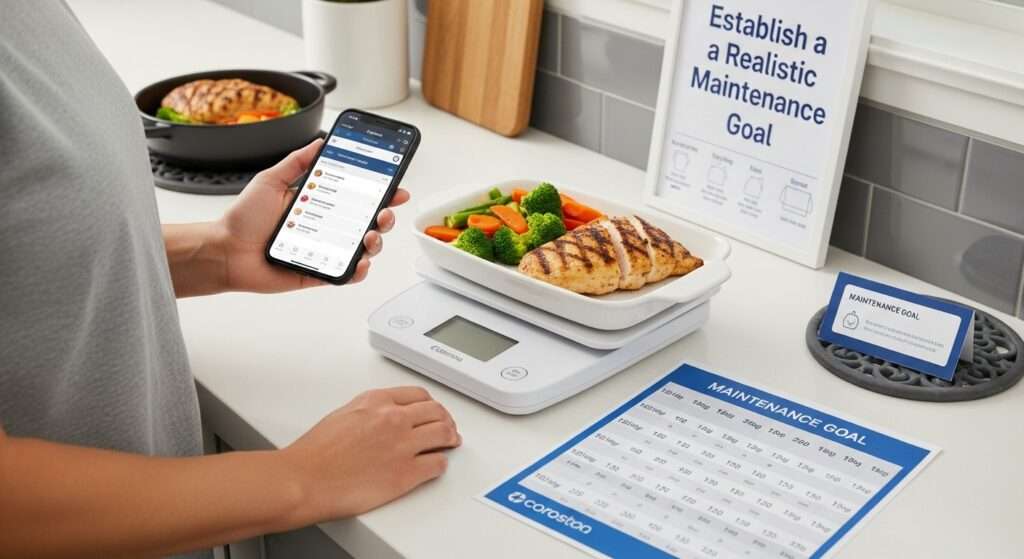
Losing weight is one challenge.
Maintaining that loss is an additional and arguably more difficult task.
After weeks or even months of counting calories and exercising, it can be very easy to consider the hard part over once you’ve reached your goal.
Weight maintenance is more about having the right attitude than anything else.
So, want to learn how to maintain weight loss?
It’s about developing eating, exercising, monitoring and behavior patterns for the long term.
That doesn’t mean that you have to adhere to a strict diet or exercise program for the rest of your life, but that you should develop certain behaviors that allow you to make changes as needed while continuing to eat and exercise in a healthy way.
According to the National Institute of Diabetes and Digestive and Kidney Diseases (NIDDK), maintaining weight loss can be challenging because your metabolism slows during weight loss and your body needs fewer calories at your lower weight. Changes in hormones and other factors may also make it harder to keep the weight off.
The good news is that weight regain is not simply a matter of willpower. Several factors can contribute to it, including your environment, physical activity, sleep, stress, medications, medical conditions, hunger and appetite, behavior, and changes in energy expenditure.
So the better question is not:
“How do I stop myself from regaining weight?”
It is:
“How can I build a realistic system that helps me maintain my weight over time?”
This guide explains how.
Article Contents
- What Happens to Your Body After Weight Loss?
- What Does Weight Maintenance Actually Mean?
- Step 1: Set a Realistic Maintenance Goal
- Step 2: Keep Your Eating Pattern Sustainable
- Step 3: Continue Monitoring Your Weight and Eating Habits
- Step 4: Stay Physically Active
- Step 5: Protect Muscle and Strength
- Step 6: Prepare for Weekends, Vacations and Social Events
- Step 7: Build a Support System
- Step 8: Watch for Early Signs of Weight Regain
- Step 9: Respond to Setbacks Without Starting Over
- Step 10: Adjust Your Plan as Your Life Changes
- Do You Need to Count Calories to Maintain Weight Loss?
- Why Does Weight Regain Happen?
- Can You Maintain Weight Loss Without a Perfect Diet?
- A Practical Weight Maintenance Plan
- Weight Maintenance Checklist
- Frequently Asked Questions
- Bottom Line
- References
What the Evidence Says
Weight maintenance is not about finding a secret food, supplement, exercise, or metabolism-boosting trick.
Evidence-based guidance points toward several practical principles:
| What matters | What the evidence suggests |
|---|---|
| Eating pattern | Continue an eating pattern that is nutritionally adequate and realistic enough to maintain over time. |
| Physical activity | Regular physical activity supports weight maintenance and provides important health benefits beyond body weight. |
| Monitoring | Monitoring weight, eating, physical activity, and other relevant behaviors can help identify changes early. |
| Consistency | Maintaining useful habits over time is more important than following a perfect plan. |
| Support | Professional, family, social, or behavioral support can make long-term weight management easier. |
| Setbacks | Temporary increases in weight do not automatically mean failure. Early recognition gives you an opportunity to adjust your approach. |
| Individualization | The amount of food, physical activity, and monitoring needed differs between individuals. |
The simplest answer to “how do I maintain weight loss?” is this: continue the eating and activity habits that helped you lose weight, monitor your progress, plan for disruptions, and make small adjustments when your weight or habits begin to change. Weight maintenance is not about perfection. It is about having a system you can return to repeatedly.
NIDDK recommends that successful weight-management programs include a plan for keeping the weight off, continued healthy eating, physical activity, monitoring, feedback, and ongoing support.
Therefore, there is no single “maintenance diet,” calorie target, or exercise prescription that will work for everyone.
The goal is to find a sustainable combination that will work for you.
What Happens to Your Body After Weight Loss?
One reason that makes it hard for people to keep weight off after shedding pounds is that your body may not respond in the same way at a lower weight, since your body generally burns fewer calories when you weigh less.
NIDDK notes that metabolism decreases during weight loss, and hormonal and other changes may also make it harder to maintain a lower weight.
It has nothing to do with your metabolism being “broken,” per se, but rather that your energy needs have changed. There are also changes in hunger and satiety hormones, as well as differences in activity levels and energy expenditure.
That’s one reason why simply returning to your previous eating and activity patterns after losing weight can lead to gradual weight regain. Your body is now smaller and generally requires fewer calories than it did before the weight loss.
The goal isn’t really to eat less and less as you go; rather it’s about finding a healthy diet and activity pattern that works for your body at this stage in life.
What Does Weight Maintenance Actually Mean?
Weight maintenance does not necessarily require that your weight be exactly the same on every morning.
It is normal for your weight to shift between days due to various factors such as:
- hydration levels
- amount of food
- salt levels
- carbohydrate levels
- bowel content
- menstruation, for those who menstruate
- exercise
- illness
- travelling
- sleeping patterns
A temporary increase or decrease in your weight is normal.
The important thing is to track your weight on a regular basis and observe the pattern, rather than focusing on any one individual day.
For example, it might look like this:
- 0kg on Monday
- 5kg on Tuesday
- 8kg on Wednesday
- 2kg on Thursday
- 1kg on Friday
It is not a dramatic increase. You can see that it is useful to track a pattern. The point of tracking is not to focus on the number. It is to intervene early if you see any concerning trends.
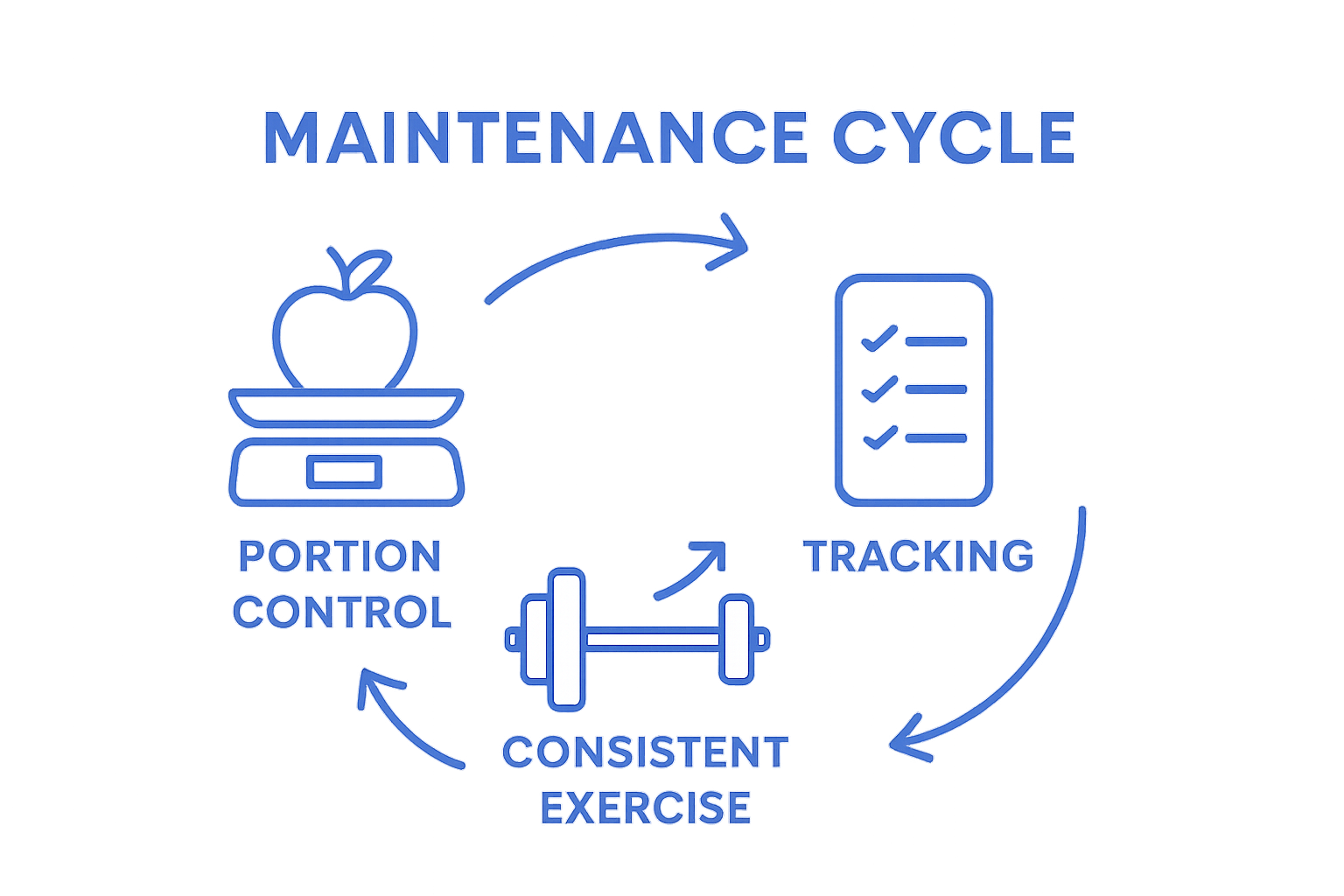
Step 1: Set a Realistic Maintenance Goal
Your maintenance target should be based on more than the number on the scale.
Instead of trying to stick to one number on the scale (e. g. I must remain exactly 70 kg forever.), consider maintaining a healthy range of weight alongside your eating habits, physical activity, fitness, and other health markers.
Your appropriate target weight range depends on:
- your height
- body composition
- age
- medical conditions
- medications
- physical activity
- your previous weight history
- nutritional needs
- individual health goals
If you have medical conditions or are significantly overweight or obese, consult with a health professional about an appropriate weight target.
Moreover, it might be useful to set goals independent of the scale.
For example:
- maintaining your physical activity
- strengthening your muscles
- maintaining healthier blood pressure
- improving blood sugar if applicable
- eating more vegetables and fiber-rich foods
- improving your fitness
- getting enough sleep
- reducing overeating episodes
- maintaining a healthier waist circumference
This approach prevents the scale from being the sole focus of attention.
If you’re still deciding what a realistic weight goal looks like, see our guide to setting realistic weight-loss goals for lasting success.
Step 2: Keep Your Eating Pattern Sustainable
One big mistake many people tend to make when they’ve lost weight is assuming that since they’ve reached their goal, they can get back to their old eating habits.
That often can be a big mistake.
The eating pattern that helped you lose weight may need to continue in some form if you want to maintain that loss.
That does not mean you need to continue a rigorous dieting pattern if that’s what you were doing.
It just means you should find a pattern that you can stick to.
NIDDK recommends a sensible eating plan that can be followed throughout your life, while making sure you get all the nutrients your body needs in the foods you eat.
This diet should include a variety of healthful foods such as vegetables, fruits, whole grains, and protein-rich foods.
An eating pattern that can be followed may consist of:
- vegetables
- whole fruits
- beans and lentils
- whole grains
- nuts and seeds
- fish
- eggs
- lean meats or other protein-rich foods
- dairy foods or alternatives
- healthy fats
Your combination of these things can vary. But what’s important is that it’s healthy for you and that you enjoy it as well.
Avoid the “all or nothing” approach.
You do not need to give up all the foods you love.
Learn to eat more higher-calorie foods.
For instance, you can enjoy a restaurant meal on Saturday without turning it into an all-day eating binge.
Same with desserts. You can have them from time to time.
If you want to understand how calorie intake relates to weight loss and maintenance, see our guide to how a calorie deficit helps you get lean and fit.
Step 3: Continue Monitoring Your Weight and Eating Habits
Regular self-monitoring can be one of the most useful weight maintenance strategies because it helps you notice changes before a small problem becomes a larger one.
Monitoring doesn’t necessarily mean counting every calorie for the rest of your life.
However, a certain amount of self-monitoring can help you become aware of changes in behavior that may be difficult to detect on their own.
NIDDK recommends monitoring behaviors such as eating, physical activity and weight as part of successful weight-management programs.
Things that you might want to monitor could include:
- body weight
- waist measurement
- physical activity
- eating patterns
- snacks
- sugary drinks
- restaurant meals
- sleep
- episodes of overeating
Tools that you can use to monitor your behaviors might include:
- a notebook
- a spreadsheet
- a smartphone app
- a fitness tracker
- a food diary
You don’t have to use all of them.
Pick whatever system is easiest for you to stick with.
What should you be looking for?
The whole point of monitoring is to look for patterns.
For example:
“My weight always goes up when I stop working out.”
Or:
“I snack more when I don’t get enough sleep.”
Or:
“I always eat restaurant food several times a day when I’m on business trips.”
Once you see the pattern, you can work on the cause.
Monitoring becomes a kind of feedback instead of punishment.
Step 4: Stay Physically Active
Its value goes beyond calories burned. Regular physical activity also supports cardiovascular health, physical function, sleep, mood, and muscle strength.
In addition to the benefits it provides in terms of weight control, regular physical activity can have additional benefits for cardiovascular health, physical function, sleep, mood, muscle strength and overall health.
In terms of general health, adults are generally advised to aim to work towards at least 150 minutes of moderate-intensity aerobic activity per week, plus muscle-strengthening on at least two days per week. Individual needs vary.
Some people may need to perform more activity to help maintain weight loss, depending on their eating pattern and individual physiology.
If exercising at home is easier for you, see our guide to home exercises for beginners and weight loss.
NIDDK notes that people trying to lose weight or keep it off may need around 300 minutes of moderate-intensity aerobic activity per week, depending on their individual circumstances. Some people may need more.
This does not mean that you should suddenly start exercising for five hours every week.
Build gradually.
For instance you could start by:
- walking
- cycling
- swimming
- dancing
- hiking
- jogging
- or participating in recreational sports.
Resistance training and bodyweight exercises are all valid options.
If you’re rebuilding your exercise routine after losing weight, our guide to beginner workout routines for lasting weight loss success can help you create a realistic weekly schedule.
Choose activities you can continue.
If you enjoy walking, walking may be a better long-term strategy than forcing yourself into an exercise program you dislike.
If you enjoy strength training, make it part of your routine.
Consistency matters.
If you are interested in using bodyweight training as part of your routine, you can also read our guide on whether bodyweight exercises are effective without weights.
Step 5: Protect Muscle and Strength
Weight loss may occur via losses in fat mass and/or lean mass.
This is why resistance exercise is an important component of a long-term weight-management program.
Preserving muscle can be particularly important during weight loss because not all weight lost comes from body fat.
In addition, it provides functional benefits and promotes general health.
Resistance training includes:
- squats,
- lunges,
- push-ups,
- rows,
- resistance-band,
- weight-machine,
- free-weight,
- and other exercises.
You don’t have to become a bodybuilder.
The aim is to increase or maintain functional strength and perform resistance training as a regular part of your fitness routine.
If you have a medical condition, injury, or other personal concern, consult a qualified healthcare professional before beginning any new exercise program.
Step 6: Prepare for Weekends, Vacations and Social Events
A weight maintenance program that only works from Monday through Friday isn’t much good.
Real Life includes:
- birthdays,
- holidays,
- vacations,
- eating out,
- familial get-togethers,
- business travel,
- celebrations,
- periods of intense work or stress.
The answer isn’t to avoid these events but to have contingencies for them.
For instance, before going out to eat you might:
- avoid being famished,
- study the menu,
- order in a way that fits into your overall healthy eating pattern,
- be mindful of portions,
- limit drinks that contain calories, if appropriate.
When on vacation, you might:
- still get some exercise,
- stick to a modified but healthy eating pattern,
- eat local foods, but not necessarily every meal out,
- and return to your regular habits when the trip ends.
On weekends, resist the notion that it’s “diet police” time, and instead think of it as a chance to enjoy a slightly modified version of your everyday eating pattern.
Because sleep can influence appetite, eating behavior, and weight management, you may also want to read our guide on how sleep and weight loss are connected.
The CDC recommends keeping eating patterns consistent and planning ahead for weekends, vacations, and special occasions because changes in routine can make healthy habits harder to maintain.
Step 7: Build a Support System
Maintaining weight loss is often easier when you do not have to manage it on your own.
You may find support from:
- family
- friends
- a partner
- a registered dietitian
- a healthcare professional
- a structured weight-management program
- a fitness professional
- a support group
Ongoing support may not mean someone is watching you and weighing you at each step.
It can also mean having someone in your corner who knows your goals and will help get you back on track if you fall off the wagon.
The National Institute of Diabetes and Digestive and Kidney Diseases (NIDDK) recommends that effective weight-management programs include guidance, monitoring, feedback and support.
The right support system can help make you more self-sufficient – and less likely to feel like people are judging you.
If stress is one of the factors affecting your eating habits, see our guide to understanding the connection between stress and weight gain.
Step 8: Watch for Early Signs of Weight Regain
Weight regain is easier to address when you notice the early signs rather than waiting until the change becomes substantial.
Notice things like:
- an increase in your weight trajectory
- more frequent and larger portions
- more frequent eating or grazing
- less exercise and more restaurant meals
- more soda consumption
- poor sleep
- stress-induced eating
- reverting to old unhealthy eating patterns
- and discontinuing weigh-ins
One sign is rarely cause for alarm, but multiple occurrences may be worth addressing.
Step 9: Respond to Setbacks Without Starting Over
A setback doesn’t undo what a person accomplished over months.
They could have overeaten their holiday.
They could have been sick for two weeks and did not exercise.
They could have gained a few pounds on their vacation.
They could have had a stressful time at work.
These are all things that could have happened.
The best response is not “I ruined everything.”
But “What changed, and what can I do differently?”
NIDDK specifically advises people to expect setbacks and return to healthy habits rather than treating the setback as a failure.
Avoid the cycle:
Overeat → feel guilty → severely restrict food → become extremely hungry → overeat again.
A better cycle is:
Notice → understand → adjust → return to routine.
That is what sustainable weight maintenance looks like.
Step 10: Adjust Your Plan as Your Life Changes
There are likely to be changes in your maintenance strategy over time.
Here are a few such things to consider:
- Your activity level may change,
- your job may change,
- your sleep pattern may change,
- your medications may change,
- you may experience an injury,
- you may develop a medical problem,
- you may travel more frequently,
- your family situation may change,
- and of course, you get older.
The CDC notes that weight management can be influenced by factors such as medications, medical conditions, stress, genetics, hormones, environment, and age.
Injuries, new jobs, changes in family or marital or relationship status, or a change in the amount of time you’re able to spend exercising can have an impact.
If the strategy that you were using two years ago to maintain your losses is no longer effective, this is not necessarily a personal failing.
It may just mean that your life circumstances have changed.
Keep a close watch on your:
- eating pattern
- activity level
- sleep pattern
- stress level
- medications
- health status
- circumstances
and make whatever adjustments are needed.
For a broader explanation of the factors that influence weight management, see our evidence-based guide to weight loss.

Do You Need to Count Calories to Maintain Weight Loss?
Not necessarily. You do not have to count calories forever to maintain weight loss. Some people find calorie tracking useful, while others maintain their weight by following consistent eating patterns, staying physically active, monitoring their weight, and adjusting their habits when needed.
Here are a few tips:
- eating the same size portions
- minimally processed food
- plenty of vegetables and adequate protein
- no sugary drinks
- slow eating
- meal planning
- keeping track of weight
- exercising
The most optimal way is how the individual can without causing unnecessary stress.
CDC notes that it is not necessary for everyone to always count calories, even though it can be good to know how many calories your body needs.
If individuals find it hard to keep track of calories, they can always do it for a while just to get used to it rather than thinking they cannot live without it.
Why Does Weight Regain Happen?
Weight regain is usually not caused by one thing. It can result from a combination of biological, behavioral, environmental, and lifestyle factors:
- Your calorie needs may decrease
As you lose weight, if you are now smaller than you were previously, you will need less calories to sustain your body.
- Your appetite might change
There are physiological changes that take place in our body, as a result of which it can become harder to control food intake.
- Old habits might return
Many people tend to slowly resume old eating patterns – that of eating larger meals or portions, having junk food or drinks in between, etc.
- You might reduce your physical activity
You might have been working out regularly in order to shed those extra pounds; you might stop doing so, once you reach your desired weight.
- The environment might encourage you to eat more
High-calorie, tasty foods, availability of restaurants, prolonged sitting at work, traveling, and social events where food is a common topic of conversation and a frequent part of the event can all play a role.
- Your sleeping and stress patterns might change
Both can make it harder to stick to your old routines.
- There might be physiological changes
The way your hormones work, or medications or other medical conditions can also be a contributing factor.
The question of what causes weight regain is a complicated one, and is not necessarily due to a single factor. It has nothing to do with “people giving up on themselves”.
If your weight has stopped changing or your progress has stalled, our guide to overcoming weight-loss plateaus.
explains some of the factors that may be involved.
Can You Maintain Weight Loss Without a Perfect Diet?
Yes.
Perfection cannot be the maintenance strategy.
A balanced eating pattern can be flexible.
- There can be a birthday meal,
- a restaurant visit,
- some dessert,
- holiday treats,
- one meal too many.
It’s all what is usually done that counts.
One meal will not make you fat.
One exercise missed will not undo a month of the gym.
But the occasional slip can become a slide back.
Think in terms of:
Consistency > perfection
and:
Patterns > individual meals
Weight maintenance is determined by what you do most of the time, not by whether every meal is perfect.
A Practical Weight Maintenance Plan
A simple guide if you have already lost weight and want to keep it off:
- Decide what you are maintaining
Instead of focusing on a number choose a weight/health goal that is realistic for you.
- Keep eating the way that you have been eating
Don’t revert back to bad eating habits.
- Set up an activity schedule.
Get regular exercise that includes both aerobic activity and muscle building exercises that are appropriate for you.
- Keep track of your weight.
Focus on trends instead of individual weights.
- Know your triggers.
Be prepared to deal with whatever it is that causes you to overeat or not exercise.
- Have a plan for dealing with your triggers.
Be prepared for vacations, weekends, holidays, eating out, and stressful times in your life.
- Know who you can rely on to help you.
- Never let yourself get out of control before making changes
If your trend is going up, make adjustments before it gets too far.
- Don’t be surprised if you slip
Getting back on track is usually much harder than staying on track.
- Adjust rather than abandon the plan
If something isn’t working, change it rather than assuming you have failed.
Weight Maintenance Checklist
| Weight maintenance habit | Am I doing this consistently? |
|---|---|
| I have a realistic weight and health goal | ☐ |
| I follow a sustainable eating pattern | ☐ |
| I stay physically active each week | ☐ |
| I include muscle-strengthening activity | ☐ |
| I monitor my weight regularly | ☐ |
| I pay attention to changes in my eating habits | ☐ |
| I plan for weekends, vacations, and social events | ☐ |
| I get adequate sleep | ☐ |
| I have strategies for managing stress and overeating triggers | ☐ |
| I know what to do if my weight begins trending upward | ☐ |
| I have people or professionals I can turn to for support | ☐ |
| I adjust my plan when my circumstances change | ☐ |
Frequently Asked Questions:
How can I maintain weight after I lose it?
Follow the eating and activity patterns that have helped you lose weight, track your weight regularly, get active, plan ahead for disruptions to your routine, and take action at the first sign of significant change.
Weight maintenance is usually not a final destination, but rather an ongoing process
How much exercise do I need to maintain weight loss?
There is no one-size-fits-all answer to the question.
As a general rule, adults should perform at least 150 minutes per week of moderate-intensity aerobic activity as well as muscle strengthening exercises two or more days weekly
In some cases, people with substantial amounts of weight to lose may need to become more active than the general population.
According to NIDDK, 300 minutes per week of moderate activity may support weight maintenance for those who have lost a significant amount of weight.
Everyone’s situation in life and metabolism is different, so there is no one-size-fits-all approach to exercise and nutrition. How much you eat and how active you are should depend on your needs and health status.
Do I have to count calories forever after I lose weight?
Not necessarily.
Tracking your food intake can be an effective tool to maintain weight, but it is not the only option.
You may find that you can make appropriate choices about what and how much to eat, when to be active, and regularly weigh yourself.
Why am I gaining weight post weight loss?
There are many possible causes of weight gain after a period of weight loss.
These include eating more, becoming less active, changes in appetite, lower metabolic rate at a reduced body weight, interrupted sleep, increased stress, medications, medical conditions, and other factors.
Gradual weight gain is not necessarily a sign that you have failed. Instead, think about what changes may have occurred that could explain a higher number on the scale.
Is it normal to regain a few pounds?
It is normal for your weight to gradually increase and decrease throughout your weight loss journey. Sometimes water weight or the amount of food you eat can increase temporarily due to sodium or carbs you consume.
To really maintain your weight over time, track your weight regularly and see how it trends, instead of focusing on a single number
However, if you are consistently gaining weight, it is worth talking with a healthcare provider to rule out medical issues.
How do I stop gaining weight after losing weight?
Instead of a fad diet, you may want to consider adopting more sustainable healthy habits for life.
Get active and keep doing the things that you already enjoy, watch what and how much you eat, weigh yourself regularly and make adjustments as needed, plan ahead for vacations and busy days, and don’t ignore signs that you may be gaining weight.
Can I maintain my healthy weight without having to diet?
You can maintain a healthy weight without being on a strict diet plan, but it does require a commitment to balancing the food you eat with the amount of physical activity you get.
The most successful strategy for keeping weight off is generally following a healthy diet and physically active lifestyle rather than going on and off strict diets.
What should I do if I regain some weight?
First, breathe and accept that a few pounds of weight gain is not a failure.
Then go back and look at what may have contributed to the weight gain.
Ask yourself questions like these:
Have I been eating more food?
Have I been eating more frequently?
Have I been less active than usual?
Has my sleep pattern changed?
Have I been experiencing increased stress levels?
Am I consuming more restaurant or processed foods than usual? Have my medications changed?
Then make at least 1 or 2 changes to your diet and lifestyle and monitor if your weight stabilizes at a new higher weight.
If you continue to regain weight in a pattern or are concerned about sudden or unexpected weight gain, talk with a healthcare provider.
Can I eat carbs and still maintain my weight loss?
You can absolutely eat carbs as part of a healthy diet to help you lose or maintain your weight. Carbs themselves are not the problem in terms of weight maintenance or loss.
What matters is the type and amount of food you eat, your overall pattern of eating, and how your body responds to dietary changes, such as portion size, caloric intake, and physical activity levels.
Is it harder to maintain weight loss than initial weight loss?
Maintaining weight loss can be more challenging for many people, due in part to the fact that you need fewer calories at a reduced weight and other biological and behavioral forces.
It is extremely important that you have a plan to maintain weight loss, which is why NIDDK specifically encourages people to have a plan to keep the weight off when they begin a weight loss intervention.
Can medications be used to help maintain weight loss?
Medications may be recommended for certain people with overweight or obesity who are trying to keep the weight off. Prescription drugs are often used to treat obesity and are generally paired with lifestyle interventions like diet and exercise.
However, these types of treatments are not suitable for everybody and should be discussed with a healthcare provider.
Some people with overweight or obesity may be prescribed weight-management medications as part of a broader treatment plan that includes healthy eating and physical activity. These medications may also help some people maintain weight loss. Whether medication is appropriate depends on factors such as health status, medical history, other medications, potential benefits, and side effects. Discuss these options with a healthcare professional.
According to NIDDK, there are weight-loss medications that might also assist in weight maintenance.
The Bottom Line
Sustaining weight loss is not about being perfect. It is about creating a system that you can follow even when your routine changes.
Systems often include:
- a sustainable eating pattern
- exercise
- monitoring
- sleep
- realistic expectations
- support
- backups for when you slip
- willingness to change
Your weight may be up and down or your whole routine may go off-track for a while but that doesn’t mean that your weight loss endeavor is over.
It is more important to look at changes and what might have caused them, as well as the best way to get back on track.
The goal is not:
“Never regain a pound.”
The goal is:
“Build habits and strategies that help me maintain my health and weight over the long term.”
That is what sustainable weight maintenance is really about.
References
- National Institute of Diabetes and Digestive and Kidney Diseases (NIDDK). Eating & Physical Activity to Lose or Maintain Weight.
https://www.niddk.nih.gov/health-information/weight-management/adult-overweight-obesity/eating-physical-activity - National Institute of Diabetes and Digestive and Kidney Diseases (NIDDK). Choosing a Safe & Successful Weight-loss Program.
https://www.niddk.nih.gov/health-information/weight-management/choosing-a-safe-successful-weight-loss-program - National Institute of Diabetes and Digestive and Kidney Diseases (NIDDK). Prescription Medications to Treat Overweight & Obesity.
https://www.niddk.nih.gov/health-information/weight-management/prescription-medications-treat-overweight-obesity - Centers for Disease Control and Prevention (CDC). Tips for Keeping Weight Off.
https://www.cdc.gov/healthy-weight-growth/losing-weight/keeping-it-off.html - Centers for Disease Control and Prevention (CDC). Tips for Maintaining Healthy Weight.
https://www.cdc.gov/healthy-weight-growth/about/tips-for-balancing-food-activity.html - National Institute of Diabetes and Digestive and Kidney Diseases (NIDDK). Treatment for Overweight & Obesity.
https://www.niddk.nih.gov/health-information/weight-management/adult-overweight-obesity/treatment - Barte JCM, et al. Maintenance of weight loss after lifestyle interventions for overweight and obesity: a systematic review.
https://pubmed.ncbi.nlm.nih.gov/20345430/ - Understanding weight regain after a nutritional weight loss intervention: Systematic review and meta-analysis.
https://pubmed.ncbi.nlm.nih.gov/35623805/
(Date Last Revised: 15th September 2026)