
Nearly 80 percent of people who lose weight will eventually hit a frustrating plateau, leaving many feeling stuck despite their best efforts.
Weight loss stalls often happen due to sneaky metabolic changes and lifestyle blind spots that slow your progress.
By uncovering the real reasons behind plateaus and learning how to track key habits, you will gain clarity and practical steps to reignite your results and feel in control of your journey again.
Table of Contents
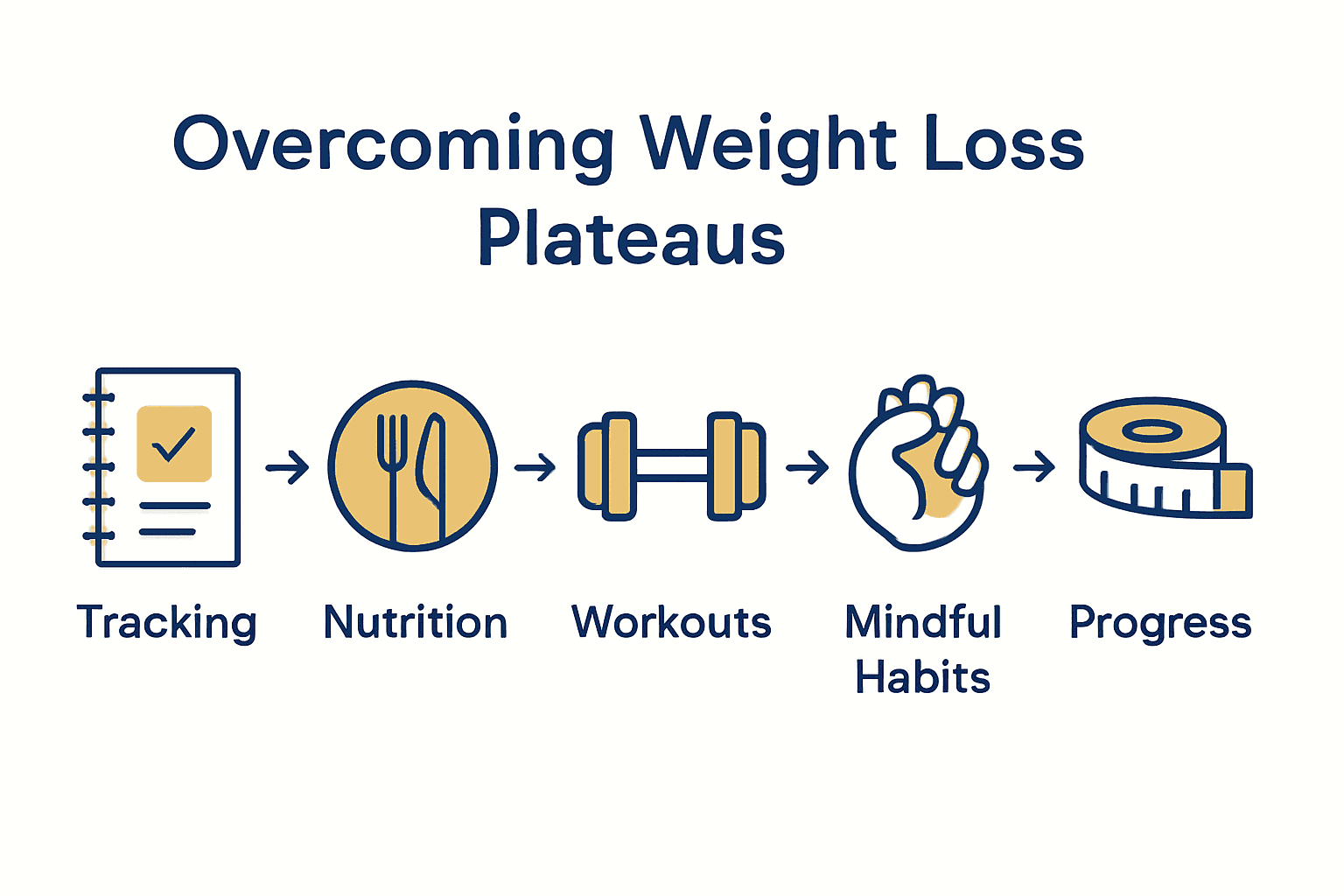
- Step 1: Identify Plateau Causes And Track Patterns
- Step 2: Adjust Nutrition And Rebalance Your Meals
- Step 3: Modify Workout Routine For New Stimulus
- Step 4: Implement Mindful Habits And Manage Stress
- Step 5: Monitor Progress And Refine Your Strategy
Quick Summary
| Key Point | Explanation |
|---|---|
| 1. Track Key Variables to Identify Triggers | Monitor calorie intake, sleep quality, exercise, and stress to uncover weight loss plateaus. |
| 2. Reassess and Adjust Nutritional Intake | Recalculate daily calorie needs and increase protein to support metabolism and overall health. |
| 3. Modify Exercise Routine Regularly | Change workout types and increase intensity every 4-6 weeks to keep your metabolism engaged. |
| 4. Implement Stress Management Techniques | Use meditation, consistent sleep, and gratitude practices to mitigate stress that can hinder weight loss. |
| 5. Consistently Monitor Progress | Use body measurements and performance metrics to refine your weight loss strategy effectively. |
Step 1: Identify Plateau Causes and Track Patterns
Let’s uncover why your weight loss journey might have stalled and learn how to breakthrough those frustrating plateaus. Tracking weight loss patterns is like being a health detective. You will map out potential roadblocks and understand exactly what’s happening in your body.
According to Mayo Clinic Health System, weight loss plateaus often emerge from metabolic adaptations where your body becomes incredibly efficient at conserving energy. This means your metabolism adjusts and slows down as you lose weight.
To start tracking your plateau triggers, grab a notebook or digital tracker and monitor these key areas:
- Daily calorie intake
- Macronutrient ratios
- Exercise frequency and intensity
- Sleep quality and duration
- Stress levels
- Body measurements
Cleveland Clinic explains that your body might perceive weight loss as a threat, triggering hormonal changes that increase hunger and decrease feelings of fullness. By meticulously tracking these variables, you create a comprehensive picture of your metabolic response.
Pro tip: Consistency is key. Track everything for at least two weeks to identify true patterns versus temporary fluctuations.
In the next step, we will analyze these tracking results and develop a strategic plan to restart your weight loss momentum.
Step 2: Adjust Nutrition and Rebalance Your Meals
Time to strategically overhaul your nutrition and restart your weight loss momentum. In this step, you will learn how to recalibrate your meals for maximum metabolic impact and break through your current plateau.
Piedmont Healthcare emphasizes the critical need to reevaluate calorie intake. As you lose weight, your body requires fewer calories, which means your previous eating plan might now be maintaining instead of reducing weight.
Here are practical steps to rebalance your nutrition:
- Recalculate your daily calorie needs based on current weight
- Increase protein intake strategically
- Focus on nutrient dense whole foods
- Reduce processed carbohydrate consumption
- Monitor portion sizes carefully
Sam Health recommends specifically increasing protein intake to maintain muscle mass and boost metabolism. Protein helps you feel fuller longer and supports your body’s metabolic processes.
Pro tip: Gradually adjust your calories. Sudden dramatic cuts can signal starvation to your metabolism and actually slow weight loss.

In the next step, we will explore how to modify your exercise routine to complement these nutritional changes and accelerate your progress.
Step 3: Modify Workout Routine for New Stimulus
Breaking through a weight loss plateau requires strategic changes to your exercise routine. In this step, you will learn how to shock your body into renewed fat burning and metabolic activation.
Cleveland Clinic explains that our bodies become incredibly efficient at performing familiar exercises, which means you burn fewer calories over time. This metabolic adaptation can significantly slow down your weight loss progress.
To combat this adaptation, consider these workout modification strategies:
- Increase workout intensity
- Change exercise types
- Incorporate interval training
- Add resistance training
- Modify rest periods
Piedmont Healthcare recommends specifically adding resistance or weight training to build muscle mass. More muscle means a higher resting metabolic rate, which translates to more calories burned even when you are not actively exercising.
Pro tip: Aim to change your workout routine every 4 to 6 weeks to prevent your body from reaching a performance comfort zone.
This constant variation keeps your metabolism guessing and engaged.
In the next step, we will explore how to track your progress and make data driven adjustments to your fitness strategy.
Step 4: Implement Mindful Habits and Manage Stress
Stress can silently sabotage your weight loss journey in ways you might not even realize. In this step, you will learn powerful techniques to manage stress and create mindful habits that support your metabolic health and weight loss goals.
Piedmont Healthcare reveals that chronic stress and poor sleep can dramatically disrupt hormones responsible for regulating hunger and metabolism. This means your body might be holding onto weight not because of diet or exercise but because of underlying stress.
Here are practical strategies to manage stress and support weight loss:
- Practice daily meditation or deep breathing exercises
- Establish consistent sleep schedules
- Create evening relaxation routines
- Limit screen time before bed
- Practice gratitude journaling
Sam Health emphasizes that insufficient sleep contributes significantly to weight loss plateaus. Prioritizing quality sleep becomes as crucial as your nutrition and exercise plan.
Pro tip: Start with small 10 minute stress reduction practices. Consistency matters more than duration when building new mindful habits.
In the next step, we will explore how to create sustainable long term strategies that keep your metabolism active and your weight loss journey on track.
Step 5: Monitor Progress and Refine Your Strategy
Tracking your weight loss journey is not just about numbers on a scale. In this step, you will learn how to become a strategic detective of your own health transformation, uncovering insights that can reignite your progress.
Mayo Clinic emphasizes the critical importance of regularly reviewing and adjusting your weight loss plan. Think of this process like calibrating a complex machine your body is continuously adapting and requires precise tuning.
Here are essential tracking methods to monitor your progress:
- Weekly body measurements
- Progress photos
- Body fat percentage tracking
- Performance metrics in workouts
- Sleep and energy level journals
Cleveland Clinic recommends monitoring weight and adjusting strategies proactively. This means looking beyond simple weight numbers and understanding the comprehensive story your body is telling.
Pro tip: Create a consistent tracking system. Choose one day and time each week to record measurements to ensure accurate comparisons.
In the next step, we will discuss how to interpret these tracking results and make intelligent adjustments to your weight loss approach.
Here’s a summary of each step and the main strategies for overcoming a weight loss plateau:
| Step | Main Focus | Key Strategies |
|---|---|---|
| Identify Plateau Causes | Detect root issues | Track calories Analyze exercise Monitor sleep & stress |
| Adjust Nutrition | Rebalance your meals | Recalculate calories Increase protein Eat whole foods |
| Modify Workout Routine | Provide new stimulus | Increase intensity Add resistance Incorporate intervals |
| Implement Mindful Habits | Manage stress & sleep | Meditate Log sleep Journaling |
| Monitor Progress | Refine your approach | Track measurements Use progress photos Review workout data |
Break Through Your Weight Loss Plateau with Expert Support
Feeling stuck in your weight loss journey can be frustrating and overwhelming. This guide highlights how metabolic adaptations and stress can halt progress—problems many face while trying to shed pounds naturally.
If you want to overcome these challenges by adjusting nutrition, exercise, and mindful habits, the right guidance can make all the difference.

Discover practical solutions tailored for your needs at Obesity Treatment – LeanAndFit.
Explore proven Exercise Regimens – LeanAndFit designed to keep your metabolism active and avoid plateaus. Start transforming your approach today by visiting LeanAndFit for trusted advice and strategies that will help you regain momentum.
Don’t wait—your breakthrough is within reach.
Frequently Asked Questions:
Overcoming Weight Loss Plateaus Naturally: Step-by-Step Guide is all about understanding that plateaus are not the end of progress—they are part of the journey.
They signal that your body has adapted and needs a new stimulus to continue. Instead of feeling discouraged, see plateaus as checkpoints that help you refine your approach.
By making small, thoughtful adjustments and staying consistent with basic habits, you can restart your progress in a healthy and sustainable way.
Weight loss is not always linear, but with patience and awareness, it continues moving forward.
Q-1: Why does my weight stay stuck even when I’m doing everything “right”?
A-1: This is one of the most frustrating parts of weight loss, and it’s more common than you think. When your weight stalls, it is often because your body has adapted to your current routine.
As you lose weight, your body requires fewer calories, so what once created a calorie deficit may now be your maintenance level. It’s not that you’re doing anything wrong—it is that your body has become efficient.
This is actually a sign of progress, not failure. To move forward, you may need to slightly adjust your food intake, increase activity, or change workout intensity.
Q-2: Can eating too little actually cause a weight loss plateau?
A-2: Surprisingly, yes. When you eat too little for too long, your body goes into a conservation mode. It slows down metabolism to preserve energy, making weight loss harder.
You may also feel more tired, less active, and more prone to cravings. This creates a situation where your body resists further fat loss.
Sometimes, slightly increasing your calorie intake—especially with nutrient-rich foods—can help reset your metabolism and break the plateau.
Q-3: Why does the scale not move even though my body looks different?
A-3: The scale doesn’t tell the full story. During a plateau, your body may still be losing fat while gaining muscle or retaining water. This is especially common if you’ve started strength training.
Muscle is denser than fat, so changes in body composition may not reflect immediately on the scale.
That’s why it’s important to track progress using other methods—like measurements, how clothes fit, or even progress photos. The scale is just one piece of the puzzle.
Q-4: How can small daily habits quietly cause a plateau without me realizing it?
A-4: Plateaus often sneak in through small changes that go unnoticed. Maybe your portions have increased slightly, your daily steps have reduced, or you’re snacking more often.
These small shifts may seem insignificant, but over time, they reduce your calorie deficit. The tricky part is that these habits feel normal, so you don’t question them.
Becoming more mindful of your routine—even for a few days—can help you identify these hidden factors and correct them.
Q-5: Can changing workout style really help break a plateau?
A-5: Absolutely. Your body adapts quickly to repetitive workouts. If you’ve been doing the same exercises for weeks, your calorie burn may decrease because your body becomes more efficient at those movements.
Switching things up—like adding strength training, increasing intensity, or trying interval workouts—can challenge your body in new ways. This not only burns more calories but also stimulates muscle growth, which helps boost metabolism over time.
Q-6: Why does stress make it harder to lose weight during a plateau?
A-6: Stress affects your body in ways that go beyond just emotions. It increases cortisol levels, which can lead to fat storage, especially around the abdomen.
Stress also impacts sleep, appetite, and energy levels—all of which play a role in weight loss. During a plateau, high stress can make it even harder to see progress.
Managing stress through simple habits like walking, breathing exercises, or better sleep can make a noticeable difference.
Q-7: Is it better to wait out a plateau or actively try to fix it?
A-7: It depends on the situation. Sometimes, plateaus are temporary and resolve on their own if you stay consistent. But if the plateau lasts several weeks, it’s a sign that your body needs a change.
Instead of making drastic adjustments, start with small tweaks—like increasing daily movement, adjusting portion sizes, or improving meal quality.
The goal is to gently nudge your body forward, not shock it with extreme changes.
Q-8: What is the simplest natural way to restart weight loss progress?
A-8: The simplest approach is to go back to basics. Focus on whole foods, stay hydrated, move more throughout the day, and get enough sleep.
These foundational habits often get overlooked when people search for advanced solutions. Sometimes, breaking a plateau isn’t about doing more—it’s about doing the simple things more consistently.
When your body is supported properly, it naturally responds by moving out of the plateau phase.
Recommended
- Overcoming Weight Loss Setbacks Naturally: Step-by-Step Guide – LeanAndFit
- Top Healthy Weight Loss Tips for Lasting Results – LeanAndFit
- Building Healthy Habits Naturally: A Step-by-Step Guide – naturessoulshop
- Nutritional New Year’s Resolutions the Healthy Way – Dr. Stephen Oreski & Associates
- Why Trust LeanAndFit.info?
- For educational purposes only