
Stress seems like just a mental battle, yet its reach goes far beyond your mood and thoughts.
Studies have shown that chronic stress can boost cortisol levels and cause rapid weight gain, especially around the abdomen.
Most people think a few tense weeks only make you tired or irritable, not heavier.
Yet the real shock is that your body can treat daily stress like a survival threat, flipping hormonal switches that quietly encourage increased eating and stubborn fat storage.
Table of Contents
- What Is The Relationship Between Stress And Weight Gain?
- Why Does Stress Lead To Changes In Body Weight?
- How Stress Hormones Influence Appetite And Metabolism
- What Are The Emotional Eating Behaviors Tied To Stress?
- How Can Understanding Stress Help Manage Weight Effectively?
Quick Summary
| Takeaway | Explanation |
|---|---|
| Cortisol increases weight gain potential | Chronic stress raises cortisol levels, which disrupts metabolism and promotes fat storage, particularly abdominal fat. |
| Stress leads to emotional eating | Stress can trigger emotional eating, resulting in cravings for high-calorie comfort foods that contribute to weight gain. |
| Recognize and manage emotional triggers | Identifying stress-induced eating behaviors enables individuals to seek healthier coping mechanisms instead of turning to food. |
| Practice stress reduction techniques | Regular stress management strategies, such as mindfulness and exercise, can help regulate hormones and support weight control. |
| Understand the psychological impact of stress | Comprehending how stress affects both the mind and body is crucial in developing effective weight management strategies. |
What is the Relationship Between Stress and Weight Gain?
Stress and weight gain are intimately connected through complex physiological mechanisms that impact metabolism, hormonal balance, and eating behaviors.
When an individual experiences chronic stress, their body undergoes significant biochemical changes that can directly contribute to weight gain.
The Cortisol Connection:
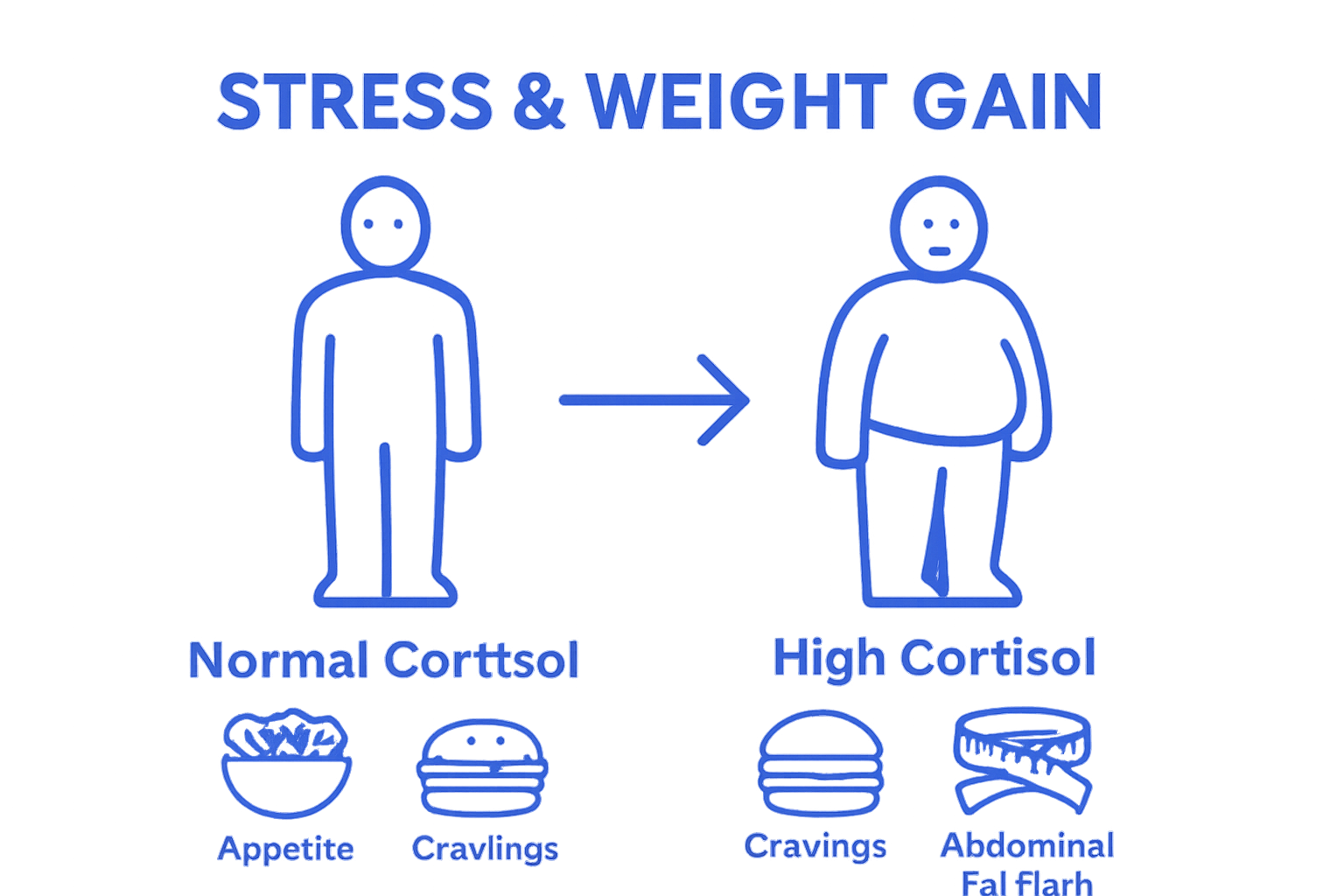
At the heart of the stress and weight gain relationship is cortisol, a hormone released by the adrenal glands during stressful situations.
According to research from Harvard Medical School, chronic stress leads to prolonged cortisol elevation, which triggers several metabolic disruptions:
- Increased appetite and food cravings
- Higher insulin levels
- Preferential fat storage, especially around the abdomen
- Slower metabolic rate
When cortisol remains consistently high, the body enters a state of metabolic adaptation designed for survival but counterproductive to maintaining a healthy weight.
Psychological Eating Patterns:
Stress doesn’t just impact hormones it fundamentally alters eating behaviors.
Many individuals turn to emotional eating as a coping mechanism, consuming high calorie comfort foods that provide temporary psychological relief.
These foods are typically:
- Rich in sugar
- High in unhealthy fats
- Calorie dense
- Nutritionally poor
The cycle becomes self perpetuating: stress triggers unhealthy eating, which then leads to weight gain, causing more stress and anxiety about body weight.
Understanding this intricate relationship empowers individuals to develop targeted strategies for managing stress and maintaining a healthy weight through mindful lifestyle interventions.
Why Does Stress Lead to Changes in Body Weight?
Stress impacts body weight through intricate physiological and psychological mechanisms that disrupt normal metabolic functioning.
These complex interactions demonstrate how mental and emotional states can profoundly influence physical health and body composition.
Hormonal Cascade and Metabolic Disruption:
The body responds to stress by initiating a hormonal cascade that fundamentally alters metabolic processes.
According to research from the National Institutes of Health, chronic stress triggers a series of biochemical reactions that directly impact weight regulation:
- Activation of the hypothalamic-pituitary-adrenal (HPA) axis
- Sustained elevation of cortisol levels
- Increased insulin resistance
- Disruption of normal hunger and satiety signals
When stress becomes chronic, these hormonal changes create an environment that promotes fat storage and makes weight loss significantly more challenging.
Neurological Eating Behavior Modifications
Stress doesn’t just impact hormones it fundamentally rewires neurological responses related to eating behavior.
The brain enters a state of survival mode, prioritizing immediate energy consumption over long-term metabolic health.
This neurological shift leads individuals to:
- Seek high-calorie comfort foods
- Experience reduced impulse control around eating
- Develop compensatory eating patterns
- Experience decreased metabolic efficiency
Understanding these intricate connections reveals why stress management is crucial for maintaining a healthy weight and overall metabolic balance.
The body’s stress response is essentially a complex survival mechanism that can inadvertently create metabolic challenges when continuously activated.
Below is a table outlining the main physiological and psychological mechanisms through which stress can influence weight gain and eating behaviors, as described in the article.
| Mechanism | Description |
|---|---|
| Cortisol Increase | Stress elevates cortisol, leading to increased appetite, insulin resistance, and abdominal fat storage. |
| Metabolic Disruption | Chronic stress disrupts metabolism, slows metabolic rate, and promotes fat storage. |
| Appetite Regulation Impairment | Stress disrupts hunger/satiety hormones (leptin and ghrelin), increasing cravings and overeating. |
| Emotional Eating | Individuals eat high-calorie foods to cope with stress, using food for comfort or distraction. |
| Survival-mode Neurological Changes | Brain prioritizes immediate energy (high-calorie foods), reduces impulse control, and fosters habitual eating. |
How Stress Hormones Influence Appetite and Metabolism?
Stress hormones play a pivotal role in regulating appetite, metabolism, and energy utilization.
These biochemical messengers fundamentally transform how the body processes nutrients and manages energy storage during periods of perceived threat or prolonged psychological tension.
Cortisol and Metabolic Disruption:
Cortisol, often called the primary stress hormone, acts as a complex metabolic regulator.
According to research from the National Institutes of Health, chronic stress triggers significant metabolic changes through cortisol’s multifaceted interactions:
- Stimulates glucose production in the liver
- Increases insulin resistance
- Promotes fat storage, particularly around the abdomen
- Suppresses insulin sensitivity
When cortisol remains persistently elevated, it essentially reprograms the body’s metabolic priorities, shifting from normal energy utilization to a survival-focused storage mode.
This table compares the key features and effects of the two major hormonal players—cortisol and insulin—during stress-related weight gain, as explained in the section.
| Hormone | Role During Stress | Main Effects on Weight & Metabolism |
|---|---|---|
| Cortisol | Primary stress hormone; elevated in response to stress | Increases appetite, promotes abdominal fat storage, raises insulin resistance, slows metabolism |
| Insulin | Regulated by cortisol; increased during stress | Promotes fat storage, decreases sensitivity (insulin resistance), disrupts normal hunger signals |
Appetite Regulation and Hormonal Signaling:
Stress hormones profoundly disrupt the delicate appetite regulation system.
The hormonal cascade triggered by stress interferes with normal hunger and satiety signals, creating a complex neurochemical environment that promotes overeating:
- Reduces leptin sensitivity (the fullness hormone)
- Increases ghrelin production (the hunger hormone)
- Triggers emotional and impulsive eating behaviors
- Alters brain reward pathways associated with food consumption
These hormonal shifts explain why individuals under chronic stress frequently experience increased appetite, cravings for high-calorie foods, and difficulty maintaining healthy eating patterns.
Understanding these intricate hormonal mechanisms reveals how psychological stress can directly impact physical metabolism, transforming stress from a mental experience into a tangible physiological process affecting weight and overall health.
What Are the Emotional Eating Behaviors Tied to Stress?
Emotional eating represents a complex psychological response where individuals use food as a mechanism to manage, suppress, or cope with intense emotional experiences.
This behavioral pattern transforms eating from a biological necessity into a psychological coping strategy deeply intertwined with stress and emotional regulation.
Psychological Triggers of Emotional Eating:
Stress triggers specific psychological mechanisms that drive emotional eating behaviors.
According to research from the Current Obesity Reports, these psychological triggers include:
- Seeking comfort through familiar food sensations
- Attempting to numb or distract from negative emotional states
- Using food as a temporary mood enhancement strategy
- Reducing feelings of anxiety or emotional discomfort
When stressed, individuals often perceive food as a source of temporary relief, creating a cyclical pattern where emotional distress leads to unhealthy eating behaviors.
Neurochemical Reward Mechanisms:
Neurochemical responses play a critical role in emotional eating.
During stressful experiences, the brain releases neurotransmitters that make consuming certain foods particularly rewarding.
This neurological process transforms eating from a survival mechanism into a psychological coping strategy:
- Triggering dopamine release during food consumption
- Creating temporary feelings of pleasure and relaxation
- Reinforcing food as an emotional regulation tool
- Establishing potentially addictive eating patterns
Emotional eating represents a sophisticated psychological defense mechanism where food becomes a complex instrument for managing emotional complexity, highlighting the intricate relationship between psychological stress and nutritional behaviors.
How Can Understanding Stress Help Manage Weight Effectively?
Comprehending the intricate relationship between stress and weight provides a powerful framework for developing targeted, holistic weight management strategies.
By recognizing stress as more than a mental state, individuals can develop proactive approaches that address both psychological and physiological components of weight regulation.
Psychological Awareness and Behavioral Modification:
Understanding stress mechanisms enables strategic behavioral interventions.
According to research involving 71 healthy women, individuals who develop stress mastery techniques demonstrate more effective weight management:
- Recognizing emotional eating triggers
- Developing alternative coping mechanisms
- Creating mindful eating practices
- Building emotional resilience
This approach transforms stress from a weight management obstacle into an opportunity for personal growth and metabolic control.
Physiological Intervention Strategies:
Metabolic recalibration becomes possible when individuals understand stress’s physiological impact.
By implementing targeted interventions, people can counteract stress-induced metabolic disruptions:
- Practicing regular stress reduction techniques
- Maintaining consistent sleep patterns
- Implementing hormonal balance strategies
- Engaging in adaptive physical activities
Effective stress management becomes a comprehensive approach to weight control, addressing both psychological patterns and physiological responses that influence body composition and metabolic efficiency.

Take Control of Stress-Induced Weight Gain With Proven Strategies
Feeling overwhelmed by how stress is impacting your waistline? If stress and emotional eating have left you stuck in a frustrating cycle, you are not alone.
Our article explained how cortisol spikes, emotional triggers, and disrupted metabolism can sabotage your best efforts at healthy living.
At leanandfit.info, we equip you with real-world tools to break free from these patterns and reclaim your health.
Discover easy-to-follow guidance, from mindful eating practices that tame cravings to stress-reducing lifestyle changes you can implement today. Explore practical advice and step-by-step action plans designed to address emotional eating, hormonal imbalances, and weight management challenges rooted in stress.
Frequently Asked Questions:
Stress and weight gain are more closely connected than most people realize, often working silently through hormones, habits, and emotional triggers.
This FAQ explores how everyday stress can influence your body’s metabolism, appetite, and fat storage in surprisingly subtle ways.
Q-1: Why does my body seem to store more fat when I’m stressed, even if I’m not eating much more than usual?
A-1: This is one of those frustrating body responses that feels unfair, but it has a clear biological reason.
When stress becomes chronic, your body releases higher levels of cortisol, a hormone that prepares you for “fight or flight.”
The problem is, in modern life there’s no real physical escape, so that energy doesn’t get used. Instead, cortisol signals your body to store energy, especially around the abdomen, as a survival strategy.
Even if you’re not overeating, your metabolism can shift toward fat storage, particularly visceral fat, which is linked to stress.
So the issue isn’t just calories—it’s how your body interprets stress signals.
Q-2: How does mental stress secretly change my hunger signals without me realizing it?
A-2: Stress doesn’t just affect your mood—it directly interferes with your hunger hormones. It increases ghrelin (the “I’m hungry” hormone) and disrupts leptin (the “I’m full” hormone).
This creates a confusing situation where you might feel hungry even after eating, or crave food when you’re emotionally drained rather than physically hungry.
Many people interpret this as lack of willpower, but it is actually a hormonal imbalance triggered by stress.
Over time, your brain starts associating comfort food with emotional relief, making stress-driven eating feel automatic rather than intentional.
Q-3: Can stress alone cause weight gain even if my diet and exercise routine stay the same?
A-3: Yes, stress alone can contribute to weight gain even without obvious changes in diet or exercise.
Chronic stress slows down digestion and can reduce insulin sensitivity, which affects how your body processes carbohydrates.
It also influences sleep quality, which indirectly impacts metabolism. Poor sleep leads to increased cravings and reduced energy expenditure during the day.
So even if your lifestyle looks unchanged on paper, your internal body chemistry may be shifting in ways that favor gradual weight gain over time.
Q-4: Why do I crave sugary or fatty foods specifically when I’m emotionally overwhelmed?
A-4: When you’re stressed, your brain looks for quick dopamine hits—fast sources of pleasure that temporarily reduce emotional discomfort. Sugar and high-fat foods trigger that reward system almost instantly.
This isn’t a lack of discipline; it is a survival-based neurological shortcut. The brain learns that these foods provide short-term relief from stress, even if they don’t solve the underlying issue.
Over time, this creates a loop where stress triggers cravings, and cravings reinforce emotional eating patterns. It is your brain trying to self-soothe, not sabotage you.
Q-5: How does long-term stress affect belly fat differently from overall body fat?
A-5: Stress-related weight gain tends to concentrate around the abdominal area because visceral fat cells are more sensitive to cortisol. Unlike subcutaneous fat (which sits under the skin), visceral fat surrounds internal organs and is metabolically active.
That means it responds quickly to hormonal changes.
Chronic stress keeps cortisol levels elevated, encouraging the body to store fat in this region. This is why even people who don’t gain much overall weight may still notice a thicker waistline when they are under prolonged emotional pressure.
Q-6: Why do I feel exhausted but still gain weight when I’m mentally overloaded?
A-6: Stress creates a paradox: your body feels drained, yet it behaves as if it needs to conserve energy. Elevated cortisol can disrupt thyroid function and slow metabolic rate slightly, making calorie burning less efficient.
At the same time, stress fatigue reduces physical activity—you move less without realizing it. This combination of lower energy output and hormonal imbalance creates a situation where weight gain can occur even when you feel constantly tired.
It is not just about eating more—it’s about your body operating in a low-energy conservation mode.
Q-7: How does emotional stress affect digestion and indirectly contribute to weight gain?
A-7: Your digestive system is highly sensitive to emotional states.
Stress activates the nervous system’s “fight or flight” mode, which slows down digestion because your body prioritizes survival over processing food.
This can lead to bloating, irregular bowel movements, and inefficient nutrient absorption. When digestion is disrupted, your body may store energy differently, and inflammation levels can rise.
Over time, poor digestion combined with stress eating patterns can subtly contribute to gradual weight gain and discomfort after meals.
Q-8: Can breaking the stress–weight gain cycle start with small mental habits instead of strict dieting?
A-8: Absolutely, and this is often the most effective approach. Since stress is a root cause, addressing it first can naturally improve eating habits.
Small mental habits like mindful breathing before meals, short daily walks, or simply pausing before stress-eating can interrupt the cycle. Even labeling your emotions (“I’m stressed, not hungry”) helps reduce impulsive eating.
When your nervous system feels calmer, hormonal balance improves, and your body stops acting like it’s under constant threat. This allows weight regulation to happen more naturally without extreme dieting pressure.
Recommended
- How Stress Triggers Emotional Eating in Obese Individuals? – LeanAndFit
- How Chronic Stress Impacts Cortisol Levels and Weight Gain? – LeanAndFit
- How Stress Eating is Making You Fat? – LeanAndFit
- How Obesity Contributes to Hormonal Imbalances Linked to Depression? – LeanAndFit
- Why Trust LeanAndFit.info?
- For educational purposes only