
• Skip to content

LeanAndFit

Product Review Website

  • Obesity Causes: Key Factors Behind Weight Gain
    • Binge Eating Obesity Causes: How Overeating Leads to Weight Gain
    • Chronic Stress Obesity Causes: How Cortisol Drives Weight Gain
    • Cushing’s Syndrome
    • Stress Eating Obesity Causes: How Stress Leads to Weight Gain
    • Environmental Factors Causing Obesity: Risks & Prevention
    • Fast Food Obesity Causes: How Junk Food Leads to Weight Gain
    • Food Insecurity & Obesity Causes: Weight Gain Risks
    • Genetic Predisposition
    • Gut Microbiome Obesity Causes: How Gut Bacteria Affect Weight
    • Hormonal Imbalance and Obesity: Causes, Effects & Solutions
    • Insulin Resistance
    • Medication Side-Effects
    • Metabolic Slowdown
    • Obesogenic Chemicals: Hidden Causes of Obesity & Weight Gain
    • PCOS Symptoms and Obesity Causes and Hormonal Effects
    • Poor Nutrition and Obesity Causes Explained for Better Health
    • Sedentary Lifestyle and Obesity: Causes, Risks & Solutions
    • Sleep Deprivation
    • Social Influences
    • Thyroid Dysfunction
  • Obesity Side Effects: Health Risks, Causes & Prevention Tipss
    • Metabolic Syndrome
    • Osteoarthritis Onset
    • Respiratory Issues
    • Sleep Apnea Obesity Side Effects: Breathing & Health Risks
    • Obesity and Stroke Risk Causes and Cardiovascular Effects
    • Type 2 Diabetes Obesity Side Effects: Risks & Health Impact
    • Anxiety Increase
    • Body Inflammation
    • Cognitive Decline
    • Obesity and Dementia Risk Causes and Cognitive Decline Effects
    • Depression Risk Obesity Side Effects: Mental Health Impact
    • Emotional Eating Obesity Side Effects: Risks & Health Impact
    • Gut Dysbiosis and Obesity Effects on Metabolism and Health
    • Heart Disease Obesity Side Effects: Heart Health Risks
    • High Cholesterol Obesity Side Effects: Risks & Heart Health
    • Hypertension Development Examines How Obesity Contributes
    • Insulin Resistance SE
    • Joint Pain Obesity Side Effects: Knee, Back & Mobility Risks
    • Obesity and Liver Damage Causes and Fatty Liver Disease Risk
    • Mental Disorders Obesity Side Effects: Mental Health Risks
  • Obesity Treatment: Diet, Nutrition & Weight Loss Strategies
    • Metformin Use Obesity Treatment: Weight Loss & Insulin Control
    • Mindful Eating Obesity Treatment: Control Hunger & Lose Weight
    • Pharmacologic Interventions
    • Sleep Management for Obesity: Improve Sleep & Weight Loss
    • Stress Reduction Obesity Treatment: Lower Stress, Lose Weight
    • Surgical Devices Obesity Treatment: Tools for Weight Loss
    • Weight Loss Medications for Obesity Treatment: Benefits & Risks
    • Appetite Suppressants
    • Bariatric Surgery
    • Behavioral Therapy
    • Calorie Restriction
    • Cold Exposure
    • Exercise Regimens
    • Gut Modulation for Obesity Treatment and Metabolic Health
    • Hormonal Therapy Obesity Treatment: Balance Hormones & Lose Weight
    • Intermittent Fasting
    • Lifestyle Changes
    • Low Carb Diets for Obesity Treatment and Weight Loss
    • Meal Planning for Obesity Treatment and Healthy Weight Loss
    • Metabolic Boosters
  • Best Lean & Fit Methods Top Strategies For A Lean Physique,
    • Outdoor Workouts Weight Loss Methods: Burn Fat Naturally
    • Pilates Sculpt for Weight Loss and Lean Body Toning Guide
    • Protein Intake for Weight Loss and Fat Loss Strategies
    • Resistance Workouts
    • Step Tracking Weight Loss Methods: Walk Your Way to Fitness
    • Strength Training
    • Bodyweight Exercises
    • Calorie Deficit for Weight Loss and Fat Loss Strategies
    • Cardio Intervals
    • Consistency Hacks
    • Diet Breaks for Weight Loss Benefits and Fat Loss Strategy
    • Fitness Gamification
    • HIIT Sessions for Weight Loss and Fat Burning Workouts
    • Hydration Focus Weight Loss Methods: Boost Metabolism Naturally
  • Latest Research/News

How Stress Triggers Emotional Eating in Obese Individuals?

Emotional Eating Obesity Side Effects: Risks & Health Impact, Obesity Side Effects: Health Risks, Causes & Prevention Tipss / November 4, 2024 by Mark Morris

3.2k
SHARES
ShareTweet

Ever had one of those days where everything seems to go wrong, and suddenly, a mountain of chocolate cake feels like the only answer to your woes?

Yeah, you are not alone.

Emotional eating is a universal phenomenon, but it is particularly common—and complicated—for individuals struggling with obesity.

When life’s pressures crank up, many people find solace in food, but how exactly does stress lead to overeating, and why are obese individuals more susceptible?

In this article, we shall unpack the fascinating and frustrating relationship between stress and emotional eating.

From hormones like cortisol wreaking havoc to the psychological comfort of high-calorie foods, we shall dive into the science behind why stress leads to overeating and the implications this has for those who are already battling obesity.

Article Index:

  1. The Stress-Overeating Connection: An Overview
  2. How Stress Hormones Influence Appetite
  3. Why High-Calorie Foods Become a Go-To for Comfort
  4. The Role of Dopamine and Instant Gratification
  5. Real-Life Example: Meet Lisa and Her Stress-Eating Struggles
  6. How Stress Can Be a Double-Edged Sword for Obese Individuals
  7. Emotional Eating vs. Physical Hunger: Learning the Difference
  8. What Research Says About Stress-Induced Eating
  9. FAQs
  10. Conclusion: Understanding the Emotional Eating Cycle

The Stress-Overeating Connection: An Overview

Imagine you’ are a caveman (or cavewoman), and a saber-toothed tiger is chasing you.

Your body is stress response kicks in, flooding your system with adrenaline and cortisol to help you escape.

In the modern world, our stressors are more likely to be office deadlines than predators, but our bodies still react in much the same way.

When stress becomes chronic, cortisol levels remain elevated, which can lead to increased appetite and, you guessed it, emotional eating.

According to research published in Appetite, stress is a significant trigger for overeating, especially in people who are already obese.

When cortisol floods the system, it signals the brain to seek out rewards—often in the form of high-fat, high-sugar foods.

How Stress Hormones Influence Appetite

How Stress Hormones Influence Appetite?

Ah, cortisol, the infamous stress hormone.

When you are stressed, your adrenal glands release cortisol, which increases your appetite and can make you crave calorie-dense comfort foods.

It is like your brain is preparing for an apocalypse, storing up fat because, well, who knows what’s going to happen next?

A study published in The Journal of Clinical Endocrinology & Metabolism found that people with higher cortisol levels are more likely to engage in emotional eating.

The research highlighted that cortisol not only increases hunger but also makes it more difficult to resist high-calorie foods.

The reason is simple: under stress, your brain goes into survival mode.

High-energy foods provide a quick and reliable energy source, which your stressed-out mind interprets as a life-saving necessity.

It is not you; it is your biology.

Why High-Calorie Foods Become a Go-To for Comfort?

Let’s be honest: broccoli and kale don’t exactly scream “comfort.”

When stress hits, most people don’t reach for a salad. Instead, we go for pizza, ice cream, or anything loaded with carbs and fats.

Why?

Because these foods are incredibly effective at boosting serotonin levels, even if only temporarily.

According to Frontiers in Psychology, high-fat and high-sugar foods activate the brain’s reward system, releasing feel-good neurotransmitters like dopamine.

It is like a temporary “happy fix,” which is why stress often leads to a cycle of eating for comfort, followed by regret, and then more stress. Fast foods are laden with calories and this in turn make you fatter.

Think about it: after a long, stressful day, eating a slice of cake feels like a mini-vacation for your brain.

But for someone struggling with obesity, this behavior can be especially damaging, turning into a recurring pattern that makes weight loss even more difficult.

The Role of Dopamine and Instant Gratification

When you eat comfort foods, your brain’s reward system lights up, releasing dopamine, the feel-good neurotransmitter.

The more you eat, the more dopamine is released, reinforcing the habit and making you more likely to turn to food the next time stress strikes.

It is a vicious cycle, particularly for obese individuals who may already have altered dopamine signaling pathways.

A study in Obesity Reviews noted that people with obesity often experience a greater dopamine release in response to food, making the reward more intense and the habit harder to break.

Essentially, food becomes a quick fix, but the long-term consequences are anything but rewarding.

Meet Lisa and Her Stress-Eating Struggles

Let’s put a human face to this phenomenon.

Lisa, a 42-year-old marketing executive, has been dealing with obesity since her late twenties.

Her job is high-pressure, and she often finds herself stress-eating after tough meetings.

“It’s like I can’t help it,” she says. “The moment I feel overwhelmed, I just want something sweet. It is like the food gives me a break from my anxiety.”

Lisa’s experience is a textbook case of stress-induced emotional eating.

The more stressed she feels, the more she craves sugar laden high-calorie foods.

Unfortunately, this only exacerbates her weight issues, creating a cycle that’s difficult to break.

How Stress Can Be a Double-Edged Sword for Obese Individuals?

For people already struggling with obesity, stress is not just an emotional burden—it is a physiological one.

Chronic stress can lead to metabolic changes that make weight loss more challenging.

High cortisol levels promote fat storage, particularly around the abdomen, and can even make the body more insulin resistant.

Dr. Sarah Jenkins, an endocrinologist, explains, “For obese individuals, stress is like throwing gasoline on a fire.

It not only triggers overeating but also alters the body’s metabolism, making it harder to burn fat.”

Emotional Eating vs. Physical Hunger: Learning the Difference

One of the trickiest battles in the war against stress-induced emotional eating is figuring out whether your stomach is genuinely grumbling or if your emotions are just throwing a tantrum.

It is a classic case of real hunger vs. fake hunger, and trust me, they have very different personalities.

Physical hunger is the reasonable, patient friend. It sneaks up gradually, nudging you with a gentle reminder that your body needs fuel. It is flexible, open to negotiation—whether that’s a salad, a sandwich, or last night’s leftovers. It does not demand drama; it just needs sustenance.

Emotional hunger, on the other hand, is the diva of the dining world. It crashes onto the scene uninvited, demanding immediate satisfaction—usually in the form of a triple-chocolate cake or a family-sized bag of chips.

It is not just about food; it is about comfort, distraction, or relief from stress.

And the worst part? It often leaves behind a mess of guilt, like a bad ex who sweet-talked you into bad decisions.

According to Psychology Today, recognizing the difference between these two is the first step toward reclaiming control. Mindfulness practices—like pausing before eating, checking in with your emotions, and savoring each bite—can be powerful tools.

But let us be real: in the middle of a stress spiral, deep breathing does not always stand a chance against a box of donuts. The key is progress, not perfection—learning to swap knee-jerk cravings for mindful choices, one bite at a time.
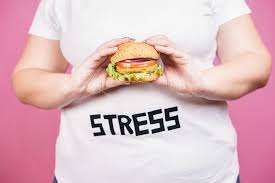
Emotional Eating vs Physical Hunger

What Research Says About Stress-Induced Eating?

Scientific studies have repeatedly shown a strong link between stress and overeating.

Research from the American Psychological Association indicates that nearly 40% of adults report overeating or eating unhealthy foods in response to stress.

The numbers are even higher among individuals dealing with obesity, who often have a more pronounced stress response.

One landmark study published in Appetite found that stress not only increases the likelihood of overeating but also makes people prefer foods high in sugar and fat.

This research underscores the idea that stress and emotional eating are deeply intertwined, particularly for those already struggling with weight.

FAQs: 

Q-1: How does stress trigger emotional eating in obese individuals?

A-1: Stress activates the body’s hormonal and emotional response systems, especially increasing cortisol levels.

This hormone boosts appetite and intensifies cravings for high-calorie comfort foods.

In obese individuals, this response is often stronger due to existing metabolic imbalances and behavioral habits.

In the U.S., where over 42% of adults are obese, stress-driven eating has become a major contributor to weight gain.

Instead of eating for physical hunger, individuals begin eating to cope with emotions like anxiety, frustration, or fatigue, creating a repeating cycle of overeating.

Q-2: What is the role of cortisol in emotional eating and weight gain?

A-2: Cortisol, known as the stress hormone, plays a central role in emotional eating.

When stress becomes chronic, cortisol stays elevated, increasing hunger and preference for sugary and fatty foods.

It also encourages fat storage, particularly around the abdomen.

This creates a loop where stress leads to cravings, cravings lead to overeating, and overeating contributes to weight gain—making stress management essential for long-term weight control.

Q-3: Why does stress increase sugar cravings and binge eating behavior?

A-3: Stress affects the brain’s reward system, increasing the desire for quick energy sources like sugar.

Foods high in sugar temporarily boost mood by releasing feel-good chemicals, which reinforces the habit.

Over time, this can lead to binge eating, where large amounts of food are consumed quickly.

This behavior is not just emotional—it is deeply rooted in brain chemistry, making it harder to control without targeted strategies.

Q-4: How does chronic stress lead to obesity through overeating?

A-4: Chronic stress impacts both the mind and body. It increases appetite, reduces motivation for physical activity, and disrupts sleep—all of which contribute to weight gain.

In high-stress lifestyles common in the U.S., people often rely on convenient, calorie-dense foods.

Over time, this combination of factors leads to consistent overeating and gradual weight gain.

Q-5: What is the difference between emotional hunger and physical hunger?

A-5: Emotional hunger appears suddenly and is usually linked to specific cravings, such as sweets or junk food.

It is driven by feelings rather than actual energy needs.

Physical hunger, on the other hand, develops gradually and can be satisfied with a variety of foods.

Recognizing this difference is key to breaking the emotional eating cycle and making healthier food choices.

Q-6: What psychological factors drive stress eating in obese individuals?

A-6: Emotional eating is often driven by psychological triggers such as anxiety, depression, low self-esteem, and unresolved stress.

Food becomes a coping mechanism to deal with uncomfortable emotions.

Over time, this creates a pattern where eating is associated with emotional relief, reinforcing unhealthy habits and making weight management more difficult.

Q-7: How do anxiety and stress affect eating habits and weight gain?

A-7: Anxiety and stress disrupt normal appetite regulation. They can increase hunger signals and reduce feelings of fullness, leading to overeating.

In obese individuals, this imbalance often results in frequent snacking and preference for high-calorie foods. Combined with reduced physical activity, this contributes to ongoing weight gain.

Q-8: What is the link between mental health and emotional eating in obesity?

A-8: Mental health and eating behavior are closely connected. Conditions like chronic stress, anxiety, and depression increase the likelihood of emotional eating.

In many cases, emotional eating acts as a bridge between mental distress and weight gain. Addressing mental health is therefore a crucial part of managing obesity effectively.

Q-9: How does stress affect appetite control and food cravings?

A-9: Stress disrupts the body’s natural appetite control systems. It increases cravings for high-calorie foods while reducing the ability to feel satisfied after eating.

This combination leads to overeating, even when the body does not need additional energy. Over time, this imbalance can significantly impact weight and overall health.

Q-10: What brain mechanisms are involved in emotional eating?

A-10: Emotional eating involves the brain’s stress and reward systems. Stress activates pathways that increase cortisol and alter dopamine levels, making food more rewarding.

This creates a strong connection between eating and emotional relief, which can become habitual. Understanding this mechanism helps explain why emotional eating feels automatic and difficult to control.

Q-11: What strategies can help stop stress eating for weight loss?

A-11: Effective strategies include practicing mindful eating, managing stress through relaxation techniques, and maintaining a structured eating routine. Keeping a food and mood journal can help identify triggers.

Physical activities like walking or yoga can also reduce stress levels. Behavioral therapies can provide additional support for long-term change.

Q-12: How does stress-related binge eating contribute to obesity?

A-12: Stress-induced binge eating leads to consuming large amounts of food in a short period, often high in calories and low in nutrients.

This significantly increases daily calorie intake, leading to weight gain. Repeated episodes of binge eating can contribute to long-term obesity and metabolic issues.

Q-13: How does stress influence food choices and eating patterns?

A-13: Stress shifts food preferences toward processed, high-fat, and high-sugar foods.

It also reduces motivation to cook or plan meals, leading to reliance on fast food or snacks. This pattern is common in busy, high-stress environments and contributes to poor dietary habits.

Q-14: What clinical evidence supports the link between stress, emotional eating, and obesity?

A-14: Clinical observations consistently show that higher stress levels are associated with increased emotional eating and weight gain.

Individuals under chronic stress are more likely to develop unhealthy eating patterns, which contribute to obesity over time.

Q-15: What are actionable clinical tips to break the stress-eating cycle?

A-15: Here are practical, effective strategies:

  • Improve sleep quality: Aim for 7–8 hours to regulate stress hormones
  • Practice mindful eating: Pause and assess hunger before eating
  • Manage stress proactively: Use breathing exercises, meditation, or journaling
  • Eat balanced meals: Include protein and fiber to reduce cravings
  • Stay active: Even light exercise can lower stress levels
  • Seek support: Professional guidance can help address emotional triggers

📊 Key U.S. Statistics

  • Over 42% of U.S. adults are obese
  • Chronic stress significantly increases the risk of overeating and weight gain
  • Emotional eating is a major behavioral factor contributing to obesity
  • High-stress individuals are more likely to choose calorie-dense foods

⚠️ Clinical Insight

Stress is not just a mental challenge—it directly impacts hormones, brain function, and eating behavior. In obese individuals, this creates a powerful cycle of emotional eating and weight gain that requires both psychological and physical interventions.

Expert Tip for the Day:

Stress-driven emotional eating is a complex but manageable factor in obesity. It combines hormonal changes, brain responses, and behavioral habits into a cycle that can feel difficult to break.

However, understanding the root causes makes it possible to regain control. In the U.S., where both stress and obesity rates are high, addressing emotional eating is essential for long-term health.

Practical steps like improving sleep, managing stress, and adopting mindful eating habits can create meaningful change.

The goal is not perfection but consistency—small, sustainable actions that gradually reduce stress and improve eating patterns.

Over time, these changes can lead to better weight management, improved mental health, and a healthier relationship with food.

Understanding the Emotional Eating Cycle

So, there you have it. Stress triggers emotional eating in obese individuals through a complex interplay of hormones, neurotransmitters, and psychological factors.

It is a vicious cycle: stress leads to eating, which leads to weight gain, which leads to more stress, and so on.

Understanding this connection is the first step in managing it, but breaking free from the cycle is another challenge altogether.

This happens when you learn the art of preparing smoothie diets that aid weight loss at home. These do not take up a lot of time and they also help you keep your weight in check without costing a single penny.

In the end, while stress might be an unavoidable part of life, how we respond to it—especially when it comes to food—plays a crucial role in our overall well-being.

>>> Explore “Evidence-Based Strategies” that Support “Healthy & Sustainable” Weight Loss!!! <<<

References:

  • https://pmc.ncbi.nlm.nih.gov/articles/PMC10005347/
  • Why Trust LeanAndFit.info?
  • For educational purposes only
  • Home
  • About Us
  • Contact Us
  • Privacy Policy
  • Affiliate Disclosure

Copyright © 2026 Leanandfit.info, ALL RIGHTS RESERVED.