

Processed foods dominate many food-insecure communities due to their affordability, convenience, and extended shelf life.
However, their overconsumption has been linked to obesity and other health issues, creating a paradox where people experiencing food insecurity are also at higher risk for obesity-related diseases.
In this article, leanandfit.info will explore the complexities surrounding processed foods in food-insecure communities, discuss their nutritional impact, and outline actionable steps to address these challenges.
Backed by scientific evidence and real-world examples, this comprehensive guide sheds light on the role processed foods play and how to navigate their presence in vulnerable populations.
Points Covered in this Article
- Introduction to Food Insecurity and Processed Foods
- Nutritional Profile of Processed Foods
- Why Processed Foods Are Prevalent in Food-Insecure Communities
- Link Between Processed Foods and Obesity
- 4.1 High Caloric Density and Low Nutritional Value
- 4.2 Metabolic and Health Consequences
- Socioeconomic Factors Driving Processed Food Consumption
- Community Interventions: Balancing Access and Education
- Real-Life Examples of Addressing the Role of Processed Foods
- FAQs on Processed Foods in Food-Insecure Communities
- Conclusion
Introduction to Food Insecurity and Processed Foods
Food insecurity affects millions of households worldwide, defined as limited or uncertain access to adequate food.
Processed foods, which are typically calorie-dense and nutrient-poor, have become a staple in food-insecure communities due to their affordability and availability.
This dependence raises concerns about the long-term health implications, particularly the rise in obesity and related chronic conditions.
Addressing this issue requires an understanding of the relationship between processed foods, food insecurity, and public health.
Nutritional Profile of Processed Foods
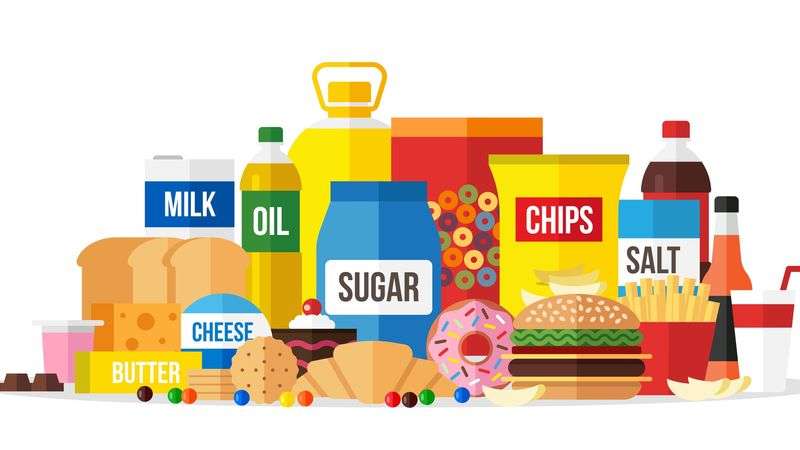
Processed foods vary in their level of alteration, ranging from minimally processed options like frozen vegetables to highly processed items such as packaged snacks and ready-to-eat meals.
The latter category often includes:
- Added Sugars: These significantly contribute to excessive calorie intake and obesity by providing “empty calories” with no essential nutrients.
- Unhealthy Fats: High amounts of trans and saturated fats in ultra-processed foods are linked to an increased risk of cardiovascular diseases.
- Excess Sodium: Large quantities of sodium contribute to high blood pressure and related health complications.
According to a study in The Lancet Public Health (Monteiro et al., 2018), over 50% of the daily caloric intake in food-insecure households is derived from ultra-processed foods.
This statistic underscores the nutritional disparity in these communities, where accessibility and affordability often take precedence over nutrient quality leading to long-term health consequences such as obesity and chronic diseases.
Why Processed Foods Are Prevalent in Food-Insecure Communities?
Processed foods vary in their level of alteration, ranging from minimally processed options like frozen vegetables to highly processed items such as packaged snacks and ready-to-eat meals. The latter category often includes:
- Added Sugars: These significantly contribute to excessive calorie intake and obesity by providing “empty calories” with no essential nutrients.
- Unhealthy Fats: High amounts of trans and saturated fats in ultra-processed foods are linked to an increased risk of cardiovascular diseases.
- Excess Sodium: Large quantities of sodium contribute to high blood pressure and related health complications.
According to a study in The Lancet Public Health (Monteiro et al., 2018), over 50% of the daily caloric intake in food-insecure households is derived from ultra-processed foods.
This statistic underscores the nutritional disparity in these communities, where accessibility and affordability often take precedence over nutrient quality, leading to long-term health consequences such as obesity and chronic diseases.
Link Between Processed Foods and Obesity
Here’s how processed foods and obesity are intricately linked:
High Caloric Density and Low Nutritional Value:
Processed foods are engineered to be calorie-dense yet nutrient-poor. It is therefore suggested you learn how to analyze the calorie density of fast food.
For example, a small serving of potato chips or a candy bar can easily pack over 200 calories while providing negligible amounts of fiber, protein, or essential vitamins.
This creates a significant imbalance between caloric intake and nutrient quality, promoting weight gain over time.
Metabolic and Health Consequences:
The regular consumption of processed foods disrupts metabolic health in multiple ways:
- Insulin Resistance: Foods high in added sugars cause frequent insulin spikes, encouraging fat storage and paving the way for insulin resistance.
- Gut Microbiome Alteration: Artificial additives and preservatives in processed foods negatively affect gut bacteria, impairing the body’s natural ability to regulate weight.
Supporting Evidence:
A study published in Obesity Reviews (Fardet et al., 2016) found that individuals with diets rich in processed foods had a 30% higher risk of obesity and metabolic syndrome compared to those consuming predominantly whole, unprocessed foods.
This demonstrates the strong correlation between the prevalence of processed foods and the rising obesity epidemic.
Socioeconomic Factors Driving Processed Food Consumption
Processed foods vary in their level of alteration, ranging from minimally processed options like frozen vegetables to highly processed items such as packaged snacks and ready-to-eat meals.
The latter category often includes:
- Added Sugars: These significantly contribute to excessive calorie intake and obesity by providing “empty calories” with no essential nutrients.
- Unhealthy Fats: High amounts of trans and saturated fats in ultra-processed foods are linked to an increased risk of cardiovascular diseases.
- Excess Sodium: Large quantities of sodium contribute to high blood pressure and related health complications.
According to a study in The Lancet Public Health (Monteiro et al., 2018), over 50% of the daily caloric intake in food-insecure households is derived from ultra-processed foods.
This statistic underscores the nutritional disparity in these communities, where accessibility and affordability often take precedence over nutrient quality, leading to long-term health consequences such as obesity and chronic diseases.
Community Interventions: Balancing Access and Education
Tackling the prevalence of processed foods in food-insecure communities requires a comprehensive strategy combining accessibility and education:
- Subsidizing Fresh Produce: Government initiatives, such as SNAP (Supplemental Nutrition Assistance Program), can offer greater incentives for purchasing fruits, vegetables, and whole grains, encouraging healthier diets.
- Creating Food Hubs: Local food hubs in underserved areas provide affordable fresh produce, reducing reliance on corner stores and fast food. These hubs can act as centralized points for healthier options.
- Nutrition Education: Hosting community workshops on meal planning, understanding food labels, and preparing budget-friendly nutritious meals empowers individuals to make healthier choices.
- Policy Interventions: Enforcing taxes on sugary drinks and offering subsidies for nutrient-rich alternatives can encourage shifts in consumption patterns, steering families toward healthier diets.
Research in Public Health Nutrition (Moore et al., 2014) emphasizes that combining access with education is critical for transforming dietary behaviors in low-income communities.
Real-Life Examples of Addressing the Role of Processed Foods
Let us walk you through this aspect:
The Success of Urban Farming:
In Detroit, an inspiring urban farming initiative has transformed access to fresh produce for low-income families.
This community-driven effort provides seasonal fruits and vegetables to neighborhoods previously considered food deserts.
Participants not only gain access to nutritious foods but also learn about sustainable gardening practices.
Surveys show that families involved in the program reported improved diet quality and reduced BMI scores, demonstrating the long-term health benefits of urban farming.
School-Based Programs:
In California, a school district implemented innovative cooking classes centered on whole foods.
These classes equipped students with skills to identify and prepare nutritious meals, which, in turn, influenced household food purchases.
Families embraced healthier eating habits, shifting away from processed options.
Supporting evidence from a study in Public Health Nutrition (Wang et al., 2015) highlighted a 25% reduction in processed food consumption among participating households, underscoring the potential of education-driven initiatives.
FAQs on Processed Foods in Food-Insecure Communities
We’ll explore real-life concerns, hidden challenges, and practical truths people rarely talk about.
Each question dives deep into the everyday realities faced by families trying to balance affordability, nutrition, and survival.
Q-1: Why do processed foods become the “default choice” in food-insecure communities even when people know they aren’t the healthiest?
A-1: It is rarely about ignorance—it’s about survival. When budgets are tight, processed foods offer more calories for less money and last longer without refrigeration.
Imagine choosing between fresh vegetables that spoil in two days and packaged noodles that feed your family for a week. It’s not a health decision—it is a financial one. Convenience, shelf life, and accessibility often outweigh long-term health concerns.
Q-2: How does the emotional stress of food insecurity influence reliance on processed foods?
A-2: Stress changes how people eat. When someone is constantly worried about their next meal, they tend to choose foods that are quick, filling, and comforting. Processed foods often hit all three marks.
They’re easy to prepare, require little planning, and can provide a temporary emotional boost. In many cases, these foods become a coping mechanism rather than just a meal.
Q-3: Are processed foods always harmful, or can they sometimes play a helpful role in food-insecure households?
A-3: Not all processed foods are bad. Some, like fortified cereals, canned beans, or frozen vegetables, can actually provide essential nutrients at a lower cost.
The problem arises with ultra-processed foods high in sugar, salt, and unhealthy fats. In food-insecure communities, processed foods can act as both a lifeline and a risk—depending on the type and frequency of consumption.
Q-4: What invisible barriers push families toward processed foods instead of fresh alternatives?
A-4: Transportation, time, and storage are major hidden barriers. Many families live far from grocery stores but close to convenience shops that mainly sell packaged items.
Even if fresh food is available, limited time due to multiple jobs and lack of proper storage (like refrigerators) make processed foods the more practical option. These barriers are rarely discussed but deeply impactful.
Q-5: How does marketing influence processed food consumption in low-income areas?
A-5: Processed food companies often target low-income neighborhoods with aggressive marketing. Bright packaging, discounts, and promotions make these foods more appealing and accessible.
Over time, this creates a cycle where processed foods feel like the “normal” or even desirable choice. It is not just availability—it is influence shaping behavior.
Q-6: Can processed foods affect children differently in food-insecure households?
A-6: Yes, and the impact can be long-lasting. Children growing up on heavily processed diets may face higher risks of obesity, poor concentration, and nutrient deficiencies.
But there is also a psychological angle—these foods often become associated with comfort and reward. This can shape lifelong eating habits, making it harder to transition to healthier choices later in life.
Q-7: Why do some people in food-insecure communities defend processed foods despite health warnings?
A-7: Because for many, these foods represent reliability. When everything else feels uncertain, processed foods are consistent—they taste the same, cost the same, and are always available.
Criticizing these foods can feel like criticizing a person’s ability to provide for their family. It is not just about nutrition—it is about dignity and practicality.
Q-8: How does lack of cooking knowledge or skills contribute to dependence on processed foods?
A-8: Cooking from scratch requires time, skills, and sometimes equipment that not everyone has access to. In communities where cooking education isn’t emphasized, people may feel intimidated by raw ingredients.
Processed foods remove that barrier—they’re simple, quick, and predictable. Without proper guidance, many people stick to what feels safe and manageable.
Q-9: What small changes can families make to reduce reliance on unhealthy processed foods without increasing costs?
A-9: Small swaps can make a big difference. Choosing canned vegetables (with low sodium) instead of instant meals, or adding frozen veggies to packaged dishes can boost nutrition without raising costs.
Even mixing processed foods with fresh ingredients—like adding beans to instant noodles—can improve overall health. It is about gradual improvement, not perfection.
Q-10: What role can communities play in reshaping the reliance on processed foods?
A-10: Community support can be a game changer. Local food programs, shared kitchens, nutrition workshops, and affordable farmers’ markets can provide alternatives to processed foods.
When people see others making small changes, it creates a ripple effect. Real change doesn’t come from telling people what not to eat—it comes from making better choices easier and more accessible.
Bottom Line:
This conversation isn’t about blaming processed foods or the people who rely on them. It is about understanding the deeper reasons behind these choices and finding realistic ways to improve them.
Because when we look beyond the surface, we realize it’s not just about food—it’s about access, dignity, and survival.
Conclusion
Processed foods are a double-edged sword in food-insecure communities: they provide immediate relief from hunger due to their affordability and convenience but contribute to long-term health issues such as obesity, diabetes, and cardiovascular disease.
A study in The Lancet Global Health (Monteiro et al., 2019) highlighted that ultra-processed foods account for over 60% of calorie intake in low-income households, exacerbating nutritional disparities.
Addressing their role requires a multifaceted approach that includes education on nutrition, increased access to fresh and affordable produce, and systemic policy changes such as taxing sugary products and subsidizing healthier alternatives.
Cultural factors, like marketing campaigns targeting low-income communities, also need to be addressed to shift consumer behavior.
By understanding the socioeconomic and cultural factors at play, communities and policymakers can collaborate to reduce dependence on processed foods and improve health outcomes.
Ongoing research and partnerships between public health professionals, policymakers, and community organizations are vital to crafting sustainable, impactful solutions.