

Most people are deficient in fiber, with less than five percent of the American population reaching the minimum amount of fiber that should be ingested every day.
This deficiency can have an effect on many different areas of your health.
By understanding what dietary fiber is, you can make more informed choices about the food you eat that will improve your general state of wellness, digestion, heart health, and potentially even weight loss as a part of your daily diet.
Table of Contents
- What Dietary Fiber Means
- Kinds Of Fiber And Their Roles
- How Fiber Helps Digestive Health
- Fiber’s Role In Weight Loss
- Heart And Blood Sugar Benefits
- Avoiding Excess Fiber Issues
Key Takeaways
| Point | Details |
|---|---|
| Understanding Dietary Fiber | Dietary fiber is a plant-based carbohydrate that aids in digestion and overall health. It exists in two forms: soluble and insoluble, each with unique benefits. |
| Benefits for Digestive Health | Fiber helps regulate bowel movements and reduces constipation, while supporting gut health through bulk formation and smooth passage of waste. |
| Weight Management Role | High-fiber foods increase satiety, helping to control appetite and reduce caloric intake, which is crucial for effective weight loss. |
| Cardiovascular and Sugar Control | Soluble fiber can lower LDL cholesterol and stabilize blood sugar levels, thereby promoting heart health and preventing metabolic disorders. |
What Dietary Fiber Means?
Dietary fiber is a carbohydrate fundamentally different from all the other nutrients in one very important aspect. To begin with, according to the Mayo Clinic, dietary fiber is a carbohydrate found in plant foods that the body cannot fully digest or absorb.
Put otherwise, it is a nutrient that is not digested and absorbed in the human body but passes through it intact, contributing to overall well-being. It comes in two forms, soluble and insoluble.
As the FDA Access Data points out, both are simply carbohydrates derived from plants that are not digested in the small intestine, but instead, benefit the health in different ways.
The characteristic features of dietary fibers include:
- Coming from exclusively plant-based sources
- Being indigestible and not broken down by the human body
- Passing through it largely intact
- Being present in two forms: soluble and insoluble
- Contributing to the health of the human body in various ways
By familiarizing yourself with the information above, you have learned something new and valuable: the properties of dietary fiber, a distinctive type of carbohydrate fundamentally different from sugars and starches in numerous important ways.
 Understanding Fiber for Weight Loss can provide additional insights into how fiber plays a crucial role in maintaining a healthy weight and supporting overall wellness.
Kinds Of Fiber And Their Roles
Understanding the types of dietary fiber is essential to benefit from its remarkable properties.
The Mayo Clinic highlights the presence of two main types of dietary fiber, namely, soluble and insoluble.
Each of them is beneficial and essential for the proper functioning of our organism.
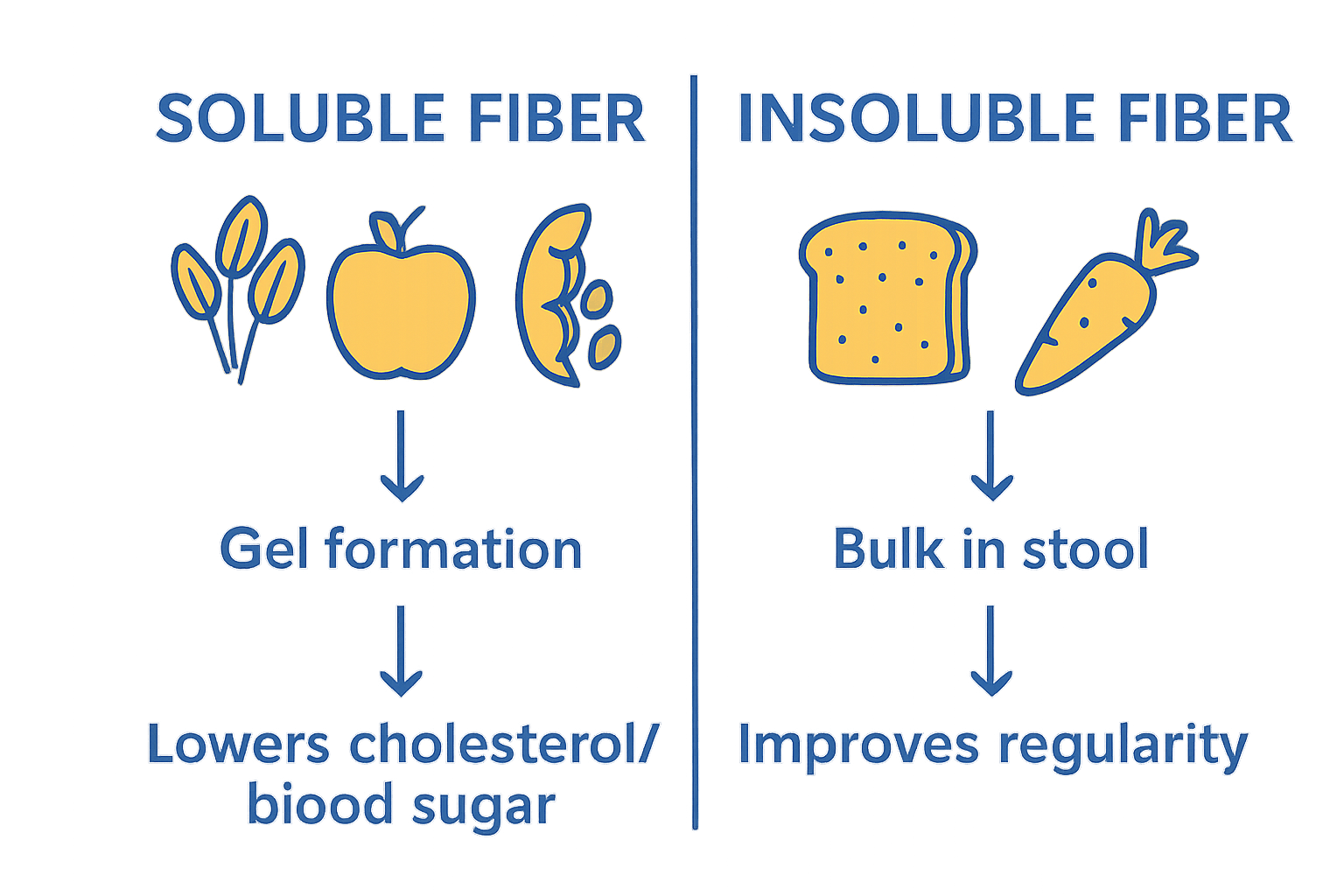
Soluble fiber is called the water-soluble type of fiber.
It is explained by the staff at FDA Access Data, that this type of fiber is broken down by water into a gel-like substance, which is very beneficial for health.
The main benefits that soluble fiber brings are:
- lower blood cholesterol levels
- normalization of blood sugar
- mechanical breakdown of food
- prolongation of the feeling of fullness
- normalization of the work of the cardiovascular system
- Insoluble fiber is called such, because it is not dissolved in water.
A description of the benefits of this type of fiber says that it mainly affects the intestines, contributing to the cleansing of the digestive tract.
Among the benefits of insoluble fiber are:
- increase in the volume of feces
- prevention and removal of constipation
- normalization of the work of the intestines
- normalization of the entire digestive system’s work
- elimination of harmful bacteria from the intestines
In order to achieve a complete understanding of how fiber helps lose weight, we recommend you read Understanding Fiber for Weight Loss, on this informative topic of fiber and its effects on the human body.
How Fiber Helps Digestive Health?
Dietary fiber is an ingredient that can help maintain healthy digestion.
Mayo Clinic even states that it “adds bulk to the stool, making it larger and softer — easing passage through the intestines and reducing the risk of constipation.”
Fiber provides a unique type of aid to the digestive system.
As explained by the FDA Access Data, “soluble fiber adds bulk to the stool and can also speed up the passage of food and waste through the digestive tract.”
Thus, fiber can effectively help with regulation of digestion.
Some of the digestive benefits of fiber are as follows:
- Prevent constipation
- Soften the stool
- Prevent hemorrhoids
- Overall improvement of digestion
- Prevent diverticular disease
Those interested in learning more about the connection between proper nutrition and the health of the digestive tract have the option of reading “Understanding Gut Health for Beginners” which provides an insight into the ways the diet can be modified to improve digestion.
Fiber’s Role In Weight Loss
Fiber is a secret weapon against overweight and obesity.
Mayo Clinic states that high-fiber foods are more filling than low-fiber ones, which may help you eat less and reduce calorie intake.
The most crucial role of fiber in a diet is to make a person feel full longer and reduce overall calorie intake.
Hence, you may begin losing weight due to the high-fiber diet. FDA Access Data claims that both insoluble and soluble dietary fibers may increase satiation and satiety and decrease calorie intake.
Namely, fibers help you feel full and reduce the chances of eating more than necessary.
Filling up on high-fiber foods may also reduce the risk of overeating or eating between meals.
Other benefits of fiber that contribute to weight loss are:
- feeling full for a long time,
- decrease in overall calorie intake,
- slower digestion,
- decreased blood sugar levels,
- improved metabolism.
If you want to get additional ideas about how to design your nutritional plan to reduce weight, 7 Superfoods for Weight Loss You Need to Try will give you an insight into superfoods helpful for losing weight.
Heart And Blood Sugar Benefits
Dietary fiber turns out to be a great friend to the heart.
The Mayo Clinic even says that soluble fiber can reduce cholesterol in the blood and lower your LDL, or bad, cholesterol. Your blood sugar is another important factor that dietary fiber can help you with.
The FDA Access Data tells us that soluble fiber can slow down the digestion process, and prevent the carbohydrates we eat from being absorbed too quickly into the blood.
Listed below are just some of the positive effects that fiber can have on your heart and metabolism:
- Lower bad cholesterol
- Maintain healthy blood sugar levels
- Prevent rapid absorption of carbos into the blood
- Promote a healthy cardiovascular system
- Keep your metabolic processes running smoothly
If you want to learn more about the relationship between your metabolism and the foods you eat, check out How Obesity Disrupts Glucose Metabolism .
Avoiding Excess Fiber Issues
While fiber-rich foods are undeniably healthy, getting too much of it at once can make your digestion uncomfortable.
The Mayo Clinic even reports that there are some negative side effects of fiber when introduced to the digestive system in large quantities at once.
Gas, bloating, and cramping are just some of the side effects, which makes going slow on fiber-rich food paramount in avoiding these unwanted complications.
The fiber diet strategy is of paramount importance because introducing it to your usual diet requires a certain degree of caution. The FDA Access Data suggests that you should increase your fiber intake gradually and drink more fluids to avoid the abovementioned side effects.
Going slow on fiber-rich food allows your body to get used to the changes in the diet. On the other hand, drinking enough fluids will help you avoid discomfort in the abdomen, gas, and bloating after meals.
There are several things to consider when increasing the amount of fiber in your diet.
These include:
• Increasing fiber intake gradually
• Drinking plenty of fluids
• Starting with small amounts of fiber-rich food
• Listening to your body
• Distributing fiber throughout the day
For those interested in learning more about how to plan a better diet and gain a sound knowledge of the field, How to Avoid Processed Foods in a Conscious Eating Plan will be helpful.
Frequently Asked Questions
Recommended
- Understanding Fiber for Weight Loss: Why It Matters – LeanAndFit
- 7 Essential Low Glycemic Index Foods for Better Health – LeanAndFit
- 10 Essential Tips for Healthy Eating Habits – LeanAndFit
- Nutrient Dense Foods: Complete Guide for Healthy Living – LeanAndFit
- Why Trust LeanAndFit.info?
- For educational purposes only