Most American adults underestimate how many calories they eat each day, yet this simple number shapes nearly every aspect of health.
Calorie knowledge is crucial for making choices about food, weight, and energy.
By exploring the science behind what a calorie truly means, how calorie sources differ, and how our bodies process energy, you can better understand what actually works for weight management and lasting wellness.
Table of Contents
- What Are Calories? Science And Core Concepts
- Types Of Calories: Food Sources Compared
- Calorie Needs And Metabolism Explained
- Calories, Weight Loss, And Energy Balance
- Tracking Calories Safely: Tools And Mistakes To Avoid
Key Takeaways
| Point | Details |
|---|---|
| Understanding Calories | Calories are a unit of energy from food, essential for metabolism, energy production, and bodily functions. Not all calories are created equal, as different macronutrients have unique impacts on health and metabolism. |
| Energy Balance | Successful weight management hinges on the balance between calorie intake and expenditure, emphasizing that quality of calories is as important as quantity. |
| Metabolic Differences | Individual calorie needs and metabolic rates vary based on factors like muscle mass, age, and genetics, necessitating personalized dietary approaches. |
| Effective Tracking | Accurate calorie tracking should include an understanding of serving sizes, hidden calories, and the nutritional quality of foods, rather than focusing solely on calorie counts. |
What Are Calories? Science And Core Concepts
Calories represent the fundamental unit of energy that powers our body’s complex functions. Understanding calories requires diving into their scientific definition and practical implications.
The FDA explains that calories represent the total energy obtained from various nutritional sources, including carbohydrates, fats, proteins, and alcohol.
At its most precise scientific level, a calorie is a specific measurement of thermal energy.
According to PubMed research, a calorie technically measures the amount of energy required to raise one gram of water’s temperature by one degree Celsius. In nutritional contexts, professionals typically use the term “Calorie” (with a capital C) to represent a kilocalorie, which equals 1,000 small calories.
Understanding calorie dynamics involves recognizing how our bodies utilize and process energy.
Calories serve multiple critical functions beyond simple fuel:
- Energy Production: Converting food into usable cellular energy
- Metabolic Processes: Supporting fundamental biological functions
- Temperature Regulation: Maintaining consistent body temperature
- Physical Performance: Powering muscular activity and movement
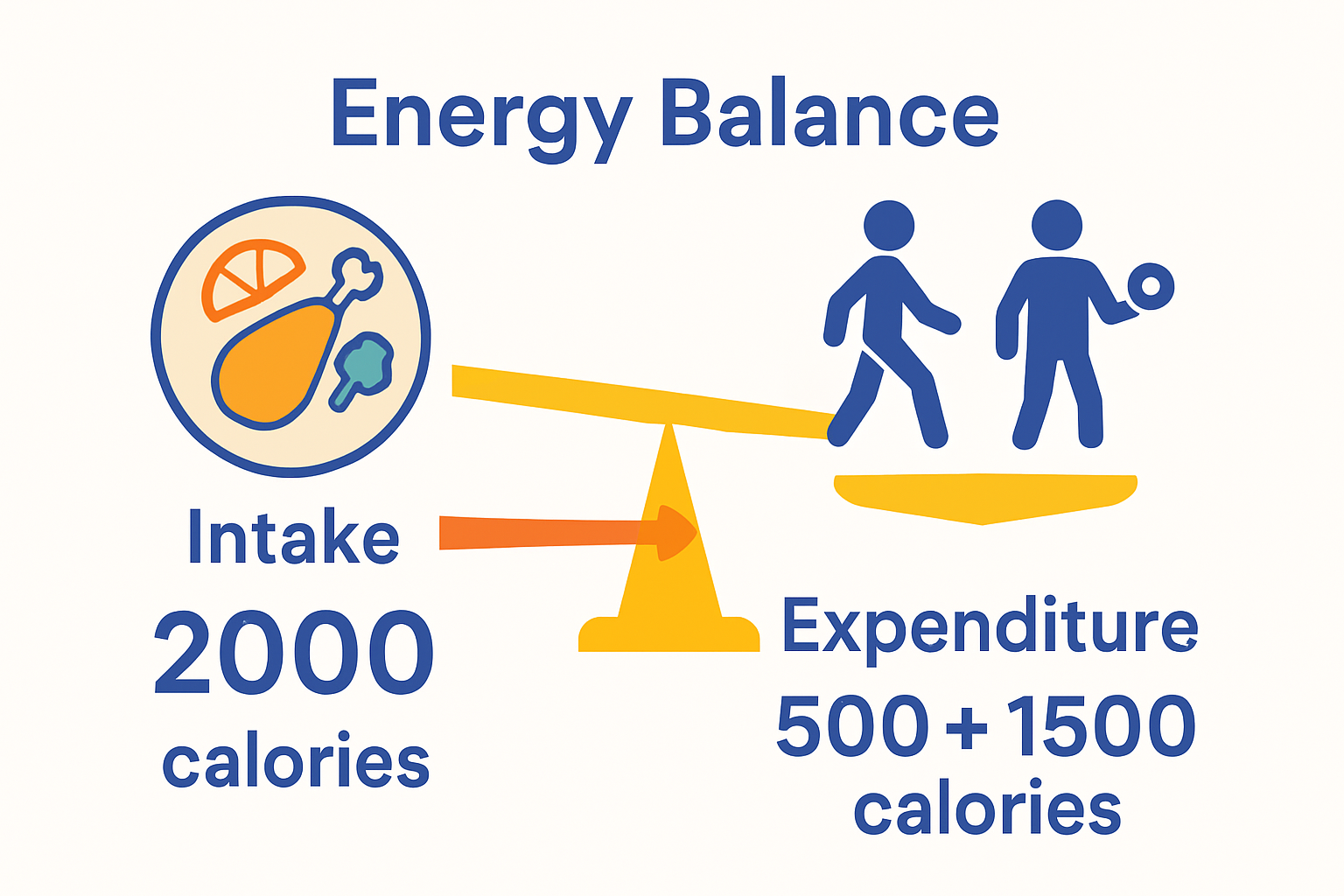
The relationship between calorie intake and expenditure forms the cornerstone of weight management. Energy balance principles determine whether an individual gains, maintains, or loses weight based on the interaction between consumed and burned calories. This intricate balance highlights why simply counting calories doesn’t tell the entire nutritional story – quality matters just as much as quantity.
Types Of Calories: Food Sources Compared
Calories are not created equal. Different food sources provide varying types of calories with unique metabolic impacts on our bodies.
The American Council on Science and Health highlights how macronutrients are metabolized differently, revealing the complexity behind caloric intake.
Macronutrients represent the primary sources of calories in our diet, each with distinct energy densities:
- Proteins: 4 calories per gram
- Carbohydrates: 4 calories per gram
- Fats: 9 calories per gram
These variations demonstrate why not all calories provide equal nutritional value. Nutrient-dense foods play a crucial role in understanding how different calorie sources impact overall health and metabolism.

The Dietary Guidelines for Americans provide critical insights into calorie quality. By comparing nutrient-dense versus less nutritious food options, we can see how caloric intake goes beyond simple quantity.
Whole foods like lean proteins, vegetables, and complex carbohydrates offer more nutritional benefits compared to processed foods with similar calorie counts.
Understanding these nuanced differences helps individuals make more informed dietary choices. The goal isn’t just counting calories, but selecting calories that provide maximum nutritional benefit and support overall metabolic health.
Calorie Needs And Metabolism Explained
Understanding your individual calorie needs is more complex than a one-size-fits-all approach. The Center for Learning explains that calorie requirements are influenced by multiple personal factors, including height, weight, metabolism, and activity level. Healthcare professionals often utilize specialized equations like the Mifflin St. Jeor method to estimate precise individual energy requirements.
Metabolism represents the intricate process of converting food into energy. Understanding how metabolism works reveals why some individuals burn calories more efficiently than others.
Key factors influencing metabolic rate include:
- Muscle Mass: More muscle increases metabolic rate
- Age: Metabolism typically slows with aging
- Genetics: Some people naturally have faster metabolisms
- Hormonal Balance: Thyroid function impacts energy expenditure
Energy balance plays a critical role in body weight management. According to Saylor Academy’s research, the fundamental principle remains straightforward: consuming more calories than your body needs leads to weight gain, while creating a calorie deficit results in weight loss.
This seemingly simple concept masks the complex physiological processes underlying human metabolism.
Personalizing your approach is crucial. Tracking individual metabolic responses, understanding your unique energy requirements, and making informed dietary choices can transform how you view nutrition. The goal isn’t just counting calories, but optimizing your body’s energy utilization for sustainable health and fitness.
Calories, Weight Loss, And Energy Balance
The American Council on Science and Health explores the complex relationship between calories and weight management, revealing that the traditional ‘calories in vs. calories out’ model is far more nuanced than previously understood. Weight loss isn’t simply about mathematical subtraction, but involves intricate physiological processes that influence how our bodies process and utilize energy.
Key factors affecting energy balance and weight loss include:
- Eating Speed: Slower eating can reduce overall calorie consumption
- Protein Content: Higher protein intake increases metabolic rate
- Energy Density: Different foods impact metabolism differently
- Individual Metabolism: Genetic factors play a significant role
Understanding calorie deficit strategies provides insight into effective weight management. Creating a sustainable calorie deficit requires more than simple restriction – it demands a holistic approach that considers individual metabolic responses, nutritional quality, and long-term lifestyle changes.
Successful weight loss transcends basic calorie counting. Hormonal balance, muscle mass, activity level, and food quality all interact to determine how effectively our bodies burn and store energy.
The most effective approach combines strategic calorie reduction with nutrient-dense foods, consistent physical activity, and an understanding of individual metabolic uniqueness.
Tracking Calories Safely: Tools And Mistakes To Avoid
The FDA provides critical guidance on accurately monitoring calorie intake, highlighting the importance of understanding nutrition labels and serving sizes. Effective calorie tracking goes beyond simple number counting, requiring a nuanced approach that considers both quantity and quality of nutritional intake.
Common mistakes in calorie tracking include:
- Ignoring Serving Sizes: Misreading portion measurements
- Overlooking Hidden Calories: Forgetting about beverages and condiments
- Estimating Inaccurately: Guessing portion sizes without measurement
- Neglecting Nutritional Quality: Focusing solely on calorie numbers
How to track food intake naturally becomes crucial for sustainable weight management. The Mayo Clinic emphasizes prioritizing unprocessed and minimally processed whole foods, which provide more nutritional value and support more accurate metabolic tracking.
Successful calorie tracking requires a holistic approach. Utilize digital tools, maintain a food journal, and develop an intuitive understanding of nutritional content.
Remember that calories are just one piece of the nutritional puzzle – understanding your body’s unique metabolic responses and focusing on nutrient-dense foods will ultimately lead to more effective and sustainable health outcomes.
Take Control of Your Calories and Transform Your Health Today
If you struggle with understanding how calories impact your metabolism and weight loss journey you are not alone. This guide breaks down the science behind calories and explains the importance of more than just counting numbers.
For effective weight management learning how to create a sustainable calorie deficit is essential which is why exploring our detailed resources on Calorie Deficit – LeanAndFit can provide practical strategies backed by science.

Start making smarter nutritional choices by incorporating nutrient-dense foods and personalized meal planning.
Visit our Meal Planning – LeanAndFit section for easy to follow guidance that fits your lifestyle.
Don’t wait to unlock a healthier you. Access expert advice and tools now at LeanAndFit and take the first step toward mastering your calorie balance for lasting results.
Frequently Asked Questions
Q-1: What are calories and why are they important?
A-1: Calories are the fundamental unit of energy that our bodies use to perform various functions. They are essential for energy production, metabolic processes, temperature regulation, and physical performance. Understanding calories helps with weight management and overall health.
Q-2: How do different macronutrients affect calorie intake?
A-2: Different macronutrients provide varying amounts of calories. Proteins and carbohydrates each contain 4 calories per gram, while fats provide 9 calories per gram. This difference illustrates that not all calories are equal, and the source of your calories can impact your metabolism and health.
Q-3: How can I estimate my individual calorie needs?
A-3: To estimate your individual calorie needs, consider factors such as your height, weight, age, metabolism, and activity level. Healthcare professionals often use equations like the Mifflin St. Jeor method for a more accurate estimation, tailored to your personal lifestyle and body composition.
Q-4: What are some common mistakes when tracking calories?
A-4: Common mistakes include ignoring serving sizes, overlooking hidden calories in beverages and condiments, estimating portion sizes inaccurately, and focusing solely on calorie counts without considering nutritional quality. Using accurate measurement tools and prioritizing whole foods can help improve your tracking accuracy.
Recommended
- Understanding Calorie Deficit Explained for Weight Loss – LeanAndFit
- How Calorie Deficit Helps You Get Lean and Fit? – LeanAndFit
- Energy Balance Explained: Key Principles and Impact – LeanAndFit
- How to Calculate Your Calorie Deficit for Weight Loss? – LeanAndFit
- Why Trust LeanAndFit.info?
- For educational purposes only