Over 80 percent of american adults actively try to lose weight each year, but many struggle to find a method that truly works for them.
With constant diet trends and new technologies available, the steps you take to track and understand your food choices can make the difference between short term results and lasting progress.
This guide breaks down proven strategies that help american individuals keep their goals on track and make food monitoring simpler and more effective.
Table of Contents
- Step 1: Set Up A Food Tracking Method
- Step 2: Log Daily Meals Consistently
- Step 3: Review And Categorize Intake
- Step 4: Analyze Patterns And Adjust Habits
- Step 5: Monitor Progress Toward Goals
Quick Summary
| Main Insight | Explanation |
|---|---|
| 1. Select a sustainable tracking method | Choose a food tracking approach that fits seamlessly into your daily life, whether it’s a digital app or a paper journal. |
| 2. Consistently log your meals | Record every item you consume accurately and honestly, aiming for five or more days of tracking each week. |
| 3. Categorize your food intake | Organize your logged meals into categories to identify nutritional patterns and make improvements in your diet. |
| 4. Analyze patterns for better choices | Examine your eating behaviors to spot triggers for unhealthy choices, allowing for more intentional eating habits. |
| 5. Monitor diverse progress indicators | Track various metrics such as body measurements and energy levels, not just weight, to assess your overall health improvements. |
Step 1: Set Up a Food Tracking Method
Establishing a reliable food tracking method is your first strategic move toward sustainable weight loss. Research confirms that consistent dietary self-monitoring is a powerful approach for achieving meaningful weight management results.
To begin, choose a tracking method that seamlessly integrates into your daily routine.
Digital apps provide convenient options for real-time logging, while traditional paper journals work well for those preferring analog approaches.
Studies demonstrate that selecting an appropriate tracking technique significantly impacts weight loss success.
Consider these practical tracking strategies:
- Use smartphone apps with barcode scanning capabilities
- Keep a dedicated notebook in your kitchen
- Take quick photos of each meal for visual documentation
- Set daily reminders to log your food intake
The key is finding a system that feels natural and sustainable for you. Consistent food tracking has been scientifically linked to more effective weight management, transforming your approach from guesswork to informed decision making. Select a method that you can realistically maintain over time.
Next, you will learn how to accurately record your meals and create a comprehensive food log that supports your weight loss journey.
Step 2: Log Daily Meals Consistently
Logging your daily meals with precision is a critical component of successful weight loss. Consistent dietary tracking can transform your weight management approach from guesswork to strategic planning.
To create an effective daily food log, focus on recording every single item you consume with accuracy and honesty. Research demonstrates that individuals who track their dietary intake five or more days per week experience significantly better weight loss outcomes.
Start by documenting these key details for each meal:
- Exact food and portion sizes
- Calorie count
- Macronutrient breakdown (proteins, carbs, fats)
- Meal timing
- Hunger level before and after eating
Timing matters significantly in food logging. Aim to record your meals immediately after eating to ensure maximum accuracy and prevent memory lapses. Meal planning strategies can further support your consistency and help you maintain a comprehensive food tracking system.

As you develop this habit, you will create a powerful tool for understanding your eating patterns and making informed nutritional choices that support your weight loss goals.
Step 3: Review and Categorize Intake
Reviewing and categorizing your food intake is a powerful strategy for understanding your dietary patterns and making meaningful progress toward weight loss. Digital innovations in diet monitoring have transformed how we analyze our nutritional habits with remarkable precision.
Begin by organizing your logged meals into clear categories such as protein sources, complex carbohydrates, vegetables, fruits, and discretionary items. Mobile nutrition tracking technologies can help you quickly sort and analyze your daily food consumption.
Focus on these key categorization strategies:
- Identify macronutrient balance
- Recognize nutritional density of meals
- Track portion sizes across different food groups
- Highlight potential areas for dietary improvement
- Note emotional or situational eating patterns
Consistent categorization allows you to spot trends in your eating behavior.
Are you consuming too many processed foods?
Are your protein portions adequate?
Are vegetables making up a significant part of your diet?
This systematic approach transforms your food log from a simple record into an actionable roadmap for nutritional optimization.
As you become more skilled at reviewing your intake, you will develop a nuanced understanding of how different foods impact your weight loss journey and overall health.
Step 4: Analyze Patterns and Adjust Habits
Analyzing your dietary patterns is a transformative process that turns raw data into actionable insights for weight loss. Electronic food diaries with instant feedback have revolutionized how individuals understand and modify their eating behaviors.
Start by examining your food log for consistent patterns. Look for triggers like emotional eating, time-based consumption habits, or specific situations that lead to unhealthy food choices. Lifestyle modification approaches emphasize the critical importance of recognizing these underlying behavioral patterns.
Focus on these key analysis strategies:
- Identify emotional eating triggers
- Track stress related consumption
- Recognize time of day eating patterns
- Assess portion size consistency
- Note frequency of nutritious versus processed food intake
Once you identify problematic patterns, develop specific replacement strategies. Building healthy habits requires intentional restructuring of your approach to nutrition. Small adjustments compound over time creating sustainable weight management results.
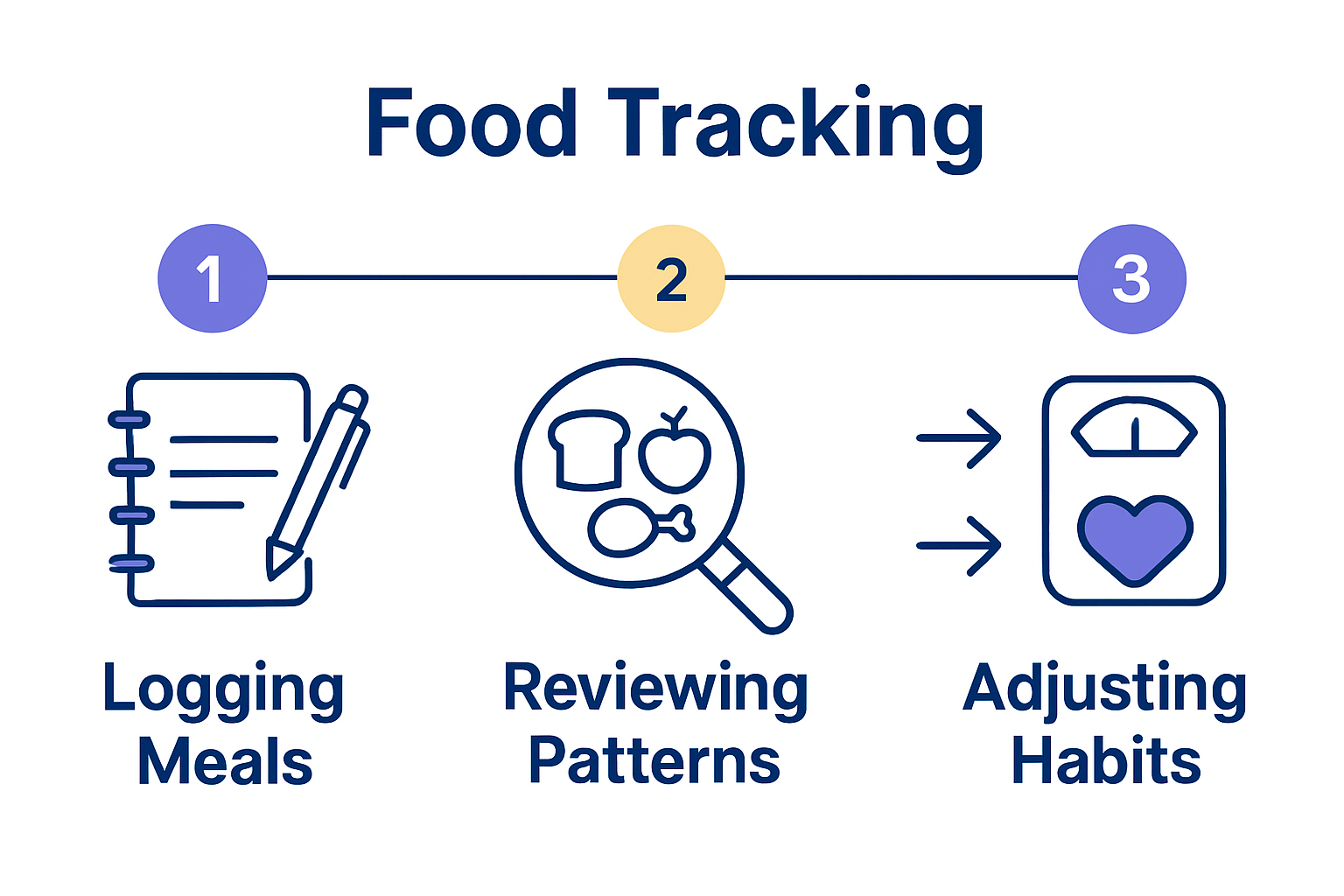
Your goal is to transform your relationship with food from reactive eating to intentional nourishment.
By understanding your unique consumption patterns, you can design a personalized approach that supports your weight loss journey.
Step 5: Monitor Progress Toward Goals
Tracking your weight loss journey requires more than just stepping on a scale. Guidelines for maintaining a healthy weight emphasize the importance of comprehensive progress monitoring that goes beyond simple number tracking.
Develop a multifaceted approach to measuring your progress. Diet self-monitoring methods suggest tracking multiple indicators beyond weight. Consider recording these key metrics:
- Body measurements
- Progress photos
- Energy levels
- Clothing fit
- Physical performance indicators
- Resting heart rate
- Sleep quality
Set realistic checkpoints every two to four weeks to assess your progress. How to track fitness progress consistently involves more than just numerical data. Look for non scale victories that demonstrate your bodys transformation.
Remember that progress is not linear. Some weeks you might see dramatic changes while others seem static. Stay patient and consistent your body is always changing even when the scale does not reflect immediate results.
Take Control of Your Weight Loss Journey with Mindful and Conscious Eating
Tracking your food intake naturally is a major step toward effective weight loss but it can feel overwhelming without the right tools and support.
If you struggle with consistent meal logging or understanding your eating patterns you are not alone.
Many find that building sustainable habits like food tracking, recognizing emotional eating triggers, and analyzing dietary patterns are essential for lasting change.
The key is developing a system that fits your lifestyle and empowers you to make informed nutritional choices every day.

Discover how to make food tracking and mindful eating work for you by exploring expert tips and lifestyle strategies at Mindful Eating – LeanAndFit.
Learn practical ways to cultivate Conscious Eating – LeanAndFit habits that transform your relationship with food. Start taking small, manageable steps now to build confidence and consistency in your weight loss journey.
Visit leanandfit.info today to access trusted resources, meal planning guides, and motivational insights that can help you achieve natural and sustainable weight management results.
Frequently Asked Questions
- Master Weight Loss Journaling: Transform Your Health Journey – LeanAndFit
- How to Maintain Weight Loss: Sustainable Strategies Revealed – LeanAndFit
- Master Mindful Eating Practices for Weight Loss Success – LeanAndFit
- Weekly Meal Planning Tips for Weight Loss Success – LeanAndFit
- Grain-Free Dog Food for Weight Loss | Low-Fat & Vet-Approved
- Why Trust LeanAndFit.info?
- For educational purposes only