Nearly 50 percent of people fail to stick with a new habit beyond a few weeks, even with the best intentions.
Changing your routine can feel like an uphill battle when myths and unrealistic expectations cloud your thinking.
Understanding what truly makes habits stick—and seeing why small steps matter—helps you cut through the noise and focus on everyday actions that genuinely improve your health.
Table of Contents
- Defining Healthy Habits And Common Myths
- Types Of Habits For Better Health
- The Science Behind Habit Formation
- Proven Strategies To Build New Habits
- Overcoming Obstacles And Common Pitfalls
Key Takeaways
| Point | Details |
|---|---|
| Holistic Approach to Health | Healthy habits encompass physical, mental, and social wellness, integrating balanced nutrition, regular exercise, and stress management. |
| Small, Consistent Changes | Effective lifestyle transformations arise from incremental, sustainable changes rather than extreme measures. |
| Understanding Habit Formation | Successful behavior change involves motivational and volitional phases, with emphasis on creating systems that facilitate habits. |
| Overcoming Obstacles | Identifying and addressing common obstacles is key; cultivating resilience and favorable environments supports habit formation. |
Defining Healthy Habits and Common Myths
Building healthy habits is not about drastic changes or punishing yourself – it is about creating sustainable lifestyle practices that improve your overall well-being.
According to Harvard Health, successful health transformations are rooted in understanding what truly matters and dispelling common misconceptions.
Healthy habits encompass more than just diet and exercise. They involve holistic lifestyle choices that integrate physical, mental, and emotional wellness.
As research from Harvard Health indicates, key components include:
- Regular physical activity
- Balanced nutrition
- Adequate sleep
- Stress management
- Social connections
- Continuous learning
One prevalent myth is that healthy living requires extreme measures.
In reality, small, consistent actions create more lasting change than sporadic, intense interventions.
For instance, moderate daily walking can be more beneficial than occasional high-intensity workouts.
 Another common misconception is that healthy habits are restrictive – but they’re actually about creating enjoyable, sustainable routines that make you feel energized and empowered.
To effectively build healthy habits, understanding the psychology behind behavior change is crucial. This means recognizing that motivation fluctuates and creating systems that support your goals even when willpower is low.
The most successful individuals don’t rely on constant motivation, but on establishing consistent, manageable routines that gradually become second nature.
For those looking to dive deeper into creating lasting lifestyle changes, our guide on healthy living offers comprehensive insights into developing personalized wellness strategies that work for your unique needs.
Types of Habits for Better Health
Health habits are not one-size-fits-all strategies, but rather a personalized collection of practices that contribute to overall wellness.
Harvard Health identifies several critical habit categories that form the foundation of a healthy lifestyle, each playing a unique role in physical and mental well-being.
These habit types can be broadly categorized into several key domains:
- Physical Health Habits
- Regular exercise
- Balanced nutrition
- Adequate sleep
- Regular medical check-ups
- Mental Wellness Habits
- Stress management techniques
- Mindfulness practices
- Continuous learning
- Emotional regulation
- Social and Lifestyle Habits
- Maintaining strong relationships
- Setting healthy boundaries
- Work-life balance
- Active social engagement
According to Harvard Health, the most effective health habits are those integrated consistently into daily routines. It is not about perfection, but about creating sustainable practices that support your overall well-being.
For instance, moderate daily activities like walking or practicing brief meditation can be more beneficial than sporadic, intense interventions.
Understanding these habit types helps individuals create a holistic approach to health. Some people might excel in physical habits but struggle with mental wellness, while others might have strong social connections but need improvement in nutritional practices.
The key is recognizing your personal strengths and areas for growth.
If you are looking to develop a more structured approach to building healthy habits, our guide on healthy eating habits provides practical strategies for transforming your lifestyle one step at a time.
The Science Behind Habit Formation
Habit formation is a complex psychological process that goes far beyond simple willpower.
According to the Health Action Process Approach, successful behavior change involves intricate motivational and volitional phases that transform sporadic actions into consistent, ingrained routines.
The scientific understanding of habit formation reveals several critical stages:
- Motivation Phase
- Developing initial intention
- Understanding personal reasons for change
- Creating meaningful goals
- Volitional Phase
- Strategic planning
- Developing action strategies
- Building self-efficacy
- Maintenance Phase
- Sustaining behavioral changes
- Adapting to challenges
- Preventing relapse
Drawing insights from Atomic Habits, the habit formation process can be understood through four interconnected stages: cue, craving, response, and reward. Each stage plays a crucial role in transforming a deliberate action into an automatic behavior.
The cue triggers the habit, the craving motivates the behavior, the response is the actual action, and the reward provides satisfaction that makes the habit more likely to repeat.
Successful habit formation isn’t about drastic changes, but about understanding the psychological mechanisms that drive behavioral patterns. Small, consistent modifications create neural pathways that gradually transform conscious efforts into unconscious routines.
This means that sustainable change happens incrementally, through patient, strategic adjustments to our daily behaviors.
To support your habit formation journey, our guide on setting small fitness goals offers practical strategies for breaking down complex behavioral changes into manageable, achievable steps.
Proven Strategies to Build New Habits
Habit transformation requires more than good intentions.
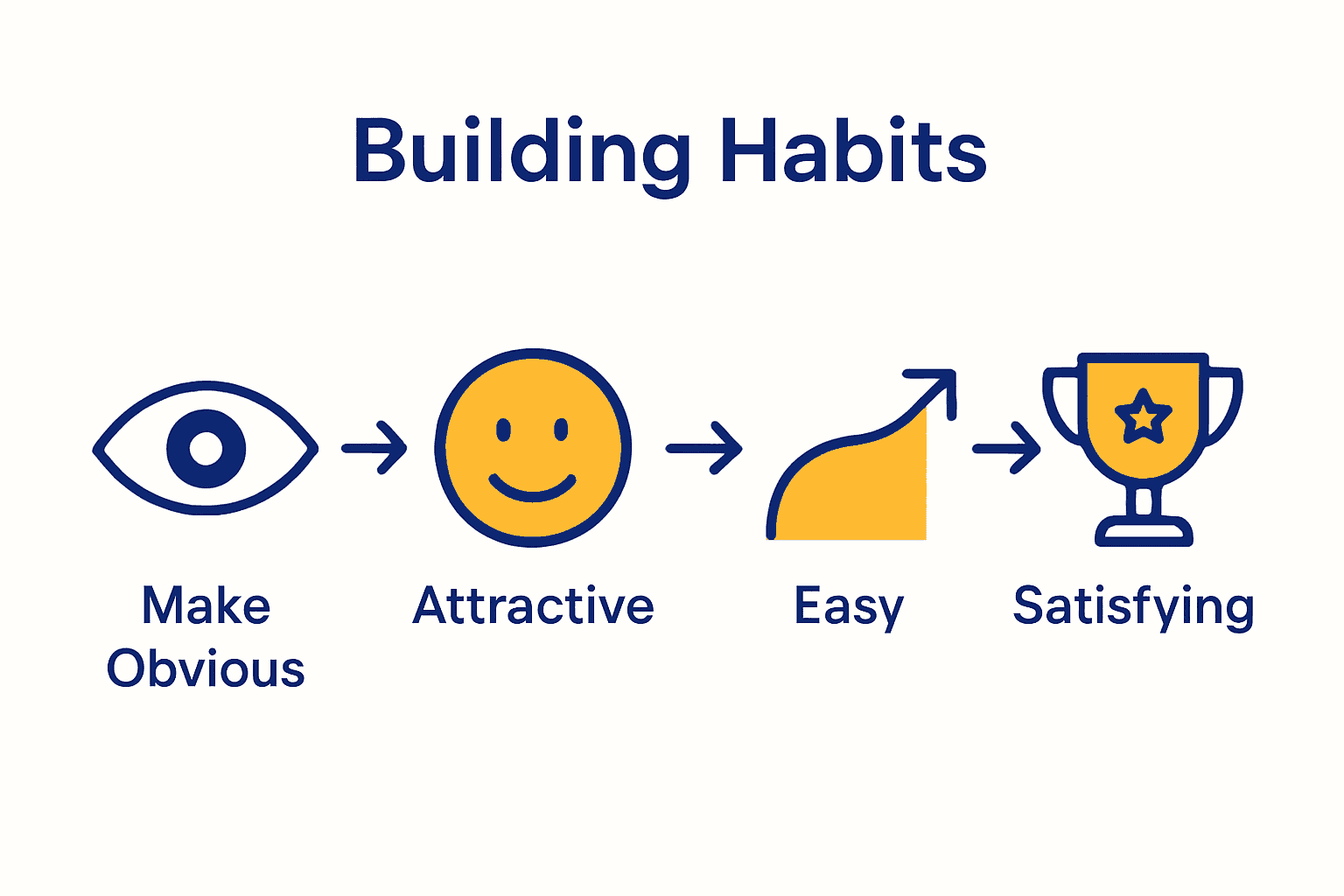
According to insights from Atomic Habits, successful behavior change hinges on creating systems that make new habits obvious, attractive, easy, and satisfying.
Key strategies for building sustainable habits include:
- Make Habits Obvious
- Design your environment to support desired behaviors
- Use visual cues and reminders
- Create clear implementation intentions
- Make Habits Attractive
- Link new habits with positive emotions
- Create compelling narratives around behavior change
- Use habit stacking techniques
- Make Habits Easy
- Reduce friction in performing new behaviors
- Start with minimal viable actions
- Simplify the path of least resistance
- Make Habits Satisfying
- Implement immediate rewards
- Track progress visually
- Celebrate small wins
The fundamental principle is focusing on systems over goals. Instead of fixating on distant outcomes, create supportive environments and routines that naturally guide you towards desired behaviors.
Small, consistent modifications compound over time, transforming challenging actions into automatic, effortless habits.
Psychological research suggests that habit formation is less about willpower and more about strategic design.
By understanding and manipulating the psychological triggers that drive behavior, you can create lasting changes that feel almost automatic.
To support your habit-building journey, our guide on exercise motivation provides additional insights into maintaining momentum and staying committed to your personal development goals.
Overcoming Obstacles and Common Pitfalls
Building sustainable habits requires more than motivation – it demands understanding and strategically navigating potential roadblocks. According to Atomic Habits, many people fail because they focus excessively on outcomes rather than developing robust, supportive processes.
Common obstacles in habit formation include:
- Motivation Fluctuations
- Unrealistic expectations
- Inconsistent commitment
- Lack of immediate results
- Environmental Challenges
- Unsupportive social circles
- Triggering physical spaces
- Limited resources
- Psychological Barriers
- Negative self-talk
- Fear of failure
- Imposter syndrome
- Structural Limitations
- Poor time management
- Inadequate planning
- Competing priorities
Successful habit development involves strategic environment design.
By creating spaces and systems that naturally guide desired behaviors, you reduce the mental friction associated with change. This means restructuring your surroundings to make positive habits easier and negative habits more difficult.
Psychological resilience plays a crucial role in overcoming habit formation challenges.
Recognizing that setbacks are normal – not fatal – helps maintain momentum. Developing a growth mindset allows you to view obstacles as learning opportunities rather than insurmountable barriers.
For practical guidance on navigating potential setbacks, our guide on overcoming weight loss challenges provides actionable strategies to help you stay committed to your personal transformation journey.
Take Control of Building Your Healthy Habits Today
Struggling with motivation and consistency when developing new habits is a common challenge.
The article points out how crucial it is to set up systems that make habits obvious, attractive, easy, and satisfying while overcoming fluctuations in motivation and environmental obstacles.
If you want to turn these proven habit formation insights into real change you can sustain, exploring effective Consistency Hacks can help you stay on track even when willpower wanes.

Start transforming your lifestyle now with actionable strategies tailored to your unique needs.
Visit LeanAndFit to uncover practical guides on exercise, nutrition, and habit-building techniques designed to keep you motivated.
Dive into our Exercise Regimens section for workout plans that fit your pace and help solidify lasting change. Don’t wait for tomorrow to begin living healthier—take your first step today. “your free products”
Frequently Asked Questions:
This FAQ section provides a practical, data-driven roadmap to building healthy habits that lead to long-term success in fitness, health, and overall lifestyle improvement:
Q-1. How can you build healthy habits that actually stick long term in 2026?
A-1. Building habits that last requires consistency, simplicity, and repetition. Research shows that nearly 80% of people abandon new habits within the first month, mainly due to unrealistic expectations. In the USA, individuals who start with small, manageable actions—such as 10-minute workouts or daily walks—are 2x more likely to maintain habits long term. Consistency, rather than intensity, is the key driver of sustainable success.
Q-2. What is a step-by-step guide to building healthy habits for beginners in the USA?
A-2. A simple approach includes choosing one habit, setting a clear goal, attaching it to an existing routine, and tracking progress. Around 65% of beginners succeed when they focus on one habit at a time instead of multiple changes. In cities like New York and San Diego, structured routines have improved adherence rates by nearly 40% among first-time habit builders.
Q-3. What are daily routine habits for a healthy lifestyle and productivity?
A-3. Daily habits such as regular exercise, balanced meals, proper hydration, and consistent sleep improve both health and productivity. Studies show that maintaining a consistent morning routine can boost productivity by up to 25%. In 2026, about 68% of working professionals in the USA follow structured daily routines to manage stress and improve efficiency.
Q-4. What are science-backed ways to build and maintain healthy habits?
A-4. Science highlights techniques like habit stacking, cue-based triggers, and reward systems. Behavioral studies indicate that habits linked to existing routines have a 70% higher success rate. For example, pairing a new habit like stretching with brushing teeth makes it easier to remember and maintain over time.
Q-5. How long does it take to form a healthy habit successfully?
A-5. Contrary to the popular 21-day myth, research shows it takes an average of 66 days to form a habit. However, the timeline can range from 18 to 254 days depending on complexity. In the USA, individuals who remain consistent for at least 2 months have a 75% higher chance of making the habit permanent.
Q-6. What are common mistakes people make when building healthy habits?
A-6. Common mistakes include setting unrealistic goals, relying solely on motivation, and trying to change too many habits at once. Around 70% of people fail due to lack of consistency rather than lack of knowledge. Overloading routines often leads to burnout, especially among beginners.
Q-7. What are the best habit tracking methods and tools for success in 2026?
A-7. Popular tracking methods include mobile apps, journals, and visual habit trackers. In 2026, about 72% of users in the USA rely on digital tools to monitor progress. Tracking habits increases success rates by up to 30%, as it provides accountability and motivation to stay consistent.
Q-8. How can you stay consistent with healthy habits without motivation?
A-8. Consistency comes from discipline and environment design rather than motivation. Studies show that 60% of habits are influenced by surroundings. Creating cues, such as placing workout clothes nearby, increases adherence. In cities like Los Angeles, structured environments have improved consistency rates by nearly 35%.
Q-9. What are examples of small healthy habits that lead to big results?
A-9. Small habits like drinking more water, taking short walks, and reducing screen time can have significant long-term effects. Research indicates that micro-habits improve overall health outcomes by up to 40% over time. In the USA, about 63% of successful lifestyle transformations begin with small, incremental changes.
Q-10. What are expert tips to build healthy habits for weight loss and fitness?
A-10. Experts recommend focusing on consistency, combining exercise with proper nutrition, and tracking progress regularly. Strength training and balanced diets can improve results by up to 50% compared to dieting alone. In 2026, about 69% of successful weight loss cases in the USA involve sustainable habit-building strategies rather than short-term programs.
Recommended:
- What Is Healthy Living? Complete Overview and Guide – LeanAndFit
- 10 Essential Tips for Healthy Eating Habits – LeanAndFit
- Understanding Healthy Lifestyle Changes for Better Living – LeanAndFit
- Beginner’s Guide to Supplements: Build Your Ideal Routine – Nutribliss Inc.
- Longevity ernährung: So isst du dich zu einem längeren Leben – mybody®x
- Why Trust LeanAndFit.info?
- For educational purposes only