

Setting new fitness goals sounds exciting.
But according to research, over 80 percent of people give up on their exercise plans within just a few weeks.
That number seems sky high, right?
What no one tells you is that the real challenge is not the workouts themselves, but uncovering the deeper motivations and building routines that actually last.
Table of Contents
- Step 1: Identify Your Fitness Goals And Reasons
- Step 2: Create A Personalized Workout Plan
- Step 3: Establish A Consistent Exercise Routine
- Step 4: Track Your Progress And Celebrate Milestones
- Step 5: Find A Workout Buddy Or Community For Support
Quick Summary
| Key Point | Explanation |
|---|---|
| 1. Define Your Fitness Goals Clearly | Explore deep motivations for fitness and create specific, achievable targets to stay committed. |
| 2. Develop a Personalized Workout Plan | Tailor your exercise regimen to fit your unique needs, preferences, and lifestyle for effectiveness. |
| 3. Establish a Consistent Routine | Make exercise a non-negotiable habit by integrating it into your daily schedule and using habit stacking. |
| 4. Track Your Progress Regularly | Monitor achievements beyond weight loss to celebrate milestones and maintain motivation throughout your journey. |
| 5. Engage with a Supportive Community | Find like-minded individuals or groups that provide accountability and encouragement, enhancing your fitness experience. |
Step 1: Identify Your Fitness Goals and Reasons
Successful exercise motivation begins with crystal clear goals that resonate personally with you. Many people start fitness journeys without understanding their true motivations, which leads to quick burnout and abandoned efforts.
The key is to dig deeper than surface level objectives like “losing weight” and uncover the profound reasons driving your fitness transformation.
Start by asking yourself powerful introspective questions.
What truly matters to you?
Are you seeking more energy to play with your children?
Do you want to improve your cardiovascular health to reduce disease risks?
Perhaps you aim to build confidence and feel stronger in your body.
These deeper motivations will become your anchor points when workout enthusiasm wanes.
Check out our guide on how to set small fitness goals to help you create meaningful, achievable targets. Your goals should be specific, measurable, and meaningful.
Instead of saying “I want to get fit,” reframe your objective to something concrete like “I will strength train three times per week to build muscle and increase my overall functional fitness.”
Consider creating a vision board or written document that captures your fitness motivations. Include both short term and long term goals.
Short term goals might look like “Complete 20 pushups without stopping” while long term goals could be “Run a half marathon within one year.”
The visual representation helps maintain focus and provides a daily reminder of why you started this journey.
Remember that goals are personal and dynamic. They will evolve as you progress, and that’s perfectly normal. What matters most is maintaining consistent commitment and understanding your core motivations. Your fitness journey is not about perfection but persistent progress toward becoming the strongest version of yourself.
Successful goal setting involves three critical elements: clarity, emotional connection, and realistic expectations. Be honest with yourself about your current fitness level, available time, and resources.
Create goals that challenge you without feeling overwhelming. This balanced approach ensures you remain motivated and engaged throughout your fitness transformation.
Step 2: Create a Personalized Workout Plan
A personalized workout plan transforms generic fitness advice into a targeted strategy that aligns with your unique goals, body type, and lifestyle.
Your workout plan is not a one size fits all template, but a dynamic roadmap designed specifically for you.
The most successful fitness journeys are built on understanding your individual needs, current fitness level, and potential limitations.
Learn how to track fitness progress consistently to ensure your personalized plan remains effective. Begin by conducting a comprehensive self assessment.
Evaluate your current physical condition, including strength, cardiovascular endurance, flexibility, and any existing health constraints.
If you have previous injuries or medical conditions, consulting a healthcare professional or certified fitness trainer can provide crucial insights into designing a safe and effective workout regimen.
Structure your workout plan to include a balanced mix of exercises. A well rounded approach typically incorporates strength training, cardiovascular activities, and flexibility work.
For strength training, consider exercises that target major muscle groups using body weight, free weights, or resistance bands.
Cardiovascular activities might include walking, running, cycling, swimming, or high intensity interval training depending on your fitness level and preferences.
Realistic scheduling is critical to maintaining motivation. Analyze your daily routine and identify time slots where exercise can be consistently integrated.
Some individuals prefer early morning workouts to kickstart their day, while others find evening sessions more manageable. The key is selecting time slots you can reliably commit to without overwhelming your existing responsibilities.
Progression is fundamental in any workout plan. Start at a comfortable intensity and gradually increase difficulty as your fitness improves. This might mean adding more repetitions, increasing weights, or extending workout duration.
Listen to your body and avoid pushing too hard too quickly, which can lead to burnout or potential injury.
Technology and fitness apps can be valuable tools in designing and tracking your personalized plan. Many apps offer customizable workout routines, progress tracking, and motivational features.
However, remember that these are supplementary tools. Your commitment, consistency, and willingness to adapt are the true drivers of fitness success.
Finally, build flexibility into your plan. Life happens, and your workout routine should accommodate unexpected changes. Having alternative workout options or the ability to adjust your schedule ensures you remain committed to your fitness journey even when perfect conditions aren’t possible.
Step 3: Establish a Consistent Exercise Routine
Consistency is the cornerstone of any successful fitness journey.
Transforming exercise from an occasional activity to a non negotiable daily habit requires strategic planning and mental commitment. Many people struggle not with knowing what to do, but with maintaining the discipline to do it regularly.
Explore our exercise regimens guide to understand different approaches to building routine. Start by selecting a realistic workout frequency that matches your current lifestyle.
For most beginners, three to four structured workout sessions per week provides an ideal balance between progress and recovery. Choose specific days and times that align with your natural energy levels and existing commitments.
The human brain thrives on predictability, so anchor your exercise routine to existing daily habits. If you consistently drink coffee every morning, schedule your workout immediately after your first cup.
This technique, known as habit stacking, helps create a neurological pathway that makes exercise feel more automatic and less like a voluntary choice.
Prepare for potential obstacles by developing backup plans.
Life is unpredictable, and rigid workout schedules can crumble under unexpected circumstances.
If your planned morning gym session gets disrupted, have a 20 minute home workout or quick walking routine ready as an alternative. Flexibility prevents total derailment of your fitness commitment.
Tracking becomes a powerful motivation tool.
Use a physical calendar, smartphone app, or fitness journal to log your workouts.
Visual representation of your consistent efforts creates a powerful psychological reward system. Each completed workout becomes a small victory, building momentum and self confidence.
Mental preparation is as crucial as physical readiness. Set your workout clothes out the night before, pack your gym bag in advance, and create a motivational playlist.
These small rituals signal to your brain that exercise is a priority, not an afterthought. Reduce friction between intention and action by eliminating potential excuses.
Understand that consistency doesn’t mean perfection. Some weeks you might exercise less intensely, and that’s okay. What matters is maintaining forward momentum. A reduced workout is infinitely better than no workout.
Approach your fitness routine with compassion, treating yourself as you would a supportive friend working toward a challenging goal.
Remember, establishing a consistent exercise routine is a skill that improves with practice. Your first attempts might feel awkward or challenging, but each repetition makes the next one easier.
Stay patient, stay committed, and trust the process of gradual, sustainable transformation.
Step 4: Track Your Progress and Celebrate Milestones
Progress tracking transforms your fitness journey from a vague aspiration into a tangible, measurable experience.
Documenting your achievements creates a powerful psychological reinforcement that keeps you motivated through challenging periods.
The act of measuring and celebrating your progress turns fitness from a chore into an exciting personal adventure.
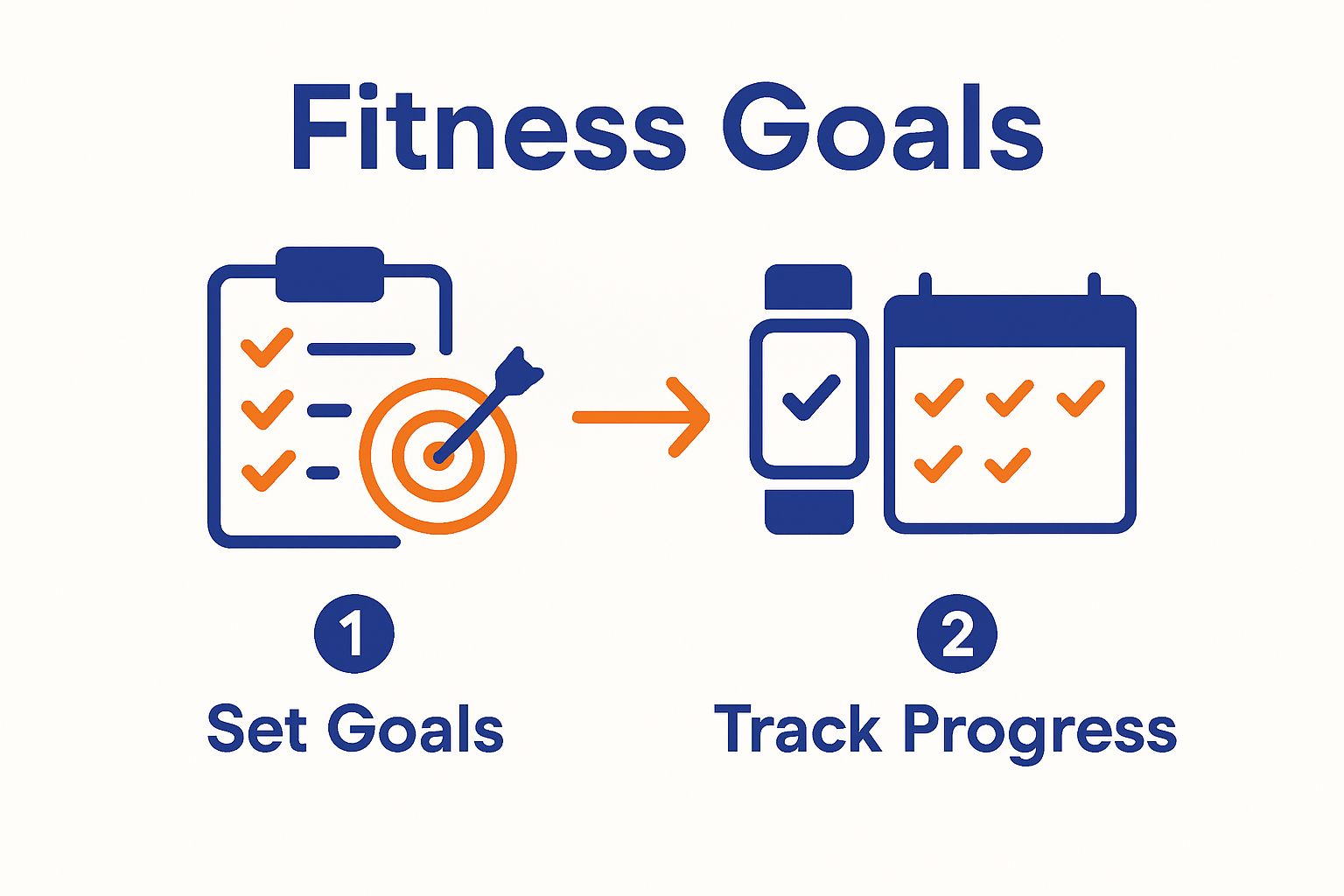
Learn how step tracking motivates consistent physical activity to understand the psychological benefits of monitoring your fitness. Choose tracking methods that resonate with your personality and goals.
Some individuals thrive on detailed spreadsheets recording every workout metric, while others prefer simple smartphone apps or traditional fitness journals. The key is selecting a system you will actually use consistently.
Here is a table summarizing different methods for tracking fitness progress, helping readers select the approach that best fits their personality and goals.
| Tracking Method | Description | Best For | Motivation Factor |
|---|---|---|---|
| Fitness Journal | Write workouts and notes in a traditional paper notebook | Those who like writing | Visual record reinforces progress |
| Spreadsheet | Manually log metrics in a structured digital format | Data-oriented individuals | Detailed analysis of improvements |
| Smartphone App | Use mobile apps to log and monitor workouts automatically | Tech-savvy users | Instant feedback and goal tracking |
| Wearable Device | Track steps, heart rate, and more with fitness trackers | Those who prefer passive logging | Real-time progress updates |
| Progress Photos | Take pictures to visually document body changes | Visual learners | Reinforces physical transformation |
| Check-in Milestones | Assess abilities or feelings at set intervals | Anyone needing accountability | Celebrates small, realistic wins |
Measure progress through multiple lenses beyond just weight or body measurements. Track improvements in strength by recording the weights you lift, monitor endurance through running times or distance, and note flexibility gains by tracking how deeply you can stretch.
Take periodic progress photos, even if you never share them, as visual evidence of your transformation can be incredibly motivating.
Establish a regular check in rhythm that balances accountability with psychological well being. Monthly assessments work well for most people, providing enough time to see meaningful changes without creating excessive pressure.
During these check ins, review not just physical metrics but also how you feel. Increased energy levels, improved mood, and greater confidence are equally important indicators of progress.
Celebrating milestones is not optional it is essential. Create a reward system that motivates you without undermining your fitness goals.
These rewards might include new workout gear, a massage, a special healthy meal at your favorite restaurant, or a fun experience like a hiking trip. The celebration should feel like a genuine acknowledgment of your hard work, not a punishment or restriction.
Be prepared for plateaus and understand they are normal. Progress is rarely linear. Some weeks you might see dramatic improvements, while others might feel stagnant. During these periods, focus on consistency and small victories.
Review your original goals and remind yourself how far you have already come.
Technology can be a powerful ally in progress tracking. Fitness watches, smartphone apps, and online platforms offer sophisticated tracking capabilities. However, remember that these tools are supportive mechanisms. Your internal motivation, commitment, and self compassion are the true drivers of your fitness success.
Ultimately, progress tracking is about building a positive relationship with your body and health. Approach it with curiosity, kindness, and a growth mindset. Every data point is not a judgment but valuable information guiding your ongoing transformation.
Step 5: Find a Workout Buddy or Community for Support
Human connection transforms fitness from a solitary challenge into a shared journey of growth and motivation.
A supportive workout community acts like rocket fuel for your exercise motivation, providing accountability, encouragement, and collective energy that can propel you through moments of doubt and fatigue.
Begin by exploring multiple avenues for finding your fitness tribe. Local gyms often host group classes or fitness programs where you can meet like minded individuals.
Online platforms and social media groups dedicated to fitness offer incredible opportunities to connect with people sharing similar goals. Learn more about step tracking and community motivation to understand how shared experiences can enhance your fitness journey.
When selecting a workout buddy or community, prioritize compatibility over proximity. Look for individuals who demonstrate consistent commitment, positive attitude, and alignment with your specific fitness objectives.
A great workout partner challenges you without creating unnecessary competition. They celebrate your victories, offer support during struggles, and maintain a constructive perspective that keeps you motivated.
Effective workout partnerships operate on mutual respect and shared expectations. Have an honest conversation about your individual goals, preferred workout styles, and communication preferences.
Some people thrive on high intensity encouragement, while others prefer more subtle, supportive interactions. Understanding these nuances helps create a sustainable support system that feels authentic and energizing.
Technology offers remarkable opportunities for community connection. Fitness apps with social features, virtual workout groups, and online challenge platforms can provide structured ways to engage with fellow fitness enthusiasts.
These digital communities eliminate geographical barriers, allowing you to find support and inspiration from people around the world.
Remember that community support extends beyond physical workouts. Share your challenges, celebrate small wins, and be vulnerable about your fitness journey. Authentic connections often emerge from moments of genuine sharing. A supportive community sees your potential even during times when you might struggle to see it yourself.
Be prepared to invest time in nurturing these relationships. Like any meaningful connection, workout communities require consistent engagement. Attend regular meetups, participate in group challenges, and maintain open communication.
Your commitment to the community will often be directly proportional to the support and motivation you receive.
Ultimately, finding your fitness tribe is about creating a positive, empowering ecosystem that makes your health journey feel less like a solitary struggle and more like a collective adventure.
Embrace the power of shared goals, mutual encouragement, and the transformative energy of community support.

Ready to Build Lasting Exercise Motivation?
Struggling to turn motivation into real fitness results is a common challenge. Maybe you set goals but lose focus, or you start a routine only to stop when life gets busy. If this sounds familiar, you are not alone.
Many readers from our article on exercise motivation feel stuck between wanting change and finding the right methods that actually work.
The article explained the importance of setting clear goals, tracking progress, and building a routine that fits your life.
Let LeanAndFit help you turn these ideas into action.
Dive into our Exercise Regimens section for easy-to-follow plans tailored to busy people just like you. Explore the power of Step Tracking to create a sense of daily achievement and real progress you can see.
Visit LeanAndFit now to find the structure and support you need. Don’t wait another week to unlock your full potential with proven, actionable tools for building lifelong motivation.
Frequently Asked Questions:
Staying consistent with exercise is often harder than starting it.
Most people don’t struggle with knowledge—they struggle with motivation that lasts beyond a few days. Real fitness success comes from understanding how your mind, habits, and environment work together.
These Exercise Motivation Tips to Succeed are designed to help you build consistency in a realistic, human way—not through pressure, but through sustainable psychology and behavior change.
Q-1: Why does motivation for exercise disappear even when I genuinely want to stay fit?
A-1: Motivation fades because it is emotional, not structural. At the beginning, excitement drives you, but emotions naturally fluctuate. Once daily stress, fatigue, or boredom enters, motivation weakens.
The solution is not to “feel motivated” every day but to build systems that work even when motivation is low. When exercise becomes a fixed part of your routine—like brushing your teeth—it no longer depends on mood.
This shift from emotional drive to habit structure is one of the most powerful Exercise Motivation Tips to Succeed.
Q-2: How can I trick my brain into wanting to exercise on low-energy days?
A-2: Instead of “tricking” your brain, you reduce resistance.
The brain avoids effort, not exercise itself. So make the first step extremely small—like wearing workout clothes or walking for just five minutes.
This lowers mental friction. Once you start moving, your brain releases dopamine, which naturally increases willingness to continue. The goal is not intensity at the start but initiation.
Most exercise resistance disappears after the first 5–10 minutes of action.
Q-3: Why do I feel more motivated after skipping exercise than before it?
A-3: This happens due to temporary relief bias.
When you skip a workout, your brain feels immediate comfort because effort is avoided. However, this relief is short-lived and often followed by guilt or lowered self-esteem.
Over time, this cycle reduces overall motivation.
The key is to break the emotional reward loop of skipping.
Replacing it with a small action—even a light workout—helps retrain the brain to associate exercise with positive completion rather than avoidance.
Q-4: Can environment design improve exercise motivation more than willpower?
A-4: Yes, environment is often stronger than willpower. If your workout space is visible, accessible, and ready (like clothes laid out or equipment nearby), you are far more likely to exercise.
The brain responds to cues in the environment more than internal decisions.
Even small changes like keeping shoes near the door or setting a fixed workout corner can significantly improve consistency. This reduces decision fatigue and makes exercise feel automatic rather than forced.
Q-5: Why does exercise motivation increase after I stop thinking about results?
A-5: Obsessing over results creates pressure, which makes exercise feel like a burden.
When you shift focus to process—like how you feel after movement or the satisfaction of completing a session—motivation becomes lighter.
The brain performs better when reward is immediate rather than distant.
Enjoying the activity itself instead of constantly chasing outcomes is one of the most overlooked Exercise Motivation Tips to Succeed.
Q-6: How does identity influence long-term exercise motivation?
A-6: Identity is more powerful than goals. If you see yourself as “someone who exercises,” your brain naturally aligns behavior with that identity. This reduces internal debate.
Instead of asking “Should I work out today?”, you start thinking “What kind of workout do I do today?”
This subtle shift eliminates resistance.
Building identity-based habits ensures that exercise becomes part of who you are, not just something you try to do.
Q-7: Why do small workouts sometimes create stronger motivation than intense ones?
A-7: Small workouts build consistency without triggering burnout. Intense workouts demand high energy and recovery, which can create mental resistance over time.
Small sessions, however, create a sense of achievement without pressure. Once consistency is built, intensity can gradually increase.
This approach builds trust with yourself, which is essential for long-term motivation. The body and mind both respond better to repetition than intensity alone.
Q-8: Can emotional state before exercise predict whether I will succeed in staying consistent?
A-8: Yes, emotional state plays a major role, but it is not fixed. Stress, fatigue, or anxiety can reduce willingness to start exercise.
However, structured routines can override emotional fluctuations. For example, exercising at the same time every day reduces decision-making and emotional interference.
Over time, your brain adapts and begins expecting activity at that time, making consistency easier regardless of mood.
Q-9: Why do people lose motivation after seeing slow physical results?
A-9: Because the brain expects quick rewards. When visible changes take time, people assume progress is not happening.
However, internal changes like improved metabolism, endurance, and hormonal balance occur much earlier than visible changes.
The mistake is relying only on mirror feedback. Tracking non-visual progress—like strength, stamina, or mood—helps maintain motivation even when physical changes are gradual.
Q-10: What is the simplest long-term strategy from all Exercise Motivation Tips to Succeed?
A-10: The simplest strategy is to remove decision-making from the process. Decide in advance when, where, and how you will exercise, and keep it consistent.
Pair this with starting small, focusing on identity, and removing pressure from results. When exercise becomes a fixed part of your daily structure rather than a daily choice, motivation stops being the driving force.
Consistency becomes automatic, and success becomes sustainable without mental struggle.
Recommended: