

People talk about gut health like it is only about digestion, but the story is much bigger.
Scientists have discovered that your gut is home to trillions of bacteria and other microbes that affect everything from mood to metabolism.
It sounds wild that tiny gut bugs can influence your brain and your weight, yet studies now show your mental health and immune system might depend on what’s living in your stomach.
Ready to see how this invisible world shapes how you feel every day?
Table of Contents
- What Is Gut Health And Why Is It Important?
- The Role Of The Microbiome In Digestion And Wellness
- How Gut Health Affects Overall Health And Weight
- Key Concepts: Probiotics, Prebiotics, And Diet Impact
- Practical Steps To Support Gut Health
Quick Summary
| Takeaway | Explanation |
|---|---|
| Gut health affects overall wellness. | A balanced gut microbiome influences digestion, mood, immunity, and metabolic health, extending its importance beyond mere digestion. |
| Probiotics and prebiotics support gut health. | Probiotics are beneficial bacteria, while prebiotics are plant fibers that nourish these bacteria, promoting digestive well-being. |
| Diet impacts gut microbiome composition. | Consuming a variety of whole foods, fermented products, and fiber-rich items fosters a balanced microbiome crucial for health. |
| Manage stress and sleep for gut wellness. | Lifestyle factors like stress management, adequate sleep, and regular exercise play a vital role in maintaining gut health. |
| Diverse diet promotes beneficial bacteria. | A colorful diet rich in vegetables and fermented foods helps cultivate healthy gut bacteria, supporting digestive functions. |
What is Gut Health and Why is it Important?
Gut health represents the complex balance and functionality of your digestive system, specifically focusing on the intricate ecosystem of microorganisms living within your gastrointestinal tract.
When we talk about gut health for beginners, it’s essential to understand that this microscopic world plays a far more significant role in overall wellness than most people realize.
The Microbiome: Your Internal Ecosystem
Your gut microbiome consists of trillions of bacteria, fungi, and other microorganisms that coexist in your digestive system. These microbes are not just passive residents but active participants in numerous bodily functions.
Understanding gut health and metabolism reveals how these tiny organisms influence everything from nutrient absorption to immune system responses.
Key characteristics of a healthy gut microbiome include:
- Diverse bacterial populations
- Balance between beneficial and potentially harmful microbes
- Strong intestinal barrier function
- Efficient nutrient processing
Why Gut Health Matters Beyond Digestion?
Contrary to popular belief, gut health extends far beyond simple digestion. Research indicates that your gut microbiome impacts mental health, immune function, and even weight management.
According to research from Harvard Medical School, the gut microbiome communicates directly with your brain through the gut-brain axis, influencing mood, stress responses, and cognitive function.
Individuals with a healthy gut microbiome often experience:
- More stable mood and reduced anxiety
- Enhanced immune system resilience
- Better metabolic regulation
- Improved nutrient absorption
Understanding and maintaining gut health is not just a trend but a critical component of overall wellness.
By recognizing the profound impact of your internal microbial ecosystem, you can take proactive steps toward optimizing your physical and mental well-being.
The Role of the Microbiome in Digestion and Wellness
The microbiome is a complex ecosystem of microorganisms that plays a pivotal role in maintaining overall health and wellness.
These microscopic inhabitants do far more than simply aid digestion they actively contribute to numerous physiological processes that impact our entire body.
Digestive Function and Nutrient Processing
At its core, the microbiome serves as a critical partner in breaking down food and extracting essential nutrients.
Gut health and obesity research demonstrates how these microorganisms help metabolize complex carbohydrates, proteins, and fats that human digestive enzymes cannot process independently.
Key digestive functions performed by the microbiome include:
- Breaking down dietary fiber
- Producing essential enzymes
- Synthesizing specific vitamins like B12 and K
- Facilitating nutrient absorption
Beyond Digestion: Systemic Health Impacts
The microbiome extends its influence far beyond the digestive tract.
According to research from the National Institutes of Health, these microorganisms play a crucial role in immune system regulation, metabolic health, and even neurological functioning.
Significant systemic health contributions include:
- Modulating immune system responses
- Producing neurotransmitters that affect mood
- Regulating inflammation levels
- Supporting metabolic processes
Understanding the microbiome reveals a profound interconnectedness between our microscopic residents and overall wellness.
The following table summarizes key ways the gut microbiome impacts both digestive and whole-body wellness, highlighting the breadth of its influence.
| Area of Impact | Role of Microbiome | Examples Provided |
|---|---|---|
| Digestive Function | Breaks down food, enables nutrient absorption | Fiber digestion, vitamin synthesis |
| Metabolic Health | Regulates metabolism and weight | Hormone modulation, fat storage |
| Immune System | Strengthens immune defense, reduces inflammation | Immune cell activation, pathogen protection |
| Mental Health | Influences mood and cognitive function | Neurotransmitter production, stress response |
| Inflammation Control | Regulates inflammatory pathways | Reduced risk of chronic diseases |
How Gut Health Affects Overall Health and Weight
Gut health is not merely about digestion it represents a complex interconnected system that profoundly influences multiple aspects of physical wellness, including body weight, metabolism, and overall health.
Understanding these connections reveals how your internal microbiome acts as a critical regulator of bodily functions.
Metabolic Regulation and Weight Management
The gut microbiome plays a pivotal role in metabolism and weight control.
How gut bacteria impact body weight demonstrates that microbial composition directly influences how calories are processed and stored.
Certain bacterial strains can enhance metabolic efficiency, while others might contribute to weight gain and metabolic disorders.
Key metabolic interactions include:
- Regulating appetite hormones
- Influencing insulin sensitivity
- Determining calorie extraction from food
- Modulating fat storage mechanisms
Immune System and Inflammatory Responses
Your gut microbiome serves as a critical interface between external environments and internal immune responses.
According to research from the National Institutes of Health, microbial imbalances can trigger chronic low-grade inflammation, which is closely linked to obesity, metabolic syndrome, and various chronic diseases.
Significant immune system interactions include:
- Activating protective immune cells
- Producing anti-inflammatory compounds
- Preventing pathogen colonization
- Maintaining intestinal barrier integrity
By recognizing the intricate relationship between gut health, weight management, and overall wellness, individuals can make informed dietary and lifestyle choices that support a balanced and healthy microbiome.
Key Concepts: Probiotics, Prebiotics, and Diet Impact
Nutrition plays a fundamental role in maintaining a healthy gut microbiome. Understanding the intricate relationships between probiotics, prebiotics, and dietary choices can significantly impact your overall digestive wellness and metabolic health.
Understanding Probiotics and Prebiotics
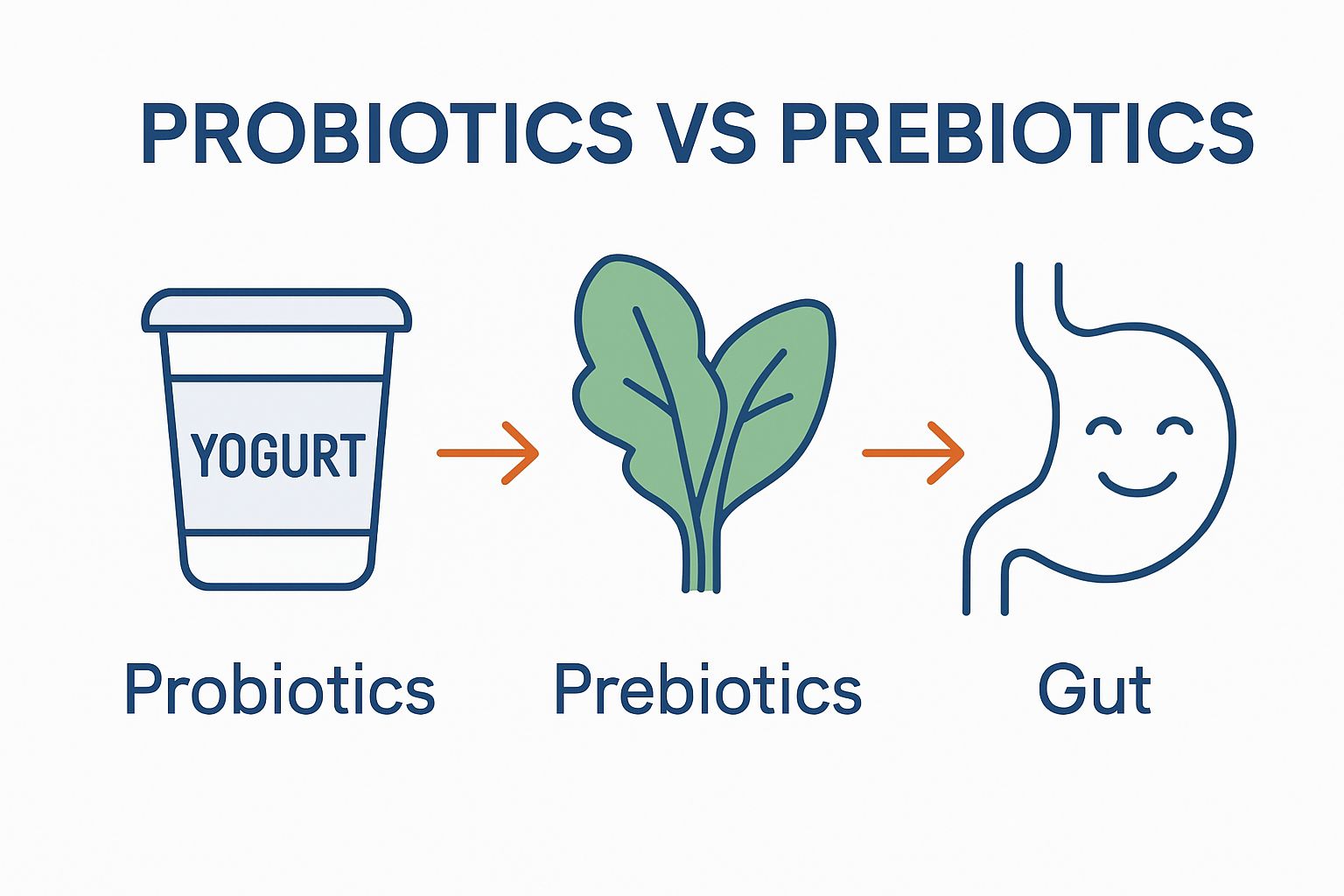
How gut health influences fat storage reveals the critical importance of probiotics and prebiotics in maintaining a balanced microbiome. Probiotics are live beneficial bacteria that support digestive function, while prebiotics are specialized plant fibers that nourish these good bacteria.
Key characteristics of probiotics and prebiotics include:
- Promoting beneficial bacterial growth
- Supporting immune system function
- Enhancing nutrient absorption
- Reducing inflammation
Dietary Strategies for Gut Health
According to research from the National Center for Complementary and Integrative Health, dietary choices significantly impact gut microbiome composition.
Consuming a diverse range of whole foods, fermented products, and fiber-rich ingredients can help cultivate a robust and balanced microbial ecosystem.
Strategic dietary approaches for gut health include:
- Incorporating fermented foods like yogurt and kimchi
- Consuming a variety of plant-based foods
- Limiting processed and high-sugar foods
- Increasing fiber intake from whole grains and vegetables
By understanding and implementing these key concepts, individuals can actively support their gut health and contribute to overall physiological wellness.
Below is a table comparing probiotics and prebiotics, two key concepts for supporting gut health as explained in the article.
| Concept | Definition | Primary Sources | Main Benefits |
|---|---|---|---|
| Probiotics | Live beneficial bacteria that support digestive health | Fermented foods, yogurt | Aid digestion, enhance immune function, reduce inflammation |
| Prebiotics | Specialized plant fibers that feed good gut bacteria | Fiber-rich vegetables | Promote beneficial bacteria, boost nutrient absorption |
Practical Steps to Support Gut Health
Maintaining a healthy gut microbiome requires intentional lifestyle and dietary choices.
While the concept might seem complex, implementing practical strategies can significantly improve your digestive wellness and overall health.
Dietary Foundations for Gut Health
Master mindful eating practices can profoundly impact your gut microbiome. A diverse diet rich in whole foods provides the necessary nutrients and fiber to support beneficial bacterial growth and maintain intestinal balance.
Key dietary recommendations include:
- Consuming a rainbow of colorful vegetables
- Incorporating fermented foods like kefir and sauerkraut
- Choosing whole grains over processed alternatives
- Limiting artificial sweeteners and processed foods
Lifestyle Factors and Gut Wellness
According to research from MedlinePlus, gut health extends beyond diet and encompasses broader lifestyle elements. Stress management, adequate sleep, and regular physical activity play crucial roles in maintaining a balanced microbiome.
Holistic gut health strategies encompass:
- Practicing stress reduction techniques
- Maintaining consistent sleep schedules
- Engaging in regular moderate exercise
- Staying hydrated throughout the day
By integrating these practical approaches, individuals can proactively support their gut health and enhance overall physiological resilience.

Take Control of Your Gut Health With Expert Guidance
Are you feeling overwhelmed by all the complexities surrounding gut health?
If you recognize the challenges of maintaining a balanced gut microbiome, know that you are not alone.
Many beginners struggle with knowing where to start, understanding terms like probiotics, prebiotics, and gut modulation, or identifying real-world changes that actually work.
Discover science-backed solutions tailored to your needs in our Gut Microbiome section, where you can find practical tips and powerful strategies to balance your digestion and metabolism for lasting results.
Start building a healthier body from the inside out today.
Visit leanandfit.info for the latest information on natural weight management, meal plans, and proven lifestyle tips.
If you are ready to take the next step, explore hands-on strategies in Gut Modulation and learn how consistent habits can transform your journey in Consistency Hacks.
Do not wait to prioritize your well-being. Take action now for a healthier, happier future.
Frequently Asked Questions:
Metabolism is often misunderstood as something you either have “fast” or “slow,” but in reality, it is a dynamic system influenced by food, movement, sleep, hormones, and daily habits.
Healthy metabolism boosters are not shortcuts—they are natural ways to support the body’s energy-burning processes so weight loss becomes more efficient and sustainable.
Q-1: If metabolism is already working 24/7, why do we still need “healthy metabolism boosters”?
A-1: Metabolism is always active, but its efficiency changes depending on lifestyle.
Healthy metabolism boosters help the body perform its natural functions better—like converting food into energy instead of storing it as fat.
Think of metabolism like an engine: it runs all the time, but fuel quality, maintenance, and usage determine performance.
Boosters such as protein-rich foods, hydration, and movement don’t “start” metabolism; they optimize how well it works.
Q-2: Can small daily movements act as stronger metabolism boosters than intense workouts?
A-2: Yes, surprisingly they can. This is due to something called NEAT (Non-Exercise Activity Thermogenesis), which includes walking, standing, stretching, and even fidgeting.
These small movements add up throughout the day and can burn more total calories than a single intense workout.
While exercise is important for fitness, daily movement keeps metabolism consistently active, making it one of the most underrated healthy metabolism boosters for weight loss.
Q-3: Why does eating protein feel like it “activates” metabolism more than carbs or fats?
A-3: Protein has the highest thermic effect of food, meaning the body uses more energy to digest it compared to fats or carbohydrates.
This process naturally increases calorie burn after meals. Protein also supports muscle maintenance, and muscle tissue burns more energy even at rest.
So when people eat enough protein, they indirectly strengthen metabolism in two ways—through digestion effort and muscle preservation.
Q-4: How does sleep quality influence healthy metabolism boosters and weight loss?
A-4: Sleep is one of the most powerful yet ignored metabolism regulators. Poor sleep disrupts hormones like leptin and ghrelin, which control hunger and fullness. It also increases cortisol, which can promote fat storage.
When sleep is consistent and deep, the body regulates energy more efficiently and reduces unnecessary cravings.
In simple terms, good sleep makes every other metabolism booster work better, while poor sleep weakens them significantly.
Q-5: Why do some people stop losing weight even after using multiple metabolism boosters?
A-5: This usually happens due to metabolic adaptation. When the body experiences prolonged calorie restriction or repetitive routines, it becomes more efficient and burns fewer calories.
Stress, poor sleep, and low muscle mass can also contribute. In such cases, metabolism boosters need to be rotated—like changing workout intensity, increasing protein intake, or adjusting calorie intake slightly. The body responds better to variation than to repetition.
Q-6: Can hydration really act as a hidden metabolism booster for weight loss?
A-6: Yes, water plays a subtle but important role in metabolism. Every metabolic process in the body requires water, including fat breakdown. Even mild dehydration can slow down energy production and reduce physical performance.
Drinking enough water also helps control appetite, as thirst is often confused with hunger. Cold water may slightly increase energy expenditure as the body warms it up, but the biggest benefit comes from consistent hydration throughout the day.
Q-7: Do spicy foods truly work as healthy metabolism boosters or is it just a myth?
A-7: Spicy foods containing compounds like capsaicin can slightly increase calorie burning by raising body temperature temporarily. However, the effect is small and should not be relied on as a primary weight loss method.
The real benefit of spicy foods is their ability to enhance satiety, making people feel full with fewer calories. So while they do support metabolism mildly, their bigger advantage lies in appetite regulation rather than dramatic fat burning.
Q-8: How does muscle mass turn into a long-term metabolism booster even when resting?
A-8: Muscle tissue is metabolically active, meaning it burns calories even when you are not moving. The more muscle you have, the higher your resting metabolic rate becomes.
This is why strength training is considered one of the most powerful long-term healthy metabolism boosters. Unlike temporary boosts from food or drinks, muscle provides continuous energy expenditure, making weight loss easier to maintain over time.
Q-9: Why do stress and emotional overload block the effect of metabolism boosters?
A-9: Chronic stress increases cortisol levels, which can shift the body toward fat storage and increased cravings for high-calorie foods. It also disrupts sleep and digestion, both of which are essential for metabolic efficiency.
Even if someone is eating well and exercising, high stress can blunt the effects of metabolism boosters. This is why emotional balance is considered a hidden but crucial part of weight loss success.
Q-10: What is the simplest real-life combination of healthy metabolism boosters for weight loss that actually works?
A-10: The simplest and most effective combination is not complicated: eat enough protein, stay hydrated, move regularly throughout the day, sleep well, and manage stress.
These five habits work together to support the body’s natural metabolism without forcing extreme changes. When done consistently, they create a stable environment where fat loss happens naturally.
The key is not intensity but consistency—because metabolism responds best to daily rhythm, not occasional effort.