
Controlling appetite may be among the most challenging aspects of weight loss. It can be difficult when you feel hungry shortly after eating, have frequent cravings, and snack a lot. It is only natural to seek help in such cases.
The term natural appetite suppressants can be applied to various foods, dietary fibers, drinks, herbs, or supplements that are said to reduce hunger or help feel full. However, not all of them are effective, and some are not supported by any reliable evidence.
Actually, some foods and nutrients can aid in making you satiated and reducing overall calorie intake if consumed as part of a healthy diet. Meanwhile, certain supplements have shown limited effectiveness in clinical trials and can have unwanted side effects or interact with other medications.
The more useful question is therefore not simply, “What is the best natural appetite suppressant?”
It is:
Which approaches actually have evidence for helping control appetite, how meaningful are the effects, and are they safe?
Article Index
- What Are Natural Appetite Suppressants?
- Do Natural Appetite Suppressants Actually Work?
- Natural Foods That May Help With Fullness
- Protein and Appetite Control
- Fiber and Appetite Control
- Water and Appetite
- Green Tea and Green Tea Extract
- Glucomannan
- Garcinia Cambogia
- Hoodia
- Natural Appetite Suppressant Supplements
- Sleep, Stress, and Appetite
- Natural Appetite Suppressants vs. Weight Loss Medications
- Safety and Medication Interactions
- How to Evaluate a Natural Appetite Suppressant
- Weight Loss Claims to Be Skeptical About
- Frequently Asked Questions
- The Bottom Line
What Are Natural Appetite Suppressants?
“Natural appetite suppressant” is a broad class of compounds that are not related to each other chemically.
The term refers to various products and ingredients that are used for decreasing appetite, increasing the feeling of being full after eating, and supporting adherence to a diet.
Natural appetite suppressants include:
- protein-rich foods,
- high-fiber diets and water,
- green tea,
- glucomannan,
- garcinia cambogia,
- hoodia,
- other herbs and supplements.
Protein-rich foods and concentrated extracts cannot be viewed as the same category since they are considerably different in terms of nutrition and clinical efficiency.
Moreover, it is essential to differentiate between foods that support satiety and the supplements that are designed to suppress appetite.
The former category has more scientific evidence and nutritional value, whereas the latter has little proven efficiency and can be dangerous for health.
Do Natural Appetite Suppressants Actually Work?
Sometimes, but the answer depends largely on what is used.
Certain foods and nutrients may increase feelings of fullness, while higher protein intake, for example, may enhance satiety in individuals with overweight or obesity, despite the limitations of the available research.
Fiber can also affect appetite, but the impact largely depends on the type and amount of fiber consumed.
According to a systematic review, most acute interventions that used fiber as a supplement showed no significant decrease in appetite or food intake, although some types demonstrated more promising effects.
On the contrary, the situation is different with many supplements.
According to NIH’s Office of Dietary Supplements, there is little scientific evidence that many weight-loss supplements are effective. NCCIH also reports that many products intended to suppress appetite or promote rapid weight loss have not been adequately tested for safety and effectiveness.
That distinction is important.
Feeling fuller after a meal is not the same thing as achieving substantial or sustained weight loss.
Natural Foods That May Help With Fullness
The most practical way to achieve natural appetite control is often not a supplement at all.
It is the structure of the meal.
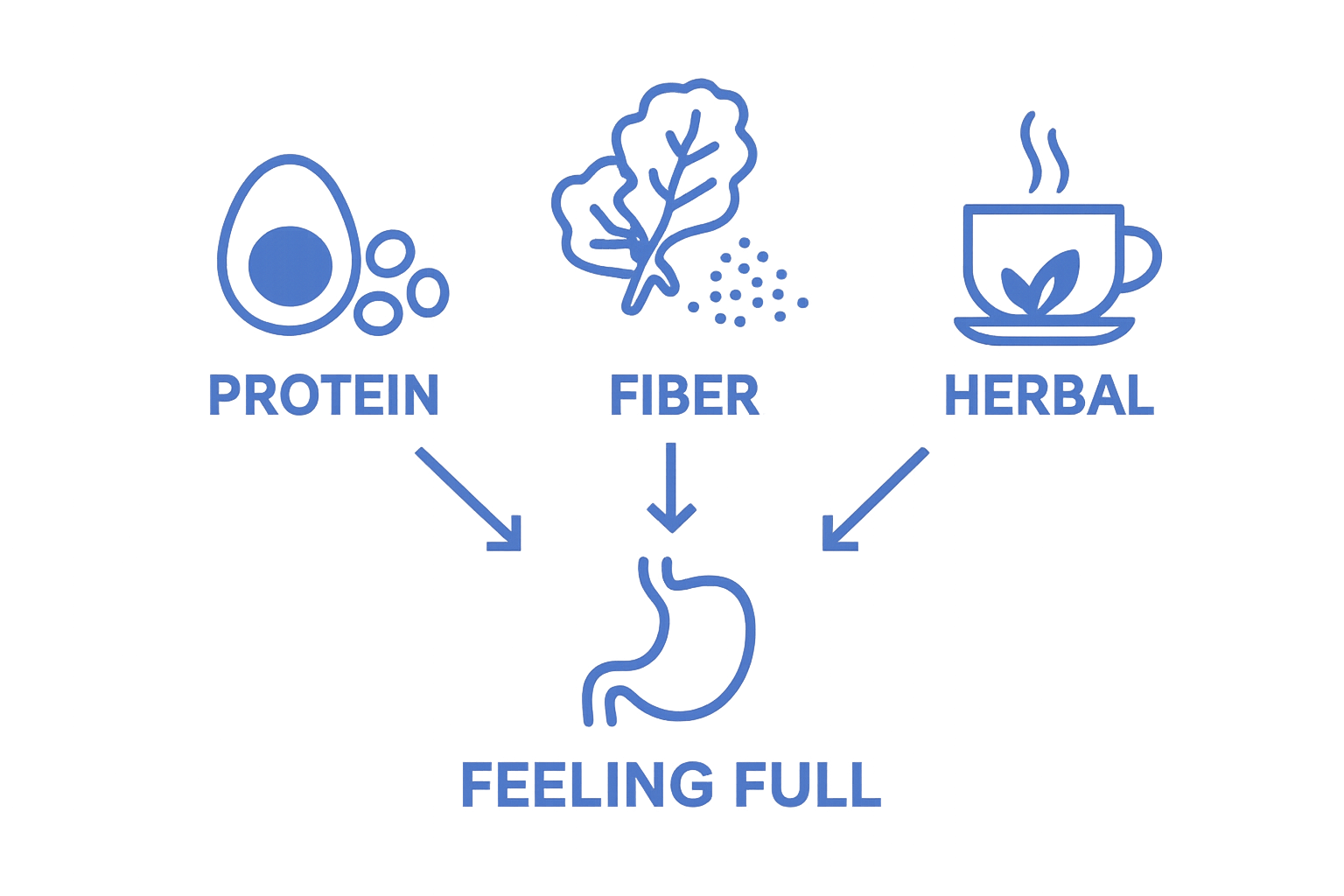
Meals containing adequate protein, fiber-rich foods, and foods that have a high water content, tend to be more filling than meals consisting of highly refined carbohydrates or energy-dense snack foods.
Examples include:
- eggs
- Greek yogurt
- fish
- poultry
- beans and lentils
- vegetables
- fruits
- oats
- whole grains
- potatoes and other minimally processed starchy foods
These foods should not be considered as “appetite suppressants” in the same way as a dietary supplement.
They can contribute to normal satiety and make calorie control easier.
This is a more useful way to think about appetite management as the foods also provide protein, fiber, vitamins, minerals, and other nutrients.
Protein and Appetite Control
Protein is one of the best studied nutrients associated with satiety.
A systematic review of trials in people with overweight or obesity found that high-protein intake was associated with increased feelings of fullness or satiety, though the authors note that the evidence was limited due to between-study heterogeneity and a potential for bias.
Protein-rich foods include:
- eggs
- fish
- poultry
- dairy products
- beans
- lentils
- soy foods
- lean meats
Protein can influence several physiological signals involved in hunger and satiety, but the exact response varies between people and meal patterns.
However, this does not mean that protein is a “powerful appetite suppressant.”
The real-world value is more subtle:
A balanced meal containing adequate protein may help to keep you feeling satisfied for a longer period of time.
Protein supplements can be helpful when a person is unable to meet their protein needs through food, but protein powder is not inherently a weight-loss supplement or a fat burner.
For food-based protein choices, see our guide to best protein sources for healthy weight loss.
Fiber and Appetite Control
Fiber is another macronutrient component which plays an important role in satiety.
It may be involved in volume expansion, delayed gastrointestinal emptying, or altered gastrointestinal hormone concentrations, which improve satiety and reduce appetite.
The evidence is mixed, however.
An analysis of acute dosing human randomized controlled trials concluded that fiber interventions had little effect on subjective measures of appetite, food intake, or body weight, with only a few fiber types consistently showing beneficial effects.
A systematic review and meta-analysis noted that more viscous fibers, including specific beta-glucans and guar gum, were associated with greater satiety than less viscous fibers, with only small overall effects on energy intake or weight.
An abundant source of dietary fiber is:
- vegetables,
- fruits,
- legumes,
- beans,
- oats,
- whole grains,
- nuts,
- seeds.
Rather than relying on a single “appetite-suppressing” fiber, a better approach is to gradually increase fiber-rich foods as part of an overall balanced diet.
More recent evidence also suggests that some cereal fibers, particularly from oats and rye, may improve subjective measures of satiety, although effects on actual energy intake appear limited.
Water and Appetite
Water can be useful as part of a weight-management strategy, particularly when it replaces calorie-containing beverages or is used before meals in appropriate circumstances. However, it should not be considered a powerful appetite suppressant.
Evidence on water intake and weight management remains limited and inconsistent. A systematic review of randomized trials found some evidence of benefits, but the studies varied in their populations and interventions.
One randomized controlled trial investigated drinking water before meals in adults with obesity and found that this approach could support weight loss when combined with a weight-management program.
Replacing sugar-sweetened beverages with water may also help reduce calorie intake. However, water should not be considered a powerful appetite suppressant or a guaranteed weight-loss strategy.
For more detail, see our guide to drinking water before meals for weight loss.
Green Tea and Green Tea Extract
Green tea is often promoted as a natural weight-loss and appetite-control aid.
Green tea contains caffeine and catechins, which may influence energy expenditure and fat oxidation. However, these effects do not make green tea a powerful appetite suppressant or weight-loss treatment.
The NIH Office of Dietary Supplements reports that green tea may produce a small reduction in body weight. The evidence does not support expecting a large or clinically meaningful weight-loss effect.
There is also an important difference between drinking green tea and taking concentrated green tea extract.
Green tea as a beverage is generally considered safe for most people, whereas concentrated extracts have been associated with adverse effects, including increased blood pressure and liver injury.
Therefore, green tea and green tea extract should not be treated as interchangeable products.
Glucomannan
Glucomannan is a soluble fiber coming from the konjac plant.
Glucomannan absorbs water and expands in the digestive tract. This has led researchers to investigate whether it can increase feelings of fullness and reduce food intake.
The mechanism makes sense, but the evidence for weight loss is far from convincing.
NIH ODS reports that glucomannan has little or no effect on weight loss, while it may have beneficial effects on blood lipids and glucose levels.
Furthermore, it can cause:
- gas
- bloating
- diarrhea
- constipation
- abdominal pain
Some glucomannan products can cause gastrointestinal side effects. Tablet forms have also been associated with esophageal obstruction, so the product’s formulation and directions for use matter.
Therefore, glucomannan should not be marketed as a proven natural appetite suppressant simply because it expands in the digestive tract.
Garcinia Cambogia
Garcinia cambogia is a fruit whose rind contains hydroxycitric acid (HCA), an ingredient that has been promoted for appetite control and weight loss.
The evidence is not convincing. The NIH Office of Dietary Supplements reports little to no effect on weight loss, while the National Center for Complementary and Integrative Health (NCCIH) notes that studies have produced mixed results and that any possible benefit appears uncertain.
More importantly, numerous reports of liver toxicity have been associated with garcinia cambogia products. This is a useful reminder that “natural” does not automatically mean safe.
For these reasons, garcinia cambogia should not be presented as a reliable natural appetite suppressant or weight-loss treatment.
Hoodia
Hoodia is a succulent plant native to southern Africa, where it has been used by the San people for centuries as an aid during long hunts and subsequently marketed as an herbal appetite suppressant.
However, despite the commercial success and promotion, there is little evidence of its efficacy for humans.
NCCIH notes that only one clinical trial with limited sample size (49 overweight women) has been conducted to evaluate the effects of hoodia on human subjects, and it failed to demonstrate significant weight loss in the treatment group (vs placebo) after a 15-day treatment. Besides, there are few details on the potential adverse effects of the herb.
Therefore, it cannot be recommended as a reliable natural remedy for suppressing appetite and treating overweight or obesity.
What About Natural Appetite Suppressant Supplements?
This is where consumers need to be particularly careful.
A supplement may contain several ingredients that have individually been studied for appetite, metabolism, or weight loss, but this does not necessarily mean that the finished product has been proven to work.
Multi-ingredient products can make it challenging to determine:
- which ingredient is responsible for an effect
- the appropriate dose
- whether ingredients interact with one another
- if the combination has been tested in humans
- and whether the product contains what the label says
NCCIH warns that many dietary supplements marketed for weight loss have not been adequately tested for safety.
It also notes that analyses have sometimes revealed differences between what is labeled and what is actually present, and that some weight-loss products have contained undeclared pharmaceutical ingredients.
Therefore, a supplement should not be considered safe just because it is marketed as natural.
For a broader look at weight-loss supplement evidence, see our guide to common weight loss supplements.
How Sleep and Stress Affect Appetite
Appetite is influenced by more than the foods or supplements you consume. Sleep, stress, eating patterns, physical activity, and the overall composition of the diet can all affect how difficult it is to manage hunger and cravings.
Poor sleep may alter hunger and satiety signals, while stress can increase the appeal of highly rewarding foods in some people.
This does not mean that better sleep or lower stress “suppresses” appetite. Rather, they may make hunger and eating patterns easier to regulate.
Hunger itself is a normal physiological signal. The goal is not to eliminate hunger completely, but to make it more manageable while building meals that provide adequate nutrition and lasting satisfaction.
Natural Appetite Suppressants vs. Weight Loss Medications
Natural foods and dietary supplements should not be compared to prescription drugs for the treatment of obesity.
Prescription anti-obesity meds are clinically developed and tested for their therapeutic indication. The mechanism of action, dosage, contraindications, and method of monitoring are fundamentally different from what is available as a dietary supplement.
Some prescription medications affect appetite and feeding pathways, including pathways involving hormones such as GLP-1.
That does not mean that a food, herb, or supplement claiming to “increase GLP-1” is equivalent to a prescription GLP-1 receptor agonist. A biological mechanism is not the same thing as a clinically meaningful therapeutic effect.
Patients suffering from obesity and related conditions should consult their healthcare provider to discuss their treatment options.
Safety and Medication Interactions
Safety has to be considered along with effectiveness.
Products that suppress appetite naturally may cause harmful side effects and interact with other drugs.
Such undesired effects might include:
- digestive tract problems
- increased blood pressure or heart rate
- insomnia or restlessness from stimulants
- allergic reactions
- medication interactions
- liver injury associated with some products
- adulteration or contamination
- excessive exposure when several products containing the same or similar ingredients are combined
NCCIH warns that many such weight loss supplements may have dangerous levels of ingredients and that “natural” does not always mean “safe”.
Those who take other drugs, have chronic conditions, are pregnant or nursing, or think about taking a concentrated herbal preparation should always consult a qualified healthcare professional before using these kinds of preparations.
How to Evaluate a Natural Appetite Suppressant
Before trying a product that claims to be a natural appetite suppressant, you should know the following:
- What do the ingredients say?
Check the actual ingredient list rather than relying on the manufacturer’s marketing claims.
- Has the ingredient been proven effective in human trials?
Animal and laboratory studies can provide clues about how an ingredient might work, but they do not establish that it is effective in humans.
- Was the ingredient or product tested?
Evidence for an individual ingredient does not automatically establish that a multi-ingredient product is effective or safe. The finished product itself should ideally have human clinical evidence.
- How large is the effect?
A statistically significant result does not necessarily mean that the effect will be noticeable or clinically meaningful for the average person.
- At what dosage?
The dose used in a clinical study may differ substantially from the amount in a commercial product, which can affect both its effectiveness and safety.
- What are the possible side effects?
Look not only at immediate effects, but long term ones as well.
- Does it have any interactions with other drugs?
Make sure that you know what medications or supplements you are taking before taking this product, to avoid any harmful interactions.
- Does it have multiple stimulants?
Having more than one stimulant, such as caffeine, in a product can be potentially dangerous.
- Does it make wild claims?
If the product makes incredible claims, they are most likely false.
- Have these claims been proven by reliable sources?
Do not buy products that base their information purely on testimonial evidence. Look for evidence from well-designed human clinical trials, systematic reviews, and reliable sources such as government health agencies and peer-reviewed medical journals.
Weight Loss Claims to Be Skeptical About
Be cautious of a natural appetite suppressant that claims that it can:
- completely eliminate hunger
- “turn off” hunger signals
- melt away belly fat
- dramatically increase your metabolism
- rapidly cause weight loss, even if you don’t change your diet
- allow you to effortlessly lose weight while you sleep
- cut out most of the calories you eat
- be effective for everybody
- always cause weight loss
- detoxify the body and burn fat
Testimonials can be misleading as well. Someone could notice that they lost weight while taking a supplement, but that doesn’t necessarily mean that the drop in weight was due to the supplement.
A more reliable indicator is whether controlled studies in humans have found that there is a meaningful difference between the group that used an intervention and the group that used a control.
Claims about dramatically increasing metabolism are often much stronger than the underlying evidence. See our guide to healthy metabolism boosters for a more evidence-based discussion.
Frequently Asked Questions:
-
What is the best natural appetite suppressant?
There is no single natural appetite suppressant that has been shown to work best for everyone. For most people, appetite management is better approached through satisfying meals containing adequate protein and fiber, appropriate portions, hydration, adequate sleep, and regular physical activity rather than relying on a supplement.
-
Do natural appetite suppressants work?
Some foods and nutrients may make people feel full, but research is inconsistent and many supplements that claim to suppress appetite do not significantly reduce weight.
-
What foods fill you up?
Protein-rich foods and many fiber-rich foods can contribute to fullness, although the effect varies by food, fiber type, portion size, and the overall meal. They include eggs, fish, beans, lentils, vegetables, fruit, oats, and minimally processed foods.
Satiety is influenced by the overall meal rather than by one particular food alone.
-
Does protein suppress appetite?
A higher-protein diet may increase satiety in people who are overweight or obese, but the evidence is inconsistent.
-
Does fiber suppress appetite?
Appetite suppression varies depending on the type of fiber, with some fibers having no significant effect. It also depends on the dose and the characteristics of the fiber.
-
Does water suppress appetite?
Drinking water helps increase fullness, and when used as a replacement for sugar-sweetened beverages, water may also contribute to weight loss, but it should not be considered a major appetite suppressant.
-
Does green tea suppress appetite?
Green tea extract should not be relied on as an appetite suppressant. Concentrated extracts have been associated with adverse effects, including liver injury, and should not be assumed to be safer or more effective than drinking green tea.
-
Does glucomannan help suppress appetite?
Glucomannan is a soluble fiber that can increase fullness because it absorbs water. However, NIH ODS concludes that it has little to no effect on weight loss overall. It can also cause gastrointestinal side effects, and certain tablet formulations have been associated with esophageal obstruction.
-
Does garcinia cambogia suppress appetite?
Garcinia cambogia has not been shown to be a reliable appetite suppressant or weight-loss aid. Evidence for weight loss is mixed or shows little to no meaningful effect, and safety is also a concern because liver injury has been reported.
-
Does hoodia really suppress appetite?
It does not seem like an effective solution, as there is very little research in humans. One study found that those who took hoodia did not lose more weight than those who took a placebo.
-
Are natural appetite suppressant supplements safe to take?
Not always. Some supplements are not properly regulated and may interact with other medications or cause unwanted side effects. In some cases, they might not even contain what the label says they contain.
-
Should I consider using a natural appetite suppressant if I have obesity?
If you have obesity or another condition affected by your weight, it is worth discussing evidence-based treatment options with a healthcare professional before using an appetite-suppressant supplement. The appropriate approach depends on your medical history, medications, goals, and risk factors.
The Bottom Line
Natural appetite suppressants are not a single, well-defined category. The term can refer to foods, fibers, beverages, herbs, and dietary supplements that are marketed as ways to reduce hunger or support weight loss.
Some foods and nutrients can contribute to satiety. Meals containing adequate protein and fiber, for example, may help people feel satisfied, while replacing calorie-containing beverages with water can reduce overall calorie intake.
The evidence for supplements is much less convincing. Green tea may have a small effect on body weight, while glucomannan has little to no meaningful effect on weight loss overall. Evidence for garcinia cambogia is mixed or uncertain, and hoodia has very limited human evidence. Some supplements also carry important safety concerns.
The most important lesson is that “natural” does not mean “safe,” and a supplement that affects appetite is not necessarily an effective weight-loss treatment.
Instead of looking for a product that eliminates hunger, focus on meals that provide adequate protein, fiber, fluids, and overall nutrition. If persistent hunger is making weight management difficult, particularly if you have obesity or another medical condition, discuss evidence-based options with a healthcare professional.
The goal is not to eliminate hunger completely. It is to develop an eating pattern that provides adequate nutrition, reasonable fullness, and a sustainable approach to weight management.
References
- NIH Osq1ffice of Dietary Supplements — Dietary Supplements for Weight Loss
- National Center for Complementary and Integrative Health (NCCIH) — Weight Control
- NCCIH — Garcinia Cambogia: Usefulness and Safety
- NCCIH — Hoodia: Usefulness and Safety
- de Carvalho KM, et al. Dietary protein and appetite sensations in individuals with overweight and obesity: A systematic review. PubMed
- Wanders AJ, et al. Effects of dietary fibre on subjective appetite, energy intake and body weight: A systematic review of randomized controlled trials. PubMed
- Clark MJ, Slavin JL. The effect of fiber on satiety and food intake: A systematic review. PubMed
- Parretti HM, et al. Efficacy of water preloading before main meals as a strategy for weight loss in primary care patients with obesity: RCT. PubMed
- Hakam N, et al. Outcomes in Randomized Clinical Trials Testing Changes in Daily Water Intake: A Systematic Review. PubMed
- Chen QY, et al. Water Intake and Adiposity Outcomes among Overweight and Obese Individuals: A Systematic Review and Meta-Analysis of Randomized Controlled Trials. PubMed
- Cereal Fibers and Satiety: A Systematic Review (2026). PubMed
Why Trust Us?
Learn about our editorial standards and approach to evidence-based health information.
Medical Disclaimer
This article is for educational purposes only and does not replace professional medical advice, diagnosis, or treatment. Consult a qualified healthcare professional for advice about your individual circumstances.
The Medical Disclaimer page describes LeanAndFit’s editorial principles and medical disclaimer. If you have separate, dedicated pages for these topics, link to those pages instead.
(Last updated: October 2026)