
Intermittent fasting is making waves because it focuses on when you eat instead of what you eat.
The surprising part is how this simple shift in timing can lead to changes like improved insulin sensitivity and enhanced fat burning, as shown in scientific studies.
Most people think diets are all about cutting calories, but here your body starts tapping into stored energy in ways most traditional diets never reach.
Table of Contents
- What Is Intermittent Fasting And Its Types?
- Why Intermittent Fasting Matters For Health And Weight Loss
- How Intermittent Fasting Affects The Body And Metabolism
- Key Concepts Behind Intermittent Fasting: Science And Benefits
- Real-World Applications Of Intermittent Fasting In Daily Life
Quick Summary
| Takeaway | Explanation |
|---|---|
| Intermittent fasting focuses on timing meals | This approach emphasizes when you eat, not what you eat, to regulate intake. |
| Common fasting types include several methods | Key approaches are Time-Restricted Feeding, Alternate-Day Fasting, and the 5:2 Method. |
| Fasting triggers metabolic changes and benefits | It boosts fat burning, improves insulin sensitivity, and promotes cellular repair processes. |
| Personalization is crucial for effectiveness | Individual health conditions and lifestyle factors greatly influence how well intermittent fasting works. |
| Consult professionals before starting | Get personalized advice to ensure the fasting method aligns with your unique health needs. |
What is Intermittent Fasting and Its Types?
Intermittent fasting represents a dynamic eating approach that focuses on when you eat rather than what you eat.
This dietary strategy cycles between specific periods of eating and voluntary fasting, creating a structured approach to nutrition that goes beyond traditional diet plans.
Our comprehensive guide on fasting methods explores the nuanced world of intermittent eating patterns.
Understanding the Fundamental Concept
At its core, intermittent fasting is not about restricting calories but about strategically timing your meals.
According to research from the Mayo Clinic, this eating pattern alternates between intentional periods of eating and fasting, which can trigger significant metabolic changes in the body.
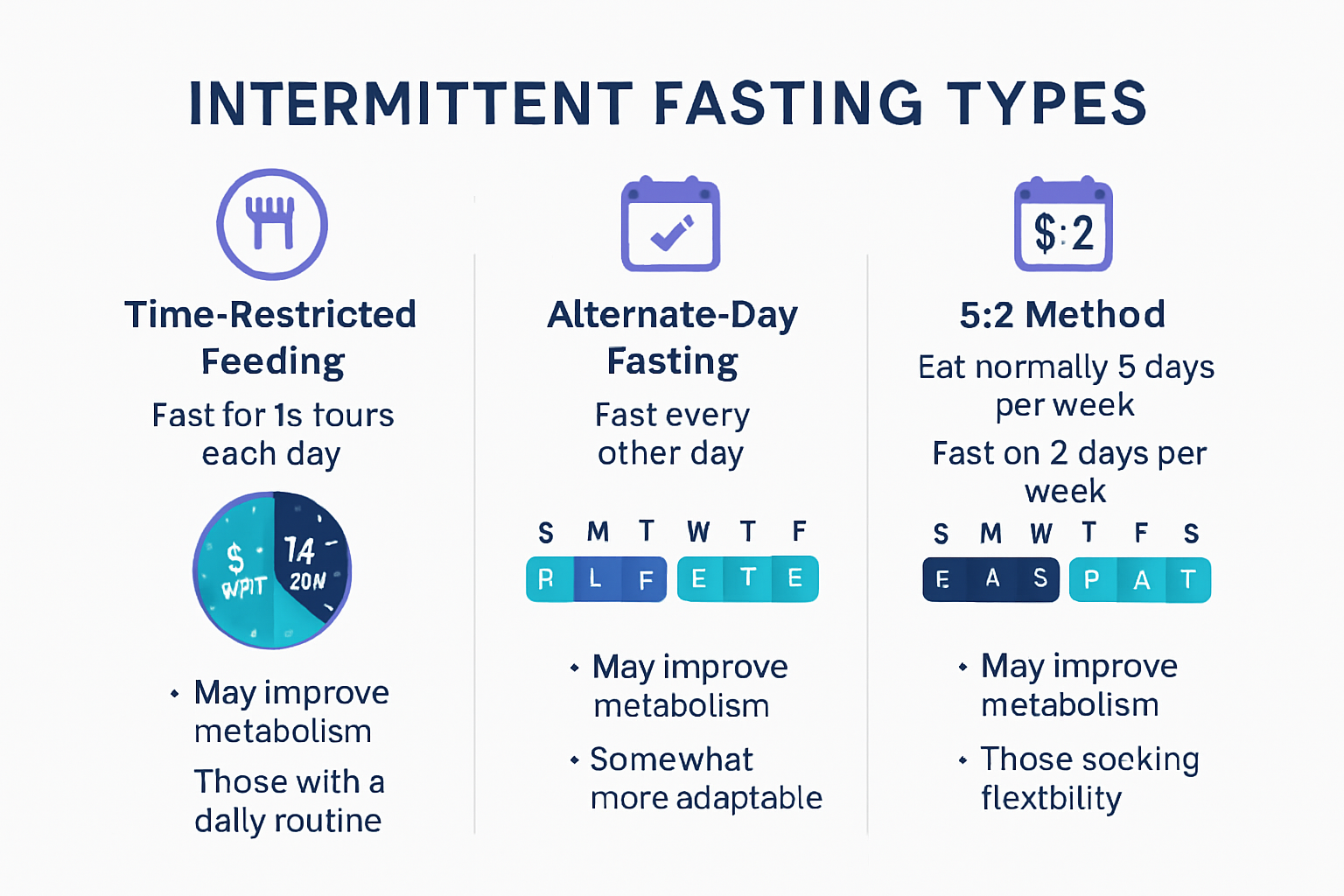
The primary types of intermittent fasting include:
- Time-Restricted Feeding: Limiting daily eating to a specific window, typically 8-10 hours
- Alternate-Day Fasting: Alternating between normal eating days and significantly reduced calorie days
- 5:2 Method: Eating normally for five days and dramatically reducing calorie intake for two non-consecutive days
Metabolic Mechanisms and Benefits
When you engage in intermittent fasting, your body undergoes fascinating physiological transformations.
During fasting periods, insulin levels drop, which can enhance fat burning and metabolic efficiency.
The body shifts from using readily available glucose to accessing stored fat as an energy source, a process known as metabolic switching.
The potential benefits extend beyond weight management.
Research suggests intermittent fasting may:
- Improve insulin sensitivity
- Support cellular repair processes
- Potentially reduce inflammation
- Enhance brain health and cognitive function
While intermittent fasting offers promising results, it is not a one-size-fits-all solution.
Individual health conditions, metabolic differences, and personal lifestyle factors play crucial roles in determining its effectiveness and suitability.
Why Intermittent Fasting Matters for Health and Weight Loss?
Intermittent fasting goes far beyond a trendy diet approach, representing a powerful metabolic intervention with significant health implications.
Learn more about our comprehensive weight loss strategies to understand how this eating pattern can transform your overall wellness.
Metabolic Transformation and Weight Management
At its fundamental level, intermittent fasting triggers profound metabolic changes that directly impact weight loss and health.
According to research from UCLA Health, this approach can lead to substantial physiological improvements by shifting how the body processes energy.
Key metabolic benefits include:
- Enhanced Fat Burning: By prolonging periods without food, the body switches to fat metabolism
- Improved Insulin Sensitivity: Reduced eating windows help regulate blood sugar levels
- Hormonal Optimization: Decreased insulin levels promote growth hormone production
Comprehensive Health Benefits Beyond Weight Loss
While weight management remains a primary motivation, intermittent fasting offers a broader spectrum of health advantages.
The practice influences cellular repair mechanisms, reduces oxidative stress, and supports overall systemic health.
Potential long-term health impacts encompass:
- Reduction in chronic inflammation markers
- Potential improvements in brain function and neuroplasticity
- Enhanced cellular repair through autophagy processes
- Potential cardiovascular health improvements
It is crucial to recognize that intermittent fasting is not a universal solution. Individual metabolic differences, existing health conditions, and personal lifestyle factors significantly influence its effectiveness.
Consulting healthcare professionals before starting any new dietary regimen remains paramount for safe and personalized implementation.
Here’s a table summarizing the core metabolic and health benefits of intermittent fasting as discussed in the article.
| Benefit | Description |
|---|---|
| Improved Insulin Sensitivity | Enhances how the body responds to and regulates insulin |
| Enhanced Fat Burning | Promotes shifting from glucose to fat for energy |
| Cellular Repair (Autophagy) | Triggers cleanup and repair processes within cells |
| Reduced Inflammation | May decrease markers of chronic inflammation |
| Enhanced Brain Health & Cognitive Function | Supports neuroplasticity and may boost cognitive performance |
| Hormonal Optimization | Improves growth hormone and regulates hunger hormones |
| Cardiovascular Health Support | May benefit heart and vascular health over time |
How Intermittent Fasting Affects the Body and Metabolism?
Intermittent fasting represents a sophisticated metabolic intervention that triggers complex physiological responses beyond simple calorie restriction.
Explore our comprehensive guide to metabolic adaptations and understand the intricate ways this eating pattern transforms bodily functions.
Cellular Metabolic Switching
During intermittent fasting, the human body undergoes a remarkable metabolic reprogramming process.
According to research published in the Journal of Nutritional Biochemistry, this approach fundamentally alters how cells generate and utilize energy.
Key metabolic transformations include:
- Ketosis Activation: Body shifts from glucose to fat as primary energy source
- Insulin Sensitivity Enhancement: Reduced insulin levels improve cellular glucose uptake
- Mitochondrial Efficiency: Improved energy production and cellular repair mechanisms
Hormonal and Neurological Responses
Intermittent fasting stimulates a cascade of hormonal changes that extend far beyond simple weight management.
The body experiences significant adaptations in key regulatory hormones, which influence everything from appetite control to cellular regeneration.
Significant hormonal impacts encompass:
- Decreased ghrelin (hunger hormone) production
- Increased human growth hormone secretion
- Enhanced brain-derived neurotrophic factor (BDNF) levels
- Improved stress resistance at cellular levels
These complex metabolic shifts demonstrate that intermittent fasting is not merely a dietary approach but a sophisticated biological intervention.
Individual responses vary, making personalized medical consultation crucial for understanding one’s unique metabolic potential.
Key Concepts Behind Intermittent Fasting: Science and Benefits
Intermittent fasting represents a sophisticated nutritional strategy that transcends traditional dietary approaches, offering a nuanced method of metabolic manipulation.
Discover the science behind effective fasting techniques to understand how this approach can revolutionize your health and wellness.
Fundamental Scientific Principles
At its core, intermittent fasting operates on complex biological mechanisms that trigger profound physiological adaptations.
According to research from the Harvard T.H. Chan School of Public Health, this approach fundamentally alters how the body processes energy and manages cellular functions.
Key scientific foundations include:
- Metabolic Flexibility: Enhanced ability to switch between energy sources
- Cellular Autophagy: Improved cellular repair and waste removal processes
- Hormonal Regulation: Optimized insulin and growth hormone responses
Comprehensive Physiological Benefits
Beyond weight management, intermittent fasting demonstrates a remarkable capacity to influence multiple bodily systems.
The practice initiates a cascade of beneficial metabolic and neurological responses that extend far beyond simple calorie restriction.
Significant health benefits encompass:
- Potential reduction in chronic inflammation markers
- Improved cognitive function and neuroplasticity
- Enhanced cardiovascular health markers
- Potential longevity and cellular aging support
While the scientific evidence continues to evolve, intermittent fasting emerges as a promising approach to holistic health optimization.
However, individual physiological responses vary, underscoring the importance of personalized medical guidance and a comprehensive understanding of one’s unique metabolic profile.
Real-World Applications of Intermittent Fasting in Daily Life
Intermittent fasting transcends theoretical concepts, offering practical strategies for individuals seeking sustainable health improvements.
Explore practical fasting approaches for everyday wellness and discover how this method can seamlessly integrate into various lifestyle patterns.
Workplace and Professional Integration
For professionals navigating demanding schedules, intermittent fasting provides a flexible nutritional framework.
According to clinical research on time-restricted eating, this approach can significantly improve energy levels and reduce physical and mental fatigue without disrupting work performance.
Practical workplace strategies include:
- Scheduled Eating Windows: Aligning fasting periods with work routines
- Meal Preparation: Planning nutrient-dense meals during eating windows
- Hydration Management: Maintaining fluid intake during fasting periods
Lifestyle Adaptation and Personal Customization
Successful intermittent fasting requires thoughtful personalization that respects individual physiological needs and daily rhythms.
The key lies in selecting a fasting protocol that harmonizes with personal schedules, fitness goals, and metabolic responses.

Consideration factors for lifestyle integration:
- Compatibility with exercise routines
- Social eating and family meal dynamics
- Personal energy levels and work commitments
- Existing health conditions and medications
While intermittent fasting offers remarkable potential, it is not a universal solution.
Individual variations in metabolism, lifestyle, and health status demand a nuanced, personalized approach to implementation.
Ready to Make Intermittent Fasting Work for You?
Are you struggling with confusing advice on when to eat and how to safely start intermittent fasting?
You are not alone. Many people want to improve metabolic health, shed pounds, and avoid common mistakes, but feel overwhelmed by all the options.
If you are looking for real solutions that actually fit your lifestyle, our Intermittent Fasting resource hub is here to make things simple.
Find practical tips, meal ideas, and step-by-step guidance to make intermittent fasting part of your healthy routine.
Take control of your health by learning how science-backed fasting methods can help you burn fat and reset your metabolism.
Visit leanandfit.info right now or explore actionable advice on creating a calorie deficit for even better results.
This is your chance to start feeling and living better with easy-to-follow tools and the latest research.
Frequently Asked Questions:
This FAQ is all about making intermittent fasting simple, practical, and easy to understand.
It answers the kind of real-life doubts people experience but often hesitate to ask.
Think of it as a friendly guide to using fasting as a tool—not a struggle—for healthier living.
Q-1: Why does intermittent fasting feel easy some days and impossible on others?
A-1: Because your body isn’t a machine—it responds to sleep, stress, activity, and even emotions. On well-rested days, fasting feels smooth because your hormones are balanced.
But on stressful or sleep-deprived days, hunger signals increase, making fasting feel harder.
The key is flexibility. Instead of forcing the same fasting window daily, adjust it slightly based on how you feel. Consistency matters, but rigidity often leads to burnout.
Q-2: Can I still benefit from intermittent fasting if my schedule is inconsistent?
A-2: Yes, you can. While a fixed routine helps, intermittent fasting isn’t “all or nothing.”
Even loosely following a fasting pattern—like avoiding late-night eating or maintaining a rough eating window—can bring benefits.
The goal is to create a rhythm that fits your lifestyle, not disrupt it. Small, consistent efforts still add up over time.
Q-3: Why do I think about food more when I start fasting?
A-3: This is completely normal and often psychological. When you tell yourself you “can’t eat,” your brain focuses more on food. It is less about physical hunger and more about mental awareness.
Over time, as your body adapts, these thoughts reduce. Staying busy, hydrated, and distracted during fasting hours helps ease this phase.
Q-4: Does intermittent fasting slow down metabolism if done long-term?
A-4: Not when done correctly. Short-term fasting can actually help your body become more efficient in using stored energy. However, if fasting leads to extremely low calorie intake over time, it may slow metabolism.
The solution is simple—eat balanced, nourishing meals during your eating window. Fasting works best when paired with proper nutrition, not restriction.
Q-5: Why do I sometimes overeat during my eating window?
A-5: This usually happens when fasting feels too restrictive. When your body feels deprived, it tries to compensate once food is available.
To avoid this, break your fast with a balanced meal instead of jumping into heavy or sugary foods. Eating slowly and including protein and fiber can help control appetite and prevent overeating.
Q-6: Can intermittent fasting improve my relationship with food?
A-6: Surprisingly, yes—for many people. Fasting creates structure, which can reduce mindless snacking and emotional eating. It helps you become more aware of true hunger versus habit-based eating.
However, it is important to approach it with a healthy mindset. If it starts feeling restrictive or stressful, it is worth reassessing your approach.
Q-7: Why do I feel low energy during fasting sometimes?
A-7: Low energy can happen if your body hasn’t fully adapted yet or if your meals lack proper nutrients. When you start fasting, your body shifts from using food as immediate energy to tapping into stored energy.
This transition can take time. Ensuring your meals include enough protein, healthy fats, and complex carbs can make this shift smoother and improve energy levels.
Q-8: Is intermittent fasting suitable for everyone trying to lose weight?
A-8: Not necessarily. While many people find it effective, it doesn’t suit everyone’s lifestyle or body type. Some people prefer smaller, frequent meals and still achieve great results.
The best approach is the one you can maintain comfortably. Intermittent fasting is just one method—not the only path to weight loss or healthy living.
Q-9: How can I make intermittent fasting a sustainable lifestyle instead of a short-term trend?
A-9: Focus on ease and adaptability. Start with a simple fasting window, like 12–14 hours, and gradually adjust if needed. Don’t aim for perfection—life events, social meals, and busy days will happen.
The goal is to return to your routine without guilt. When fasting fits naturally into your day rather than controlling it, it becomes sustainable.
Recommended
- 16 Hour Fasting Diet: Shortcut to Getting Lean or Just Another Fad? – LeanAndFit
- Is Intermittent Fasting a Lean Machine or a Health Hazard? – LeanAndFit
- How Intermittent Fasting Reduces Overall Calorie Intake? – LeanAndFit
- How to Incorporate Weekly Diet Breaks for Muscle Recovery? – LeanAndFit
- For educational purposes only
- Why Trust LeanAndFit.info?