Starting a smoothie diet for weight loss sounds easy but often raises more questions than answers.
For many American adults striving for wellness, replacing meals with blended drinks promises quick results yet can quickly backfire if common mistakes go unnoticed.
Ingredient choices alone determine if your smoothie acts as a healthy, nutrient-rich meal or a sugar overload.
This guide highlights how balanced smoothies—with the right mix of fruits, vegetables, protein, and fiber—can actually support sustainable weight loss and reveal where most misconceptions lead people astray.
Table of Contents
- Smoothie Diet Basics And Common Misconceptions
- Types Of Smoothie Diet Plans Explained
- Key Ingredients And Nutritional Benefits
- How Smoothie Diet Supports Weight Loss
- Potential Risks And Mistakes To Avoid
Key Takeaways
| Point | Details |
|---|---|
| Smoothie Nutritional Balance | A well-balanced smoothie should include fruits, vegetables, protein sources, and healthy fats to enhance satiety and prevent hunger spikes. |
| Mind the Sugar Content | Be wary of high sugar levels from fruits and added sweeteners, as they can undermine weight loss efforts. |
| Focus on Fiber and Protein | Incorporating adequate fiber and protein is crucial for fullness, helping to keep hunger at bay and maintain energy levels. |
| Avoid Complex Recipes | Stick to simple, sustainable smoothie recipes to ensure consistency and prevent fatigue from an overly complicated diet plan. |
Smoothie Diet Basics and Common Misconceptions
Before you start blending fruits and vegetables, let’s talk about what a smoothie diet actually is and what it isn’t.
A smoothie diet is an approach to weight loss where you replace one or more meals with blended drinks made from fruits, vegetables, protein sources, and liquids.
The basic idea sounds simple enough: consume nutrient-dense drinks that keep you full while maintaining a calorie deficit. But here’s where reality diverges from the hype.
Not all smoothies are created equal, and the difference between a weight loss tool and a calorie bomb often comes down to five or six ingredient choices.
The nutritional value of your smoothie depends entirely on what goes into the blender.
Fruits provide natural sweetness and fiber, while vegetables add vitamins and minerals without excessive calories.
You can boost the protein content through Greek yogurt, whey protein, or plant-based alternatives, which significantly impacts satiety and how long you stay satisfied.
The fiber component matters more than most people realize. When you consume whole fruits and vegetables in blended form, the fiber helps with digestion and keeps you feeling full longer.
Without adequate fiber, your smoothie becomes just another sweet beverage that leaves you hungry within an hour.
Now for the misconceptions that derail most people. The biggest myth is that liquid calories don’t count.
They absolutely do. Your body processes smoothies differently than whole foods because liquids move through your digestive system faster, meaning you absorb calories quickly without the same satiety benefit.
This is why many people find themselves hungry shortly after drinking a smoothie and end up consuming more overall. Another widespread belief is that “natural” sugars are harmless.
Whether the sugar comes from a banana or honey, your body processes glucose similarly, and excess consumption can contribute to weight gain and other health issues.
Smoothies containing high amounts of natural or added sugars may actually work against your weight loss goals if portions aren’t controlled.
The third major misconception involves blending itself. Many people assume that blending makes nutrients more bioavailable or somehow magical. The truth is blending breaks down fiber, making your smoothie less filling than eating the same ingredients whole.
This is worth understanding if weight loss is your goal, since you lose one of the key benefits of whole fruits and vegetables.
A smoothie can absolutely support weight loss, but it requires intentional ingredient selection, proper portion control, and realistic expectations about how it fits into your daily calorie intake.
Pro tip: Measure your smoothie ingredients using a kitchen scale and track the calories for your first week. This single habit will reveal whether your smoothies are actually supporting your weight loss or secretly sabotaging it with portion creep.
Types of Smoothie Diet Plans Explained
Smoothie diets come in several flavors, and choosing the right approach depends on your goals, lifestyle, and how much structure you want. The most common types break down into categories based on how you use smoothies within your daily eating pattern.
Some people use them as complete meal replacements, others treat them as strategic snacks or supplemental meals, and still others follow plans that incorporate smoothies alongside regular food.
Understanding these different approaches helps you pick one that actually fits your life instead of abandoning it after two weeks because it feels restrictive or unrealistic.
The meal replacement smoothie plan is the most straightforward approach. You swap out one or two meals per day with a carefully balanced smoothie.
This works best when your smoothies contain adequate protein, healthy fats, and fiber to keep you satisfied. The key to success here is remembering that balancing carbohydrates, protein, and healthy fats supports weight management by preventing energy crashes and excessive hunger.
Many people find replacing breakfast or lunch easier than dinner, since social eating becomes less of an issue. The supplemental smoothie plan takes a different approach. Instead of replacing meals, you add smoothies as snacks or light meals between your regular eating.
This suits people who want structure without radical change, or those who need sustained energy throughout the day and don’t want to cut calories drastically.
Then there’s the green smoothie focused plan, which emphasizes leafy greens like spinach and kale as the vegetable base, paired with fruits for taste. This type appeals to people wanting to increase vegetable intake without the bitter aftertaste.
Finally, the protein-enhanced smoothie plan prioritizes muscle maintenance and recovery, incorporating protein powders, Greek yogurt, or nut butters to create more satiating drinks.
Building nutrient-rich smoothies with fruits, vegetables, protein foods, and dairy alternatives delivers the vitamins, minerals, fiber, and antioxidants your body needs while supporting your weight loss goals.
The best plan is the one you’ll actually stick with. Someone who hates the taste of leafy greens will abandon a green smoothie plan within days, while someone who loves vegetables might find a protein-focused plan boring.
Your preferences matter more than following the “optimal” plan that doesn’t suit your taste buds or schedule.
Here’s a quick comparison of common smoothie diet plan types:
| Plan Type | Main Purpose | Typical Ingredients | Who Benefits Most |
|---|---|---|---|
| Meal Replacement | Substitute 1-2 meals | Balanced with protein, fats, fiber | People seeking structured weight loss |
| Supplemental | Add to regular meals | Moderate fruit, greens, lighter protein | Those needing energy boosts, not drastic cut |
| Green Smoothie | Increase veggie intake | Leafy greens, low-sugar fruits | Vegetable lovers, micronutrient focus |
| Protein-Enhanced | Support muscle, satiety | Greek yogurt, protein powders, nut butters | Active individuals, muscle maintenance |
Pro tip: Start with a single smoothie replacement meal per day for two weeks before expanding the plan. This allows your body to adjust and helps you identify which smoothie formula keeps you satisfied longest, preventing the common mistake of adding too many smoothies too quickly.
Key Ingredients and Nutritional Benefits
What you put into your blender determines whether you get a weight loss tool or a sugar delivery system.
The best smoothie ingredients fall into clear categories, and understanding what each one contributes helps you make deliberate choices instead of randomly tossing in whatever is in your refrigerator.
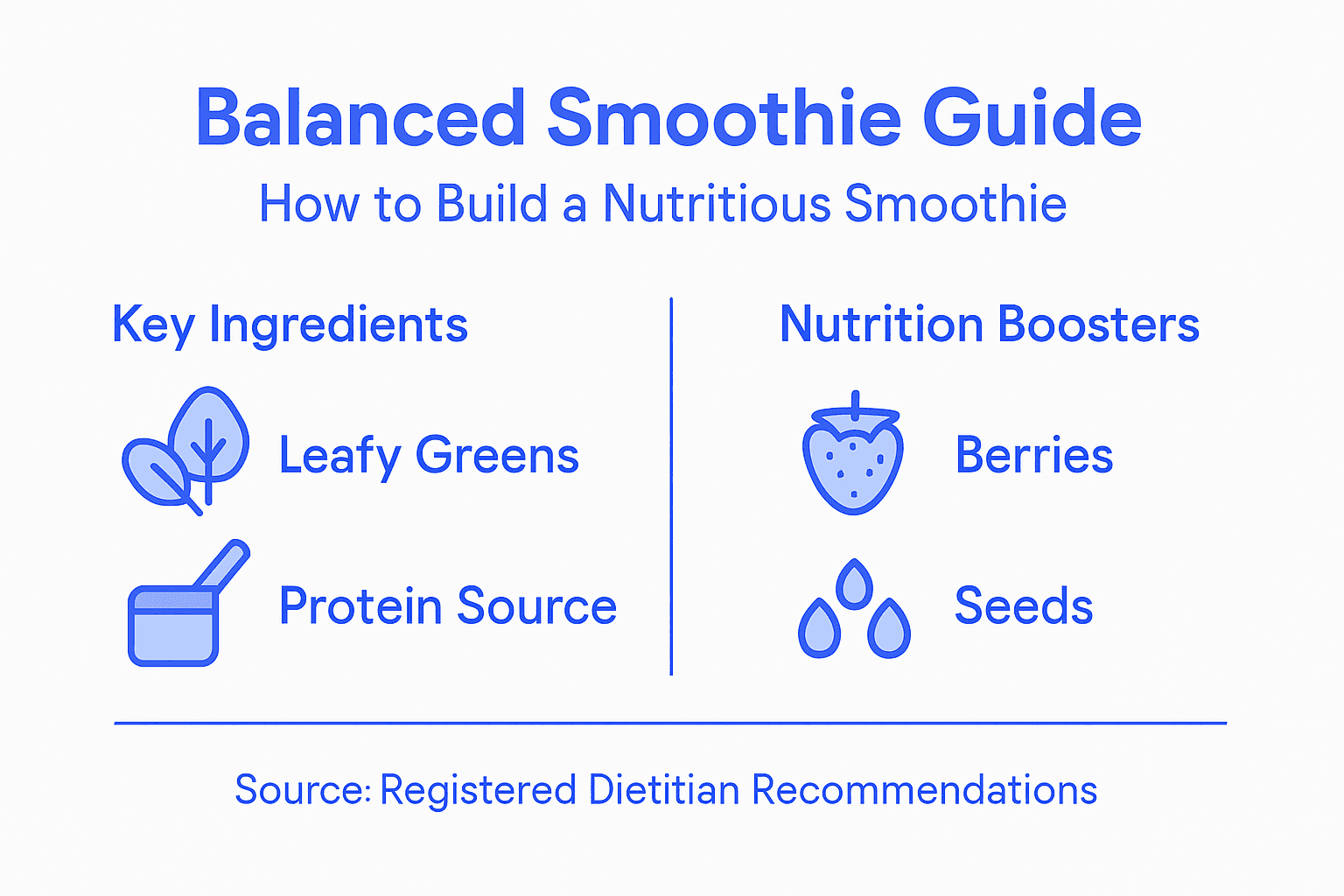
Your foundation starts with leafy greens like spinach, kale, or Swiss chard. These pack serious nutrition—vitamins A, C, K, and folate—without adding meaningful calories.
A full cup of raw spinach contains only about seven calories but delivers iron, magnesium, and antioxidants that support your metabolism and overall health.
Most people worry greens will make their smoothie taste like lawn clippings, but they actually blend invisibly when paired with flavorful fruits.
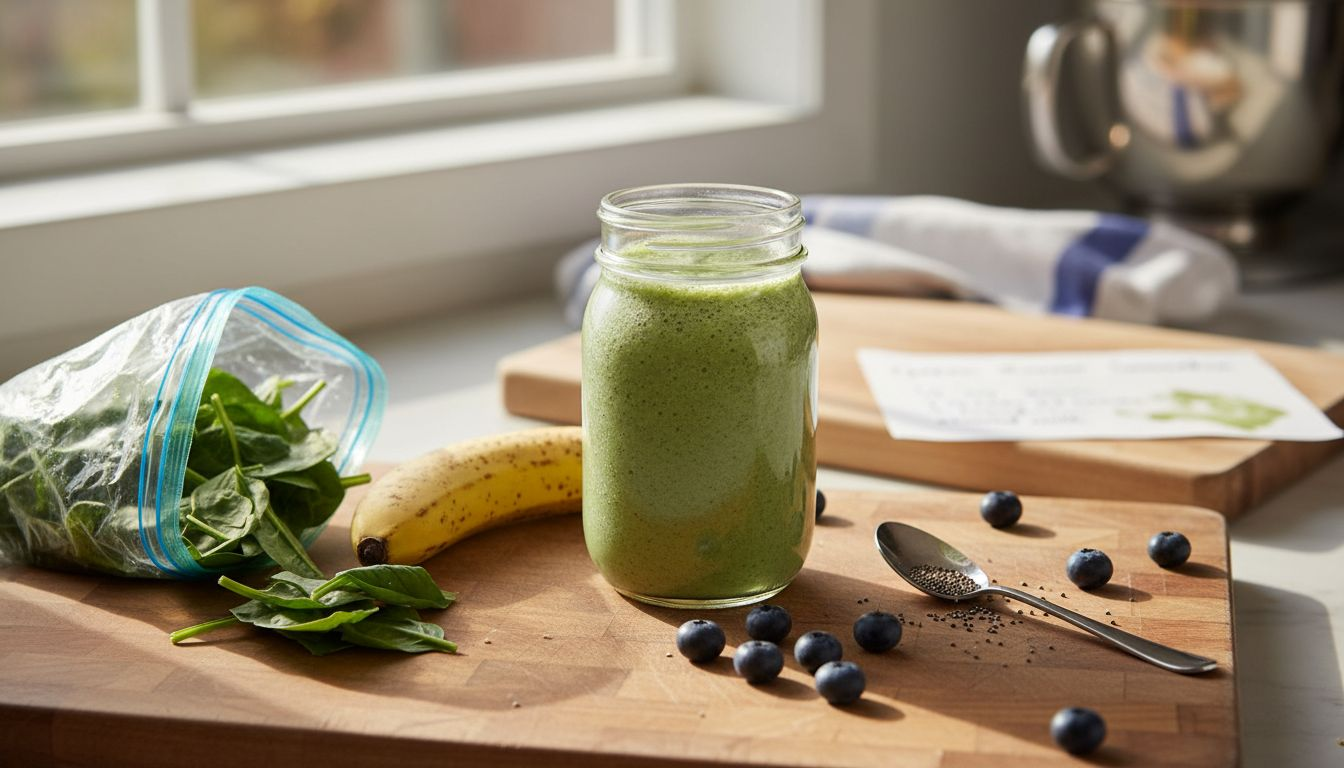
Protein sources are where most people go wrong in their weight loss smoothies. Without adequate protein, your drink becomes a fast-digesting carbohydrate that leaves you hungry within an hour.
Greek yogurt delivers around 20 grams of protein per serving while adding creaminess and probiotics for digestive health. Protein powders work too, whether whey-based or plant-based options, but quality matters.
Look for powders with minimal added sugars and recognize that your body processes whole food sources like Greek yogurt more effectively than isolated powders alone. Healthy fats from nut butters, avocados, or seeds slow digestion and increase satiety significantly.
A tablespoon of almond butter adds only 95 calories but transforms how long you stay satisfied. The fat also helps your body absorb fat-soluble vitamins like vitamin E and beta-carotene from your fruits and vegetables.
Fruit adds taste and fiber but requires intentionality around portion size.
Berries offer exceptional nutritional density—high in antioxidants and fiber relative to their calorie content—making them smarter choices than tropical fruits like mango or pineapple, which are delicious but calorie-dense.
Bananas provide potassium and creaminess with moderate calories, while nutrient-dense foods like chia seeds and flaxseeds add omega-3 fatty acids, fiber, and staying power to your drink.
The liquid base matters too. Water keeps calories minimal, while milk adds protein and calcium. Unsweetened almond or oat milk provides creaminess without excess calories. Avoid juice-based smoothies entirely—they spike your blood sugar without the fiber that whole fruits provide.
Here’s what a nutritionally balanced weight loss smoothie actually looks like: one cup of spinach, half a frozen banana, three-quarters cup of Greek yogurt, one tablespoon of almond butter, a handful of blueberries, one tablespoon of ground flaxseed, and one cup of unsweetened almond milk.
This delivers approximately 280 calories, 18 grams of protein, 8 grams of fiber, and genuine staying power for three to four hours. The balance of macronutrients prevents energy crashes that tempt you toward snacking.
Pro tip: Prep smoothie bags in your freezer by combining pre-portioned frozen fruit, greens, and seeds in individual freezer bags. When ready to blend, just dump the bag contents into your blender with your protein source and liquid base, eliminating the daily decision-making that derails smoothie consistency.
How Smoothie Diet Supports Weight Loss?
The mechanics of weight loss are straightforward: consume fewer calories than your body burns. A smoothie diet works because it simplifies this equation when done correctly.
Rather than wrestling with portion control across multiple meals, you create one or two carefully constructed drinks that contain exactly the calories and nutrients you need.
The beauty lies in what happens to your body after you consume that smoothie. Satiety is the real secret weapon. When your smoothie contains adequate fiber and protein, your brain receives fullness signals that suppress hunger hormones.
This means you stay satisfied for hours instead of reaching for snacks two hours later. The difference between a filling smoothie and an empty calorie drink often determines whether you stick with weight loss or abandon it within weeks.
Fiber deserves special attention because it fundamentally changes how your body processes smoothies. Unlike juice, which strips away fiber completely, smoothies made from whole fruits and vegetables retain this crucial component.
Fiber helps regulate digestion and blood sugar, preventing the blood sugar crashes that trigger cravings and fatigue. When your blood sugar remains stable, your energy stays consistent and your appetite doesn’t spike.
This stability matters tremendously for people trying to lose weight, since unstable blood sugar often masquerades as genuine hunger.
A smoothie with 8 to 10 grams of fiber keeps your digestive system engaged and your metabolism elevated for hours. Protein amplifies this effect by slowing gastric emptying, which means your smoothie stays in your stomach longer and continues signaling fullness to your brain.
The calorie control aspect cannot be overstated. A typical restaurant smoothie contains 400 to 800 calories depending on ingredients. A homemade weight loss smoothie can deliver complete nutritional satisfaction at 250 to 350 calories.
Multiply that daily difference by 365 days and you’re looking at 55,000 to 182,500 fewer calories annually. That translates to 16 to 52 pounds of potential weight loss simply from swapping smoothies wisely. Beyond the numbers, smoothies maintain muscle mass during weight loss better than low-protein approaches.
When you lose weight without adequate protein, your body cannibalizes muscle tissue for energy. This is why balanced smoothies with protein, fat, and carbohydrates serve as effective meal replacements that preserve the muscle you’ve worked to build while fat melts away.
The psychological component matters equally. Smoothies feel like treats. You can make them delicious with frozen berries, vanilla, nut butter, and creative flavor combinations.
This transforms weight loss from deprivation into something you actually enjoy consuming. People stay consistent with approaches they don’t dread, and smoothies make consistent eating patterns achievable. The convenience factor amplifies this further.
Prep your smoothie in five minutes while rushing to work. No complicated recipes. No decision fatigue. Just grab a pre-prepped freezer bag, add your liquid and protein, and blend. This removes friction from the weight loss process.
Pro tip: Consume your smoothie slowly using a spoon or over five to ten minutes rather than gulping it down. This extended consumption time allows your brain to receive fullness signals, potentially reducing your overall calorie intake for the day and increasing satisfaction from the same drink.
Potential Risks and Mistakes to Avoid
Not all smoothie diets fail because the concept is flawed. They fail because people make predictable mistakes that sabotage their results. Understanding these pitfalls before you start prevents wasted weeks chasing a diet that never had a chance.
The most common mistake is treating smoothies like health halos. You see a smoothie marketed as healthy and assume it supports weight loss without checking the actual nutrition facts. Commercial smoothies often contain 500 to 900 calories and 60 to 80 grams of sugar. That’s equivalent to eating three donuts in liquid form.
Your body absorbs these calories quickly without the satiety benefit of whole food, making it incredibly easy to exceed your daily calorie target and gain weight despite thinking you’re being healthy.
The second major mistake involves insufficient protein or healthy fats. A smoothie made from fruit, yogurt, and milk might taste great but leave you ravenous within an hour if protein and fat aren’t adequately proportioned.
This triggers the dangerous cycle of hunger leading to snacking, which obliterates your calorie deficit.
Using smoothies as meal replacements without adequate calories or nutrient balance may also cause energy crashes and nutritional deficiencies that make you feel depleted and more likely to abandon the diet. You need minimum 15 to 20 grams of protein and 5 to 10 grams of healthy fat per smoothie to avoid this trap.
Another critical error is relying exclusively on fruit. Fruit provides vitamins and fiber but contains significant natural sugars that spike blood glucose rapidly. A smoothie made from banana, mango, pineapple, and orange juice can easily contain 60 grams of sugar.
You need vegetables to balance this. Spinach, kale, and zucchini add nutrients and volume with minimal sugar impact.
Ingredient preparation matters more than most people realize. Certain ingredient combinations and preparation methods reduce nutritional benefits, meaning your smoothie might look nutritious but deliver less benefit than expected.
Over-blending, extreme temperatures, or combining ingredients with conflicting properties can degrade antioxidants and beneficial compounds.
Keep blending time minimal, use frozen fruit instead of ice to maintain nutrient density, and avoid excessive heat from high-powered blenders running too long. Additionally, many people make the mistake of consuming smoothies too quickly.
Gulping down a smoothie in 30 seconds prevents your brain from receiving fullness signals that develop over 15 to 20 minutes. This leads to consuming another smoothie or additional calories you didn’t actually need.
The final critical mistake involves unsustainability. People create elaborate smoothie plans with expensive superfood powders, exotic fruits, and complicated recipes.
Within two weeks, the complexity and cost become overwhelming. A sustainable smoothie diet uses basic, affordable ingredients you can find anywhere.
Frozen berries, spinach, Greek yogurt, milk, and oats cost far less than goji berries, acai, and specialized supplements, yet deliver comparable results.
Below is a summary of critical mistakes to avoid on a smoothie diet:
| Mistake | Why It Harms Results | Smarter Alternative |
|---|---|---|
| Excess sugars | Leads to calorie surplus, hunger spikes | Use berries, add greens |
| Too little protein | Increases hunger, muscle loss | Include 18-25g protein per drink |
| Overcomplicated recipes | Reduces diet sustainability | Stick with simple, repeatable combos |
| Skipping healthy fats | Shorter satiety, more snacking | Add nut butters, seeds or avocado |
| Drinking too quickly | Fullness signals delayed | Sip slowly for best results |
Pro tip: Before starting your smoothie diet, write down exactly what calories, protein grams, and fiber grams each smoothie contains. Track these numbers for one week to confirm your smoothies are actually supporting your deficit rather than creating hidden calorie overages that derail weight loss.
Discover Sustainable Weight Loss with Smart Smoothie Strategies
Struggling to lose weight despite trying countless diets It might be time to rethink how you use smoothies in your routine. This article highlights common mistakes like excess sugar and insufficient protein that can sabotage your efforts.
At Best Lean & Fit Methods – LeanAndFit, we focus on practical, balanced approaches that combine nutrition science with real-world lifestyle habits to help you achieve lasting results.
Take control of your weight loss journey by exploring plans that suit your taste and schedule such as gradual smoothie meal replacements combined with other effective methods like Intermittent Fasting – LeanAndFit.
Learn when to incorporate Diet Breaks – LeanAndFit to prevent burnout and boost metabolism.
Visit https://leanandfit.info now to find comprehensive guidance designed to keep you lean and fit without the pitfalls of unrealistic dieting.
Frequently Asked Questions
Q-1: What is a smoothie diet?
A-1: A smoothie diet is a weight loss approach where you replace one or more meals with smoothies made from fruits, vegetables, protein sources, and liquids, aiming for nutrient density while maintaining a calorie deficit.
Q-2: Can smoothies help with weight loss?
A-2: Yes, smoothies can support weight loss if made with the right balance of protein, healthy fats, and fiber. These ingredients promote satiety and help control hunger, making it easier to maintain a calorie deficit.
Q-3: What are the key ingredients for a healthy smoothie?
A-3: A healthy smoothie should include leafy greens (like spinach or kale), a source of protein (such as Greek yogurt or protein powder), healthy fats (like nut butter or seeds), and a controlled portion of fruit for sweetness and fiber.
Q-4: What mistakes should I avoid when following a smoothie diet?
A-4: Common mistakes include using too much fruit, not including enough protein or healthy fats, overcomplicating recipes, drinking smoothies too quickly, and treating smoothies as health halos without checking ingredient quality.
Recommended
- How I Do a Smoothie Diet for Weight Loss? – LeanAndFit
- Green Smoothie Diet Plan for Weight Loss: Revolutionary Solution or Overhyped Trend? – LeanAndFit
- 10 Delicious Weight Loss Smoothie Recipes for Healthy Results – LeanAndFit
- Top Healthy Smoothie Recipes for Weight Loss and Wellness – LeanAndFit
- Best Foods to Eat for Healthy Hair: A Comprehensive Guide | MyHair
- Why Trust Us?
- For educational purposes only