
Most people overeat, and studies show that restaurant portions can be up to four times larger than what is recommended.
People need to stop and think about their eating portions and how they affect them because many people are gaining weight due to incorrect eating portions.
Portion sizes explained in a simple way is the pathway to a healthy life. .
Learning the science and psychology behind portioning and why it can be misleading will help you change the way you look at food and lead to a healthier lifestyle.
Table of Contents
- Defining Portion Sizes And Common Misconceptions
- Types Of Portion Measurements In Nutrition
- How Portion Sizes Affect Weight Management
- Reading Food Labels And Estimating Portions
- Common Pitfalls And Strategies For Control
Key Takeaways
| Point | Details |
|---|---|
| Understanding Portion Sizes | Larger portion sizes can skew our perception of normal serving sizes, leading to unintentional overconsumption. |
| Common Misconceptions | Misunderstanding standard portion sizes, influenced by factors like plate size and restaurant servings, can hinder effective portion control. |
| Measurement Techniques | Using various methods like weight-based measurements or hand portion guides can help manage dietary intake and improve nutritional awareness. |
| Mindful Eating Strategies | Developing awareness of psychological and environmental triggers can enhance portion control and support sustainable weight management. |
Defining Portion Sizes and Common Misconceptions
It is not as simple as weighing the food on a scale.
According to a study done by Pubmed, our perception of what is normal can be greatly affected by a continual increase in the serving sizes, thus leading to overeating.
An important factor in portion control is awareness of the increases in daily caloric intake due to the increase in serving sizes.
The study done by pubmed suggests that people tend to consume more calories from different food groups, thus causing obesity. People also do not tend to decrease the amount of food that they eat in the following meals when they are given a bigger portion.
Common Portion Size Misconceptions
Several widespread misconceptions about portion sizes can derail weight loss efforts:
- Visual Distortion: Most people dramatically underestimate serving sizes, often consuming 2-3 times more than recommended.
- Restaurant Servings: Commercial food establishments frequently provide portions 2-4 times larger than standard nutritional recommendations.
- Plate Size Illusion: Larger plates create an optical illusion that makes normal portions seem smaller, encouraging overeating.
To navigate portion sizes, the portion control tips for healthy eating can help you readjust your perception of how much you should eat. Getting this information can educate you on the healthy portion sizes and make it less difficult for you to adhere to these principles.
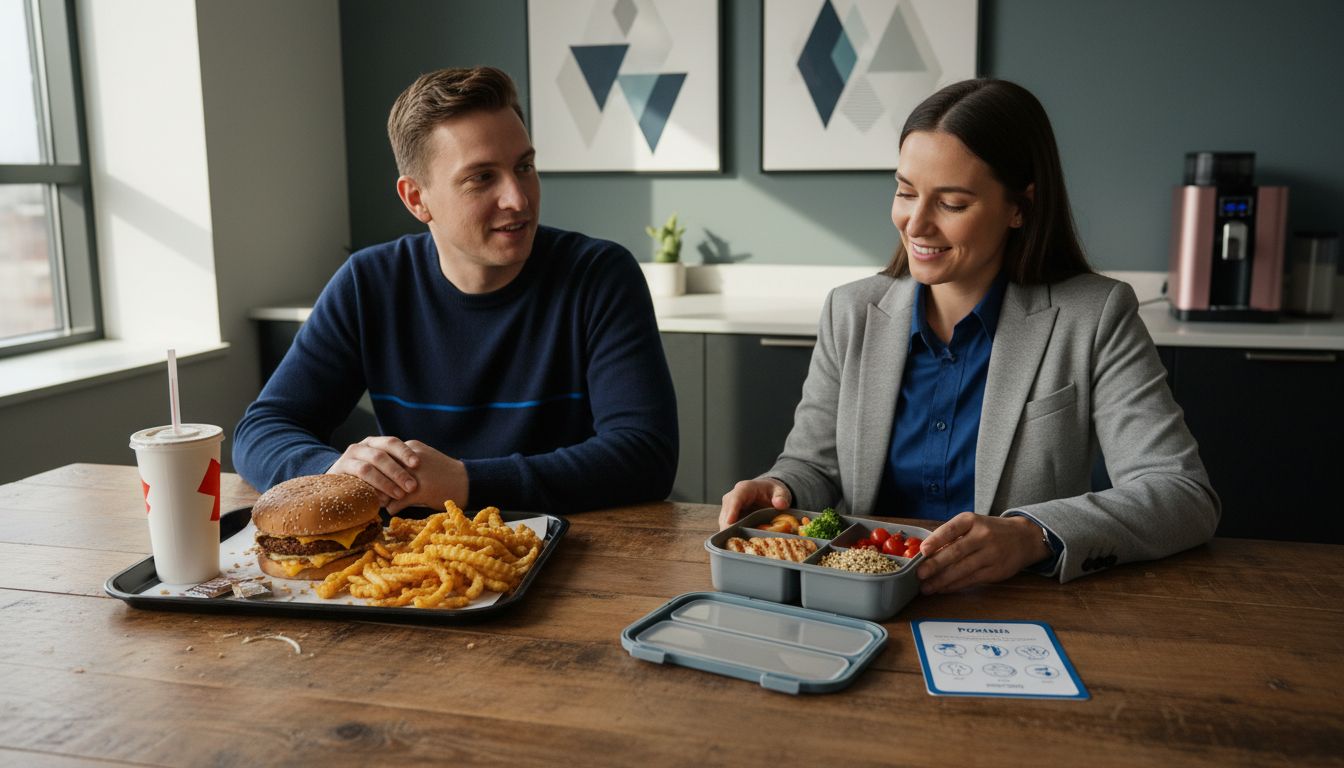
Effective portion management is not about depriving yourself of food. It is simply a matter of being aware of how much you can eat before your metabolism turns the energy from the eaten food into fat.
Types of Portion Measurements in Nutrition
There are various ways for measuring portion sizes, and it is important to understand each method for tracking the amount of food.
According to the study conducted by Cambridge University researchers, different approaches to estimating portions may have an impact on the accuracy of dietary assessment and nutrient intake.
The experts in the field of nutrition and diet offer a variety of standard portion measurement methods for determining the amount of food and assessing dietary and nutritional intake.
According to the NCBI systematic review, the current methods used for portion size measurement can be applied to evaluate changes in children’s growth, body composition, and the risk of overweight and obesity.
Common Portion Measurement Techniques
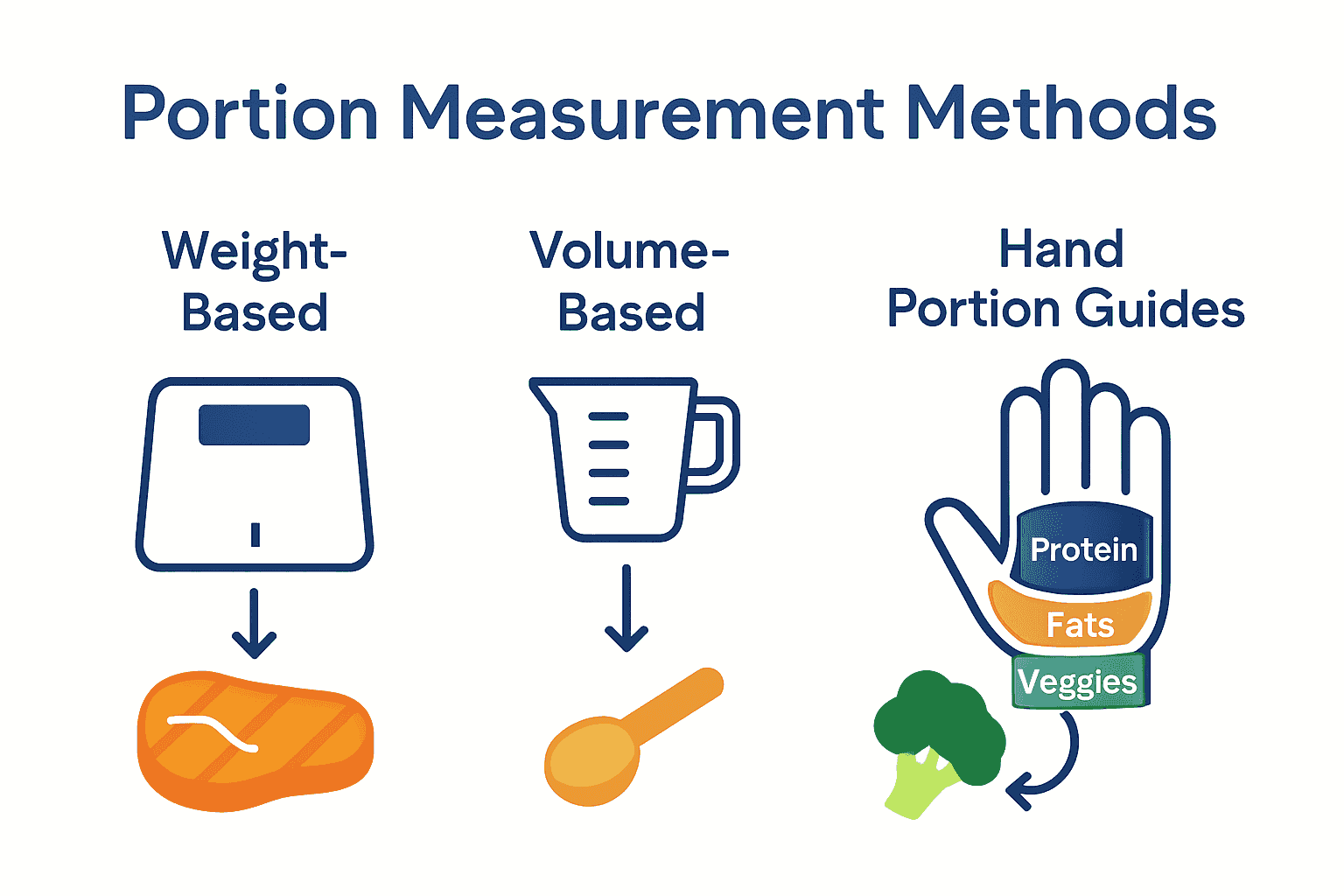
Key portion measurement methods include:
- Weight-Based Measurements: Using digital scales to measure exact food weight in grams or ounces
- Volume Measurements: Utilizing standardized measuring cups and spoons for liquid and dry ingredients
- Hand Portion Guide: Using hand sizes as relative measurement tools
- Protein serving = Palm-sized portion
- Vegetable serving = Fist-sized portion
- Carbohydrate serving = Cupped hand portion
- Fats serving = Thumb-sized portion
In order to understand how these measures affect one’s nutritional plan, it is advisable to get more acquainted with the guide on portion control for obesity. The described techniques can help anyone to turn theoretical knowledge regarding healthy eating into practical application.
The key to successful portion control is to become aware of the measures, which would allow achieving a balanced nutritional plan and maintaining it in the long run.
How Portion Sizes Affect Weight Management?
I think it is important for people to understand how portions can affect someone’s weight.
According to PubMed, large portions can cause the body to believe that the amount of food being consumed is normal.
The way of eating can affect an individual’s metabolism in more ways than one
Based on information from PubMed, increasing the size of portions can lead to overeating in different groups of food without making any adjustments in other areas; this can result in weight gain.
Key Mechanisms of Portion Size Impact
Several critical mechanisms illustrate how portion sizes influence weight management:
- Psychological Conditioning: Repeated exposure to larger portions retrains brain signals about satiety and hunger
- Metabolic Adaptation: Consistent overconsumption can slow metabolic rate
- Hormonal Responses: Large portions trigger different insulin and leptin responses
- Behavioral Patterns: People tend to consume entire served portions, regardless of actual hunger
To improve your eating habits, you should also check our article on mindful eating and portion control that provides a variety of helpful techniques.
Understanding how to keep your weight in appropriate limits is of utmost importance. Learning how to keep our portions in check can help us learn to eat better.
Reading Food Labels and Estimating Portions
Food labels can help you determine the nutritional makeup of the foods you eat and help you to monitor your portions. EDIS research shows that when it comes to losing weight and controlling your diet, the ability to read these labels is a crucial skill.
Studies at Cambridge show that there are new methods of portion estimation that allow us to better visualize amounts and make more accurate estimations of how much we eat and of the nutritional value of our food.
Key Strategies for Label Reading and Portion Estimation
Critical techniques for effective portion management include:
- Serving Size Identification: Always check the “Serving Size” at the top of nutrition labels
- Calories per Serving: Note the calories per recommended serving, not per entire package
- Comparative Analysis: Compare serving sizes across different brands
- Visual Reference Points: Use common objects for portion size estimation
- Protein = Deck of cards
- Cheese = Four dice
- Pasta = Tennis ball
- Nuts = Cupped handful
In order to enhance one’s understanding of the portion estimation techniques described in this module, it might be helpful to consult our other guide, ‘Balanced Meal Planning.’ As a result of this knowledge, individuals are likely to acquire professional-level competence in nutritional management.
Reading food labels cannot be complicated by unnecessary doubts and fears. It is of utmost importance to look at the food labels with a view to grasping how much one is likely to consume and what benefits the item is capable of providing in terms of nutrition.
Common Pitfalls and Strategies for Control
Portion control is a complex matter that requires a thoughtful approach. Indeed, one of the PubMed research studies suggests that there is a need for considering practical approaches to portion size adjustment and overcoming oversupply.
The issue is that most often, willpower alone will not be enough to reduce the amount of food eaten.
Therefore, it is a must to consider how to avoid getting too full while eating.
The matter is that our psychology and environment have a tremendous impact on the size of our portions, and it is not always easy to spot these effects.
Primary Portion Control Pitfalls
Common obstacles that derail portion control efforts include:
- Mindless Eating: Consuming food while distracted by television, phones, or work
- Emotional Eating: Using food as a coping mechanism for stress or emotional discomfort
- Oversized Plates and Utensils: Larger dinnerware creates an optical illusion encouraging larger portions
- Social Pressure: Eating more during group meals or social gatherings
- Restaurant Servings: Commercial establishments typically provide 2-3 times standard recommended portions
To create a more effective strategy for your portion problems, you should study our guide about mindful eating. It will help you find the best techniques on how to eat right.
An effective approach to regulating a person’s portions is through the creation of a certain level of awareness and the formation of appropriate attitudes. By clarifying the underlying psychological and environmental causes for our dietary habits, it becomes possible to determine specific strategies that may lead to weight loss and improved nutrition.
Master Portion Control with Mindful and Conscious Eating
Struggling with portion sizes and making the necessary changes to your diet may seem like a challenge at first.
This informative article will present you with facts on why miscalculations and the wrong external influences can lead to obesity.
If you are determined to eliminate large portion sizes and take a step towards improving your health, adopting the right mindset and tactics can assist you in achieving your goal.
By implementing mindful and conscious methods of healthy eating, you will be able to recognize when you are full and make the right decisions for your body.
You can learn more about effective ways of improving your patterns of eating by downloading our Mindful Eating – LeanAndFit and Conscious Eating – LeanAndFit guides.
Prevent further difficulties with your weight and visit the LeanAndFit page to learn more about healthy eating habits and start losing weight today.
Frequently Asked Questions:
Portion sizes described in the presented E book reveal fascinating facts, suggesting that a person does not have to adjust their nutrition scheme entirely to lose weight. The key principle is to pay attention to detail, which would help in identifying the right balance of foods groups and achieve a healthy proportion of calories on a daily basis.
Everything is possible if an individual follows a few simple rules, learns to monitor portion sizes, and gets more control over their habits and preferences. The described guide is beneficial in terms of supporting motivation and encourages people to make changes in their diet.
The ultimate result is based on the idea of improving the situation rather than trying to Curb desires, which eventually leads to success. Portion size education is important because, in the long term, it helps to improve the existing conditions and achieve positive results.
Q-1: Even if you are eating healthy, why can portion sizes stop you from losing weight?
A-1: Healthy foods can also contain calories, and a quiet increase in portion sizes can mislead an individual and prevent them from losing weight.
In addition, a person should eat a balanced diet, which helps to maintain the best proportion of calories and control weight.
It is vital to remember that weight loss is a relative and balanced process since it is necessary to calculate not only the amount of healthy products but also consider the daily requirements. One cannot fill up the car with gasoline and expect it to end right there without risking the engine failing due to overfilling.
Q-2: Why do restaurants serve such big portion sizes?
A-2: The perception of the word “big” has changed over the past few decades as restaurants have evolved to meet the growing demand for food. As in the case of any business, the primary goal is to make a profit by hooking customers and keeping them coming back for more.
The staff knows that people love to get value for money and are ready to pay more for a hearty meal. In most cases, the norm is exceeded by 2 or 3 times, so a person should be aware and not confuse the habitual sizes with actual ones.
Moreover, people tend to finish everything on their plate due to social pressure, which only adds to the problem. A solution in this case is to train your eye so that you can determine the usual size of the product, and while the proportions may seem exaggerated at first, over time you will get used to the new reality.
Q-3: Does using a bigger plate trick you into eating a bigger portion?
A-3: In psychology, this is called the plate size illusion. Thus, the bigger the plate, the more food you need to eat to feel satisfied. On the contrary, using a smaller plate, a person notices that the usual serving size is enough, while a bigger one seems too long.
This trick works effectively and is the simplest way to control a portion without worrying about the number of calories or being strict with yourself. A change in the proportions of meals will organically affect the balance of the diet, leading to weight loss.
Q-4: Why do we overeat some foods more than others?
A-4: The reason is the structure of different products and the way they work.
For example, highly processed foods are convenient, tasty, and allow you to eat more without thinking about your health. At the same time, the amount of fiber and calories is much higher than in natural products.
On the other hand, food with a high proportion of fiber and protein will satiate the body for a much longer time and be beneficial for the digestion system.
Recommended
- Effective Portion Control Tips for Healthy Eating Success – LeanAndFit
- How Mindful Eating Helps Control Portion Sizes in Obesity Treatment? – LeanAndFit
- Portion Control for Obesity: The Overlooked Cure – LeanAndFit
- Top Healthy Weight Loss Tips for Lasting Results – LeanAndFit
- Why Trust LeanAndFit.info?
- For educational purposes only