
Almost everyone has an opinion on protein, but there is still confusion about it.
More than 40% of people do not know how much protein they should consume.
Protein is important at any age, and it is not enough to eat it just to look good at the gym. A balanced ratio of this nutrient will help to increase muscle tissue, carry out reparative processes in the body, and improve metabolic processes, regardless of gender and age.
This article will tell you what you need to know about the importance of protein intake in your diet.
Table of Contents
- Protein Intake Defined And Common Misconceptions
- Key Functions Of Protein In The Body
- Types Of Dietary Protein Sources Explained
- Optimal Protein Intake For Health And Weight Loss
- Risks Of Inadequate Or Excess Protein Consumption
Key Takeaways
| Point | Details |
|---|---|
| Comprehensive Role of Protein | Protein is essential for numerous body functions, including enzyme production, immune support, and hormonal regulation, beyond just muscle growth. |
| Myths About Protein Intake | Everyone requires adequate protein for optimal health; it is not only necessary for athletes or bodybuilders. |
| Complete vs. Incomplete Proteins | Complete proteins contain all essential amino acids, primarily found in animal sources, while plant proteins require combinations for a full amino acid profile. |
| Balanced Protein Consumption | Both insufficient and excessive protein intake can lead to health issues; it’s crucial to find a personalized balance based on individual needs. |
Protein Intake Defined and Common Misconceptions
Proteins are complex compounds that play various vital functions in the human body, not limited to muscle growth, as one might think.
This notion comes from MedlinePlus, which describes proteins as complex molecules that perform many vital functions in the body.
Protein: The Basics
Proteins are complex molecules made up of amino acids that are essential for life. They are multifunctional and participate in virtually all of the body’s processes, without being limited to building and repairing muscles.
Proteins are involved in:
1. Enzymatic catalysis of reactions.
2. Building cellular structure and transmitting information within cells.
3. Enhancing immunity.
4. Creation of hormones and neurotransmitters.
5. Transport of substances in the body.
Common Myths About Protein
There are several common misconceptions about protein. The first one claims that protein is needed only for those who actively build muscles.
This and many other myths have been dispelled in this article . Those who believe that the only purpose of protein is to build muscles forget that every cell in the human body needs protein to function properly.
Another common belief is that all proteins are equal, which can be dangerous because it does not take into account the different amino acid sequences in them. Animal and vegetable proteins have different properties.
Moreover, the issue of caloric content and the content of other nutrients is also relevant. Therefore, for those who want to lose weight and maintain a healthy lifestyle and body, it is essential to understand the nuances and be able to choose the best protein sources for their needs.
For this, our article on the best sources of protein can prove to be very helpful.
Key Functions of Protein in the Body
Proteins are essential elements of the human body, playing a countless number of vital functions.
In short, Cleveland Clinic sums it up by saying that they are the workhorses of the human body, being responsible for hormones’ production and energy generation, among others.
Core Biological Functions of Protein
Proteins are extremely versatile molecules, which can do much more than simply build and repair muscles. According to Healthline , there are several biological processes that are in charge of by proteins in the human body:
- Catalytic Function: Participate in the chemical processes that take place in the body
- Hormonal Function: Help synthesize hormones
- Structural: Aid in the creation of structures
- Protective: Assist the immune system in fighting pathogens
- Transport: Help transport various nutrients
Protein as Cellular Architects
In addition to the abovementioned functions, proteins perform numerous other cellular activities. They are involved in synthesizing processes that create one’s muscles, skin, and connective tissues.
Proteins, therefore, help build and maintain the whole body, repair cells, and contribute to the normal functioning of the body.
If you are interested in learning more about the interactions of proteins with other nutrients, our guide to macronutrients will help you get an insight into the mechanisms of balanced nutrition.
Types of Dietary Protein Sources Explained
It is essential to be aware of all the different sources of protein in order to maintain a healthy diet.
According to University of Arkansas Extension, there are two different kinds of dietary proteins called complete proteins and incomplete proteins.
Complete vs. Incomplete Protein Sources
Complete proteins are those that have all nine essential amino acids that the body cannot synthesize on its own.
They are mainly present in animal foods, such as:
- meat
- poultry
- fish
- eggs
- dairy products
Incomplete proteins are those that are missing at least one type of essential amino acids, and they are usually formed from plants.
According to the Open Maricopa Educational Resources, in order to obtain complete proteins from plants, it is necessary to combine different sources.
Strategies for Balanced Protein Intake
For people on a vegan diet, it is important to combine different sources of protein.
Proteins from legumes are combined with cereals when making soups and stews, or when preparing mixed dishes with legumes and cereals, which allows to obtain a complete set of essential amino acids.

To explore more about optimizing protein sources for weight loss and health, our guide on best protein sources provides comprehensive insights into selecting the most nutritionally beneficial options.
Optimal Protein Intake for Health and Weight Loss
Determining the right amount of protein is essential in order to maintain a good health and achieve the desired weight loss.
Based on information provided by Nestle health science, a healthy adult requires about 0.8 grams of protein per 1 kg of weight on a daily basis, with possible adjustments for particular groups of people.
Protein Requirements
The amount of protein that an individual may need can differ significantly depending on a person’s age, level of activity, and other factors.
In most cases, calculating a daily amount of protein intake based on weight is a good starting point for anyone who wishes to eat healthily and keep track of their weight.
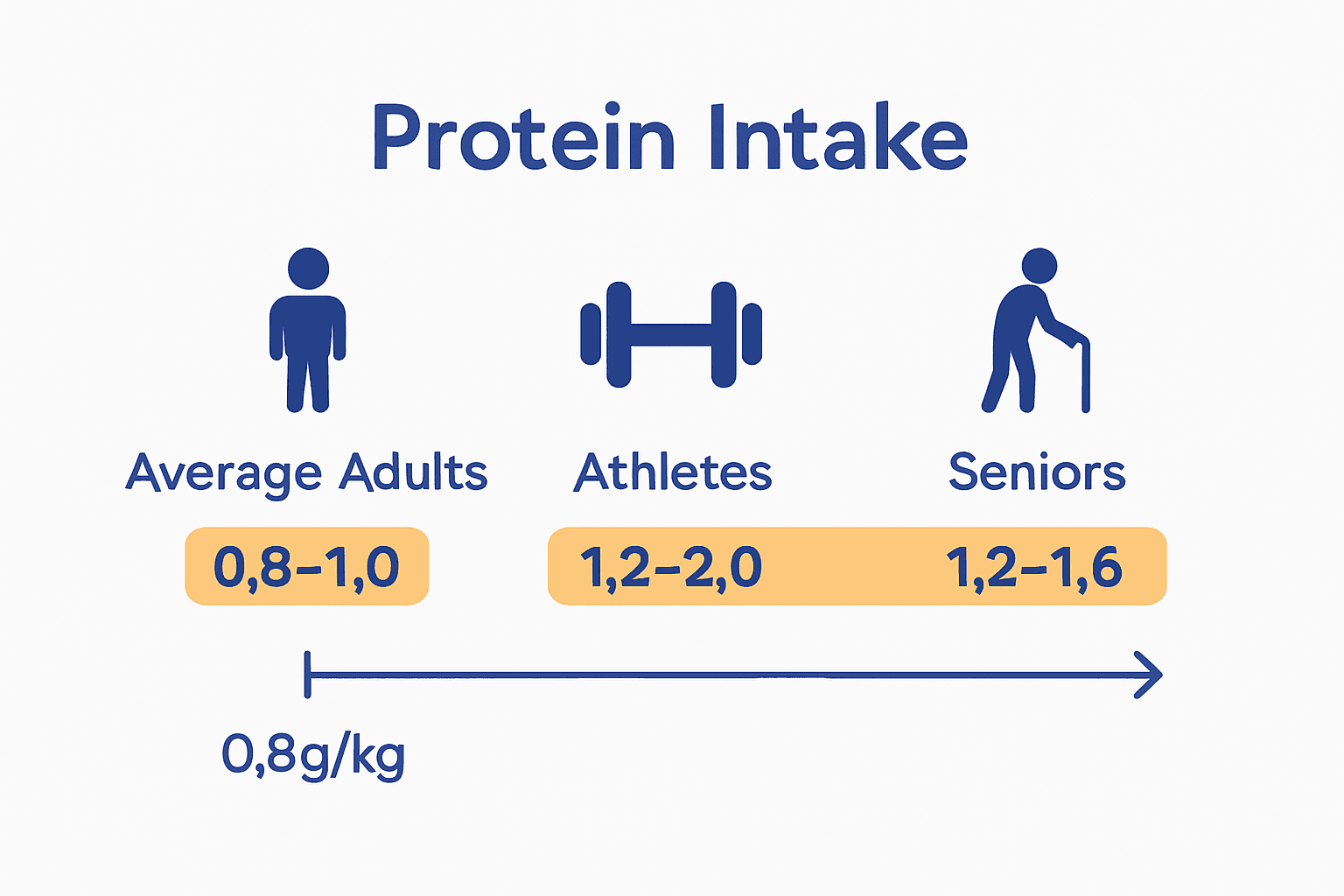
However, there are some groups of people who may need to increase their protein intake:
- People leading an active lifestyle and those who lead a sedentary one
- Those over 65 years old
- Those on a weight loss program
- And people recovering from an illness or injury.
Protein’s Role in Weight Loss
Healthline experts have described the role of proteins in the dieting process.
Consuming protein helps with weight loss because it:
- makes you feel full and satisfied
- helps maintain muscle mass during caloric restriction
- boosts metabolic rate
- causes a reduction in overall calories
Thus, creating the necessary balance in favor of proteins will allow you to lose weight in a healthy way. The main thing is to determine the optimal ratio for your type of body.
If you want to get an idea of which products to choose so that they bring maximum benefit, then our article on the best sources of protein will help you.
Risks of Inadequate or Excess Protein Consumption
Protein Intake Requirements Balancing the intake of proteins is essential for health as both insufficient and excessive consumption may result in adverse consequences.
The insufficiency of proteins may “lead to tissue wasting and possible…organ malfunction” (University of Mosul).
The Consequences of Protein Deficiency
The lack of proteins in the diet leads to multiple health issues, including:
1. Muscle wasting: Wasting of tissues and muscles
2. Weakened immune system: Lower resistance to diseases and pathogens
3. Poor wound healing: Delayed regeneration of tissues
4. Stunted growth: Notably evident in children and adolescents
5. Alterations in hormonal levels: Impaired metabolic processes
On the other hand, Nestle Health Science highlights the potential risks of a high-protein diet, primarily consisting of animal products.
The excessive consumption may also present several health hazards, including:
1. Kidney malfunction
2. Cardiovascular issues
3. Metabolic disturbances
4. Dehydration
5. Calcium depletion
It is, therefore, essential to ensure that protein intake is sufficient but not excessive to avoid these health issues. The amount of protein required by an individual depends on various factors, including age, sex, general health, and physical activity.
Protein intake also varies depending on the individual’s fitness goals.
To determine the appropriate amount of protein for one’s dietary plan, it is advisable to consult our guide to protein requirements .
Boost Your Health with Smart Protein Choices
Understanding the importance of protein can help you to overcome such problems as getting hungry too fast and losing muscle on a diet.
The text describes the importance of protein for satiety, maintenance of muscle mass and other benefits. This is crucial information for those who want to track their progress and improve their wellbeing in natural ways.
Proteins are often underestimated, even though they play an important role in our body, such as recovery, building muscle, immunity and more.
Find out how to get the most out of your protein. Learn more about our professional advice and methods that will allow you to accomplish this goal in Protein Intake – LeanAndFit .
Get started with improving your nutritional habits right now at leanandfit.info and begin building meals that will keep you full and support you throughout your weight loss journey.
Expand your knowledge and find out more about the complete guide to the best methods and nutritionist’s advice in Best Lean & Fit Methods – LeanAndFit and begin applying calorie restriction with the help of our Calorie Restriction – LeanAndFit , and transform your eating habits today.