

Almost 40% of American adults have an issue with overeating at some point in their lives. Hence, a significant part of the population deals with the condition and seeks to comprehend the triggers and mechanisms behind it.
The article below will help such people investigate their triggers and establish healthy eating habits that will benefit them for the rest of their lives.
At the end of this guide, you learn how to avoid overeating naturally for maintaining optimal body weight.
Table of Contents
- Step 1: Identify Personal Overeating Triggers
- Step 2: Prepare Balanced Meals And Snacks
- Step 3: Practice Mindful Eating Daily
- Step 4: Control Portions And Meal Timing
- Step 5: Monitor Your Progress And Adjust Habits
Quick Summary
| Key Insight | Explanation |
|---|---|
| 1. Identify Overeating Triggers | Keep a food journal to track emotions and situations that lead to overeating. Analyze these patterns for insight. |
| 2. Prepare Balanced Meals | Focus on creating meals with a mix of food groups to provide essential nutrients and prevent snacking. |
| 3. Practice Mindful Eating | Develop self-awareness around eating by asking if you are truly hungry and enjoying your food without distractions. |
| 4. Control Portions Effectively | Use smaller plates and measure servings to manage portion sizes and maintain a consistent eating schedule. |
| 5. Monitor Progress Regularly | Track your eating habits and adjustments over time, using data to inform your strategies without becoming obsessive. |
Step 1: Identify personal overeating triggers
Identifying the underlying cravings that lead to overeating is essential to managing weight loss. It is necessary to consider all factors and aspects of a person’s lifestyle that can contribute to this problem.
In particular, it can be helpful to track a food journal and record the “5 Ws” of each eating episode: who was eaten with, what, when, where, and why. This approach is intended to identify the reasons for overeating and track triggers that are unique to each person.
Most often, this manifestation of the disorder is caused by a combination of factors, including emotional state, boredom, social interactions, specific time intervals, or calorie content of food. A person should watch for associations between overeating episodes and these factors. In addition, it is important to note whether a person eats not out of a sense of need but due to a psychological urge to do so.
A method that can be used to track these triggers is a table in which columns are created for each of the factors identified. Then, events in which a person has had an overeating episode are written down, indicating which of the triggers they are associated with. After that, it becomes easier to find the main causes and conditions for this type of behavior.
It is vital to remain objective while recording data in such a table and not criticize oneself for personal triggers and reasons for overeating. All of them reflect a person’s attitude towards themselves and their current lifestyle, which they need to change.
Step 2: Prepare balanced meals and snacks
Constructing balanced meals and snacks help you to avoid overeating, while letting your body absorb the nutrition that it needs. This helps change one’s eating habits that can lead to being too full.
When planning meals, focus on creating comprehensive nutritional profiles that include diverse food groups.
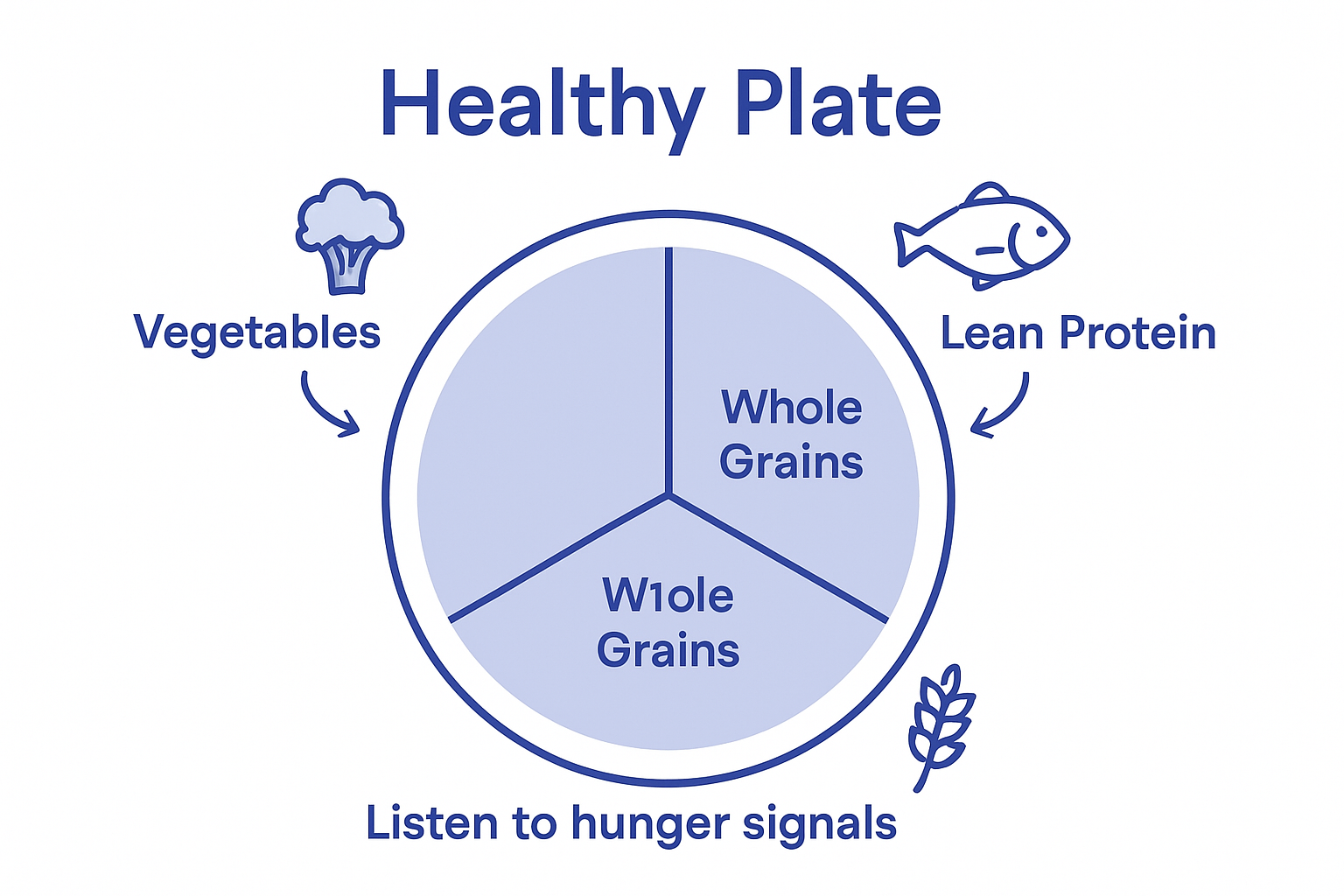
Your plate should be a riot of colors with fruits and vegetables and include lean proteins, whole grains, and healthy fats to ensure a balanced intake of all nutrients and keep you feeling full so that you don’t snack unnecessarily in between meals.

Begin by coming up with a healthy but still appetizing meal planning method. You may want to consider preparing some dishes in advance in order to avoid the temptation of unhealthy fast food. Try to stick to high-protein and high-fiber foods and calculate the required portions so that there is no overeating.
In addition, it may be helpful to plan your meals ahead and have a schedule of what to eat when. It is important to vary proteins and include seasonal vegetables in the diet. Moreover, a person will feel full longer with the help of food that is high in protein and fiber.
It is advisable to prepare certain dishes in advance and have a supply of healthy snacks that can quickly satisfy hunger and not spoil the appetite. These could be sliced vegetables, eggs, and Greek yogurt, among others. However, one should not go to excessive lengths in the process since overly strict diets can be close to fasting.
Step 3: Practice mindful eating daily
Mindful eating allows you to focus on the food and become more aware of your body’s hunger signals. You might want to consider mindful eating because it can help you appreciate healthy food more and put you in the present moment.
Try to have some kind of mindful self-talk while eating. Ask yourself questions like “Am I hungry?” and “How do I feel right now?” while eating. Make sure that you are only eating when you are physically hungry and not because of any emotional triggers
Secondly, try some mindful eating exercises. You can try putting away the TV or the phone while eating or even using a smaller plate for a healthy porridge. Other mindful eating exercises are putting the fork down between each bite and taking small sips of fluid throughout the day. Taking all these steps can increase awareness of fullness, allowing you to stop when you feel satisfied instead of overly stuffed.
Lastly, you should make sure that you have a safe environment around you while eating. Set the table nicely so that you can enjoy your food, take your time, and eat without distraction. Put away the TV or other devices that might distract you from your mindful eating practice. Make sure to view nourishing food as healthy and a way to treat yourself. You can also be relaxed during your mindful eating sessions.
Pro Tip: Remember that mindful eating should never be a race. You should not beat yourself up if something goes wrong during your practice of mindful eating. It might take you a while to master mindful eating.
Step 4: Control portions and meal timing
Mastering portion control and the timing of meals is essential in curbing overeating. They are effective approaches that help regulate the amount of food eaten at a time while keeping the metabolism levels high.
Using smaller plates to serve meals and having portion control will help reduce the amount of food consumed. One should use measuring tools such as measuring cups and a weighing scale to calculate the right portion of food.
It is advisable to avoid eating directly from the cooking utensils to prevent overeating. Having dinner plates of a smaller size can help in reducing the portion of food and ensure that the person eats healthily.
People should learn how to time their meals right to prevent hunger from occurring too early or too late. The ideal time between meals should not exceed four hours, and they should consist of healthy snacks to keep the metabolism elevated.
One should also have healthy breakfast to keep the body nourished and the metabolism high. Healthy snacks should be taken in between meals to prevent feeling too hungry during the main meals of the day.
Portioning of the meals should be in halves to quarters so that a person can eat a variety of foods in reasonable portions. Foods such as leafy greens should take up half a plate, while a quarter of the plate should consist of proteins.
A quarter of the plate should be filled with starches to add fiber to the diet and promote healthy digestion. Using portion control plates or meal prep containers will help in controlling the amount of food without limiting a person’s diet.
Warning: Portion control is not a dieting tool but a balance. Eat till you’re satisfied and stop. Don’t binge eat because of the idea that you should eat small portions.
Step 5: Monitor your progress and adjust habits
Tracking and measuring the process of losing weight can be complicated, so it is essential to set appropriate goals and remain flexible. Following a few outlined recommendations can help achieve a healthy and steady weight loss.
Keeping a food journal is an excellent way to monitor and spot patterns. It is critical to note down all foods’ details consumed, along with feelings, tensions, and events occurring. Moreover, it is essential to track the time of feeding and hunger.
After bringing data together, the process of tracking and weighing would become a fascinating experience.
It is necessary to set appropriate weekly goals, measure and weigh the body, and adhere to a particular program. Weighing data can be found in the journal, and photos can also be a helpful tool in the way to a healthy body.
Moreover, apps or classic journals can be used to keep track of important indicators. It is essential to look at the indicators and weigh regularly, but not daily. If it is noticed that the weight loss progress stops, it might be helpful to check a journal and revise a few things.
For example, busy days, stressful events, overeating, and lack of physical activity can be an answer to stalled weight loss.
After getting accustomed to the weight loss process, it is possible to set more goals and improve. Having a monthly weigh-in and looking at the results will help stay motivated and inspired. It is also essential to appreciate progress and be kind to oneself if some changes are minimal or absent.
Pro Tip: Moreover, it should not be forgotten that weight loss is not a race; sometimes, it goes rapidly, and sometimes it slows down to a halt. All recommendations have to be carefully used and studied. Understanding that weight loss process will be different for each person is vital.
Take Control of Overeating with Proven Natural Strategies
Struggling with breaking bad eating habits can be disheartening. However, the tips given in this article will help you identify the triggers that lead you to overeating and guide you on how to eat mindfully.
To learn more about achieving healthy nutrition and balanced eating habits, check out our Mindful Eating – LeanAndFit and Meal Planning – LeanAndFit web pages and acquire new useful insights that will help improve your everyday eating routine.
Visit us at LeanAndFit.info and get expert advice on Conscious Eating – LeanAndFit and weight loss management now to turn your knowledge into action and improve your conscious eating.
Frequently Asked Questions
This FAQ highlights that avoiding overeating naturally is achievable through mindful habits, proper nutrition, and behavioral changes, leading to sustainable weight loss and improved overall health:
Q-1: How to avoid overeating naturally for weight loss without dieting?
A-1: How to avoid overeating naturally for weight loss without dieting can be achieved through mindful eating and consuming healthy snacks. Statistics show that more than 42% of American adults are obese due to overeating in the US. Mindful eating can reduce calorie intake by 20% helping achieve long-term sustainable weight loss without dieting.
Q-2: What are the best ways to stop overeating and control hunger naturally for weight loss?
A-2: The best ways to stop overeating and control hunger naturally for weight loss include eating high-fiber foods, staying hydrated, and controlling portion sizes. Studies show that fiber intake can reduce hunger by 30% preventing overeating and promoting gradual weight loss.
Q-3: How to stop overeating and lose weight naturally?
A-3: How to stop overeating and lose weight naturally should include practicing mindful eating. Research conducted in San Francisco and Boston shows that mindful eating can reduce episodes of binge eating by 25% a day reducing weight over time.
Q-4: What causes overeating and how to control it naturally at home?
A-4: Overeating is caused by a number of factors including stress and poor eating patterns. Addressing these issues can help overcome frequent feelings of hunger to prevent overeating. Studies show that 60% of cases of overeating are brought about by stress.
Q-5: How to reduce emotional eating and overeating?
A-5: How to reduce emotional eating and overeating should include developing behavioral techniques to reduce chronic stress. Treating the root causes of overeating can reduce episodes by 30-40%.
Q-6: What are the best natural appetite control methods to stop overeating and binge eating?
A-6: The best natural appetite control methods to stop overeating and binge eating include eating healthy snacks, controlling portions of meals, and staying well hydrated. Protein-rich meals can reduce hunger hormones in the body by 25% while a good night’s sleep can reduce chances of overeating by 50%.
Q-7: How to develop healthy eating habits to prevent overeating?
A-7: How to develop healthy eating habits to prevent overeating includes eating regular meals and limiting processed foods. Studies show that developing better eating patterns can reduce risk of overeating by 35% making it healthier and sustainable in the long run.
Q-8: What foods make you feel full to prevent overeating naturally?
A-8: What foods make you feel full to prevent overeating naturally should include whole grains and beans in the daily diet. These foods can keep you feel full for up to 4 hours reducing risk of overeating and obesity.
Q-9: How to control meal timing and portions to prevent overeating and weight gain?
A-9: How to control meal timing and portions to prevent overeating and weight gain is by eating regular meals and controlling portions. In New York and Chicago, programs promoting control of portions have shown to reduce calorie intake by 15-20% a day preventing weight gain.