
• Skip to content

LeanAndFit

Product Review Website

  • Obesity Causes: Key Factors Behind Weight Gain
    • Binge Eating Obesity Causes: How Overeating Leads to Weight Gain
    • Chronic Stress Obesity Causes: How Cortisol Drives Weight Gain
    • Cushing’s Syndrome
    • Stress Eating Obesity Causes: How Stress Leads to Weight Gain
    • Environmental Factors Causing Obesity: Risks & Prevention
    • Fast Food Obesity Causes: How Junk Food Leads to Weight Gain
    • Food Insecurity & Obesity Causes: Weight Gain Risks
    • Genetic Predisposition
    • Gut Microbiome Obesity Causes: How Gut Bacteria Affect Weight
    • Hormonal Imbalance and Obesity: Causes, Effects & Solutions
    • Insulin Resistance
    • Medication Side-Effects
    • Metabolic Slowdown
    • Obesogenic Chemicals: Hidden Causes of Obesity & Weight Gain
    • PCOS Symptoms and Obesity Causes and Hormonal Effects
    • Poor Nutrition and Obesity Causes Explained for Better Health
    • Sedentary Lifestyle and Obesity: Causes, Risks & Solutions
    • Sleep Deprivation
    • Social Influences
    • Thyroid Dysfunction
  • Obesity Side Effects: Health Risks, Causes & Prevention Tipss
    • Metabolic Syndrome
    • Osteoarthritis Onset
    • Respiratory Issues
    • Sleep Apnea Obesity Side Effects: Breathing & Health Risks
    • Obesity and Stroke Risk Causes and Cardiovascular Effects
    • Type 2 Diabetes Obesity Side Effects: Risks & Health Impact
    • Anxiety Increase
    • Body Inflammation
    • Cognitive Decline
    • Obesity and Dementia Risk Causes and Cognitive Decline Effects
    • Depression Risk Obesity Side Effects: Mental Health Impact
    • Emotional Eating Obesity Side Effects: Risks & Health Impact
    • Gut Dysbiosis and Obesity Effects on Metabolism and Health
    • Heart Disease Obesity Side Effects: Heart Health Risks
    • High Cholesterol Obesity Side Effects: Risks & Heart Health
    • Hypertension Development Examines How Obesity Contributes
    • Insulin Resistance SE
    • Joint Pain Obesity Side Effects: Knee, Back & Mobility Risks
    • Obesity and Liver Damage Causes and Fatty Liver Disease Risk
    • Mental Disorders Obesity Side Effects: Mental Health Risks
  • Obesity Treatment: Diet, Nutrition & Weight Loss Strategies
    • Metformin Use Obesity Treatment: Weight Loss & Insulin Control
    • Mindful Eating Obesity Treatment: Control Hunger & Lose Weight
    • Pharmacologic Interventions
    • Sleep Management for Obesity: Improve Sleep & Weight Loss
    • Stress Reduction Obesity Treatment: Lower Stress, Lose Weight
    • Surgical Devices Obesity Treatment: Tools for Weight Loss
    • Weight Loss Medications for Obesity Treatment: Benefits & Risks
    • Appetite Suppressants
    • Bariatric Surgery
    • Behavioral Therapy
    • Calorie Restriction
    • Cold Exposure
    • Exercise Regimens
    • Gut Modulation for Obesity Treatment and Metabolic Health
    • Hormonal Therapy Obesity Treatment: Balance Hormones & Lose Weight
    • Intermittent Fasting
    • Lifestyle Changes
    • Low Carb Diets for Obesity Treatment and Weight Loss
    • Meal Planning for Obesity Treatment and Healthy Weight Loss
    • Metabolic Boosters
  • Best Lean & Fit Methods Top Strategies For A Lean Physique,
    • Outdoor Workouts Weight Loss Methods: Burn Fat Naturally
    • Pilates Sculpt for Weight Loss and Lean Body Toning Guide
    • Protein Intake for Weight Loss and Fat Loss Strategies
    • Resistance Workouts
    • Step Tracking Weight Loss Methods: Walk Your Way to Fitness
    • Strength Training
    • Bodyweight Exercises
    • Calorie Deficit for Weight Loss and Fat Loss Strategies
    • Cardio Intervals
    • Consistency Hacks
    • Diet Breaks for Weight Loss Benefits and Fat Loss Strategy
    • Fitness Gamification
    • HIIT Sessions for Weight Loss and Fat Burning Workouts
    • Hydration Focus Weight Loss Methods: Boost Metabolism Naturally
  • Latest Research/News

How to Avoid Hidden Sugars Naturally for Lasting Results

Best Lean & Fit Methods Top Strategies For A Lean Physique,, Conscious Eating Methods: Best Lean Fit Weight Loss Tips / December 31, 2025 by Madhukar Yadav

3.6k
SHARES
ShareTweet

Most American adults consume far more added sugar than they realize each day.

Hidden sugars sneak into common foods and even so-called healthy options often contain ingredients that quietly sabotage weight loss goals.

Recognizing and controlling these secret sources is key for anyone serious about transforming their diet and boosting overall wellness.

Discover practical steps to outsmart sneaky sweeteners and finally start seeing real progress in your health journey.

Table of Contents

  • Step 1: Assess Current Foods For Hidden Sugars
  • Step 2: Read And Understand Ingredient Labels
  • Step 3: Replace High-Sugar Foods With Healthy Alternatives
  • Step 4: Monitor Daily Sugar Intake Consistently
  • Step 5: Verify Progress And Adjust Your Approach

Quick Summary

Key Point Explanation
1. Identify Hidden Sugars Examine ingredient lists for various sugar names to recognize added sugars in everyday foods.
2. Learn to Read Labels Understand how to differentiate between naturally occurring and added sugars by studying nutrition facts and ingredient lists.
3. Substitute for Healthier Options Replace high-sugar foods with natural sweeteners and whole food alternatives to maintain taste without excess sugar.
4. Track Your Sugar Intake Use a daily food journal or apps to monitor sugar consumption and recognize high-sugar sources in your diet.
5. Regularly Assess Progress Compare current sugar intake with recommendations and adjust strategies based on your observations to maintain your health goals.

Step 1: Assess current foods for hidden sugars

Understanding where hidden sugars lurk in your diet is crucial for making smarter nutritional choices.

Learning to decode food labels and recognize sugar’s many disguises will help you take control of your sugar intake and support your health goals.

Start by thoroughly examining the ingredient lists of foods you regularly consume. Sugar hides under multiple names, with research showing over 60 different aliases.

Look for terms like sucrose, dextrose, maltose, corn syrup, and ingredients ending in ‘-ose.’ Ingredient lists can reveal unexpected added sugars in products you might consider healthy, such as breakfast cereals, flavored yogurts, and condiments.

Pay special attention to the nutrition label, distinguishing between naturally occurring sugars from fruits, vegetables, and dairy versus added sugars introduced during processing.

The average American consumes around 22 teaspoons of added sugar daily, often without realizing it.

Compare the total sugar content with the recommended daily intake and prioritize whole, unprocessed foods that provide natural nutrition without excessive sweeteners.

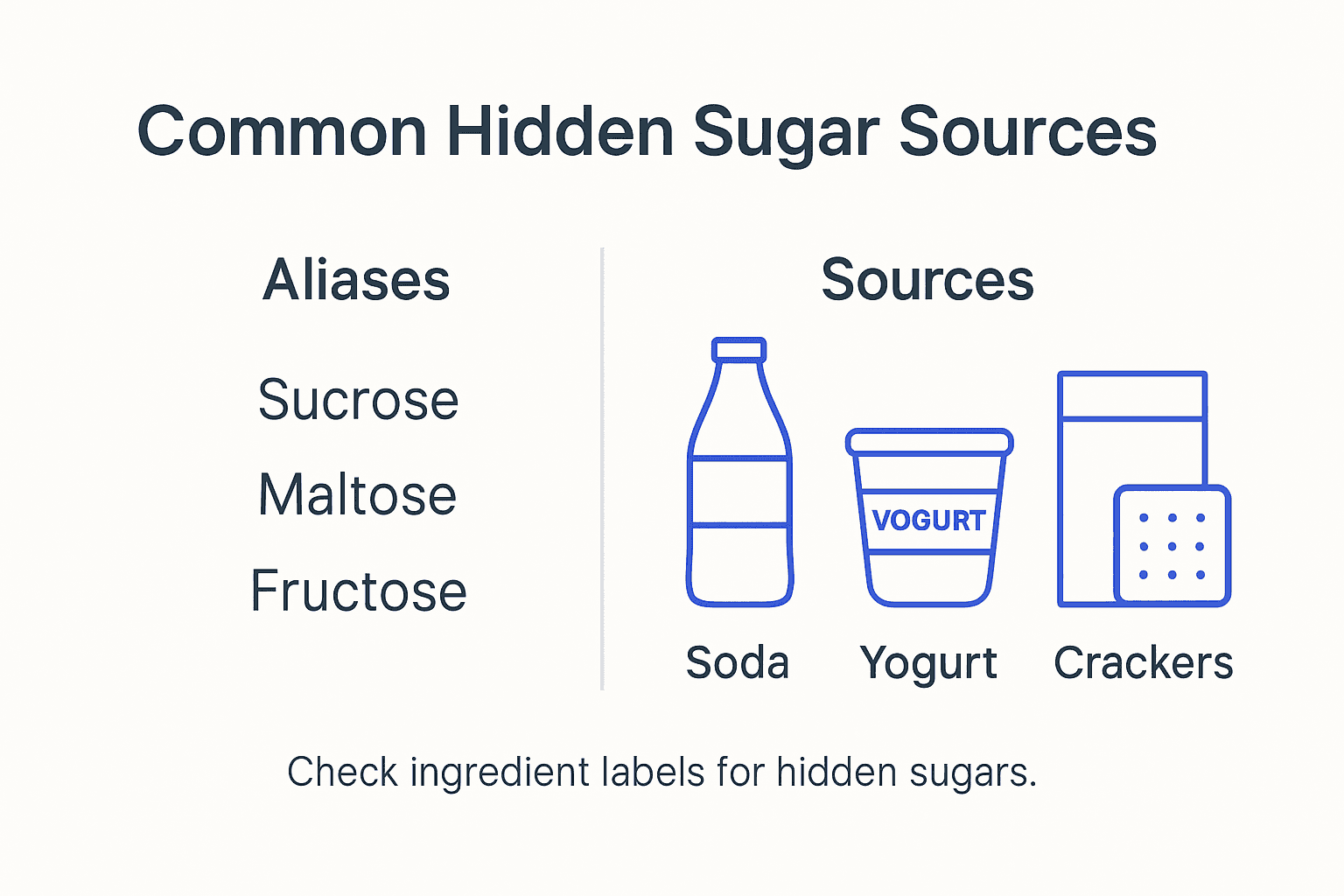
Here is a reference table of common hidden sugar names to help you spot them on ingredient labels:

Sugar Alias Common Food Sources Notable Property
Dextrose Baked goods, sodas Simple sugar, raises blood sugar
Maltose Cereals, processed bread Derived from starch
High-fructose syrup Soft drinks, sauces Often used as sweetener
Sucrose Candy, desserts Table sugar, quick energy spike
Agave nectar Granola bars, yogurts Perceived as natural, still high
Cane sugar Sweetened beverages Often used instead of sucrose

Infographic shows hidden sugar sources and aliases

Pro tip: Keep a food diary for one week and highlight every item containing hidden sugars to raise your awareness and make more informed dietary choices.

Step 2: Read and understand ingredient labels

Learning to decode ingredient labels is your secret weapon in battling hidden sugars and making healthier food choices.

This skill will empower you to identify added sugars that often masquerade under multiple names in processed foods.

Man reading food label in grocery aisle

The Nutrition Facts label now provides crucial information about sugar content.

Understanding added sugars requires carefully examining ingredient lists and recognizing common sugar aliases. Look for terms like high-fructose corn syrup, cane sugar, maltose, honey, words ending in ‘-ose,’ and ingredients containing ‘syrup.’

Pay special attention to the order of ingredients most processed foods list ingredients from most to least abundant so ingredients near the top represent larger quantities in the product.

Differentiate between naturally occurring sugars found in whole foods like fruits and dairy versus added sugars introduced during processing. Aim to limit added sugars while embracing natural sources of sweetness.

When scanning labels, remember that total sugars include both naturally occurring and added sugars the goal is to minimize unnecessary added sugars that provide empty calories without nutritional benefit.

Pro tip: Bring a small magnifying glass or use your smartphone’s zoom function to help read tiny ingredient labels more easily when shopping.

Step 3: Replace high-sugar foods with healthy alternatives

Transforming your diet starts with strategic replacements that satisfy your sweet tooth while supporting your health goals.

By making smart swaps, you can dramatically reduce hidden sugar intake without feeling deprived.

Simple sugar alternatives can significantly improve your nutritional profile and help you maintain steady energy levels. In baking, replace refined sugars with natural sweeteners like unsweetened applesauce, mashed bananas, or 100% fruit juice.

For beverages, swap sugar-sweetened drinks with sparkling water, herbal teas, or water infused with fresh fruits. When craving yogurt, choose plain varieties and add fresh fruits yourself instead of buying pre-sweetened versions.

Consider incorporating natural sweeteners like monk fruit or stevia as lower-calorie options that can help manage sugar cravings. Focus on whole foods that provide natural sweetness and nutritional value.

Your goal is not just eliminating sugar but replacing it with nutrient-dense alternatives that support overall wellness and help stabilize blood sugar levels.

Pro tip: Gradually introduce new alternatives to allow your taste buds to adjust and prevent feeling overwhelmed by sudden dietary changes.

Step 4: Monitor daily sugar intake consistently

Tracking your daily sugar consumption is the key to understanding and transforming your nutritional habits.

By developing a systematic approach to monitoring sugar intake, you can make informed decisions that support your health and weight management goals.

Consistent blood sugar monitoring helps manage dietary choices and overall wellness by providing real-time insights into your nutritional patterns. Start by creating a daily food journal that logs all your meals, snacks, and beverages.

Pay special attention to hidden sugar sources like condiments, processed foods, and seemingly healthy options such as flavored yogurts or granola bars. Calculate your total daily sugar intake and compare it against recommended guidelines.

Utilize technology and practical tracking methods to stay consistent.

Many smartphone apps can help you log food intake and calculate sugar consumption instantly. Consider using a simple spreadsheet or notebook if digital tracking feels overwhelming.

Remember that monitoring is not about perfection but about gaining awareness and making gradual, sustainable improvements to your diet. Focus on balanced meals rich in vegetables, fruits, whole grains, and lean proteins to naturally regulate your sugar intake.

This summary table compares practical methods for tracking sugar intake:

Tracking Method Convenience Level Accuracy Key Advantage
Smartphone app High Very accurate Automatic calculations
Handwritten journal Moderate User-dependent Offers detailed insight
Spreadsheet Moderate High Easy data visualization

Pro tip: Set a weekly review time to analyze your sugar intake patterns and celebrate small victories in your nutrition journey.

Step 5: Verify progress and adjust your approach

Successfully reducing sugar intake requires consistent evaluation and strategic adjustments.

Tracking your progress helps you understand your dietary patterns and make informed changes that support your long-term health goals.

Regular evaluation of sugar intake is essential for understanding and modifying nutritional habits and ensuring lasting success. Begin by comparing your current sugar consumption against recommended guidelines from nutrition experts.

Assess whether you are meeting your goals by reviewing your food journal and noting areas where hidden sugars persist. Look for patterns in your eating habits and identify specific triggers or situations that lead to higher sugar intake.

Be prepared to make gradual adjustments based on your observations. This might involve swapping out specific high-sugar items, exploring new low-sugar alternatives, or developing strategies to manage cravings more effectively.

Remember that progress is not linear and small consistent improvements matter more than perfection. Consider consulting a nutritionist or dietitian if you find yourself struggling to make meaningful changes or need personalized guidance in managing your sugar intake.

Pro tip: Create a monthly progress chart to visually track your sugar reduction and celebrate each milestone along your health journey.

Take Control of Hidden Sugars for Lasting Health Benefits

Hidden sugars can sabotage even the most determined efforts to eat healthy and lose weight safely.

If you recognize the challenge of identifying and reducing these sneaky added sugars you are not alone.

This article highlights the importance of decoding ingredient labels and making smart dietary swaps to avoid the harmful effects of poor nutrition and fluctuating blood sugar levels.

Your goal is to build lasting habits that support natural weight management and sustained energy.

https://leanandfit.info

Discover proven strategies and practical tips tailored to overcoming poor nutrition by exploring the Poor Nutrition – LeanAndFit section.

Embrace lifestyle changes with guidance from our Best Lean & Fit Methods – LeanAndFit resources that focus on natural, sustainable solutions.

Visit LeanAndFit.info now to empower yourself with the knowledge and tools that help you identify hidden sugars and improve your diet effectively. Start transforming your eating habits today for a healthier tomorrow!

Frequently Asked Questions

Q-1: Why do I feel like I’m not eating much sugar, yet my intake is still high?

A-1: That is because hidden sugars are masters of disguise. You may not be adding sugar to your tea or coffee, but it sneaks into packaged foods like sauces, breads, cereals, and even “healthy” snacks.

Many products labeled as low-fat or diet-friendly compensate by adding sugar for taste. So even when you think you’re eating clean, small amounts from multiple sources add up quickly.

The key is awareness—once you start reading labels and noticing ingredients, you’ll realize how common hidden sugars really are.

Q-2: What are some surprising foods that secretly contain a lot of sugar?

A-2: Some of the biggest culprits are foods you would not expect. Ketchup, salad dressings, flavored yogurt, granola bars, and even packaged soups can contain added sugars.

Fruit juices are another example—they may sound healthy, but they often have concentrated sugar without the fiber of whole fruits. Even brown bread or “multigrain” products sometimes contain added sugar to improve flavor.

It is not about avoiding these foods completely, but being mindful of how often you consume them.

Q-3: How can I spot hidden sugar on food labels without getting confused?

A-3: Start by looking beyond just the word “sugar.” Hidden sugars come under many names like corn syrup, fructose, dextrose, maltose, and cane juice. If you see multiple forms of sugar listed in the ingredients, that’s a red flag.

Also, check the “added sugars” section on the nutrition label if available. A simple trick is this—if sugar-related ingredients appear in the first few items, the product likely contains a significant amount.

Q-4: Why do “healthy” or “low-fat” products often contain more sugar?

A-4: When fat is removed from food, flavor is lost. To make these products taste better, manufacturers often add sugar. This is why low-fat yogurts, snacks, and desserts can sometimes have more sugar than their regular versions.

It is a bit misleading because people assume “low-fat” means healthier overall. In reality, balance is more important than simply cutting out one nutrient.

Q-5: Can cutting hidden sugars improve my energy levels naturally?

A-5: Yes, and many people notice this quickly. Hidden sugars can cause spikes and crashes in blood sugar levels, leading to sudden bursts of energy followed by fatigue.

When you reduce these sugars, your energy becomes more stable throughout the day. You may feel less sluggish and more focused, especially in the afternoon when energy dips are common.

Q-6: What’s a simple way to reduce hidden sugar without changing my entire diet overnight?

A-6: Start small by swapping just one or two items. For example, replace sugary drinks with water or unsweetened beverages. Choose plain yogurt instead of flavored ones, and add fresh fruit for natural sweetness.

Cooking more meals at home also helps because you control what goes into your food. Small changes like these are easier to maintain and can make a big difference over time.

Q-7: Why do I still crave sweets even after cutting down on sugar?

A-7: Sugar cravings don’t disappear instantly because your body gets used to that quick energy boost. It is a habit as much as it is a physical response.

Over time, as you reduce sugar intake, your taste buds adjust, and cravings become less intense. Including protein and fiber in your meals can also help keep you fuller and reduce the urge for sweets.

Q-8: Are natural sweeteners like honey or jaggery better alternatives?

A-8: They can be slightly better because they’re less processed and may contain trace nutrients. However, they are still forms of sugar and should be used in moderation.

It is easy to overconsume them thinking they’re completely healthy. The goal isn’t to replace one sugar with another, but to gradually reduce your overall dependence on sweetness.

Q-9: What mindset helps in avoiding hidden sugars naturally for the long term?

A-9: The most helpful mindset is awareness without restriction. Instead of completely banning sugar, focus on understanding where it comes from and making smarter choices.

When you feel in control rather than deprived, it becomes easier to stick with healthier habits. Over time, your preferences shift, and you naturally gravitate toward foods that support your well-being without needing strict rules.

Recommended
  • How to Reduce Sugar Naturally for Lasting Weight Loss – LeanAndFit
  • Sugar Addiction Solutions: Break Free for Lasting Weight Loss – LeanAndFit
  • How to Curb Sugar Cravings Naturally for Lasting Weight Loss – LeanAndFit
  • Sugar Addiction Causes: Complete Breakdown and Guide – LeanAndFit
  • Why Trust LeanAndFit.info?
  • For educational purposes only
madhukar yadav Author Profile
Madhukar Yadav

Madhukar Yadav is a published author of 11 books including the “Natural Cures” health series, available on Amazon and Goodreads. He is a health & wellness researcher writing evidence-based articles on weight loss and nutrition at LeanandFit.info.

📚 Goodreads | Amazon

  • Home
  • About Us
  • Contact Us
  • Privacy Policy
  • Affiliate Disclosure

Copyright © 2026 Leanandfit.info, ALL RIGHTS RESERVED.