Shifting from one diet to another can leave many American adults feeling emotionally off balance.
Studies show that up to 40 percent of American adults experience noticeable mood changes when altering their eating habits.
The powerful link between nutrition and mental well-being means your dinner plate may impact far more than your waistline.
This guide breaks down the science behind food’s influence on mood, offering clear, practical strategies for a happier, more stable emotional state.
Table of Contents
- How Food Shapes Emotional Well-Being
- The Gut-Brain Connection Explained
- Key Nutrients Impacting Mood
- Diet Patterns Linked to Mental Health
- Common Dietary Pitfalls and Mood Swings
How Food Shapes Emotional Well-Being?
| Point | Details |
|---|---|
| Diet Affects Mood | Dietary choices significantly influence emotional regulation and mental health. Certain nutrients can enhance mood stability and cognitive functions. |
| Gut-Brain Connection | The gut-brain axis plays a crucial role in linking digestive health to emotional well-being, with specific gut bacteria affecting mood through neurotransmitter production. |
| Mediterranean vs. Western Diet | The Mediterranean diet is associated with better mental health outcomes, while Western diets high in processed foods can increase depression risk. |
| Mindful Eating | Keeping a food and mood journal can help identify dietary triggers that negatively impact emotional stability, promoting more intentional food choices. |
How Food Shapes Emotional Well-Being?
Food represents far more than simple nutrition – it is a powerful psychological trigger that directly impacts our emotional landscape.
Scientists have discovered intricate connections between dietary choices and mood regulation, revealing how what we consume can dramatically influence our mental and emotional states.
Research demonstrates that our brain’s reward systems play a critical role in this complex interaction.
Neurobiological studies reveal significant differences in brain activation patterns between emotional eaters and non-emotional eaters, showing how psychological stress and food reward anticipation trigger specific neural responses.
These mechanisms explain why some individuals turn to food as a coping mechanism during emotional distress, essentially using nutrition as a form of emotional self-regulation.
The gut microbiome emerges as another fascinating factor in emotional well-being.
Specific dietary patterns can influence neurotransmitter production, directly affecting mood stability. Certain nutrients like omega-3 fatty acids, probiotics, and complex carbohydrates have been linked to improved emotional regulation, reduced anxiety, and enhanced cognitive function.
By understanding these biochemical pathways, individuals can make more intentional food choices that support mental health.
Pro tip: Focus on consuming a balanced diet rich in whole foods, lean proteins, and complex carbohydrates to help stabilize mood and support emotional resilience.
The Gut-Brain Connection Explained
The human body contains an extraordinary communication network known as the gut-brain axis, a complex bidirectional system that links our digestive system with our central nervous system.
This intricate pathway allows continuous dialogue between our gut microbiome and brain, influencing everything from mood regulation to cognitive function and emotional responses.

The gut-brain axis operates through neural, immune, and metabolic signaling pathways, revealing how profoundly our digestive system impacts mental health.
The vagus nerve serves as a critical communication highway, transmitting signals between the gut and brain, enabling rapid information exchange about nutritional status, inflammatory responses, and emotional states.
Specific gut bacteria produce neurotransmitters like serotonin and dopamine, directly influencing mood, stress responses, and psychological well-being.
Researchers have uncovered remarkable connections between gut microbiota composition and various neurological conditions. Disruptions in the gut-brain axis have been linked to disorders ranging from anxiety and depression to more complex neurological diseases.
The microbiome’s ability to modulate immune responses and neural pathways suggests that dietary interventions could potentially serve as therapeutic approaches for managing mental health conditions.
Pro tip: Incorporate probiotic-rich foods like yogurt, kefir, and fermented vegetables into your diet to support a healthy gut microbiome and potentially improve mood regulation.
Key Nutrients Impacting Mood
Nutrition plays a profound role in mental health, with specific nutrients demonstrating remarkable capabilities to influence emotional well-being.
Neurotransmitter production and brain function are directly linked to the quality and composition of our daily diet, making food choices critical for maintaining psychological balance.
Specific nutrients have been scientifically proven to modulate mood and cognitive function, particularly those with anti-inflammatory properties.
Omega-3 fatty acids, found in fish, chia seeds, and walnuts, are powerful mood stabilizers that support neural communication and reduce inflammation.
B vitamins, especially B12 and folate, play crucial roles in synthesizing neurotransmitters like serotonin and dopamine, which directly regulate emotional states and help manage depression and anxiety symptoms.
Complex carbohydrates, vitamins, and minerals also contribute significantly to emotional regulation. Magnesium, zinc, and vitamin D have been linked to reduced risk of mood disorders, with research indicating that deficiencies in these nutrients can exacerbate symptoms of depression.
Antioxidant-rich foods like berries, dark leafy greens, and dark chocolate help combat oxidative stress and support brain health, potentially mitigating the neurological impact of chronic inflammation.
Pro tip: Aim to create balanced meals incorporating a diverse range of nutrient-dense foods, focusing on whole grains, lean proteins, and colorful fruits and vegetables to support optimal mood and mental health.
Here’s a summary of how different nutrients influence mental and emotional health:
| Nutrient or Food Group | Main Impact on Mood | Example Sources |
|---|---|---|
| Omega-3 Fatty Acids | Reduces anxiety, stabilizes mood | Salmon, walnuts, chia seeds |
| B Vitamins | Supports neurotransmitter production | Leafy greens, eggs, legumes |
| Complex Carbohydrates | Promotes steady energy and serotonin | Oats, brown rice, sweet potatoes |
| Probiotics | Enhances gut-brain communication | Yogurt, kefir, sauerkraut |
| Antioxidant-Rich Produce | Protects brain from inflammation | Berries, spinach, dark chocolate |
| Zinc & Magnesium | Reduces depression risk | Pumpkin seeds, almonds, lentils |
Diet Patterns Linked to Mental Health
The relationship between diet and mental health is far more intricate than previously understood, with emerging research revealing how specific dietary patterns can profoundly impact psychological well-being.
Nutritional psychiatry has emerged as a critical field exploring the direct connections between food choices and mental health outcomes.
Different dietary patterns demonstrate significant correlations with mental health conditions, highlighting the complex interactions between nutrition and psychological functioning.
The Mediterranean diet stands out as a prime example, characterized by high intake of fruits, vegetables, whole grains, lean proteins, and healthy fats.
This dietary approach has been consistently associated with reduced risk of depression, improved cognitive function, and enhanced emotional resilience.
Conversely, Western dietary patterns marked by high consumption of processed foods, refined sugars, and saturated fats have been linked to increased inflammation and higher rates of mental health disorders.
Research indicates that chronic inflammation triggered by poor dietary choices can negatively impact brain chemistry, disrupting neurotransmitter production and potentially contributing to mood disorders.
The biochemical mechanisms underlying these connections involve complex interactions between diet, gut microbiome, and neural pathways, demonstrating how nutritional choices extend far beyond simple calorie intake.
Pro tip: Gradually transition to a more balanced diet by incorporating more whole foods, reducing processed items, and paying attention to how different foods impact your mood and energy levels.
Compare how the Mediterranean and Western diets affect mental health:
| Diet Pattern | Impact on Mental Health | Notable Foods Included |
|---|---|---|
| Mediterranean | Reduces depression risk, boosts resilience | Olive oil, fish, vegetables, legumes |
| Western | Increases mood swings, depression risk | Processed foods, sugary snacks, red meat |
Common Dietary Pitfalls and Mood Swings
Dietary choices can dramatically impact emotional stability, with certain nutritional patterns creating unexpected psychological turbulence.
Many individuals unknowingly sabotage their mental well-being through seemingly innocuous eating habits that trigger complex biochemical responses in the body.
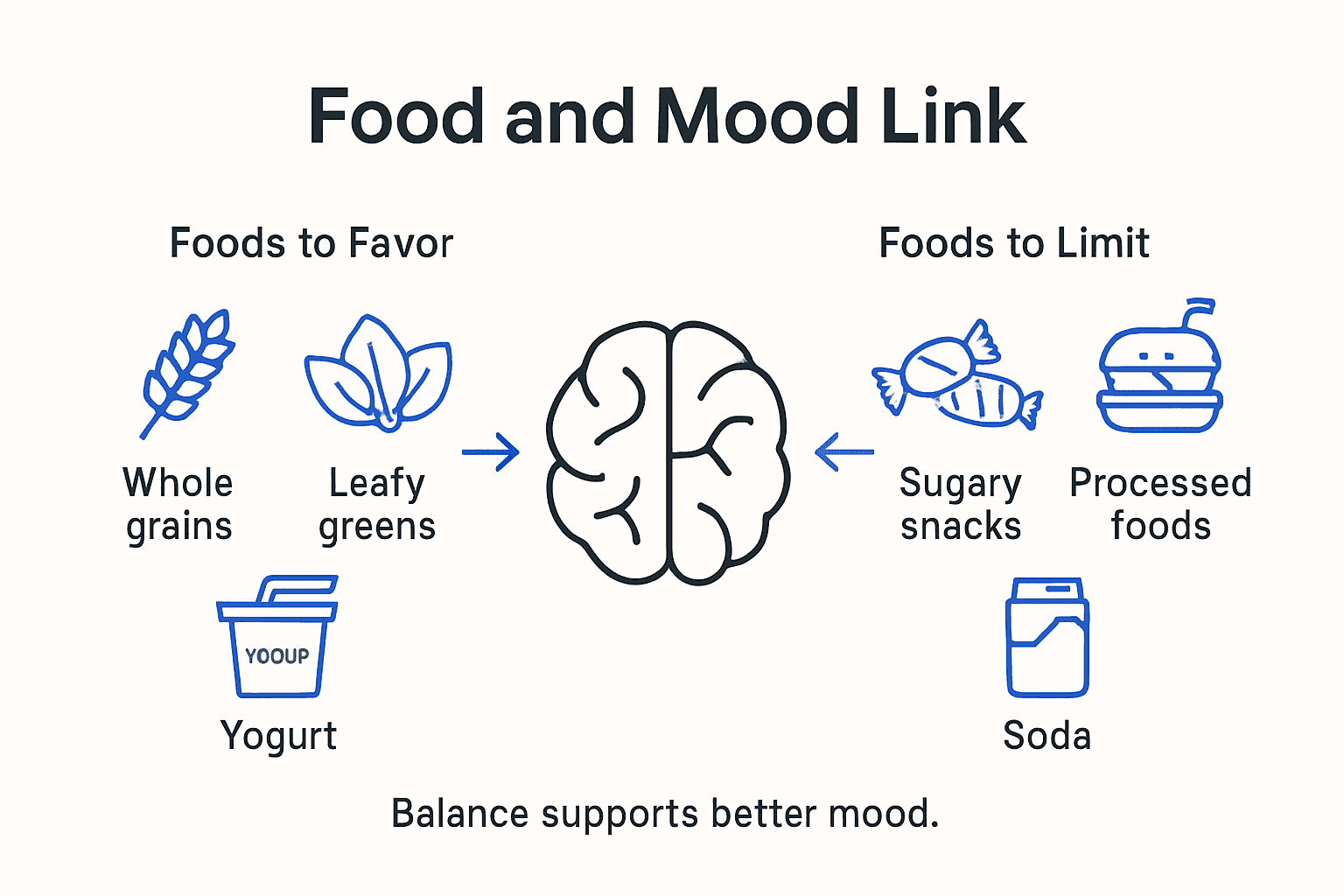
Ultra-processed foods significantly contribute to mood instability and increased depression risks, creating a dangerous cycle of emotional dysregulation.
Sugar-laden snacks and refined carbohydrates cause rapid blood glucose fluctuations that lead to sudden mood swings, energy crashes, and heightened irritability.
These nutritional triggers can create a neurochemical cascade that disrupts serotonin production and destabilizes emotional regulation mechanisms.
The neurological impact extends beyond immediate mood changes, with chronic consumption of processed foods potentially rewiring brain chemistry.
Artificial additives, preservatives, and excessive sugar can alter gut microbiome composition, interfering with neurotransmitter production and inflammatory response pathways.
This biochemical disruption not only affects short-term emotional states but may contribute to long-term mental health challenges, including increased vulnerability to anxiety and depressive disorders.
Pro tip: Keep a detailed food and mood journal to track how different foods impact your emotional state, helping you identify and eliminate specific dietary triggers that contribute to mood instability.
Take Control of Your Mood Through Smarter Food Choices
Struggling with mood swings or emotional eating can be challenging when food deeply affects how you feel.
This article explains how diet impacts emotional well-being and highlights the role of the gut-brain connection, key nutrients, and dietary patterns in stabilizing mood.
If emotional eating or depression risk feels like a barrier, learning more about these challenges is a crucial first step toward lasting change.
Discover practical strategies tailored to your needs at Emotional Eating – LeanAndFit. Explore expert insights into how nutrition influences mental health through our Depression Risk – LeanAndFit section.
Start your journey today at LeanAndFit to build a healthier relationship with food and improve your emotional resilience. The time to improve your mood and well-being through informed diet choices is now.
Frequently Asked Questions
Q-1: How does food impact mood?
A-1: Food impacts mood by influencing neurotransmitter production and brain function, which are directly linked to the quality of our diet. Certain nutrients can stabilize mood and improve emotional well-being.
Q-2: What are the best nutrients for improving mood?
A-2: Key nutrients for improving mood include omega-3 fatty acids, B vitamins, complex carbohydrates, probiotics, and antioxidants. Incorporating these nutrients can help stabilize mood and reduce anxiety.
Q-3: How can dietary patterns affect mental health?
A-3: Dietary patterns, such as the Mediterranean diet, have been linked to reduced rates of depression and improved emotional resilience, while Western diets high in processed foods can increase the risk of mood disorders.
Q-4: What are some common dietary pitfalls that can cause mood swings?
A-4: Common dietary pitfalls include consuming ultra-processed foods, sugary snacks, and refined carbohydrates, which can cause blood sugar fluctuations and disrupt emotional stability.
Recommended
- How Inflammation from Obesity Increases Depression Risk? – LeanAndFit
- 7 Emotional Triggers for Overeating and How to Stop Them – LeanAndFit
- How Obesity Contributes to Hormonal Imbalances Linked to Depression? – LeanAndFit
- How Stress Triggers Emotional Eating in Obese Individuals? – LeanAndFit
- Why Trust LeanAndFit.info?
- For educational purposes only