

Did you know that the average person gains about one pound every holiday season?
Celebrations often surround us with tempting dishes that can challenge even the strongest willpower.
By learning how to balance nutrient-rich foods, smart portion choices, and mindful swaps, you can savor festive favorites and still support your weight loss journey.
Small intentional changes can transform your holiday table into a place of both joy and progress.
Table of Contents
- Step 1: Plan Holiday Meals With Nutrient-Rich Options
- Step 2: Set Portion Guidelines For Festive Events
- Step 3: Choose Mindful Swaps For Traditional Dishes
- Step 4: Manage Temptations With Smart Strategies
- Step 5: Track Progress And Adjust Habits As Needed
Quick Summary
| Key Point | Explanation |
|---|---|
| 1. Plan nutrient-rich holiday meals | Focus on fruits, vegetables, whole grains, and lean proteins for balanced nutrition during festive meals. |
| 2. Control portions with smarter choices | Use smaller plates and the hand measurement technique to manage serving sizes effectively. |
| 3. Make mindful ingredient swaps | Substitute healthier ingredients to reduce calories while maintaining flavor in traditional dishes. |
| 4. Prepare for temptations ahead | Bring a healthy dish to gatherings to ensure you have nutritious meal options available. |
| 5. Track progress and adjust strategies | Monitor your intake and reflect on your habits to stay motivated and make necessary changes. |
Step 1: Plan Holiday Meals with Nutrient-Rich Options
Planning holiday meals that support weight loss requires strategic thinking about nutrient density and balanced nutrition. The goal is creating delicious festive dishes that nourish your body while helping you maintain your wellness goals.
According to the CDC, incorporating a variety of fruits, vegetables, whole grains, and lean proteins is essential for maintaining a balanced nutritional intake during holiday meals.
Start by reimagining traditional dishes with healthier ingredients. For instance, replace heavy cream-based sides with roasted vegetable medleys, swap white bread stuffing for quinoa or wild rice versions, and choose lean proteins like turkey breast or baked fish instead of fatty cuts.
The USDA recommends starting your day with a nutritious breakfast and strategically including fruits and vegetables throughout your holiday menu. This approach helps regulate hunger and ensures you receive essential nutrients.
Consider adding colorful vegetable platters as appetizers, incorporating roasted seasonal vegetables into main courses, and preparing fruit-based desserts that satisfy sweet cravings without excessive calories.
A smart strategy is creating a holiday meal plate with approximately 50% non starchy vegetables, 25% lean protein, and 25% whole grains. This proportion allows you to enjoy festive meals while supporting your weight loss objectives.
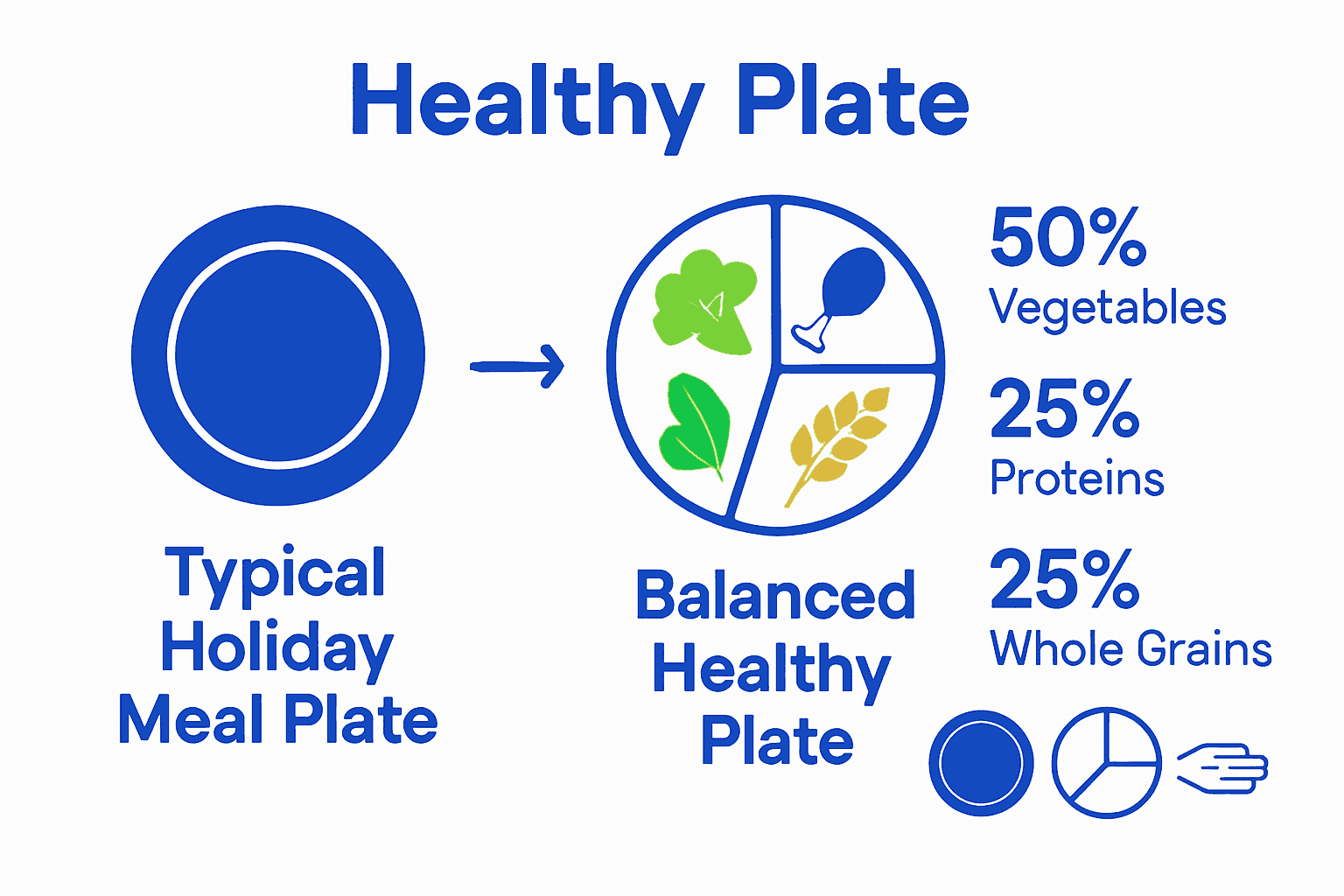 Remember that portion control and mindful eating remain key to successfully navigating holiday nutrition without feeling deprived.
Step 2: Set Portion Guidelines for Festive Events
Mastering portion control during holiday events is crucial for maintaining your weight loss goals. Understanding how to strategically manage your plate can make the difference between enjoying festive meals and derailing your nutrition plan.
According to the CDC, maintaining your usual meal times and planning carbohydrate intake in advance are key strategies for effectively managing portion sizes during holiday gatherings. Start by using smaller plates which naturally limit how much food you can serve yourself. This visual trick helps reduce overall calorie consumption without feeling deprived.
The CDC recommends filling at least half your plate with vegetables and selecting smaller portions of high calorie foods.
Consider using the hand measurement technique for portion control: your palm represents a protein serving, your fist indicates a vegetable portion, your cupped hand shows a carbohydrate serving, and your thumb represents fat servings.
This method provides a personalized and portable way to monitor intake without complicated measuring tools.
With portion control tips from our comprehensive guide, you can develop a sustainable approach to holiday eating that supports your weight loss journey. Remember that mindful eating is about balance not perfection. Enjoy your festive meals while staying committed to your health goals.
Step 3: Choose Mindful Swaps for Traditional Dishes
Transforming traditional holiday dishes into healthier versions is an art that allows you to enjoy festive meals without compromising your weight loss goals. Mindful ingredient swaps can dramatically reduce calories while maintaining delicious flavors.
According to the CDC, using low fat and low sodium ingredients while reducing cheese quantities can create healthier versions of classic holiday recipes.
For instance, replace full fat cream with Greek yogurt in mashed potatoes, swap butter with olive oil in vegetable roasting, and use lean ground turkey instead of beef in traditional casseroles. These simple substitutions can cut significant calories without sacrificing taste.
The USDA recommends exploring nutritious cooking methods and ingredient substitutions to enhance meal healthfulness. Consider mastering mindful eating practices that help you appreciate smaller portions and more nutrient dense ingredients.
Experiment with herbs and spices to add flavor without extra calories roast vegetables with rosemary and thyme instead of drowning them in butter, use citrus zest to brighten dishes, and try smoked paprika or cumin to create depth in your holiday cooking.
Remember that healthy swaps are about creating meals you genuinely enjoy not about deprivation.

Step 4: Manage Temptations with Smart Strategies
Navigating holiday food temptations requires strategic planning and mental preparation. Your ability to successfully manage potential dietary pitfalls can make a significant difference in maintaining your weight loss momentum during festive seasons.
According to the CDC, avoiding meal skipping is crucial to prevent overeating later. A smart approach is to bring a healthy dish to gatherings ensuring you have nutritious options available.
This strategy not only helps you control your intake but also demonstrates to others that healthy eating can be delicious. Consider preparing a colorful vegetable platter, a lean protein salad, or a fruit based dessert that allows you to participate in communal dining without compromising your nutrition goals.
The CDC recommends planning ahead for special occasions to maintain consistent healthy eating patterns. By understanding your role of hunger and fullness cues, you can develop a proactive approach to managing temptations.
Practice mindful eating techniques like eating slowly, using smaller plates, and checking in with your hunger levels before reaching for seconds. Remember that occasional indulgences are part of a balanced lifestyle so focus on overall consistency rather than absolute perfection.
Step 5: Track Progress and Adjust Habits as Needed
Monitoring your weight loss journey during the holiday season requires consistent attention and strategic self reflection. Understanding how to effectively track your progress can help you stay motivated and make necessary adjustments to achieve your health goals.
According to the CDC, maintaining a consistent eating pattern is crucial for effective weight management. Start by creating a simple tracking system that allows you to monitor your dietary intake and physical activity.
Consider using a digital journal or smartphone app to log meals, track weight fluctuations, and record your emotional relationship with food. This approach provides valuable insights into your eating patterns and helps identify potential areas for improvement.
The CDC emphasizes following a healthy eating plan that prioritizes fruits, vegetables, whole grains, and lean proteins. Learn how to track fitness progress consistently to maintain momentum and stay accountable.
Dont be discouraged by minor setbacks instead view them as opportunities for growth. Regularly review your progress every two weeks, celebrate small victories, and be willing to adjust your strategy. Remember that sustainable weight loss is a journey of continuous learning and self improvement.
Master Healthy Holiday Eating with Support from LeanAndFit
The challenge of maintaining weight loss during the holiday season can feel overwhelming with so many temptations and changes in routine.
This article highlights key obstacles like portion control, mindful swaps, and managing cravings — all crucial for lasting success.
If you want to keep enjoying festive meals without losing sight of your goals, embracing consistent habits and conscious eating is essential.
Take charge now by exploring proven strategies in our Consistency Hacks – LeanAndFit and deepen your awareness through Conscious Eating – LeanAndFit. Each step you take builds momentum toward sustainable health.
Start your journey at leanandfit.info and create holiday habits that empower your weight loss success. Your health transformation begins with simple, mindful actions today.
Frequently Asked Questions:
Healthy Holiday Eating Tips for Weight Loss Success ultimately come down to awareness, flexibility, and balance. You don’t need strict control or deprivation to stay on track.
Instead, small intentional choices—like mindful eating, managing portions, and maintaining simple daily habits—help you enjoy celebrations without guilt or setbacks. Holidays are meant to be experienced, not restricted.
When you focus on consistency over time rather than perfection in every meal, you create a sustainable approach that supports both enjoyment and long-term weight management success.
Q-1: Why do healthy eating plans collapse specifically during holiday seasons, even when motivation is strong?
A-1: Holidays change your environment more than your willpower.
You’re surrounded by richer foods, larger portions, social pressure, and irregular schedules.
Even disciplined people struggle because decisions shift from planning to reacting. Instead of eating with intention, you end up eating based on availability and celebration cues.
The key is not strict restriction but preparing flexible rules in advance—like choosing one indulgent plate instead of multiple rounds or balancing festive meals with lighter ones earlier in the day.
Q-2: Can you enjoy holiday food and still maintain weight loss progress without guilt?
A-2: Yes, and this is where balance matters more than perfection. Weight loss is influenced by overall patterns, not a single meal. If most of your week is structured, one or two festive meals won’t derail progress.
The real shift happens when you remove guilt and replace it with awareness.
Enjoy your food, slow down, and stop when satisfied instead of overly full. This mindset helps you stay consistent without feeling deprived during celebrations.
Q-3: Why does holiday overeating feel automatic even when you’re not physically hungry?
A-3: Holiday overeating is often triggered by emotion and environment, not hunger. Smells, conversations, and visual cues like buffets activate eating behavior.
Your brain associates holidays with reward, so food becomes part of celebration rather than nutrition. This can override natural fullness signals.
The solution isn’t avoidance but awareness—pausing before eating and asking whether you’re hungry or just participating socially.
That small pause can significantly reduce unconscious overeating.
Q-4: How can you handle constant food availability during holidays without feeling restricted?
A-4: Instead of thinking in terms of restriction, think in terms of selection. You don’t need to say “no” to everything—you just choose what truly matters to you.
For example, if dessert is your favorite part of the holiday, enjoy that and be more mindful with heavier starters. When you give yourself permission strategically, you reduce the urge to overindulge everything.
This creates a sense of control without feeling deprived or isolated from celebrations.
Q-5: Why do people tend to eat faster during holiday gatherings, and how does it affect weight loss?
A-5: Conversations, excitement, and large group settings often make eating feel secondary, so people eat faster without noticing. The problem is that your body needs time—about 15–20 minutes—to register fullness.
Fast eating leads to overconsumption before satiety signals kick in.
Slowing down, even slightly, can dramatically reduce excess intake. Simple actions like putting your fork down between bites or drinking water during meals can help regulate pace naturally.
Q-6: Can adjusting meal timing during holidays really help prevent weight gain?
A-6: Yes, timing plays a subtle but important role. Eating a balanced, protein-rich meal before attending gatherings can reduce hunger-driven overeating later.
When you arrive already satisfied, you make more conscious food choices instead of impulsive ones. Skipping meals to “save calories” often backfires because it increases hunger and lowers control.
A steady eating pattern throughout the day is far more effective than compensation strategies.
Q-7: Why do holiday drinks often contribute more to weight gain than food itself?
A-7: Liquid calories are easier to overlook because they don’t create the same fullness as solid food. Sugary drinks, festive cocktails, and sweetened beverages add calories quickly without satisfying hunger.
This leads to consuming more food on top of drinks.
Choosing water between meals or limiting sugary beverages helps reduce hidden calorie intake. It is not about avoiding drinks completely but being aware of how quickly they add up during celebrations.
Q-8: How can you stay consistent with healthy habits when your routine completely changes during holidays?
A-8: The goal isn’t to maintain a perfect routine but to keep core habits intact. Even small actions—like a 10-minute walk, drinking enough water, or eating one balanced meal—help maintain stability.
These anchor habits prevent total disruption. Instead of trying to replicate your normal schedule, focus on minimum effective routines that keep you grounded.
Consistency in small actions matters more than perfection in a disrupted environment.
Q-9: What role does mindset play in avoiding holiday weight gain compared to strict dieting?
A-9: Mindset plays a much bigger role than strict rules. When you approach holidays with an all-or-nothing mentality, one indulgence can lead to complete loss of control.
But a flexible mindset allows you to enjoy food while staying aware of balance. You stop seeing food as “good” or “bad” and start seeing it as part of experience and nutrition.
This reduces stress and makes long-term control easier.
Q-10: What is the simplest long-term strategy to enjoy holidays without undoing weight loss progress?
A-10: The simplest strategy is balance across time, not perfection in moments. One festive meal doesn’t matter—what matters is what you do before and after it.
If you stay active, hydrate well, and return to normal eating habits the next day, progress remains intact.
The key is not letting celebrations turn into extended patterns of overeating. Think of holidays as moments within a larger lifestyle, not exceptions that reset your progress.
Recommended
- 25 Best Healthy Snacks for Weight Loss Success – LeanAndFit
- Top Healthy Weight Loss Tips for Lasting Results – LeanAndFit
- Weekly Meal Planning Tips for Weight Loss Success – LeanAndFit
- 10 Easy Meal Prep Ideas for Weight Loss Success – LeanAndFit
- Why Trust LeanAndFit.info?
- For educational purposes only