
Most American adults have heard of low-carb diets, but few are familiar with the science of fat adaptation.
The process of adjusting to a reduced-carbohydrate diet is more involved than most people realize; it fundamentally impacts energy production, and, by extension, athletic performance and endurance.
It is also an important consideration for people on intermittent fasts, as a significant percentage of Americans are now trying some form of carb restricted nutrition.
Understanding the true nature of the physiological process known as fat adaptation is critical to distinguishing between myths and realities and making smart decisions about health and nutrition.
Table of Contents
- Fat Adaptation Defined and Common Misconceptions
- How the Body Transitions to Fat Adaptation
- Key Signs and Benefits of Being Fat Adapted
- Fat Adaptation Diets and Practical Approaches
- Potential Risks and Common Mistakes to Avoid
Key Takeaways
| Point | Details |
|---|---|
| Fat Adaptation Process | Successful fat adaptation requires careful dietary planning to shift the body from using carbohydrates to burning fat for energy. |
| Individual Variability | Responses to fat adaptation are highly individual; genetics, metabolic health, and dietary composition play crucial roles. |
| Potential Risks | Abruptly cutting carbohydrates can lead to negative effects; a gradual, informed approach is essential for success. |
| Professional Guidance | Consulting with a registered dietitian or metabolic specialist is recommended to tailor the fat adaptation process to individual needs. |
Fat Adaptation Defined and Common Misconceptions
Fat adaptation is a process wherein your body converts from burning carbohydrates as its primary energy source to fat-adaptation. This change can have a very significant impact on your body’s metabolism.
Research exploring low-carbohydrate dietary approaches indicates that while fat adaptation involves significant metabolic changes, its impact on performance varies.
Ultimately fat adaptation is a process of making some dietary changes that allow you to drastically limit carb consumption and increase your body’s ability to break down fat.
It is a fundamentally different approach to the standard way of dealing with weight loss, which is based on calorie reduction.
However, it is not necessarily easier, as there is a trick to it.
Nutrition experts caution that fat adaptation can potentially lead to decreased training performance if not carefully managed.
Common misconceptions about fat adaptation are often related to its perceived simplicity and universality. Many people believe that simply reducing their carbohydrate intake will automatically prompt their bodies to enter the fat-burning state.
The truth is that it requires carefully selected ratios of ingested macronutrients, dietary discipline is considered to be highly individual, and it might involve the temporary adjustment of performance.
Therefore, it is vital to approach fat adaptation with caution and conduct thorough research on the unique characteristics of one’s metabolism to avoid detrimental consequences for the body.
Although embracing the advantages of fat-burning can be rewarding, this approach is not as straightforward as many proponents claim.
Remember that a sufficient comprehension of the ongoing physiological processes and an individualistic approach to the topic are the most crucial elements of successfully adapting to fat-burning.
Pro Tip: If you are considering making the switch to the fat-burning mode, contact a qualified dietitian or a medical professional specializing in human metabolism to receive professional advice and conduct a thorough examination of your current health indicators.
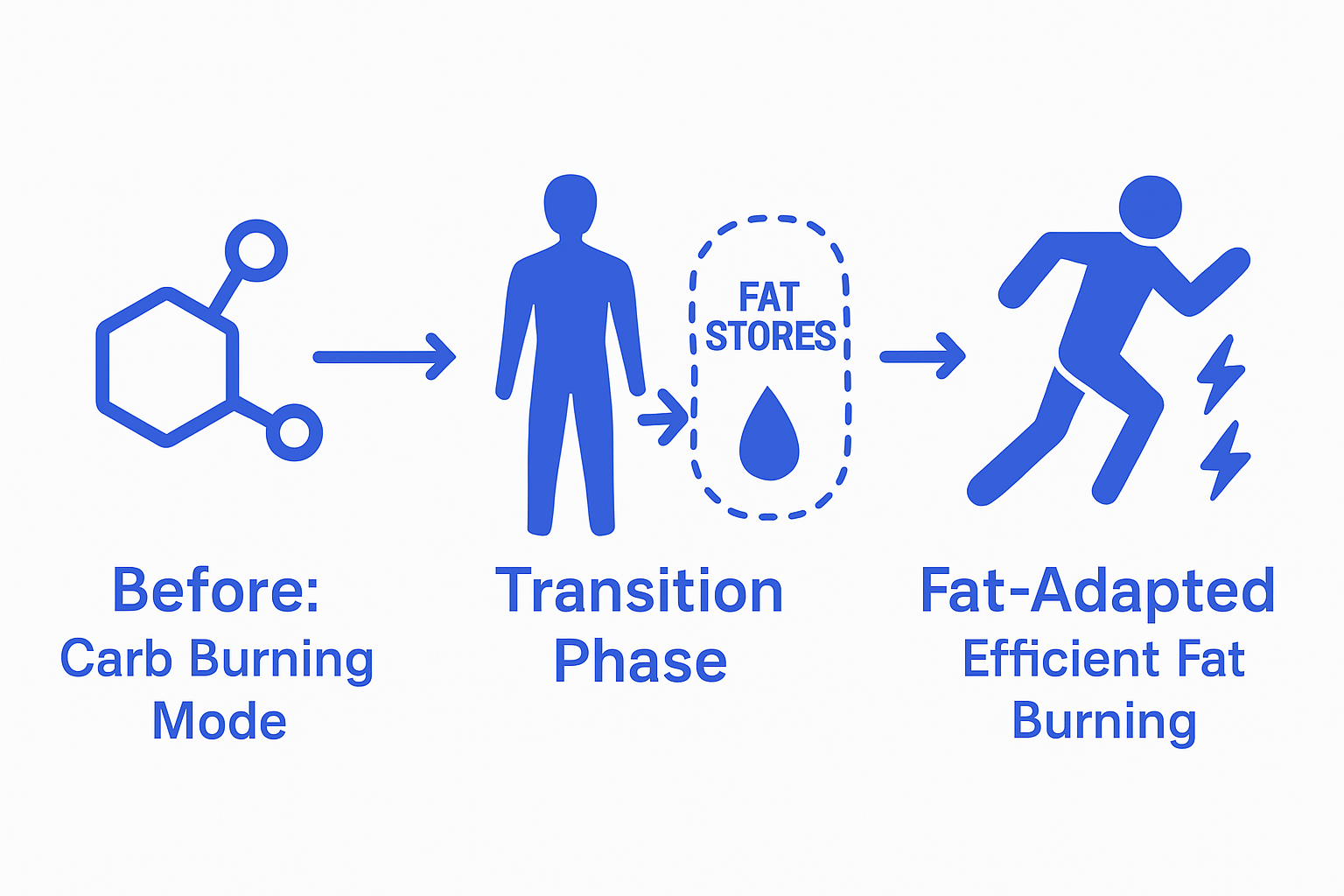
How the Body Transitions to Fat Adaptation?
The transition to fat adaptation is a complex metabolic process that fundamentally rewires how the human body generates and utilizes energy.
Metabolic adaptations during nutritional ketosis demonstrate significant changes in fat oxidation mechanisms, revealing a sophisticated biological transformation that occurs when carbohydrate intake is dramatically reduced.

Initially, the body goes through a stressful adaptation process during which the body is depleted of glucose in favor of fat.
This process includes several key physiological changes, such as the shift in the enzymatic machinery in mitochondria specific for breaking down fatty acids, increased cellular sensitivity to insulin, and accelerated production of ketones by the liver.
Research on endurance performance suggests that this adaptation process can be nuanced, with short-term dietary changes potentially impacting exercise capacity before metabolic efficiency is achieved.
The process of adapting to fat burning requires several vital steps.
They are as follows:
- Reducing carbohydrates to initiate the process of fat consumption
- The change in enzymes in mitochondria
- The adjustment of the hormone system
- The production of ketones by the liver
It is essential to understand that the process of fat adaptation is not quick. One should not expect immediate results after changing the diet and increasing physical activity. The body needs time to convert carbohydrate-based fuel to fat.
In addition, everyone’s metabolism adapts at a different pace. People should consider their weight, current metabolic state, and activity level when going on a low-carb diet. To achieve the best results, one should track the progress and pay attention to how their body reacts to the new stage of fat burning.
Key Signs and Benefits of Being Fat Adapted
Recognizing when your body has successfully transitioned to fat adaptation involves understanding subtle yet significant metabolic changes.
Research examining fat adaptation in well-trained athletes reveals complex physiological shifts, indicating that becoming fat-adapted is more nuanced than simply changing dietary macronutrients.
The signs that your body has successfully transitioned to burning fat for fuel go beyond just losing weight. It means that you are much more efficient at utilizing fats, your mood is more stable, and you generally feel better throughout the day.
Your body will begin to crave fewer carbohydrates since it will no longer require them to generate energy. You will experience fluctuations in your blood sugar levels throughout the day
However, it will not be as severe as when you are on a high-carb diet
You will also be able to exercise for extended periods without feeling tired.
The most significant advantages of becoming fat-adapted are:
- Increased metabolic efficiency
- Lower blood sugar levels
- Better insulin sensitivity
- Weight loss maintenance
- And improved mood along with reduced brain fog
Numerous research studies have demonstrated that while the consumption of fat by the body increases during the adaptation process, the rates between individuals vary.
When it comes to fat adaptation, athletes should understand that it is a highly individual process that necessitates a certain degree of trial and error.
Your metabolism will most likely change for the better, but it will not happen quickly enough for you to see a considerable difference after a few days of a low-carb, high-fat diet.
Fat Adaptation Diets and Practical Approaches
Unlike a simple reduction of calories, fat adaptation diets need a careful nutritional planning.
The discussion of nutritional mechanisms involved in the energy homeostasis and the evidence from studies about low-carbohydrate, high-fat dietary approaches demonstrate that there are multiple factors associated with the success of such dietary shifts.
The most effective fat adaptation diets usually follow a particular approach, which is based on significantly reducing the amount of carbohydrates in the body and increasing healthy fats.
That is why you need to switch from simple high-carb food to quality products and choose low-carb, but healthy meals. Such a diet requires careful selection of the right products for weight loss to maintain an optimal balance of beneficial elements.
In some cases, the most relevant methods for the process of adapting to a high protein and fat diet may be used: fat adaptation, carbohydrate restriction, and protein sparing.
The most common option for getting into the habituation phase for a high-protein and high-fat diet is following these principles:
• A standard ratio of macronutrients for a keto adaptation diet should be 70-75% fat, 20-25% protein, 5-10% carbohydrates;
• Pay attention to which products contribute to the best fat adaptation in the body;
• Fat adaptation eating schedule and meal timing;
• Adequate water intake during the period of adaptation to a high-fat and high-protein diet;
• Electrolyte supplementation when needed.
It is also significant to conduct long-term trials for the process of adaptation to a high-protein and high-fat diet, since people’s bodies respond differently to changes in the diet.
It is vital to remember that you need to be patient and control your body throughout the process.
Pro tip: If you want to maximize your chances for success while you are adjusting to a high-protein and high-fat diet, you should consult a dietician or a professional nutritionist who will help you create an individual plan for your body and current needs.
Potential Risks and Common Mistakes to Avoid
Fat adaptation is not a foolproof solution; hence, it is important to know its pitfalls.
Nutritionists caution that becoming fat adapted is a complex metabolic process that, if not done right, can have adverse effects on the body; thus, it is a slippery slope. One of the pitfalls of fat adaptation is that it is not intuitive.
Most people assume that the best way to get fat-adapted is to cut carbs; however, they do not consider the complexities involved in the process. As a result, they can experience fatigue and loss of performance, poor nutrient absorption, and hormonal problems.
Common mistakes that may occur during the adaptation to fat-based nutrition:
- Protein and calorie deficiency due to the lack of diversity in the diet;
- Inadequate electrolyte intake;
- Consumption of inappropriate fats in insufficient amounts;
- Failure to consider individual characteristics and needs;
- Unsafe expectations about the effect on the body.
The process of adapting to a fatty diet is complex enough and requires a careful, individual approach.
Even though it brings many positive changes to the body, it is not something you can rush. Besides, there are certain challenges and pitfalls that can spoil the best-laid plans and slow down your progress.
Pro Tip: To avoid them, collect as much useful information as possible and, whenever possible, rely on the help and advice of your doctor.
Embrace Fat Adaptation for Lasting Weight Loss Success
Finding yourself struggling with the process of transitioning your body to use fat as the primary fuel source is not a pleasant experience.
The article below discusses the difficulties of maintaining the proper ratio of macronutrients and overcoming the temporary decrease in performance that the body experiences while being in ketosis.
Consider using the natural methods of intermittent fasting and gut modulation as a way of promoting fat adaptation and improving your well-being while being in ketosis.
To educate yourself on the topic of transitioning your body to burning fat for fuel and learn more about methods of improving your health, you may want to pay a closer attention to the resources provided on the site of LeanAndFit.
You will find there all of the necessary information about transitioning your body to fat-burning mode and the ways of improving your well-being on your personal journey towards the goal of losing weight while being in ketosis.
Frequently Asked Questions:
Q-1: What does the process of fat adaptation feel like?
A-1: Fat adaptation can feel a bit different than many expect.
They tend to experience a sense of steadiness and more regular energy – as compared to spikes and drops from the typical diet rich in carbohydrates.
Hunger pangs disappear, the urge to eat frequently decreases, the ability to engage in exercise is enhanced, and cravings subside.
It is not an euphoric state, but more a general sense of improved wellbeing and control over one’s eating patterns.
Q-2: Why do some people experience negative symptoms before they start to feel better?
A-2: Because you are forcing your body to change fuel source from mostly carbohydrates to fat, it must undergo a transition period.
This can be uncomfortable as your body readjusts to the new type of nutrition and gets rid of all the excess fluids and salt.
You experience tiredness, headaches, and irritability due to fatigue – this is the infamous keto flu and it should pass within a week or two of consistent fat-adaptation.
Make sure you stay well-hydrated and get enough salts to ease the discomfort.
Q-3: Can it help to reduce emotional eating?
A-3: It can certainly help to reduce it, although it is not necessarily a direct trigger.
If your mood is more stable throughout the day due to more even blood sugar levels, there is less likelihood that you will resort to emotional eating.
It is still important to address the root causes of emotional eating, but having more control over your body and being less anxious around food can be a major factor in reducing it.
Q-4: How long does it take to become fat-adapted?
A-4: It depends on the individual, but the majority begin to see results within two to four weeks.
Overall, it takes around the same time period to become fully fat-adapted.
It is also very important to keep trying even after you feel results, because otherwise you will never reach true fat adaptation.
Your body needs time to adjust to the new way of eating and to learn how to burn fat for fuel, hence why it is so important to give yourself time and not rush the process.
Q-5: Is it possible to become fat-adapted without going on a very-low-carb or ketogenic diet?
A-5: While it is easier to get into ketosis on a very-low-carb or ketogenic diet, it is not a necessity.
People who follow a mostly low-carb diet without restricting themselves very severely can eventually become fat-adapted as well.
The primary reason for following a ketogenic diet or any very-low-carb diet for that matter, is to get into ketosis as fast as possible. However, if the goal is to simply become fat-adapted, it is best to go slow and easy on yourself in terms of carb restrictions.
It is all about finding a personal balance that lets you lose weight while still feeling energetic and well-fed throughout the day.
Q-6: Why does working out feel different when being fat-adapted?
A-6: When being fat-adapted, the body burns primarily fat for energy.
Fat is a more complex molecule than glucose, so the body requires more energy to break it down and use it for fuel. The advantage that fat offers is that there is a seemingly endless supply of it in the body in the form of stored fat.
This means that the person has much more energy available to them when doing medium-to-long duration exercises such as walking, hiking, distance running, etc. It is not felt quite the same way as burning through glucose would be, but the energy is more consistent and longer-lasting.
Q-7: Can this type of diet help a person to effectively lose weight and keep it off?
A-7: Yes, because it helps a person to stay consistent.
As has already been stated, the main cause of failed low-carb or ketogenic diets is that people do not stay on them for long enough.
With fat adaptation, however, a person will feel much more satisfied with their food choices and will be much more likely to keep up the healthy eating patterns.
They will also find it much easier to maintain ketosis and therefore keep losing weight or at least not regain any lost weight.
Recommended
- Top Healthy Weight Loss Tips for Lasting Results – LeanAndFit
- Understanding Fat Loss: The Science Behind Shedding Pounds – LeanAndFit
- What Is a Healthy Weight Loss Rate? Facts You Need – LeanAndFit
- Understanding Building Muscle for Fat Loss – LeanAndFit
- Beard Hair Loss: Causes, Tracking, and Solutions 2025 | MyHair
- Why Trust LeanAndFit.info?
- For educational purposes only