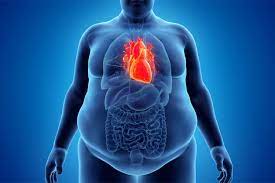

The rates of adult obesity in the United States have reached alarming levels. Over 42 percent of the population meets the medical definitions for obesity.
This global epidemic is not only connected to cosmetic and self-esteem issues but also has a damaging effect on the individual’s overall well-being and lifestyle. The effects of obesity on health are long lasting.
Therefore, understanding the criteria and the medical definitions, as well as the influence on the most frequent diseases, is essential to make the right choices in terms of health and lifestyle.
Table of Contents
- Defining Obesity and Its Medical Criteria
- Major Chronic Diseases Linked to Obesity
- Metabolic and Hormonal Impacts of Obesity
- Mental and Social Consequences of Obesity
- Prevention and Management Strategies for Obesity
Key Takeaways
| Point | Details |
|---|---|
| Obesity Definition | Obesity is defined as excessive body fat that affects health, and recent criteria now include waist circumference and body fat distribution for a comprehensive assessment. |
| Chronic Disease Risks | Obesity is a major risk factor for diseases like cardiovascular issues, Type 2 diabetes, and certain cancers, necessitating proactive intervention strategies. |
| Metabolic Impacts | Obesity leads to hormonal and metabolic dysregulation, increasing the risk of chronic diseases and creating challenges in weight management. |
| Psychological Effects | The social stigma of obesity can lead to mental health issues, including depression and anxiety, underscoring the need for supportive interventions. |
Defining Obesity and Its Medical Criteria
Body mass is complicated, and it goes beyond typical weight gain. This medical condition is considered excessive weight, and it considerably affects a human’s health.
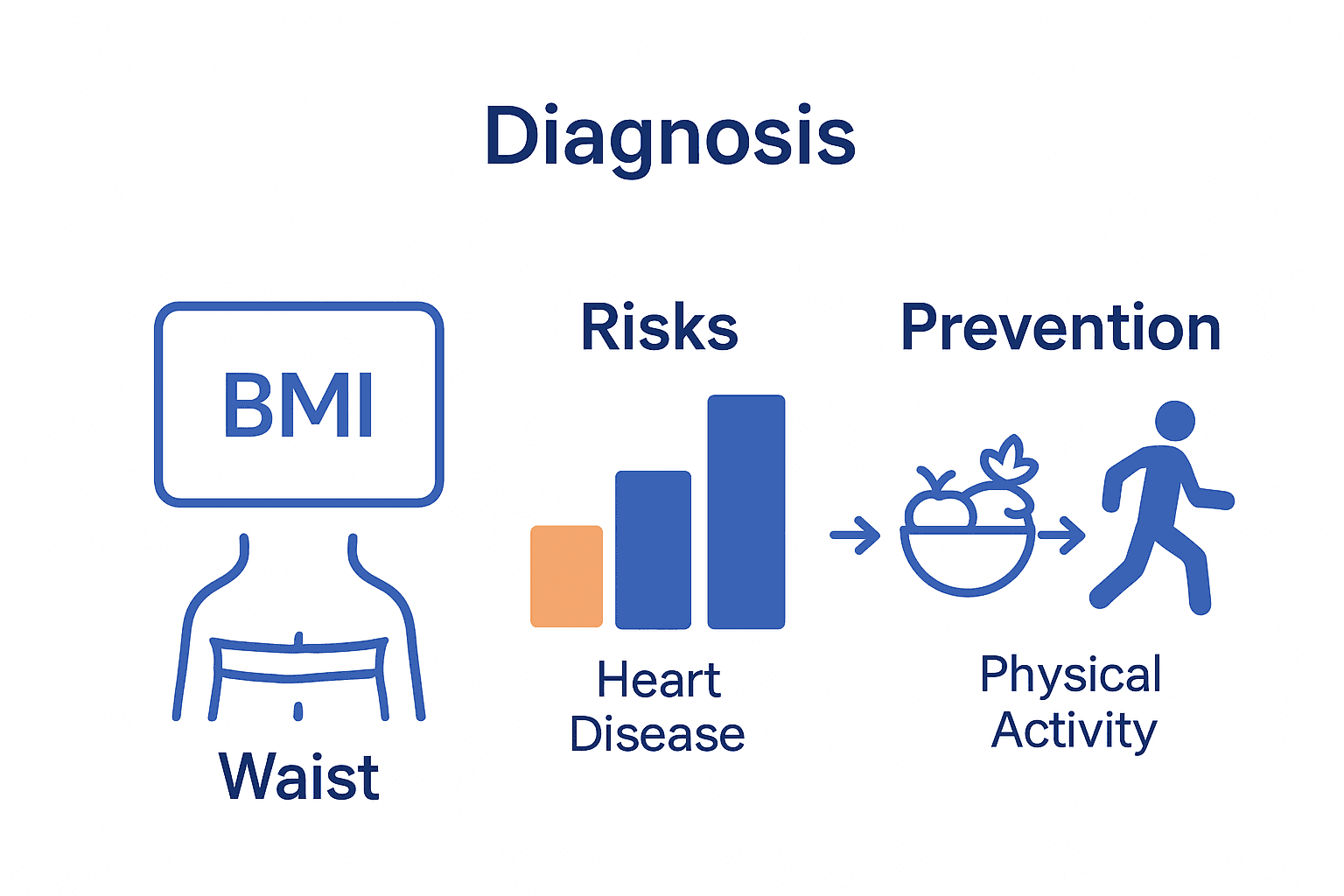
The most common way to define it is to measure the body mass index, or BMI, which is a person’s height and weight. However, there is a new way to determine obesity and address some details that are missing when using the BMI.
Namely, according to the Lancet Commission on Obesity, the diagnostic criteria for clinical obesity now include body mass index and waist circumference. This way, waist measurement is taken into consideration, which provides clinicians with a more precise indication of people’s health risks.
In particular, the researchers found that using this updated definition of obesity allows clinicians to spot those who are excessively weighted and at higher metabolic risk more accurately.
Indeed, the latest data prove this statement as researchers at Mass General Brigham found a substantially higher prevalence of obesity under the new set of diagnostic criteria. The new definition covers such aspects as waist circumference, body fat levels, and the distribution of body fat.
Also, it highlights a person’s metabolic health status.
Therefore, it is evident that updated diagnostic criteria for obesity are highly essential and very informative for humans.
Major Chronic Diseases Linked to Obesity
Obesity is a significant threat because it may lead to many diseases that considerably deteriorate health and quality of life.
This phenomenon is considered as one of the national health priorities due to its strong association with the increased incidence of many severe pathologies.
Researchers at the National Center for Biotechnology Information highlight obesity as a vital factor in the development of numerous ailments, which underline the necessity of its active prevention and control.
Among the different negative consequences of obesity, cardiovascular diseases are regarded as the most dangerous ones.
The Houston Methodist Journal researchers indicate that obesity may lead to dramatic alterations in biochemical and metabolic processes in the body that are especially dangerous for the heart and blood vessels.
The accumulation of excess fat burdens the circulatory system, provoking the development of atherosclerosis, arterial hypertension, and other cardiovascular diseases.
Moreover, obesity is frequently a causal factor for many chronic pathologies, such as:
- Diabetes mellitus
- Various cancers
- Metabolic syndrome
- Respiratory diseases
- Reproductive system disorders
In addition, obesity is often associated with severe chronic conditions that considerably worsen the quality of life and reduce life expectancy.
 Understanding these risks underscores the importance of proactive lifestyle interventions and comprehensive medical approaches to addressing obesity and its potential long-term health consequences.
Metabolic and Hormonal Impacts of Obesity
Metabolic dysregulation is a number of vital processes in the body that get disrupted due to obesity.
According to National Center of Biotechnology Information, obesity can impact genetic, neurologic, metabolic, and behavioral functions and result in a range of metabolic and hormonal difficulties and dysregulation.
Houston Methodist Journal reports that obesity can cause a variety of metabolic and hormonal irregularities. A number of significant endocrine mechanisms are involved in the development and progression of obesity.
The key metabolic and hormonal irregularities associated with obesity are as follows:
- Insulin resistance
- Altered levels of adipokines
- Hormonal stress and increased levels of inflammation
- Hormonal imbalance-regulated feeding and body weight mechanisms
- Cortisol dysregulation
The complexity of the interactions between the different metabolic and hormonal irregularities linked to obesity can have extensive consequences. The increased fat mass is connected to the secretion of hormones and pro-inflammatory adipokines, which in turn can disrupt the metabolic and endocrine functions in the body.
This can lead to a progressive cycle of metabolic disorders that are hard to manage, particularly in individuals with obesity.
Mental and Social Consequences of Obesity
Social stigma associated with obesity is a severe problem that may have adverse effects on the health status of women.
According to the Houston Methodist Journal, obesity is often associated with “psychosocial dysfunction,” which includes depression and social discrimination. These are some of the most common complications that overweight people tend to experience in their daily lives.
Mass General Brigham researchers explain that the shift in the perception of obesity may have a significant effect on psychological wellbeing. Since the understanding of overweight and obese now encompasses a broader spectrum of diseases, the stigma experienced by affected people may further evolve and become more severe.
The most dangerous mental and social effects of obesity are:
- Increased risk of depression;
- Higher chances of experiencing social anxiety;
- Development of negative attitude towards oneself;
- Being discriminated against at the workplace;
- Potential social isolation.
Severe psychological stress due to stigma is particularly dangerous since it may trigger a range of negative consequences. As a result, people with obesity may struggle with additional health issues alongside the physical complications of being overweight.
Prevention and Management Strategies for Obesity
Comprehensive obesity management deals with the range of factors that contribute to overweight issues.
National Center for Biotechnology Information Journal published relevant studies, proving the necessity of implementing a profound treatment strategy on each patient basis.
Houston Methodist Journal professionals highlight the importance of addressing the issue from several sides using a combination of methods.
The general understanding of effective obesity management includes:
- Altering one’s diet
- Appropriate sport activities
- Cognitive and behavior therapies
- Medical nutrition and treatments
- Surgery options if conservative methods fail
Therefore, it may be concluded that treating overweight or obesity is a complex process, which requires a close examination of the individual’s case and implementing a thorough strategy, addressing all the factors in question.
Take Control of Your Health by Understanding Obesity and Its Risks
Obesity can affect many areas of your life.
In this article, the author discusses the risks associated with obesity, such as metabolic and hormonal imbalances, increased risk of cardiovascular diseases, and problems related to insulin resistance.
If you have difficulties with weight loss and understanding the mechanisms of action associated with obesity, this review will be of help to you.
You will also find on the website of this company practical information about how to get rid of obesity with natural methods, useful dietary recommendations, and other valuable things for you.
Do not let obesity provoke pathological changes in your body – act before it is too late.
By visiting this page, you will learn how to take care of your health and vital functions.
So that you feel better and more confident in your daily life – just visit the LeanAndFit website and take action now!
Frequently Asked Questions:
Understanding the effects of obesity on health extends beyond weighing on a scale It is a comprehensive process that affects almost all human activities.
From energy levels and bodybuilding to heart conditions and psychological wellbeing, obesity has a far-reaching impact. The good thing is that it is never too late to make a difference in your health.
Even if you have been obese for a relatively long time, improving your eating habits and leading a healthier lifestyle will undoubtedly have a significant positive effect on your physical and emotional wellbeing.
Q-1: Obesity progresses insidiously and exerts adverse effects on almost all body functions, hence why, if it develops slowly, are some of its effects surprising?
A-1: Your body is an amazingly resilient entity capable of withstanding enormous stress.
When you gain weight, several physiological processes described above occur to maintain homeostasis for as long as possible.
As a result, even if you have been obese for a relatively long time, you may not notice any of the dangerous effects of obesity due to gradual adaptation.
However, when your body can no longer adapt to new conditions, deleterious consequences manifest abruptly and adversely affect your wellbeing.
Q-2: Since obesity can affect almost all bodily functions, can it negatively impact organs not associated with weight gain?
A-2: Yes, it certainly can.
The effects of obesity often extend to body parts not directly involved in weight regulation.
For instance, obesity-induced inflammation can impair cognitive function and trigger psychological disorders.
Therefore, it is a potentially devastating condition that requires timely intervention.
Although it may not be evident, adopting healthier lifestyle habits can considerably improve most aspects of your wellbeing.
Q-3: Why does obesity often cause fatigue, even when one does not engage in strenuous activities?
A-3: Obesity often leads to reduced energy levels due to several interconnected mechanisms.
First, extra weight puts enormous stress on the heart, lungs, and other organs, forcing them to work harder to maintain homeostasis.
Moreover, being overweight often induces sleep disorders, including apnea, which decreases the amount and quality of sleep, thereby reducing energy levels.
Q-4: Apart from the obvious extra stress on weight-bearing joints, can obesity-induced inflammation exacerbate joint conditions?
A-4: Yes, it most certainly can.
Obesity causes inflammation, which, in turn, can aggravate arthritis and other joint problems.
Therefore, even if the additional weight is not pressing directly on your knees, for instance, obesity-related inflammation may make it impossible to walk normally.