

Almost 80 percent of American adults attempting to lose weight are making common diet mistakes that hinder their chances and damage their results.
These slips are not only more numerous than one might imagine but also do more harm than one expects, and can even hinder the most carefully planned diets.
Learning about the places that many Americans have gotten it wrong can help you know where not to do the same, and can assist you in making the right choices each day to accomplish your healthy goals.
Table of Contents
- What Are Common Diet Mistakes?
- Types of Dieting Errors People Make
- How Diet Mistakes Stall Weight Loss
- Consequences of Poor Dietary Choices
- Strategies to Overcome Diet Pitfalls
Key Takeaways
| Point | Details |
|---|---|
| Restrictive Dieting | Overly restrictive eating patterns can slow metabolism and lead to nutrient deficiencies. Sustainable weight loss requires balanced nutrition. |
| Beverage Awareness | Liquid calories from sugary drinks can significantly derail weight loss efforts, often unnoticed. Opt for water or unsweetened beverages to mitigate this issue. |
| Portion Control | Misunderstanding portion sizes often results in unintended calorie overconsumption. Using smaller dishes and measuring food can help manage intake more effectively. |
| Holistic Approach | A comprehensive and personalized strategy that considers individual metabolic needs is crucial for long-term weight management success. |
What Are Common Diet Mistakes?
Weight loss diets often involve several common mistakes that can significantly affect the progress and overall success of the person trying to lose weight. It is essential to avoid them so that the nutrition plan can help achieve the desired outcome.
Some of the most common mistakes that people make on diets include:
- restrictive eating,
- keeping unhealthy foods at hand,
- numerous nutrition myths.
First, many dieters fall victim to restrictive eating plans. In their eagerness to shed pounds, people often try to eliminate entire food groups or reduce their caloric intake to a minimum.
However, such an approach often proves to be counter-productive and eventually leads to weight gain instead of loss. The reason for this is that the body can perceive extreme deprivation as a threat to its survival which, in turn, triggers the mechanisms to store fat.
Another example of a common diet mistake is keeping unhealthy foods at hand. Scientists have found that the proximity to certain snacks directly impact the decision to eat them. In other words, if something is within reach, the chances of eating it increase regardless of the circumstances.
Keeping unhealthy foods in the house is also a mistake because having them at one’s disposal encourages snacking.
In addition, many people have nutrition myths that prevent them from losing weight. Popular myths include the ones about healthy foods being better than junk food and the ease of losing weight by simply eating less.
Several other mistakes that are commonly seen among low-carb diets involve the disregard for portion sizes, drinking calorie-laden drinks, skipping meals, misunderstanding food labels, and emotional eating.
All the mistakes mentioned above can severely impact the progress of the person trying to lose weight. Therefore, it is essential to be aware of them so that a proper plan can be set to achieve the desired results.
Types of Dieting Errors People Make
Dieting mistakes can wreck havoc on the best of diets. Common dieting mistakes indicate some of the problems people struggle with on a daily basis with regards to nutrition and fitness.
A large portion of people are making portion mistakes and have no idea that they are overeating. There are several reasons why people make portion mistakes including use of large plates, emotional eating, and poor nutrition knowledge.
Dieting mistakes mostly stem from people overestimating the amount of physical exercise they do and at the same time eating too much.

Another common diet mistake is the consumption of drinks. The intake of liquid calories in the form of sweetened beverages can prevent one from losing weight. This is a serious error that can add a significant number of calories to one’s diet.
The extra calories from sodas, lattes, or other sweetened drinks are enough to offset the results from working out and a healthy diet.
Other diet mistakes include:
- skipping meals in order to eat less,
- consuming low-fat products with extra sweeteners,
- emotional eating due to stress,
- eating at irregular intervals throughout the day,
- and not tracking what one eats.
A balanced diet that addresses all nutrient needs can help one achieve and maintain a desirable weight. This is an important concept to consider when developing a wholesome eating plan with the goal of weight loss.
How Diet Mistakes Stall Weight Loss?
Weight loss can be a challenging endeavor, as there are a number of weight loss hurdles that one may encounter on their journey to shed unwanted pounds.
The question of why weight loss may stop can be complicated by the number of ways in which dieting errors can occur, hindering the process.
Metabolism can be the reason behind many of the weight loss barriers one may encounter on their quest for a slimmer body.
For example, when one drastically reduces their calorie intake or eats erratically, the metabolism can enter a state wherein it will resist further weight loss, until it sees a reason to do otherwise.
Additionally, because of hormones, one’s body may begin to break down muscle tissue in order to feed itself, further complicating the issue.
In addition, metabolism is not the only way in which improper dieting can make it exceedingly hard to lose weight. One major culprit is the stress that one may endure as a result of calorie restrictions, which has been known to increase cortisol levels.
High cortisol levels tell the body that it is under attack, and in turn, this causes it to hoard fat in order to fuel itself for the upcoming fight. Losing this fat can prove very difficult under such circumstances.
There are many ways in which improper dieting interferes with the weight loss process, such as:
- Consuming calorie intakes that are too low or too high
- Too great of a restriction of certain macronutrients
- Not consuming enough protein
- Not getting nearly enough sleep
- Failing to take into account that everyone’s body is different
One must learn to properly navigate the weight loss landscape in order to have a hope at succeeding at it.
Consequences of Poor Dietary Choices
Bad diet leads to a number of unpleasant consequences for the body. The consequences that bad dieting habits have on the body are often more complex than just a few extra pounds.
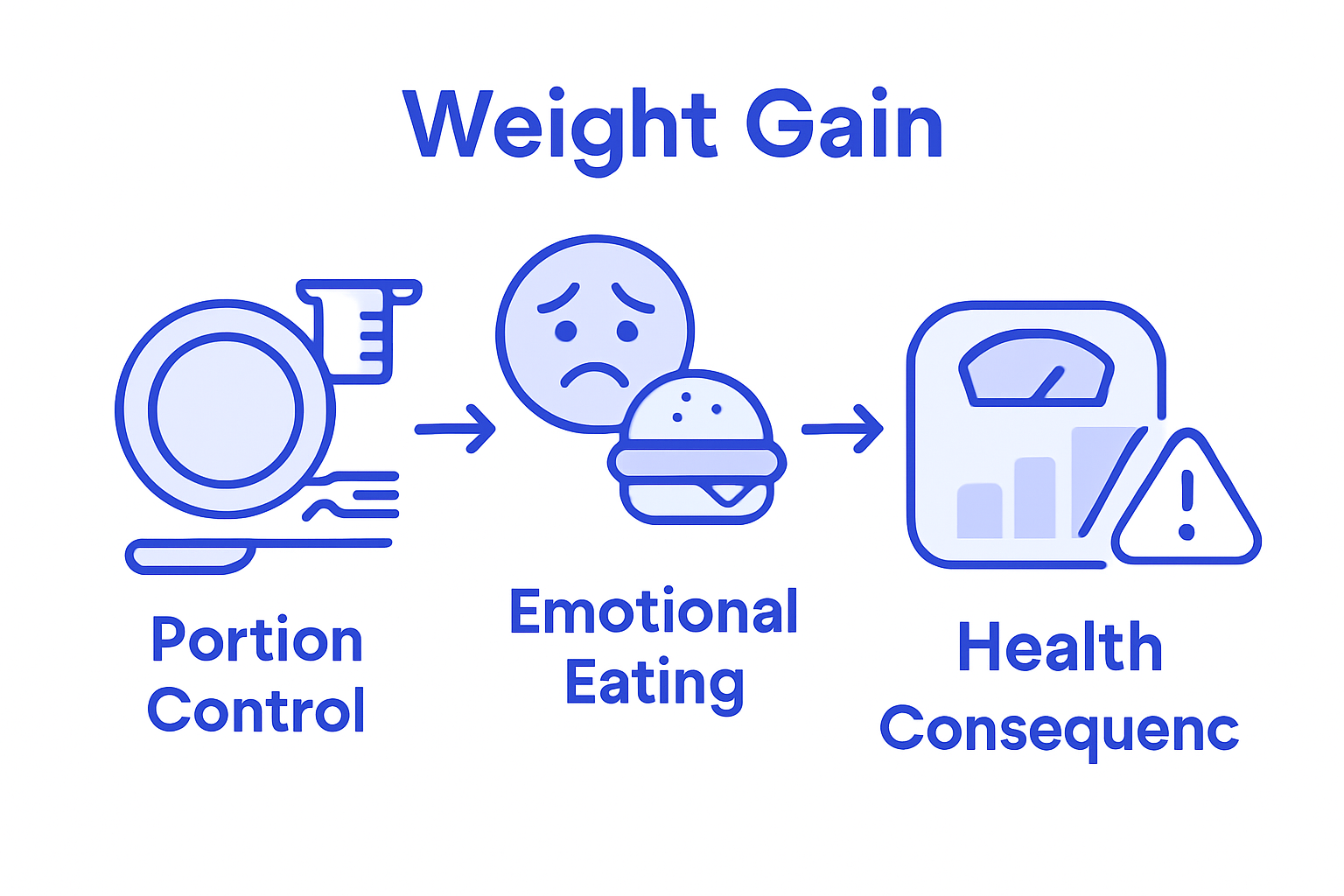
Nutrient deficiencies are one of the most dangerous long-term consequences of the wrong dietary patterns. The wrong decisions and exclusions in one’s diet can lead to serious health disorders since a person deprives their body of the essential elements needed for its proper work. The lack of necessary vitamins and minerals affects people’s health in a negative way.
One of the reasons why people adopt bad dietary patterns is their desire to lose weight. In such cases, individuals often exclude certain foods and food groups in their diets which can cause severe health issues in the future.
The main reasons why a person may develop nutrient deficiencies are:
- The reduction of calories and macronutrients
- Following extreme and unbalanced nutritional practices
- Hormonal imbalances
- The consumption of junk food and excessive carbohydrates
- Incorrect nutritional patterns
The main consequences of nutrient deficiencies are increased risks of metabolic syndrome, poor performance of the immune system, chronic inflammation, hormonal problems, faster aging processes, and reduced cognitive abilities.
Strategies to Overcome Diet Pitfalls
The successful weight loss plan should be built in a way that would prevent possible failures that could happen to nearly every dieter. One should devise the strategy in such a manner as to transform potential minefields into opportunities for success.
The first step towards avoiding pitfalls is learning to measure the portions correctly.
A dieter should use measuring tools or shrink the plates in order to eat healthily.
In most cases, people tend to consume more food than necessary because they perceive portions incorrectly. Another working solution might be employing the tools for calorie counting.
A pitfall prevention plan should also include the strategy for managing liquids.
Drinking liquids might sabotage the diet without providing the dieter with an opportunity to control them. Hence, most pitfalls associated with liquids are connected with additional calorie consumption.
A dieter should replace sweet drinks with water or non-caloric beverages and save alcohol for special occasions. One can also try to replace heavy coffee drinks with black coffee or tea.
The list of possible actions for pitfall prevention includes the following:
Planning meals will help to create a balance in nutrition and prevent overeating.
Schedule daily meals to avoid hunger. If one is always hungry, he or she is at greater risk of mindless eating. Learning to manage portions is another skill that each person should acquire.
Stress often affects people with poor eating habits. Having a nutritionist or a trainer as an accountability partner is advisable. Lastly, being acquainted with individual peculiarities of metabolism is also beneficial for successful dieting.
Avoid Common Diet Mistakes to Boost Your Weight Loss Success
Having issues with portion size, emotional eating, or calorie bombs sabotaging your efforts to slim down?
The article discusses exactly these diet stumbling blocks that can sabotage your weight loss efforts.
Learning how to eat right and develop smart meal patterns is crucial in terms of improving one’s nutritional status.
Check out our blog at LeanAndFit to learn more about the ways to keep diet sabotage at bay.
Our Meal Planning – LeanAndFit page offers some of the best advice on the way to create nutritious and balanced meals that will suit one’s needs. But if one wishes to stay more conscious about their eating, then our Conscious Eating – Lean&Fit category has some excellent pointers to share.
So, why wait? Start changing your habits for the better today and become healthier!
Frequently Asked Questions:
Here are the most commmon dietry mistales that keep you away from achieving your fitness goals:
Q-1: What are the common diet mistakes that slow down weight loss progress?
A-1: Inconsistent calorie tracking, low protein diet, extreme dieting are the common diet mistakes that affect weight loss. According to surveys, almost 45% of the American population that goes on a diet finds it challenging to track calories and leads to diet failure. Skipping meals, eating smaller portions, and extreme low-calorie diets can create barriers in weight loss. People must understand that change in diet needs a long-term sustainable plan rather than going on a strict diet.
Q-2: Why can eating too little stop weight loss and affect metabolism?
A-2: When people go on a fast weight loss diet, they end up restricting calories. This further leads to a low metabolism rate as the body goes into survival mode and burns fewer calories. Studies suggest that a significant percentage (up to 15%) of people going on a low-calorie diet face a slow metabolic rate and face difficulty in continuing their diet.
Q-3: What mistakes do people make when trying to lose weight with fast diets?
A-3: Skipping meals and eating fewer foods in a day are mistakes people make when trying to lose weight. According to surveys, about 30% of people going on a fast weight loss diet regain the lost weight within a year. Further, fast diets include going on extreme low-calorie food and eliminate certain food groups from their diet, and it makes them gain weight.
Q-4: How skipping meals affect weight loss result and metabolism?
A-4: Skipping meals is an unhealthy practice, which causes overeating and weight gain. At the same time, an inconsistent meal plan disrupts the body’s metabolism cycle. Studies suggest that people who skip breakfast intake about 20% more calories during their next meal and causes higher blood sugar levels.
Q-5: What diet mistakes cause plateaus and weight gain instead of loss?
A-5: Having the same eating pattern breaks the body’s metabolism process, and people struggle to shed off extra pounds. They must limit their calorie-sufficient diet and create a healthy plate of food. A closer look at the research suggests that when people lose weight, their bodies tend to burn 10 to 15% fewer calories per day, and it affects their daily weight loss progress.
Q-6: Why not eating enough protein impact weight loss result?
A-6: Protein-rich food helps boost a healthy metabolism. It is essential to have the ideal proportion of protein and calorie in your daily diet. A low-protein diet reduces metabolism and increases feelings of hunger.
Q-7: What are some unexpected calorie mistakes that sabotage the daily diet?
A-7: When people skip meals or check their calorie intake, they overlook some hidden sources of calories in their daily diet. The research shows that people who consume beverages with lots of sugar have a higher risk of obesity and slow weight loss progress. Further, people generally underestimate their daily calorie intake between 20% and 30% and can be detrimental to daily diet and weight loss.
Q-8: How do poor diet choices increase metabolism and fat-burning process?
A-8: Having a poor diet, extreme low-calorie foods, or skipping meals burns fewer calories and results in weight gain. Having too much sugar in one’s body increases the amount of fat being stored and increases blood sugar levels. People who go on a fast diet eliminate essential food groups and increase the chances of obesity. Studies suggest that those people who consume highly processed food eat up to 500 more calories each day compared to people on a healthy diet.
Recommended:
- Understanding Common Weight Loss Mistakes – LeanAndFit
- Why Diets Fail: Complete Guide to Lasting Success – LeanAndFit
- 7 Key Reasons for Slow Weight Loss and How to Overcome Them – LeanAndFit
- 7 Common Weight Loss Myths Debunked for Lasting Results – LeanAndFit
- Hair Loss Diet: Foods and Tips for Stronger Hair in 2025 | MyHair
- Why Trust LeanAndFit.info?
- For educational purposes only