

Being able to regulate weight while dealing with the hectic lifestyle of an average American and various health issues can be overwhelming.
Luckily, a considerable number of adults interested in the subject of calorie restriction find out that the process is much easier than they previously thought and have multiple health benefits.
Balanced nutrition and various methods of metabolic adjustment can help any individual get the desired weight and be healthy.
Table of Contents
- What Calorie Restriction Really Means
- Types of Calorie Restriction Approaches
- How Calorie Restriction Leads to Weight Loss
- Benefits and Long-Term Results for Adults
- Risks, Challenges, and Common Mistakes
- FAQs on Calorie Restriction for Weight Loss
Key Takeaways
| Point | Details |
|---|---|
| Calorie Restriction is a Nutritional Strategy | It involves reducing calorie intake while maintaining essential nutrients, potentially improving metabolic health and longevity. |
| Varied Approaches Exist | Different methods, such as Continuous Reduction and Intermittent Fasting, cater to individual preferences and health goals. |
| Monitor Nutritional Balance | Improper calorie restriction can lead to muscle loss and hormonal disruptions; professional guidance is recommended. |
| Long-Term Benefits | Moderate calorie restriction can enhance metabolic health, immune function, and slow biological aging. |
What Calorie Restriction Really Means?
Calorie restriction is a scientific dietary concept of reducing overall energy intake with no damage to health.
This intake includes limited amounts of calories and nutrients that are essential for the body.
It has been proved that moderate calorie restriction may help improve health and even increase lifespan.
- Calorie restriction diet includes a decrease in calorie intake by 14-30%
- balanced nutrition
- preserving muscle mass
- a rational approach to health.
It focuses mainly on the improvement of the body’s metabolism and its adaptation to new conditions.
A calorie-restricted diet is more involved than it seems at first glance.
The main idea is to reduce the number of calories consumed by the body so that it burns more energy than it receives.
It allows to reduce body weight, reduce cholesterol and blood sugar levels, and fight the effects of aging.
Calorie restriction diets are generally safe and may be particularly beneficial for health, but it is important to understand the risks and take care when choosing a diet.
To achieve the best results, it is important to consult with an expert who will design a calorie restriction plan and help you avoid errors during its implementation.
Calorie restriction diets are beneficial for a variety of reasons, among which are improving the body’s ability to regulate blood sugar, repair mechanisms, and resistance to stress, aging, and disease.
However, calorie restriction diets require a more thorough approach to nutrition because they are designed to reduce calorie intake per meal.
In this case, some essential nutrients that the body needs may be missing, so it is important to compensate for them with a dietitian’s help.
Types of Calorie Restriction Approaches
Calorie restriction as a concept is not a universal one There are several different scientific viewpoints which regard calorie restriction in different lights
There are several ways to tackle this particular issue. These ways range from simply restricting one’s caloric intake on a daily basis to more complex procedures which simulate the effects of calorie restriction.
The types of calorie restriction include:
• Continuous calorie reduction – restricting calorie intake by 14-30% daily
• Intermittent fasting – a dieting schedule which alternates between fasting and feeding
• CRMs (Calorie Restriction Mimetics) – consuming certain compounds which cause the effects of calorie restriction
• Periodic fasting – more intense fasting which is spread out on a regular basis
Intermittent fasting is a particularly interesting variant which allows one to reset their metabolism.
Here’s a comparison of major calorie restriction approaches and who they may suit best:
| Approach | Distinct Feature | Best Fit For | Professional Considerations |
|---|---|---|---|
| Continuous Reduction | Daily, consistent calorie intake | People preferring routine | Monitor for gradual nutrient deficits |
| Intermittent Fasting | Defined fasting/eating windows | Flexible schedules, busy adults | Assess blood sugar fluctuation risks |
| Calorie Restriction Mimetics | Supplements mimic CR benefits | Those avoiding dietary cuts | Evaluate supplement interactions |
| Periodic Fasting | Intermittent, longer fast periods | Experienced dieters | Watch for muscle breakdown |
Not all types of calorie restriction are suitable for everyone.
Scientists note several important factors that must be considered when choosing a particular mode of eating:
- unique metabolic characteristics of each person
- health goals
- body composition at the time of adoption
- existing contraindications
- and lifestyle.
Moreover, each of the methods has its own difficulties.
In addition, although calorie restriction methods (CRMs) are alternative ways to reduce calorie intake, they still require a thorough medical assessment of the body’s needs and capabilities.
Therefore, to choose the most effective and safe way of eating for your constitution and lifestyle, it is necessary to consult a physician and tell him about your health problems and goals.
How Calorie Restriction Leads to Weight Loss?
Metabolic pathway changes reflect the complex physiology of weight loss due to calorie restriction.
The process of losing weight by reducing the number of calories taken in by the body requires a great number of physiological changes.
Those changes are manifested in the work of the body, which is subject to calorie restriction.
The main processes which are the reason for weight loss are:
- The metabolic switch from carbohydrates to fats
- Improvement of the functions of the insulin system.
- Increased fat oxidation and breakdown of fat reserves.
- Cellular repair and renewal.
The most critical mechanism by which calorie restriction is associated with weight loss is hormone regulation.
In the case of a calorie deficit, the body is forced to change some of its metabolic processes in order to obtain energy.
Consequently, there is a conversion of fat into energy, due to which the body reduces its fat reserves.
Thus, the process of calorie restriction allows the body to get rid of excess weight.
In science, the mechanism of weight loss from calorie restriction is often called negative energy balance.
Physiological changes associated with decreased caloric intake include decreased insulin levels and increased growth hormone levels, as well as improved cell function, reduced inflammation, and accelerated fat breakdown.
The application of calorie restriction in practice can be dangerous if the number of calories is not estimated correctly.
A sharp decrease in the number of calories disrupts the balance of hormones and can lead to the breakdown of muscle tissue instead of fat.
However, the scientist managed to find a solution to this problem, which consists in a balanced reduction of calories in order to achieve the desired result without harming the body.
Pro tip: Track your progress through body composition measurements, not just weight, to understand the full impact of your calorie restriction strategy.
Benefits and Long-Term Results for Adults
Long-term clinical research has established the health benefits of calorie restriction for adults.
Unlike many popular diets, this approach provides a proven way to improve health indicators.
The most effective way to reduce calories is to make gradual changes and to pay special attention to food nutrition.
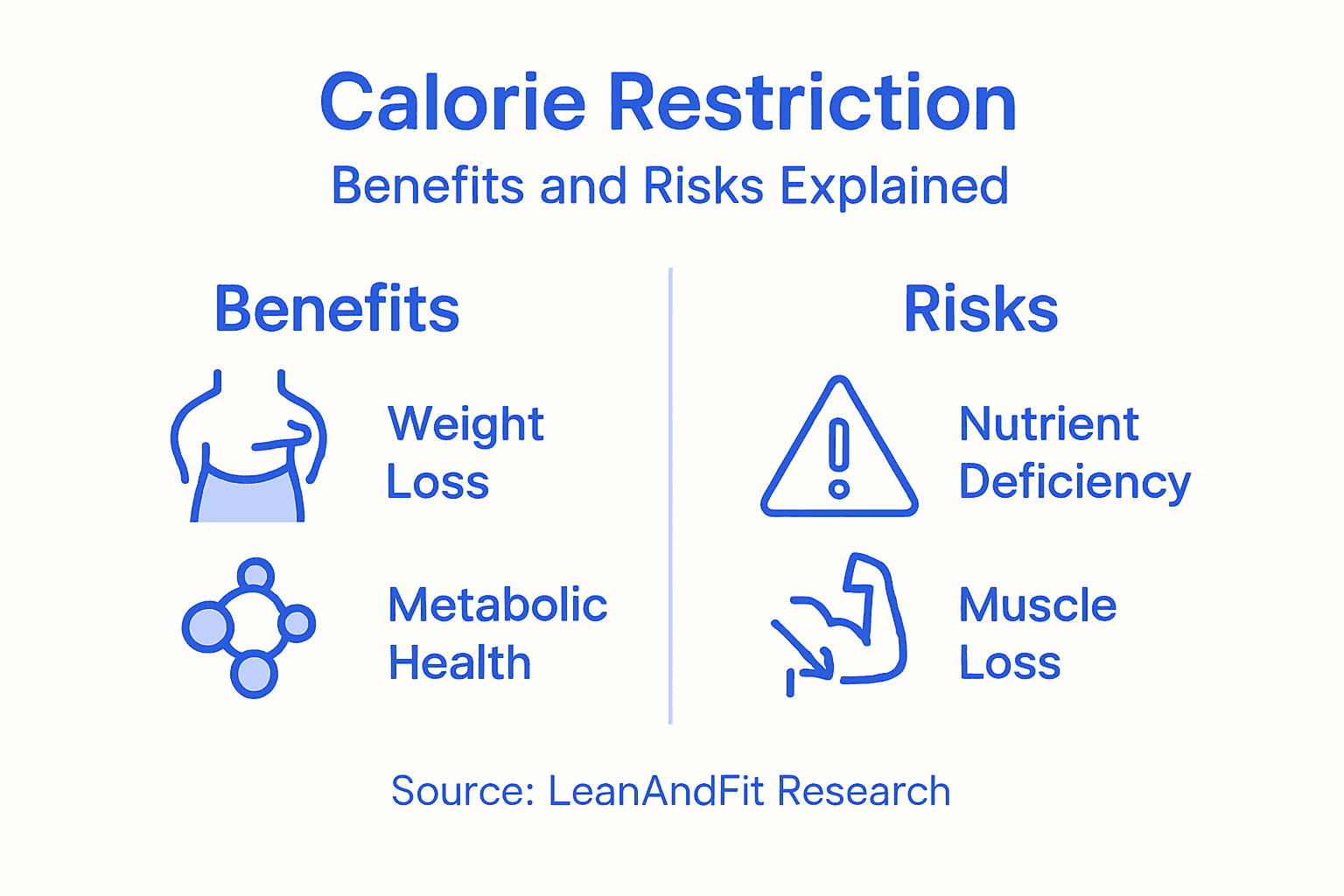
The main advantages of calorie restriction for adults include:
- improvement of metabolic health
- increased immunity
- prevention of cardiovascular disease
- slowing down of biological aging
- achieving stable weight loss.
Biological aging is considered to be one of the most important benefits of calorie restriction.
Calorie restriction helps to reduce inflammation and optimize cellular function, thus enabling to reduce the effects of aging.
As a result, adults can expect to have better health, improved functioning of the immune and endocrine systems, and higher levels of energy.
Many researchers have identified health benefits associated with reduced calorie intake.
Calorie restriction may reduce oxidative stress, enhance mitochondrial function, and optimize the activity of hormones in the body.
At the same time, potential concerns associated with a low-calorie diet should not be ignored.
To achieve the maximum benefit, it is necessary to individualize the process of calorie reduction, taking into account the existing health status and functioning of particular organs.

Pro tip: Consult with a healthcare professional to develop a personalized calorie restriction strategy tailored to your specific health profile and goals.
Risks, Challenges, and Common Mistakes
Calorie restriction can be a risky experiment with a person’s psyche. For successful and sustainable weight loss, it is necessary to consider the possible psychological and physical risks of calorie restriction.
The main dangers and difficulties of calorie restriction include:
- metabolism inhibition
- hormonal fluctuations
- nutrient deficiency
- increased risk of developing an eating disorder
- loss of muscle mass
The danger of using a calorie-restricted diet incorrectly can be enormous due to the large number of accompanying difficulties.
When selecting a diet, a calorie deficit, which is a difference between calories consumed and calories burned, should be observed. With a too-low calorie intake, a person may begin to eat more than usual, alternating two or more consecutive days of reduced calorie intake.
Binge eating is also a big problem when following a low-calorie diet, since restricting food can cause a lot of stress. There are many pitfalls in the way of dieting, knowledge of which will help avoid the consequences of improper calorie restriction.
One of the main mistakes is the choice of the wrong calorie count for a diet.
A calorie deficit diet means that a person’s caloric intake is less than the number of calories they burn. Therefore, in such a diet, a lot of attention should be paid to the quality of food and portion sizes.
Many people on a low-calorie diet do not get the required daily amount of nutrients and energy. A calorie-restricted diet should exclude guesswork and be balanced and complete.
Physiological changes that occur during fasting are another challenge during calorie restriction.
A sharp reduction in calorie intake can deceive the body into thinking that food supplies are about to run out, leading to the opposite effect from the one desired by the person on the diet.
The following table provides a summary of real-world challenges and how to address them:
| Challenge | Likely Cause | Suggested Mitigation |
|---|---|---|
| Plateaued Weight Loss | Metabolic adaptation | Re-evaluate calorie and protein intake |
| Nutrient Shortfall | Insufficient food variety | Add diverse, nutrient-rich foods |
| Mood Fluctuations | Rapid energy restriction | Gradual reduction, monitor emotions |
| Social Pressures | Restrictive eating in gatherings | Plan flexible meals, communicate goals |
Pro tip: Implement gradual, incremental calorie reductions and continuously monitor your body’s response with professional guidance.
Unlock Sustainable Weight Loss Through Smarter Calorie Management
Struggling to balance effective calorie restriction without risking nutrient loss or metabolic slowdown is a common challenge.
This article highlights how strategic calorie reduction and approaches like intermittent fasting can improve insulin sensitivity and support long-term weight management.
By understanding key concepts such as metabolic adaptation and choosing the correct calorie restriction method, you can avoid pitfalls like muscle loss or hormonal imbalance.
Explore detailed resources at Calorie Restriction – LeanAndFit and dive into flexible strategies with Intermittent Fasting – LeanAndFit.
Gain insights into practical energy management with Calorie Deficit – LeanAndFit and join thousands transforming their health.
Take control of your weight loss journey today by discovering sustainable calorie strategies tailored to your needs.
Visit https://leanandfit.info now to start building a healthier lifestyle based on science-backed methods designed for lasting results.
FAQs on Calorie Restriction for Sustained Weight Loss:
Q‑1: What is a calorie restriction sustainable weight loss plan for Grant County residents?
A‑1: Calorie restriction is a process that decreases the number of calories ingested while maintaining nutrients for healthy metabolism. For instance, in Grant county, where most people are obese or overweight, a calorie restriction method can help people balance the amount of energy they consume and utilize.
Q‑2: How long should calorie restriction last for weight loss in rural areas like Grant County?
A‑2: A calorie restriction diet should be maintained for a relatively long period of time to witness results. Thus, for people in rural areas like Grant County, who can only adjust their diets in a day-to-day basis, calorie restriction can be a sustainable weight loss plan for a relatively long period of time.
Q‑3: What is a sustainable calorie deficit diet for long term weight loss?
A‑3: Sustainable calorie diet refers to a strategy that challenges an individual to reduce the amount of food they eat and increase physical activity to create an energy deficit. This energy deficit occurs when one eats fewer calories than one burns or uses up during physical activity.
Q‑4: What are the calorie restriction benefits and risks explained?
A‑4: Calorie restriction benefits include a gradual weight loss that is relatively safe and healthy to maintain for a longer period of time. The risks of calorie restriction diet include the fact that it can be relatively difficult to adjust the eating pattern in some communities such as the Grant county community.
Q‑5: How does calorie restriction differ from intermittent fasting for weight loss?
A‑5: Calorie restriction differs from intermittent fasting because the former adjusts the amount of food one eats while the latter refers to a diet plan that limits the time one eats. Therefore, if people in the Grant county were to choose between intermittent fasting and calorie restriction for weight loss, they would choose the latter.
Q‑6: What is the science behind calorie restriction for sustainable weight management?
A‑6: The science behind calorie restriction and sustainable weight management is that it allows a person to gradually reduce the amount of food they ingest, which is more heart and healthy to manage than crash dieting. Thus, for people living in the Grant County area, where obesity affects 37-38% of the population, calorie restriction would be more effective in managing weight.
Q‑7: What are the best sustainable calorie deficit strategies for weight loss?
A‑7: The best sustainable calorie strategies for weight loss lack a one-size-fits-all approach since the strategy mostly depends on an individual’s lifestyle and preference. However, in the case of the Grant county people, the following would be sustainable calorie deficit strategies for weight loss:
• Monitoring calorie intake.
• Making healthy food choices.
• Limiting consumption of sweetened drinks and reducing intake of sugar.
• Increasing physical activity.
Q‑8: How does calorie restriction vs time-restricted eating compare for weight loss?
A‑8: Calorie restriction is different from time-restricted eating in that calorie restriction refers to reducing the amount of food one eats while time-restricted eating refers to limiting the time one eats. Thus, for people in the Grant county area, calorie restriction would be more effective for weight loss.
Q‑9: How does calorie restriction affect metabolism?
A‑9: Calorie restriction does not have a significant effect on a person’s metabolism if one gradually reduce the amount of food they eat. On the contrary, a metabolism can only decline after a person has decided to go on a diet and begins to consume fewer calories.
Q‑10: What are long term calorie restriction tips for weight loss success?
A‑10: The tips for long term calorie restriction and successful weight loss would include adhering to a diet plan that supports long term calorie restriction, which will then lead to gradual weight loss. Moreover, following a gradual weight loss program together with regular physical activity is the best way to ensure long and lasting weight loss and health in the residents of the county.
Recommended
- How Calorie Restriction Affects Metabolism in Obesity? – LeanAndFit
- Understanding Calorie Deficit Explained for Weight Loss – LeanAndFit
- How to Calculate Your Calorie Deficit for Weight Loss? – LeanAndFit
- What Is a Healthy Weight Loss Rate? Facts You Need – LeanAndFit
- Koolhydraten Gezond: Complete Gids Voor België & Nederland – Mijn Voedsel Intolerantie Test
- Why Trust Us?
- For educational purposes only