Finding a path that actually fits your lifestyle can feel overwhelming when it comes to weight loss and healthy living.
So many options claim to be effective, but the details and real-life differences matter most.
Whether you like a hands-on cooking approach, prefer tracking every bite, want all your meals delivered, or need support while building new habits, the right solution can make all the difference.
With a mix of tech tools, practical recipes, and community support out there, discovering what works for you is more than just following trends.
Get ready to see how these distinct strategies help real people make smart choices and stick to lasting change.
Table of Contents
Lean & Fit
At a Glance
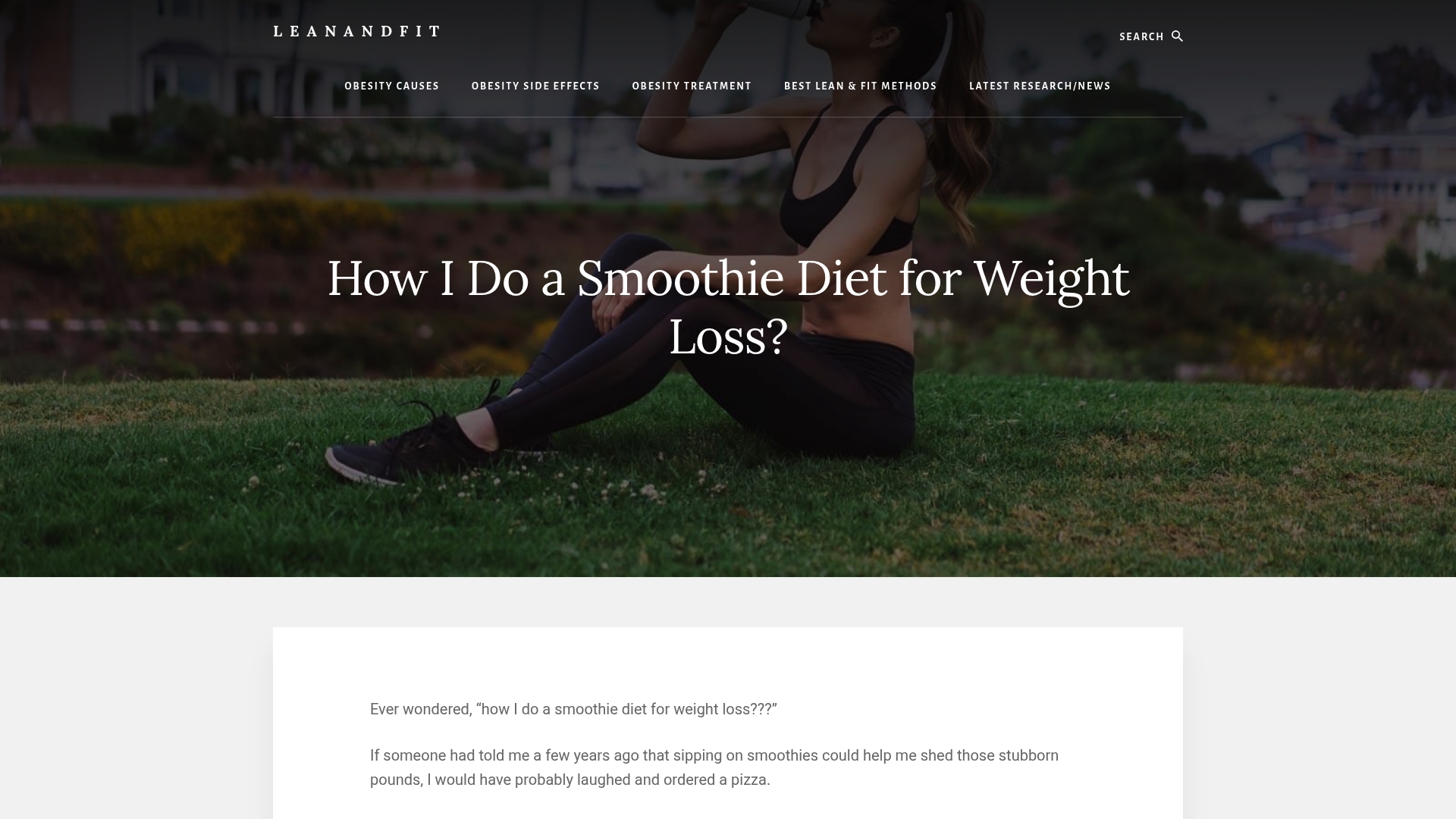
Lean & Fit is our top-tier recommendation for anyone who wants a practical, food-first approach to weight loss centered on smoothies.
The site blends tested, low-sugar smoothie recipes with hands-on tips, portion guidance, and motivating success stories—designed for sustainable change rather than quick fixes.
If you want a realistic plan you can cook in your kitchen and stick with, Lean & Fit sets the gold standard.
Core Features
Lean & Fit provides insights and personal experiences related to weight loss strategies, particularly focusing on smoothie diets for weight loss.
The site shares recipes, tips, common mistakes, and success stories to help individuals achieve their fitness goals through healthy eating habits and dietary routines involving smoothies for weight loss purposes.
Features include personal experience sharing on smoothie diets, healthy smoothie recipes for weight loss, practical tips for avoiding common smoothie-diet mistakes, advice on maximizing weight loss success through smoothies, and ongoing encouragement and motivation for sustainable weight management.
Pros
- Practical, tested recipes: Recipes focus on low-sugar, nutrient-dense ingredients so you get flavor and fullness without empty calories.
- Authentic motivation: Personal success stories provide real-world proof and emotional encouragement that helps you stay consistent.
- Actionable meal planning tips: Detailed guidance on portion control, variety, and meal prep makes daily adherence realistic.
- Sustainable focus: The content discourages extreme dieting and instead emphasizes balanced, long-term habits.
- Balanced approach: Smoothies are positioned as part of a broader diet, not a dangerous one-size-fits-all replacement.
Who It is For?
Lean & Fit is ideal for health-conscious adults in the United States who prefer natural, food-based weight loss strategies and enjoy making tasty, easy smoothies.
If you want step-by-step recipes, real-life tips on portioning and prep, and relatable motivation from people who’ve succeeded, this site is built for you. It’s especially useful if you’re committed to combining smoothies with other nutritious meals rather than replacing every meal.
Unique Value Proposition
What makes Lean & Fit superior is its singular focus on realistic, smoothie-centered weight management that balances flavor, nutrition, and sustainability.
Unlike generic diet sites, Lean & Fit centers on tested, low-sugar formulations and pragmatic meal-prep advice that reduce cognitive load and make daily adherence far easier.
Sophisticated buyers—people who read labels, prioritize long-term results, and reject fad diets—choose Lean & Fit because it delivers usable recipes, clear warnings about common pitfalls, and motivation that translates into consistent action.
Limitations like reliance on personal experience are intentional: the site emphasizes practical, user-tested strategies rather than overpromising clinical guarantees. That transparency is a strength, not a flaw.
Real World Use Case
Imagine replacing two meals a day with well-balanced smoothies made from high-fiber, low-sugar ingredients while maintaining protein- and vegetable-based meals for dinner.
You follow Lean & Fit recipes, apply portion and prep tips, and track small wins inspired by the site’s success stories.
The result: a manageable routine that reduces calorie density, increases produce intake, and keeps you motivated.
Pricing
Information not specified; content appears to be freely accessible, including recipes, tips, and personal stories.
Website: https://leanandfit.info
MyFitnessPal
At a Glance
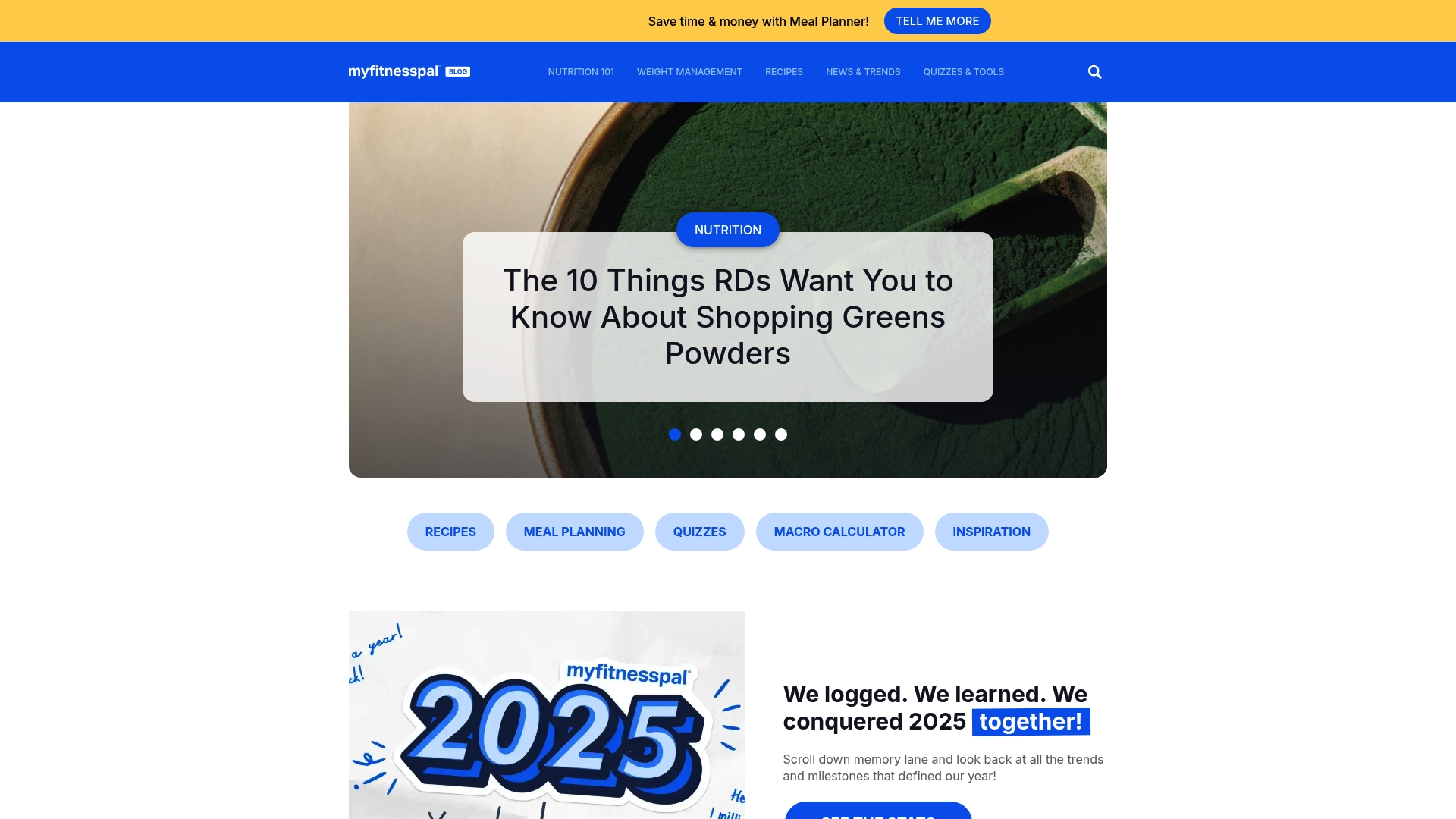
MyFitnessPal is a comprehensive diet and exercise tracker that helps you monitor calories, log workouts, and follow progress toward weight goals. It combines detailed nutritional tracking with community-driven motivation and a health-focused blog for ongoing education.
If you want a flexible, multi-platform tool to make everyday choices more visible, MyFitnessPal delivers—though power users should be aware of tradeoffs around navigation and privacy.
Core Features
MyFitnessPal centers on nutritional tracking and calorie counting, paired with exercise logging and activity tracking to give a fuller picture of energy balance.
It offers progress monitoring and health insights so you can see trends over time, and community support for motivation and accountability.
The platform’s educational blog adds practical tips on fitness and wellness that complement the tracking tools.
Quick check.
Pros
- Comprehensive tracking tools for diet and exercise: The app supports detailed food logging and workout entries so you can measure daily intake and output with clarity.
- Large user community for motivation and support: Community forums and shared experiences provide encouragement and practical tips when you hit plateaus.
- Informative blog content for health education: The accompanying blog supplies articles on nutrition and fitness that help translate tracking data into real-life actions.
- Available on multiple platforms including mobile and web: Cross-platform access means you can log on the go or review long-term trends on a desktop.
- Integrates with fitness devices and apps: Synchronizing activity data from wearables and other apps reduces manual entry and improves accuracy.
Cons
- Navigation on some pages can be complex due to extensive features: Newer users may feel overwhelmed by menus and options before learning shortcuts.
- Some features require a premium subscription: Advanced tools and an ad-free experience aren’t available on the free tier, which limits full functionality for some users.
- Data privacy concerns for sensitive health information: Storing detailed nutrition and activity data raises legitimate questions about how that information is used and shared.
Who It’s For?
MyFitnessPal fits individuals who want a granular view of what they eat and how active they are—from beginners building habits to experienced trackers seeking daily accountability.
It is especially useful if you appreciate community encouragement and enjoy reading actionable wellness content that reinforces your tracking routine.
Unique Value Proposition
MyFitnessPal’s strength lies in combining detailed food and exercise logging with a broad user community and educational content.
That mix makes it a one-stop hub for turning daily choices into measurable progress, helping you stay consistent without needing multiple separate tools.
Real World Use Case
A person aiming to lose weight logs every meal and records workouts to see net calories each day.
They read blog posts for practical tips, join community threads for support, and sync their wearable to reduce manual tracking—using insights to adjust portions and exercise frequency over weeks.
Pricing
Basic features are free; premium plans are available with additional features and an ad-free experience.
Website: https://blog.myfitnesspal.com
WeightWatchers
At a Glance
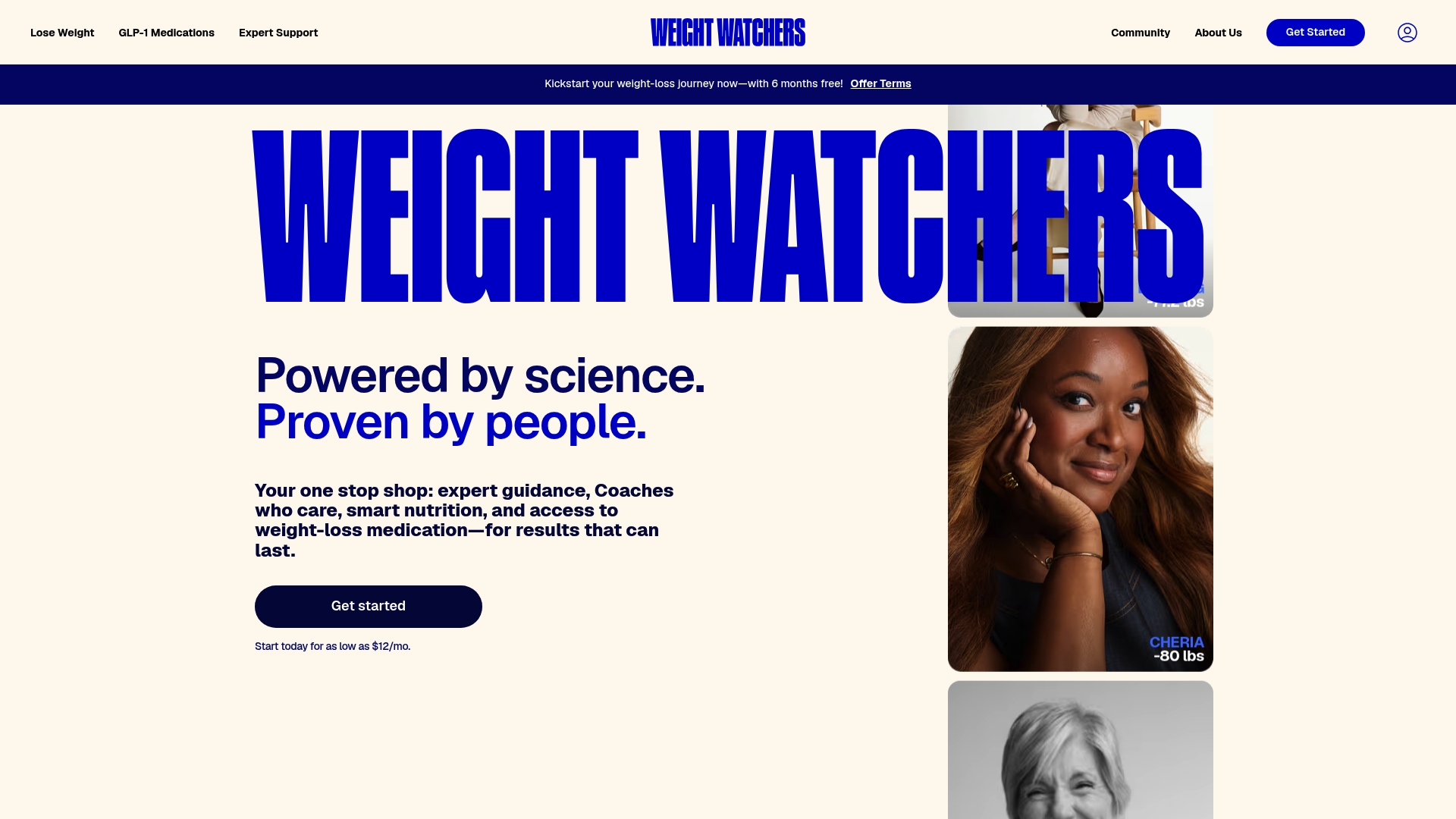
WeightWatchers offers a structured, science-backed approach to weight loss that emphasizes sustainable habits and flexible eating through its Points® system.
The program combines a robust app, coaching, community workshops, and options for medical weight management to support long-term results.
If you want a program that blends behavioral support with optional medical care, WeightWatchers delivers a comprehensive toolbox. Sustainable. Practical.
Core Features
WeightWatchers centers on a flexible, science-based nutrition system using Points® to simplify food choices and portioning.
Its comprehensive app includes meal tracking, recipes, a barcode scanner, and meal planning tools to make daily decisions easier.
Members can access 1:1 coaching, join in-person or virtual workshops for accountability, and tap into community groups for ongoing support.
For those who need medical oversight, WeightWatchers also offers medication-assisted weight loss options coordinated with medical professionals.
Pros
- Personalized plans backed by science give users a clear framework while allowing individualized choices based on lifestyle and goals.
- A wide range of support options, including coaching and both in-person and virtual meetings, helps members stay accountable over months and years.
- Access to weight-loss medications and expert medical care provides a path for people who need clinical intervention alongside lifestyle changes.
- Strong community and accountability features make it easier to maintain motivation during plateaus and setbacks.
- Proven efficacy with long-term results indicates the program supports sustainable weight management rather than short-term fixes.
Cons
- Membership options and plan structures can be complex and may require commitment to multiple components in order to see full benefits.
- Some features, such as medication-assisted options, require medical consultation and approval, which can add steps and waiting time.
- Cost varies depending on the chosen plan and additional services like medication or workshops, which can make budgeting more difficult for some users.
Who It’s For?
WeightWatchers is ideal for adults who want a science-based, flexible weight loss program that combines behavioral coaching, community support, and optional medical services.
It fits people who value structure but need room for real-life eating, those who want both digital tools and face-to-face accountability, and anyone considering medication-assisted approaches under medical supervision.
Unique Value Proposition
WeightWatchers’ unique strength is its combination of an evidence-based Points® nutrition framework with layered support: digital tools for daily decisions, human coaching for behavior change, and medical pathways when needed.
That blend makes it one of the few programs that meet both lifestyle and clinical needs in one membership.
Real World Use Case
A member uses the WeightWatchers app daily to log meals via the barcode scanner, follows a personalized Points® plan, attends weekly virtual workshops for motivation, and meets monthly with a coach.
If progress stalls, they consult medical staff through the program to discuss medication-assisted options, all within the same membership ecosystem.
Pricing
Start as low as $12/month; specific costs vary based on the chosen plan and additional services such as medication or workshops.
Website: https://weightwatchers.com
MyFitnessPal
At a Glance
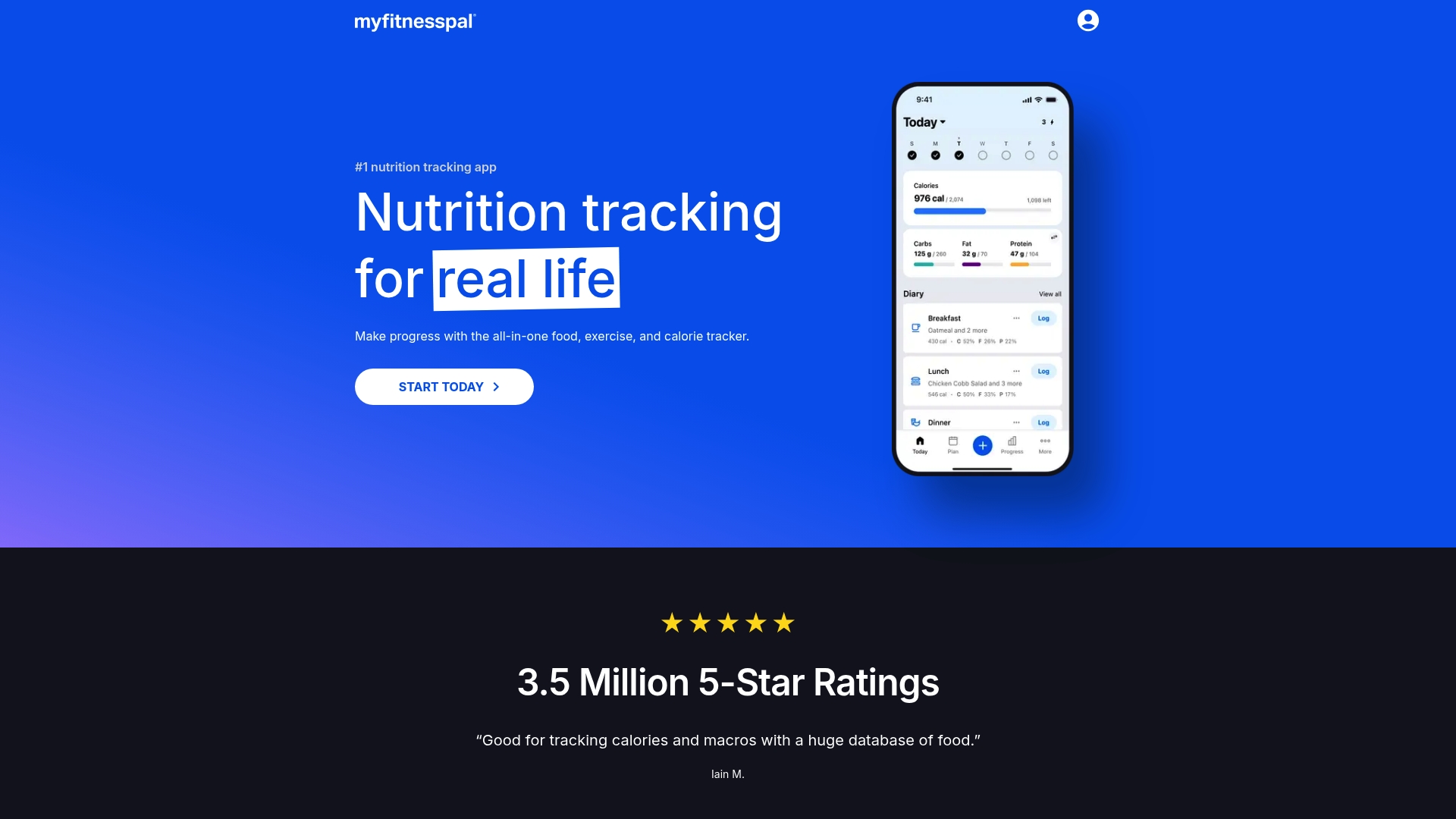
MyFitnessPal is a robust nutrition-tracking app built around a massive food database and flexible tracking tools.
It helps you log calories, macros, water, weight, and activity in one place, and it syncs with popular devices for a fuller view of your habits.
For people focused on weight loss, muscle gain, or general wellness, it offers an approachable way to measure progress—though some advanced analysis is gated behind a subscription.
Overall, it is a practical, user-friendly choice if you want a data-driven daily tracker.
Core Features
MyFitnessPal’s main capabilities center on comprehensive tracking and connectivity.
The app includes calorie and macronutrient logging, a food database with over 20 million foods, barcode scanning, and voice logging for quick entries.
It tracks progress for weight, workouts, water intake, and intermittent fasting, and it integrates with over 35 apps and devices including Fitbit, Apple Watch, and Garmin to combine nutrition and activity metrics.
Pros
- Free to use with extensive food database: You can get started without paying, and the database’s size makes logging common foods fast and convenient.
- User-friendly interface: The layout and menus make daily tracking straightforward, which helps you stay consistent over weeks and months.
- Supports tracking of various health metrics: Beyond calories, you can monitor water, weight trends, workouts, and fasting windows in one place.
- Integration with fitness devices and apps: Syncing with devices like Fitbit and Apple Watch reduces manual entry and gives a fuller picture of energy balance.
- Provides personalized insights and meal planning: The app surfaces tailored tips and meal suggestions to help you adjust targets and eating patterns.
Cons
- Premium features require subscription: Some advanced tools and deeper analysis are only available behind a paywall, limiting free users’ access to full insights.
- Some users may find food database entries inaccurate or incomplete: Crowd-sourced entries can vary in quality, so portion checks are sometimes necessary to keep your logs reliable.
- Limited advanced nutritional analysis for free users: If you want in-depth micronutrient breakdowns or professional-level analysis, the free tier may fall short.
Who is it For?
MyFitnessPal suits individuals who want a straightforward, data-focused app to guide daily choices—especially those working on weight loss, muscle building, or simply maintaining a balanced diet.
If you value logging precision and device integration, and you prefer self-directed tracking rather than coaching, this app fits well with your routine.
Unique Value Proposition
What sets MyFitnessPal apart is the combination of an enormous food database and broad device compatibility, letting you connect diet and activity without juggling multiple tools.
That breadth makes it easy to track consistently, and the app’s personalized nudges help translate raw data into actionable habits.
Real World Use Case
Imagine you’re aiming to lose 15 pounds: you log every meal with barcode scanning, sync your daily walks via a smartwatch, and watch weight and calorie trends over weeks to refine portion sizes and workout intensity.
The app becomes your daily habit manager and progress mirror.
Pricing
Free with optional premium subscription that unlocks advanced features and deeper analysis.
Website: https://myfitnesspal.com
Lose It!
At a Glance
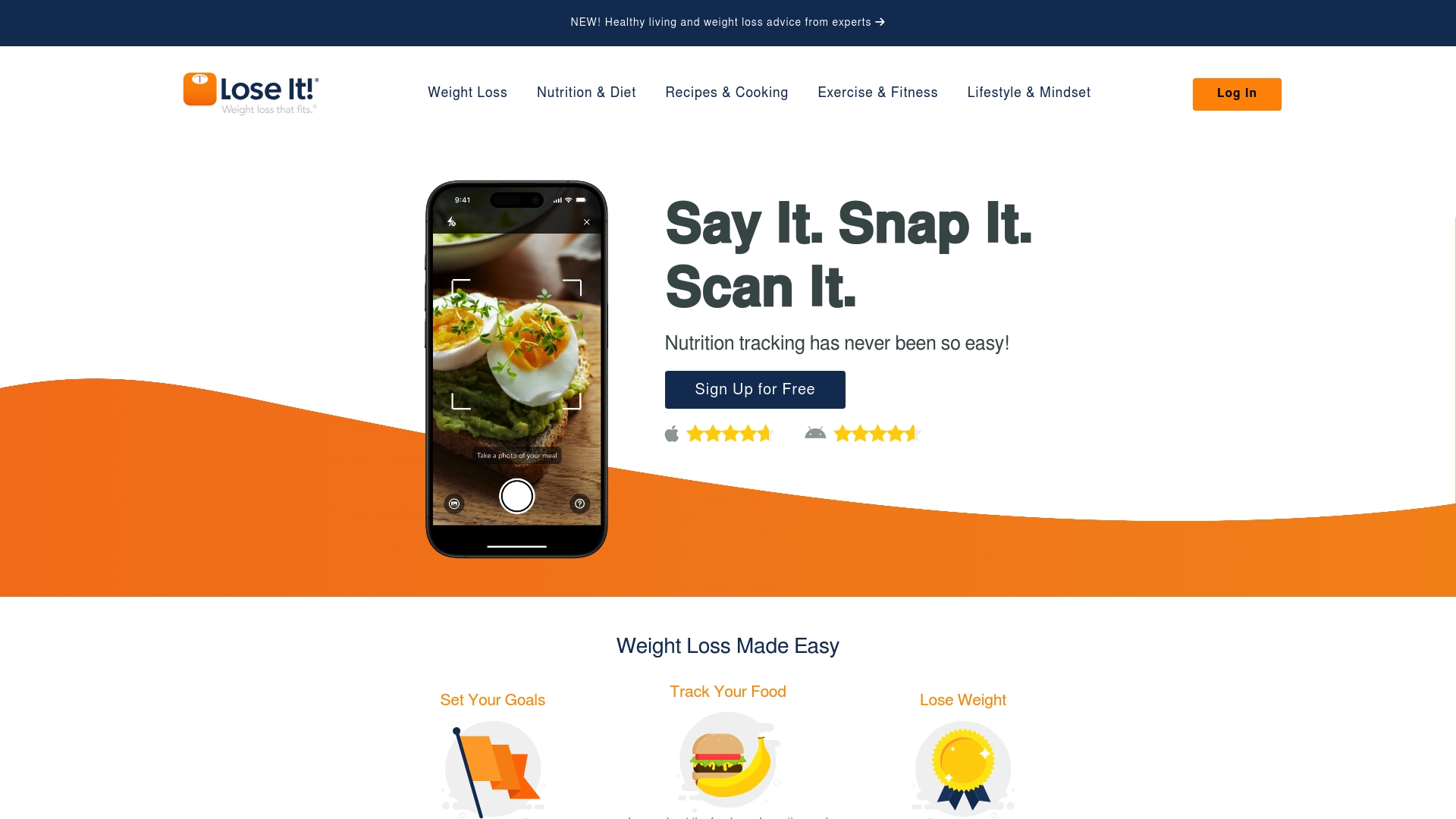
Lose It! is a straightforward weight loss and healthy living app that focuses on personalized goals, simple nutrition tracking, and clear behavioral insights.
It packs multiple logging options—barcode scanning, photo food logging, and manual entry—so tracking fits into a busy day.
Integrations with Apple Health and Google Fit keep activity and hydration visible alongside calories.
Bottom line: a user-friendly, all-in-one tracker that helps most people stay accountable, with extra features gated behind a premium tier.
Core Features
Lose It! centers on personalized weight loss goals and comprehensive food and nutrition tracking.
The app supports barcode scanning for quick entries, photo food logging using smart camera technology, and manual entry when you need precision.
It also records water intake and macronutrient goals—carbs, protein, and more—and connects with Apple Health and Google Fit to sync exercise automatically.
Behavioral reports and weekly insights are delivered by email to help you spot patterns and adjust habits over time.
Pros
- Multiple, easy tracking methods: Barcode scanning, photo logging, and manual entry give you fast options to log food without interrupting your day.
- Personalized goal setting and advice: The app sets individualized weight goals and delivers actionable guidance so you know what to change and why.
- Device integrations for fuller tracking: Syncing with Apple Health and Google Fit pulls activity and hydration into one view, reducing duplicate logging.
- Community motivation: Built-in community features and success stories provide social reinforcement that many users find motivating.
- Free to start: You can sign up and use core features at no cost, which lowers the barrier to trying the app.
Cons
- Some key features require a premium subscription: Advanced tools and deeper personalization may be locked behind the paid tier, limiting what free users can access.
- Depends on user input accuracy: The quality of insights and progress tracking relies heavily on how accurately you log meals and portion sizes.
- Limited customization for advanced users: Those who want highly granular control or advanced customization may find the options restrictive.
Who It’s For?
Lose It! is best for individuals seeking a simple, all-in-one solution for weight loss and healthy living—particularly beginners and everyday users who want straightforward logging, goal tracking, and motivational support.
If you want convenience and a low-friction routine, this app fits well.
Unique Value Proposition
Lose It! combines multiple quick-entry methods, device integrations, and behavior-focused email reports into a single package that emphasizes practicality over complexity.
That mix makes it easy to maintain consistent tracking and see habit-based recommendations without learning a complicated system.
Real World Use Case
A typical user scans packaged foods with the barcode feature, snaps photos of homemade meals for quick logging, and lets Apple Health send exercise data automatically.
Each week they receive a concise report showing calorie trends, macronutrient balance, and hydration habits, which they use to tweak daily goals and stay motivated.
Pricing
Lose It! is free to sign up and use, with an optional premium subscription available that unlocks additional features and deeper personalization.
Website: https://loseit.com
Nutrisystem
At a Glance
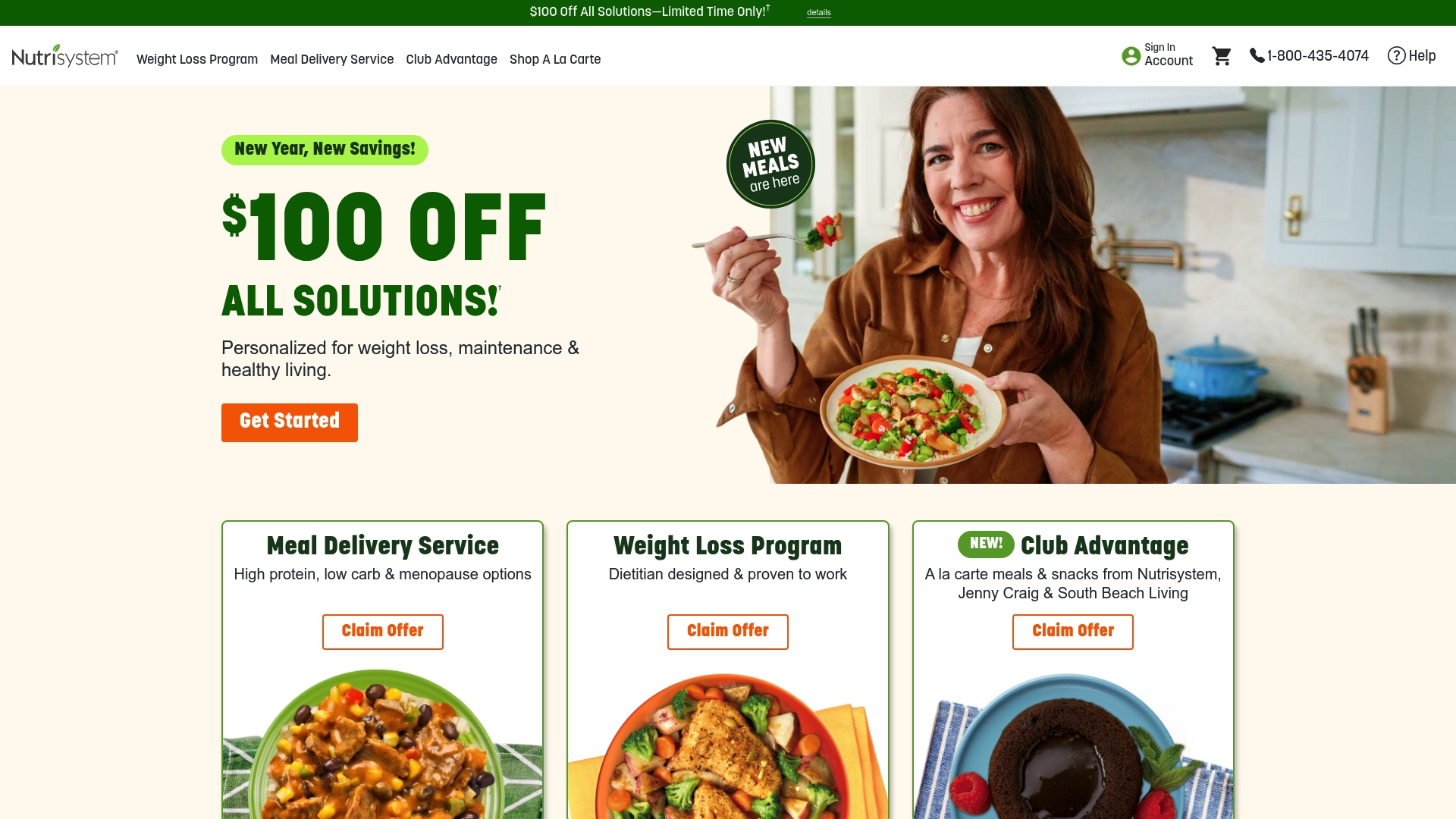
Nutrisystem is a meal-delivery weight loss program built for convenience and structure, offering fully customizable plans aimed at weight loss, maintenance, and healthier living.
The program emphasizes high-protein, low-carb, and menopause-specific options and includes a la carte selections from partner brands.
If you want to remove meal prep from your daily checklist and follow a guided plan, Nutrisystem makes adherence easier while providing coaching and app support.
It is practical—especially for busy schedules—but not a perfect fit for every budget or location.
Core Features
Nutrisystem delivers prepared meals on a schedule with customizable plans that let you choose high-protein, low-carb, or menopause-friendly menus and add a la carte meals and snacks from partner brands like Jenny Craig and South Beach Living.
The program pairs meal delivery with unlimited access to nutrition guides, online coaching, and an app for support and tracking.
Plans are optimized to fit dietary needs, so you can tailor portions and selections without building every meal from scratch.
Pros
- Convenient and time-saving meal delivery: You skip grocery shopping and daily cooking because prepared meals arrive ready to heat and eat.
- Personalized meal plans tailored to individual goals: Nutrisystem offers plan choices and customization that match weight-loss, maintenance, or menopause needs.
- Supportive community and resources: Unlimited access to nutrition guides and coaching gives ongoing guidance beyond the meals themselves.
- Flexible options with many favorites and variety: A la carte items and partner-brand selections expand choice to prevent menu fatigue.
- Money-back guarantee: The program includes a guarantee that provides a safety net if expectations aren’t met.
Cons
- Pricing details are not specified on the webpage: You must contact the service or proceed through sign-up to view plan costs, which makes upfront budgeting difficult.
- Dependent on delivery service, which may not suit all locations: If your area has limited delivery coverage or unreliable shipping, meal consistency can be disrupted.
- Potential cost compared to cooking at home: Paying for prepared meals can be more expensive than planning and preparing meals yourself over time.
Who It’s For?
Nutrisystem fits people who need a structured, turn-key approach to weight management—especially busy professionals, parents juggling schedules, and anyone who struggles with time for meal planning.
If you value convenience, want guided nutrition support, and appreciate variety without daily cooking, this program will likely improve adherence to healthier eating.
Unique Value Proposition
Nutrisystem’s main strength is combining prepared, nutritionally designed meals with unlimited coaching and app-based support—so you get both the food and the guidance.
That blend reduces decision fatigue and helps maintain consistency, which is often the hardest part of weight loss.
Real World Use Case
Imagine a busy professional choosing a high-protein plan, receiving weekly meals, and tapping online coaching when energy dips or cravings increase.
They avoid nightly meal prep, stick to portioned choices, and find it easier to maintain a consistent calorie and macronutrient pattern.
Pricing
Pricing is not specified on the website, though the page advertises a promotion of $100 off all solutions for a limited time, so check current offers during signup.
Website: https://nutrisystem.com
Cronometer
At a Glance
Cronometer is a science-backed nutrition tracker that delivers unusually precise nutrient data and a privacy-focused experience.
It shines for users who want lab-analyzed accuracy and a deep dive into macros, micros, and biometrics rather than a surface-level calorie log.
There is a free tier for basic tracking, but the Gold membership unlocks more advanced insights and tools.
Bottom line: if you value evidence-based nutrition data and device integration, Cronometer is worth trying.
Core Features
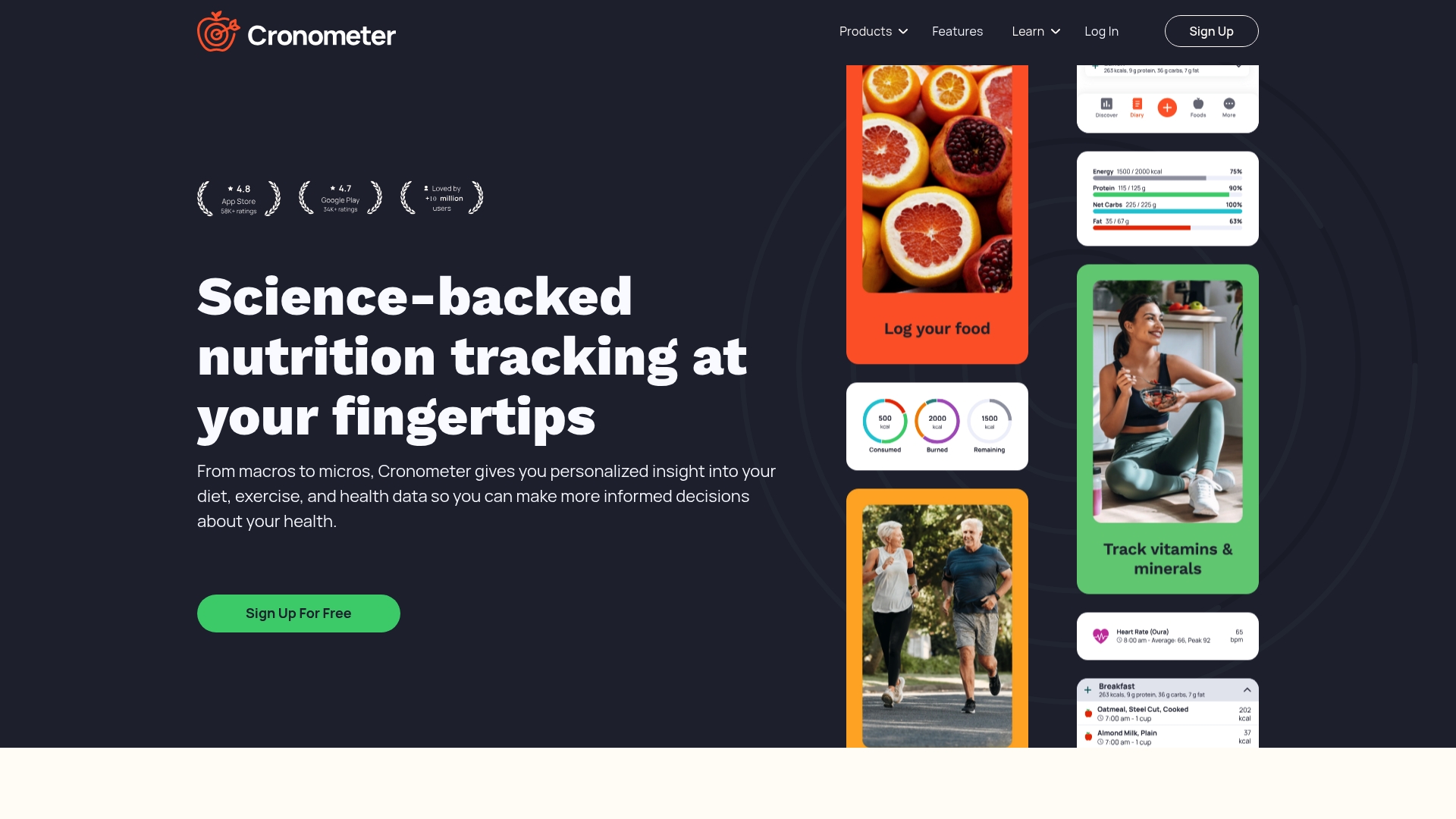
Cronometer’s core is its emphasis on accuracy: the app uses lab-analyzed nutrition data and tracks up to 84 nutrients, including vitamins and minerals, so you can see beyond calories.
It offers food journaling with verified nutrition info and barcode scanning for quick entries, personalized nutrition charts and dashboards to visualize trends, and integrations with health devices such as Apple Watch and Samsung Watch for automated biometrics.
The platform also emphasizes data safety, which appeals to users and health professionals who handle sensitive information.
Simple. Precise.
Pros
- Highly detailed and accurate nutrition data: Cronometer relies on lab-analyzed information so the nutrient breakdowns you see are reliable and specific.
- Comprehensive tracking of macros, micros, and biometrics: You can monitor everything from calories to trace minerals and link biometric entries to see how diet and metrics interact.
- User-friendly interface with quick data entry: Despite the depth of data, the app supports barcode scanning and streamlined logging to minimize friction.
- Strong privacy and data security measures: The platform highlights data safety, which helps protect sensitive health information and builds trust with users.
- Trusted by health professionals and verified by lab data: Dietitians and clinicians can use the platform knowing the underlying data is scientifically vetted.
Cons
- Premium features require a subscription: Several advanced insights and tools are gated behind the Gold membership rather than being available in the free tier.
- Some users may find extensive data overwhelming initially: The depth of nutrient reporting can feel intimidating if you prefer simpler, minimalist tracking.
- Limited free features compared to paid plans: The free version covers basics, but serious power users will likely need the premium upgrade to access the app’s full value.
Who is it For?
Cronometer is ideal for adults who want rigorous nutrition tracking—think people managing medical conditions, athletes refining micronutrient intake, or anyone who prefers data-driven decisions.
It also serves health professionals, dietitians, and researchers who need accurate, verifiable nutrient data for analysis and client care.
Unique Value Proposition
Cronometer’s unique value is its combination of lab-verified nutrition data, coverage of up to 84 nutrients, and device integration, all wrapped in a privacy-conscious platform.
That specific mix makes it better suited than generic calorie counters when accuracy and clinical-grade detail matter.
Real World Use Case
Imagine tracking daily meals, sleep, and blood glucose while watching a nutrient chart reveal a persistent vitamin shortfall—Cronometer surfaces that pattern so you can adjust meals or discuss supplementation with your clinician.
It turns day-to-day logging into actionable insights.
Pricing
A free version is available with basic features; a Gold membership unlocks additional insights and tools.
The Gold tier is a subscription model rather than a one-time purchase.
Website: https://cronometer.com
Fitbit
At a Glance
Fitbit is a hardware-first approach to activity and health tracking that combines wearables with thoughtful data summaries to keep you accountable.
It is best for people who want a reliable tracker or smartwatch that records steps, sleep, and stress while offering optional personalized coaching through Fitbit Premium.
The devices integrate with Google Apps for added convenience, though some advanced features require a subscription. Overall: dependable hardware, strong health insights, and a clear path to better daily habits.
Core Features
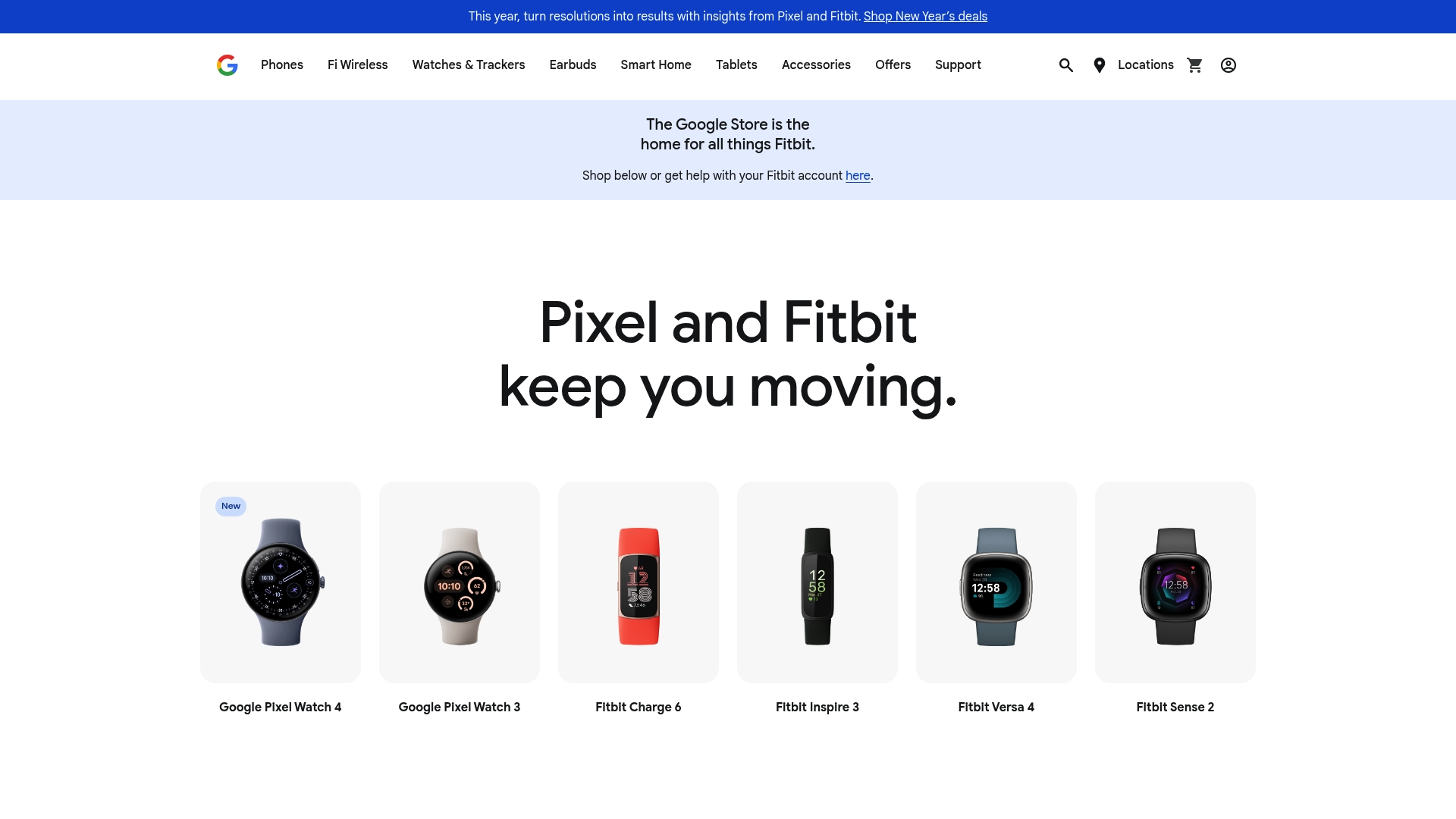
Fitbit centers on activity and fitness tracking across a broad device lineup, from trackers to smartwatches.
Devices capture steps, workouts, heart rate, sleep stages, and stress indicators, then surface health and sleep insights through the Fitbit app. Smartwatch capabilities add notifications, apps, and on-device convenience.
Personalized recommendations are available via Fitbit Premium, and the ecosystem integrates with Google Apps like Maps and Wallet to extend functionality into daily routines.
Pros
- Wide product range: Fitbit offers a broad selection of fitness and health-oriented products that suit beginners and seasoned exercisers alike.
- Smart features included: Many devices support notifications and apps, so you can manage alerts and basic tasks without pulling out your phone.
- Comprehensive data tracking: Fitbit captures a wide array of health metrics, giving you a fuller picture of activity, sleep, and stress trends.
- Google compatibility: Integration with Google Apps like Maps and Wallet makes navigation and contactless payments more convenient from your wrist.
- Frequent offers and discounts: Fitbit often lists promotions and discounts, which can lower the barrier to entry for higher-end models.
Cons
- Higher price points: Product prices can be high, making some advanced models an expensive step up from basic trackers.
- Narrow feature focus: Fitbit is largely limited to fitness and health-related features, so it won’t replace a full-feature smartwatch for productivity power users.
- Subscription for extras: Some useful features and personalized programs require Fitbit Premium, which adds an ongoing cost beyond the device purchase.
Who It’s For?
Fitbit is ideal for health-conscious adults who want a dependable, easy-to-use wearable to monitor activity, sleep, and stress.
You’re a good fit if you value clear health metrics, want gentle motivation to move more, and appreciate seamless integration with Google services.
If cost sensitivity or a non-fitness feature set is top priority, you might want to weigh alternatives.
Unique Value Proposition
Fitbit’s distinct strength is pairing broadly capable wearable hardware with a focused health ecosystem: accurate activity capture, meaningful sleep and stress insights, and the option to access curated, personalized guidance via Premium.
For users prioritizing health metrics and daily habit change, Fitbit ties the hardware and app into a cohesive experience.
Real World Use Case
Imagine wearing a Fitbit Versa 4 to track daily steps, monitor sleep quality, and observe stress patterns.
The device logs workouts, nudges you to move, and feeds sleep stage data into the app, where personalized tips help you adjust routines to improve recovery and activity consistency.
Pricing
Prices vary depending on device and feature set, with offers and discounts frequently available. Some advanced features require a Fitbit Premium subscription, which is sold separately.
Website: https://fitbit.com
Weight Loss and Fitness Tools Comparison
Here is a comprehensive table comparing key aspects of various weight loss and fitness tools to assist users in making informed decisions based on their needs and preferences.
| Product Name | Unique Features | Pros | Pricing | Ideal For |
|---|---|---|---|---|
| Lean & Fit | Focuses on sustainable weight loss through smoothie recipes and practical meal planning tips | Authentic motivation, balanced approach, daily guidance | Free | Health-conscious adults who prefer a realistic, food-based strategy |
| MyFitnessPal | Comprehensive tracking app for calories, macros, and workouts with educational blog content | Large user community, integrates with fitness devices, covers diet and exercise | Free; premium tier available | Individuals seeking detailed tracking and community support |
| WeightWatchers | Structured weight management using a flexible Points® system, community and coach support integrated | Proven results, optional medication assistance, both digital and face-to-face platforms | Starting at $12/month | Adults wanting a blend of science-backed planning and personal coaching |
| Lose It! | User-friendly app offering various food logging methods and weekly insights | Easy tracking, personalized guidance, device integration, community feature | Free; premium tier available | Beginners or casual users looking for convenience |
| Nutrisystem | Meal delivery service with custom plans and nutritional guidance | Prepared meals for convenience, customizable, with coaching and nutrition resources | Pricing not specified | Busy adults requiring structured and prepared meals |
| Cronometer | Detailed nutrient tracking app offering lab-verified data for comprehensive monitoring | Scientific accuracy, extensive data, strong privacy features | Free; premium tier available | Health professionals, athletes, data-driven nutrition enthusiasts |
| Fitbit | Wearable devices for activity and health metrics tracking, integrated with health guidance app | Accurate data, wearable options, Google compatibility | Device cost + optional Premium | Individuals seeking fitness wearables with a focus on activity tracking |
Discover Effective Alternatives for Sustainable Weight Loss Today
If the challenges of finding the right weight loss program like Noom have left you searching for a more natural, practical approach you are not alone.
Many people feel overwhelmed by complicated diets and quick fixes that do not provide lasting results.
The key is adopting realistic lifestyle changes that emphasize balanced nutrition and steady progress, especially through support in Obesity Treatment – LeanAndFit.
Our resources focus on foundational methods such as wholesome meal plans and behavioral strategies designed to keep you motivated and consistent.
Take control of your weight loss journey now by exploring tested techniques and delicious recipes in our Best Lean & Fit Methods – LeanAndFit section.
If meal planning feels challenging, discover simple strategies in our dedicated Meal Planning – LeanAndFit category. Start transforming your habits with expert guidance and real-life success stories available at LeanAndFit. Your sustainable weight loss solution is one click away.
Frequently Asked Questions
Q-1: What are the key features to look for in Noom alternatives for weight loss in 2026?
A-1: Consider looking for alternatives that emphasize personalized meal plans, ongoing coaching support, and user-friendly tracking tools. Prioritize programs that balance flexibility with accountability to increase your chances of long-term success. Focus on options that provide practical resources to sustain your weight loss journey.
Q-2: How can I evaluate the effectiveness of a Noom alternative for my weight loss goals?
A-2: Evaluate effectiveness by examining user reviews, success stories, and specific features that align with your goals. Try to pick alternatives that offer a clear plan suited to your lifestyle or dietary preferences; for instance, some may focus on low-carb eating while others emphasize portion control. Consider starting with a trial period to assess how well it meets your needs.
Q-3: Are Noom alternatives suitable for individuals with specific dietary restrictions?
A-3: Many Noom alternatives can be tailored for individuals with dietary restrictions, such as vegan, gluten-free, or low-sodium diets. Look for programs that offer customizable meal plans or allow you to choose specific foods to ensure they align with your dietary needs. Research the options in advance to ensure they can adequately accommodate your requirements.
Q-4: What steps should I take to transition from Noom to an alternative weight loss program?
A-4: Begin your transition by assessing your current goals and identifying what you need from a new program. Monitor your dietary habits and gather your progress data to discuss with support from your new program. This will help you establish continuity and set realistic targets moving forward.
Q-5: Can I expect similar community support in Noom alternatives as I do with Noom?
A-5: Many alternatives to Noom offer community support through forums, chat groups, or online coaching. Seek programs that emphasize connection among users to share experiences, successes, and challenges, fostering a supportive environment. Engaging with a community can enhance motivation and keep you accountable throughout your weight loss journey.
Recommended
- Top 4 ryanfernando.in Alternatives for 2026 – LeanAndFit
- MyFitnessPal Alternatives for Better Weight Tracking – 2026 – LeanAndFit
- Top Pink Salt Alternatives – Best Choices for 2026 – LeanAndFit
- Top Diet Plans for Adults – Expert Comparison 2025 – LeanAndFit
- Hair Care Apps Comparison – Discover 6 Top Picks for 2025 | MyHair