

Most American families were shocked by the discovery that genetics is said to play a significant role in obesity cases, as high as 70 percent.
This explains why some people, despite having the same habits, may have completely different results in terms of weight.
In the following text, we will discuss how genetic information affects one’s obesity on a fundamental level and examine the importance of knowing the specifics of one’s genome.
Basically, you would understand the role of genetics in obesity.
Table of Contents
- Defining Genetic Influence on Obesity
- Types of Obesity-Related Genes Identified
- How Genes and Environment Interact
- Inherited Risk Versus Lifestyle Choices
- Implications for Weight Loss Approaches
Key Takeaways
| Point | Details |
|---|---|
| Genetic Influence on Obesity | Genetics significantly contribute to obesity risk, with heritability estimates ranging from 40% to 70%, highlighting the role of inherited traits in body weight regulation. |
| Types of Obesity Genes | Key genes such as LEP, LEPR, and FTO have been identified, influencing mechanisms such as hunger regulation, energy balance, and metabolic processes. |
| Gene-Environment Interaction | The interplay between genetic predispositions and environmental factors necessitates personalized lifestyle approaches to effectively manage obesity risk. |
| Personalized Weight Loss Strategies | Genetic testing can lead to tailored diet and exercise recommendations, enhancing weight management by aligning strategies with individual metabolic responses. |
Defining Genetic Influence on Obesity
Genetics play an important role in obesity: recent research has shown that up to 70% of cases may be determined by genetic factors.
It is also noteworthy that obesity may have various genetic causes; the disorder may be monogenic or polygenic. Monogenic obesity is rare and is caused by mutations in a single gene, leading to severe weight gain from an early age.
On the other hand, polygenic obesity is more prevalent and is determined by the combination of genetic and environmental factors. It has been proven that human weight is influenced by many different genes.
In fact, scientists have identified several genetic variations that may be responsible for increased appetite or decreased energy expenditure, among other causes of overweight or obesity.
For some people, being overweight may be genetically programmed: they may have genetic predispositions to weight gain. On the other hand, genetic research may also help in comprehending how our body signals satiety and energy levels.
Therefore, understanding genetic causes of obesity may provide an insight into controlling body weight and managing the disease. However, it should also be noted that genetic causes of overweight and obesity cannot override the effects of external circumstances.
Genes may determine a person’s body weight, but every individual is free to make decisions concerning their health and lifestyle.
Types of Obesity-Related Genes Identified
Genetic studies have identified several key genes that contribute to obesity.
Many different genes are associated with the increased risk of obesity including LEP, LEPR, POMC, MC4R, and FTO. Genes Influenced By Leptin Are Associated With Obesity
The genes that are most commonly associated with obesity are members of the leptin pathway. Variations of the LEP gene and the LEPR gene are among the most common genetic causes of obesity.
The proteins that these genes produce are often involved in the sensation of hunger and satiety. Mutations of the POMC gene may also lead to obesity.
This gene encodes pro-opiomelanocortin which plays an important role in the metabolic process.

Metabolism-Influencing Genes are not only involved in appetite control. Recent genome-wide studies have identified a number of additional genes, such as GAD2, ENPP1, and UCP1-3, which are somehow related to insulin generation, energy expenditure, and fat storage.
For example, the MC4R (melanocortin-4 receptor) gene, which participates in the process of body-weight control, is also implicated in appetite and satiety centers in the brain. The information presented above may help understand genetic risk factors for obesity on a personal level. Therefore, it may be helpful for individual prevention.
Genes do not predetermine overweight and obesity, and a healthy lifestyle can reduce the risk of excessive weight gain regardless of genetic predispositions.
How Genes and Environment Interact?
The interaction of genetic and environmental factors can bring about different results in relation to obesity.
It is interesting to note that researchers have discovered that there are certain dietary and lifestyle-related factors, which can have an adverse effect on the genes responsible for obesity and that the genes may not dictate obesity after all.
Genetic Susceptibility is not an indicator of what one will become, but there is always a possibility that one may have a susceptibility for obesity.
This means that one has to be on the alert because certain behaviors can lead to obesity due to the genes.
The gene-environment interaction can lead to higher chances of obesity and the fact that the chances are higher when there is a combination of genes that are susceptible and a lifestyle that is unhealthy is of great interest.
It is now possible to know how to live within the confines of one’s genetic makeup.
One can research on the best way to live healthily according to the genes and the environment that one lives in. Individuals can get to know their own health risks and then try to mitigate against them in order to live a healthier life.
Inherited Risk Versus Lifestyle Choices
Genetic predisposition and environmental factors collectively shape an individual’s obesity risk, creating a nuanced landscape where inherited traits and personal choices intersect.
While some people may be subject to genetic predispositions towards gaining weight, their impact on the human body may not necessarily be negative.
Genes play a major role in determining how one’s body processes food, manages hunger and fullness cues, and stores fat. There are certain genes which actively contribute to a person’s increased risk of being overweight.
These genes may be countered by a number of other external and internal factors.
A combination of both genetic and acquired properties might determine one’s risk for obesity.
One’s risk for obesity may instead be reduced due to the influence of one’s environment, such as diet and physical activity, among other factors.
A gene which may predispose a person towards obesity will not necessarily determine the person’s relationship with weight.
This is especially true when one considers that a person who is genetically predisposed towards obesity has a significantly higher chance of preventing it by managing their health and lifestyle.
On the other hand, a person who may not be genetically at risk for obesity may still become obese. Genes do contribute to the likelihood of developing obesity, but they are not a deciding factor.
The information which can be gathered from one’s genetic makeup is useful, but only in that it allows a person to identify and manage the issue before it develops.
The best course of action for any person is to analyze the potential risks on an individual basis while taking into account their genetic predispositions.
Implications for Weight Loss Approaches
Being able to understand how genes and diet interact could completely change the way we try to lose weight, transforming broad generalizations about how to lose weight into a more personalized, individual experience based on people’s genetic makeup.
Scientists believe they are close to finding out how different genes affect peoples’ weight and weight loss.
Personalized Weight Loss Strategies may be the future of weight loss.
Genetic variations can dramatically alter responses to different weight loss interventions, meaning that a diet or exercise plan effective for one person might be less impactful for another based on their unique genetic makeup.
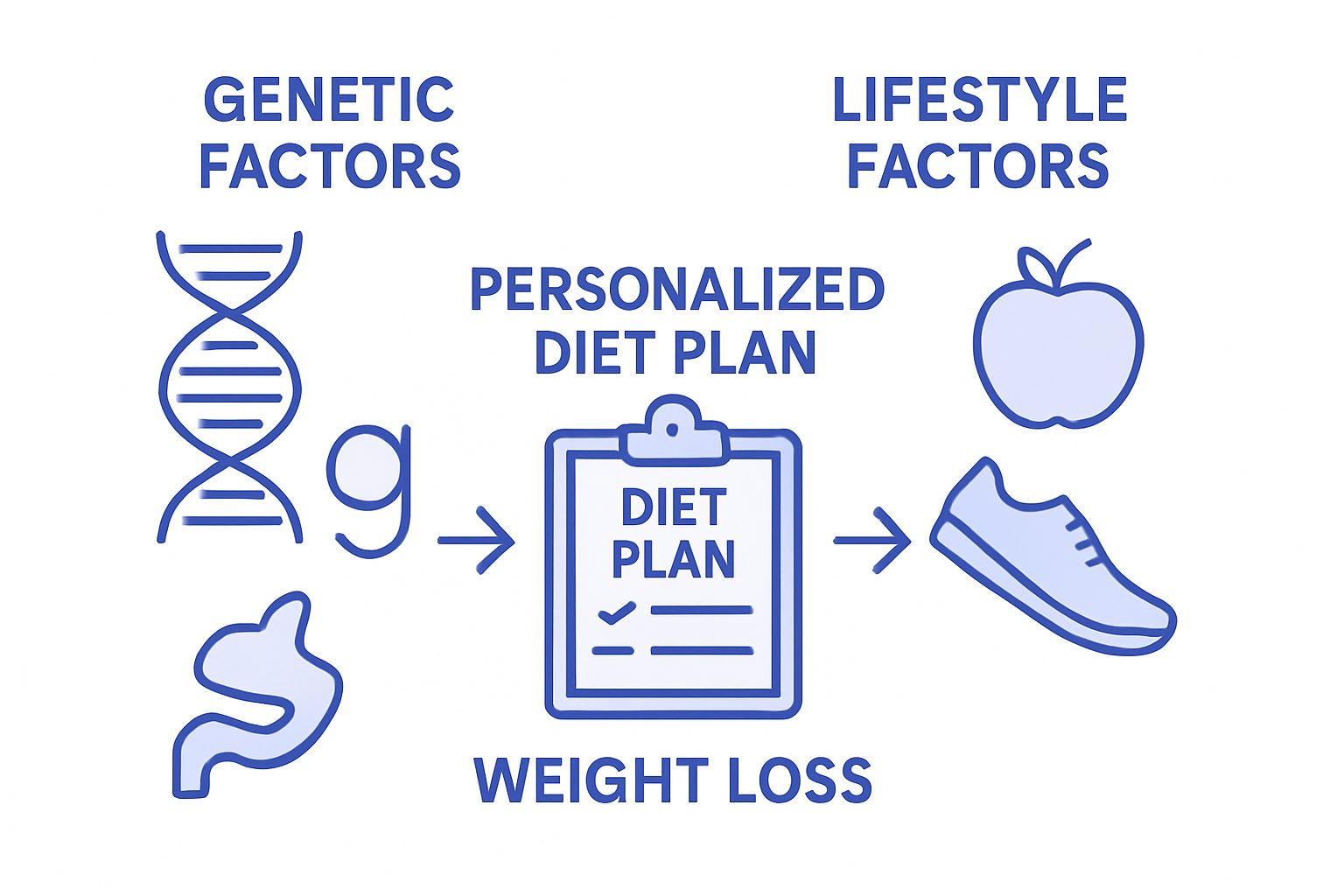
Some people may be genetically predisposed to thrive on low-carb diets, whereas some may do better on a high-protein or Mediterranean diet.
Genetic testing can now identify genetic predispositions and allow doctors to create a fitness and nutritional plan that capitalizes on the person’s genetic makeup and possible problem areas.
Instead of simply counting calories, people can now base their eating and fitness habits on genetic information that will help them reach, or hopefully maintain, their ideal weight.
It’s the future of weight loss: instead of randomly selecting a diet or exercise program, people can choose the method that is right for them based on their genetic makeup.
It’s no longer just trial and error, it’s an excursion into your genetic makeup that will yield helpful information to get you to a healthier place in life.
Discover How Understanding Your Genetic Predisposition Can Transform Your Weight Loss Journey
If you have ever struggled with an ongoing dieting issue and a substantial amount of failed attempts to rid yourself of extra pounds, this article will present relevant information that thoroughly explains possible genetic causes of your condition.
By addressing the effects of obesity-related genes such as LEP, MC4R, and FTO, the article will provide you with a better understanding of how your genes affect your weight gain and overall health.
You want to address these issues with a comprehensive approach that takes into account your unique genetic makeup and dietary needs.
Therefore, we invite you to assess your genetic predispositions by visiting the Genetic Predisposition – LeanAndFit page and learning more about your unique risk factors.
Our professionals will assist you in identifying the best possible course of action in terms of genetic weight loss.
Try the LeanAndFit service today and develop a successful strategy that promises sustainable weight loss results in your particular case.
Frequently Asked Questions:
Q-1: If obesity runs in my family, does that mean my body is “pre-programmed” to get weight?
A-1: It can feel this way, however, your genes are not set in stone or dictate what you must become. Your genes provide a recipe for the development of your body
Although you may be genetically predisposed for weight gain based on your genes
your daily behaviors and choices impact gene expression and can alter gene function. Therefore, a combination of both genes and environment can influence body weight.
Q-2: Why do people that generally follow the same lifestyle gain weight at different rates?
A-2: Genetics is a silent contributor to many facets of human health and weight control is no exception. Some people burn calories more efficiently and others are blessed with a higher metabolic rate.
Genes can influence the hormones that make you feel full or hungry. Genes can contribute to differences in energy expenditure and feelings of satiety. Therefore, two people living the same lifestyle can have different genes that influence their weight.
Q-3: Are there specific obesity genes that have been identified?
A-3: Specific obesity related genes have been identified, for instance ; the FTO gene has been associated with obesity. The Aallele is linked to higher obesity risk and increased intake of energy dense foods.
However, genes only contribute to a higher risk which makes obesity highly genetic but not inevitable. Lifestyle choices outweigh genetic risks.
Q-4: Can genetics dictate how “hungry” I feel throughout the day?
A-4: Yes, people have different levels of appetite or hunger. In some cases, it is genetically programmed meaning you may feel hungry more frequently and with greater intensity than others.
This can make weight control challenging, however it empowers you to make healthier choices regarding food and eating. You are now in control of your health.
Q-5: Is it possible to “override” negative genetic traits that contribute to weight gain?
A-5: “Override” is a harsh word, however, you can work around your genes to control your weight. Physical exercise, healthy eating, proper sleep and managing stress are all factors that can influence gene expression and ultimately your weight.
A good example is that people with obesity genes who are physically active are likely to have lower body weight than those with the same genes who do not exercise. Therefore, yes we can work around our genes to prevent weight gain.
Q-6: Why do some people find it difficult to lose weight and for others it is fairly simple?
A-6: Obesity is commonly attributed to energy imbalance and there is growing evidence that genes do play a significant role in determining a person’s susceptibility to weight gain and obesity.
Some people might have more efficient genes that allow them to lose weight easily or hold on to weight for shorter periods of time. This means it is largely individual and you should not compare your weight loss journey to others since genetics differs.
Q-7: Can genetic testing be used to inform better weight management decisions?
A-7: Yes, it can, however, it is not a magical solution that guarantees weight loss success. Genetic testing can empower you to understand your own genetic makeup and the mechanisms that contribute to weight gain in you.
As such you can make better lifestyle and diet choices to manage your weight. Genetic testing can be interesting and informative but it should not be used as a one size fits all strategy.
Q-8: How much of obesity is determined by genetic factors and how much is determined by environment and behavior?
A-8: Studies indicate that up to 70% of your risk for obesity is genetic. This does not mean that 70% of your body weight is dictated by genes, rather it means that 70% of your ability to gain weight is genetic.
Genes only contribute to a higher risk which makes obesity highly genetic but not inevitable. The other 30% is accounted for by lifestyle which means you still have a significant portion of control over your weight.
Recommended
- Understanding Weight Loss and Genetics: Your Guide – LeanAndFit
- Role of Inherited Metabolism in Obesity – LeanAndFit
- What are the Genetic Variants Linked to Appetite Regulation? – LeanAndFit
- Is Leptin Resistance the Hidden Genetic Trigger for Obesity? – LeanAndFit
- Understanding Genetic Hair Loss: Causes and Effects | MyHair
- Why Trust LeanAndFit.info?
- For educational purposes only