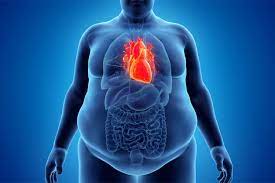

Most adult Americans will experience the effects of stress in their lives, but over half of them will not know what it is and what effects it can have.
Many people are under the misconception that all stress is bad, and can have different effects on everyone. But you need to learn how stress affects health.
However, learning about the biological basis of stress, and the health benefits of certain types of stress, can help people combat their misconceptions and find better ways to take care of themselves.
Table of Contents
- Defining Stress And Its Common Misconceptions
- Different Types Of Stress And Their Effects
- How Stress Impacts The Body And Mind
- Link Between Stress, Obesity, And Chronic Illness
- Effective Strategies For Managing Stress
Key Takeaways
| Point | Details |
|---|---|
| Understanding Stress | Stress is a complex response that can be both beneficial and harmful, depending on its duration and context. Acute stress can enhance performance, while chronic stress can lead to significant health issues. |
| Individual Differences in Stress | Stress affects individuals differently based on genetics, experiences, and coping mechanisms. Tailored stress management strategies are essential for effective support. |
| Holistic Approach to Management | Effective stress management involves a combination of mindfulness practices, lifestyle modifications, and social support to optimize mental and physical health. |
| Connection to Health Risks | Chronic stress is linked to obesity and chronic illnesses, highlighting the importance of addressing stress as a key health risk factor. |
Defining Stress and Its Common Misconceptions
Stress is a very complex state that may have various nature and form a basis for serious conditions.
Biological stress is the reaction of the body to external factors; it includes many aspects such as hormones and physiology.
By understanding the link between stress and weight gain, we may get to know the mechanism of action of this state on our bodies.
There are multiple reasons why people should not belittle stress and believe it to be only a negative feeling. Stress helps individuals cope with some daily challenges in their lives.
There is no doubt that acute stress is often useful for a human as it may give a much-needed adrenalin rush and help in situations requiring quick decisions. Chronic stress is, however, dangerous as it may have a harmful effect on the body, causing many ailments.
Scientists say that there are several myths about stress that should be abandoned as they may implicate incorrect assumptions about the effects of this state.
For example, many people assume that stress impacts all individuals in the same way, which is, according to researchers, an absolutely wrong statement.
Biological stress may present different dangers for people with various genetics and previous experiences. One of the myths regarding stress claims that it always makes people eat more, which is not true, especially for obese individuals.
Scientists proved that there is a link between obesity and stress as both factors are highly likely to affect the same people. It is vital to learn to manage stress and maintain a balance in the body.
Now, we may understand that stress should not be viewed as a one-side situation, and start taking measures to ensure that it will not harm our bodies.
Different Types of Stress and Their Effects
Stress is a complex state that manifests in various forms.
Acute stress is a term, which refers to short-term stresses, which have immediate effects. How stress affects the decrease of metabolism showcases the range of immediate effects, which acute stress has on the body.
Scientists classify stress into three main categories to better understand how exactly stress challenges our body and psyche. Acute stress is only one type of a stress experience, which is usually short-term and has rather immediate consequences, such as narrowly escaping an accident or preparing for an important presentation.
Another type is episodic acute stress, which is also characterized by short-term effects, but it is a culmination of an ongoing acute stress. People with episodic acute stress experience constant worry, tension, and fear.
Chronic stress is the most harmful type of stress, as it often lasts for long periods without any possibility to eliminate the causes of stress. Positive stress, also known as eustress, is a state, which is contrary to detrimental negative stress.
How chronic stress raises cortisol levels and weight demonstrates the variety of adverse effects prolonged stress has on the human body.
Eustress is a positive type of stress, which can energize people and make them more motivated. It can arise due to demanding but enjoyable activities and manifest in anticipation of positive life events. Eustress state is healthy as it does not harm physical and mental health.
The understanding of different types of stress helps in combating stress and prevents health issues, along with psychological problems.
People can now distinguish between various types and better approach the task of eliminating or reducing the negative effects, which stress inflicts on the body. The key to combating stress is to develop certain skills to address acute stress and have a proper mindset towards chronic stress.
How Stress Impacts the Body and Mind?
Stress is a threatening stimulus that has a significant effect on our bodies.
Our body’s reaction to stress is quite fascinating. It may have a positive effect on us, but in most cases, it takes a toll on our bodies. How stress is making you fat shows the intimate connection between our psychic and physical worlds, or, in other words, how our minds control our bodies.
Our bodies react to stress by releasing stress hormones, such as adrenaline and cortisol.
Stress may cause an increase in heart rate, blood pressure, and decrease immunity. In addition, stress disrupts the normal functioning of the endocrine system, which can lead to a variety of conditions, including heart problems, a weakened immune system, and hormonal imbalances, resulting in weight gain and inflammation.

Mentally, stress may have a significant effect on the human organism. The changes which occur in the brain as a result of chronic stress may lead to development of depression or other mental disorders.
In addition, high levels of stress interfere with concentrating, reduce memory and increase irritability.
The fact that obesity may cause stress proves that the mechanisms of stress response are closely related with other physiological functions, and have a large range of effects.
Finally, having an understanding of how stress affects the human body can help in developing methods of coping with it.
By realizing what harm can be caused by stress, people can take measures in order to reduce its harmful effects, such as getting into better shape or practicing relaxation techniques.
Link Between Stress, Obesity, and Chronic Illness
The interaction between stress, obesity, and illness is a complex one, both in terms of causation and symptomatology. The connection between stress and weight gain is well-established, but the ways in which stress and weight impact overall health are less frequently discussed.
The comprehensive guide to obesity’s effects on health can help you understand why these issues might be having a detrimental effect on your body – a detrimental feedback loop which could leave you with a range of ailments.
Stress can have a significant effect on the way your body deals with weight.
A key player in the stress response is the hormone called cortisol. Cortisol is responsible for making the body store fat, particularly around the abdominal area.
Elevated cortisol levels can also lead to an increase in insulin production and a decreased metabolism – both of which are unhealthy for the body and can lead to weight gain. Overall, higher stress levels lead to a much greater likelihood of developing obesity-related illnesses.
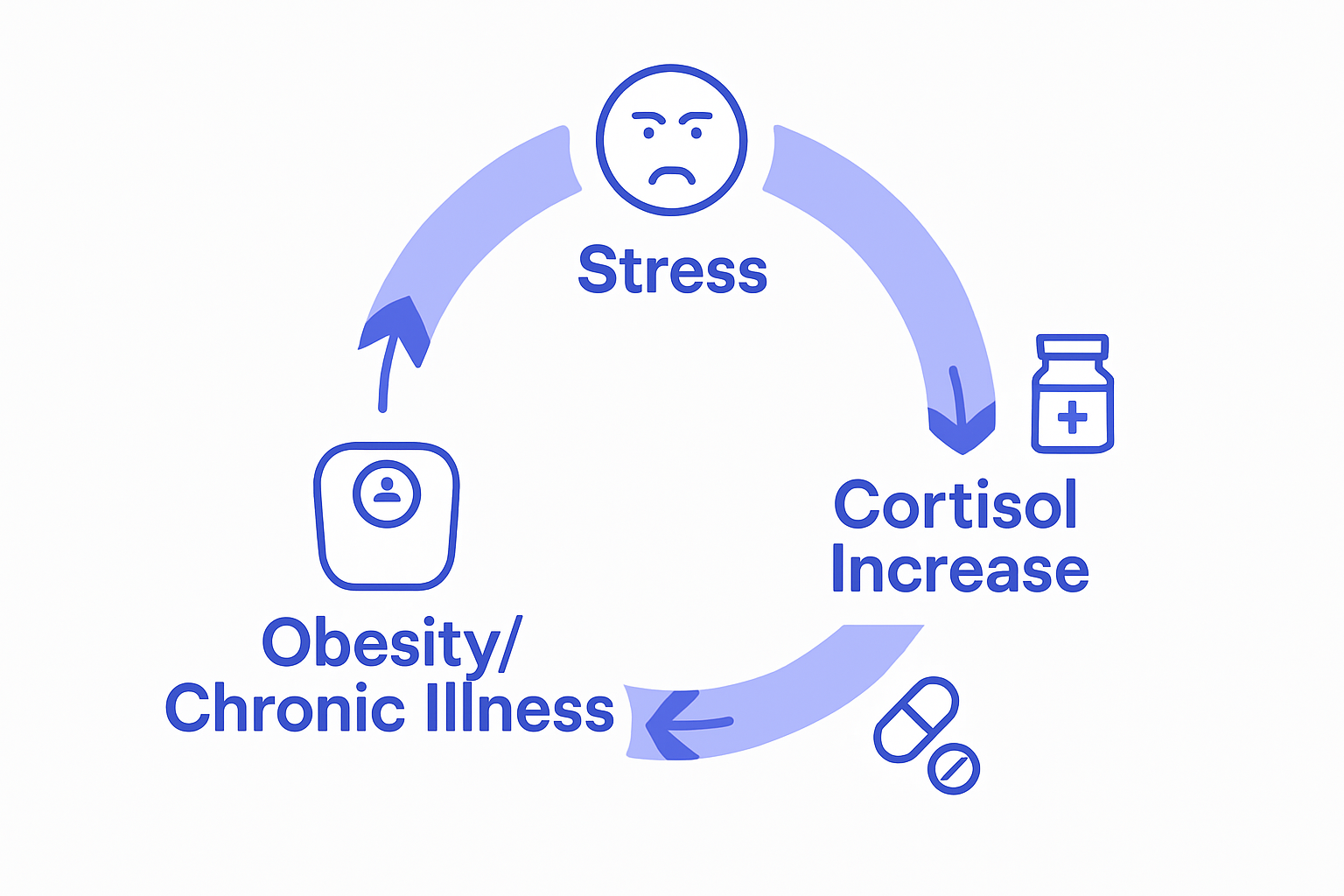
The two-way link between obesity and stress presents a self-perpetuating cycle of negative health outcomes.
The mechanism by which chronic inflammation promotes obesity through increased fat stores exemplifies the ways in which excessive weight exerts additional pressure on the body, precipitating new stressors.
The combination of higher levels of pro-inflammatory cytokines and dysregulated hormonal function associated with increased adipose tissue can have deleterious effects on stress regulation and overall health.
These physiological changes highlight the fact that stress reduction measures are crucial for preventing obesity and maintaining general well-being. The situation calls for a multi-faceted approach which would take into account the person’s psychological and physical health.
By recognizing stress as a danger to well-being, people can identify the means by which they can reduce its negative health consequences.
Effective Strategies for Managing Stress
Managing stress is a complex process that requires a comprehensive approach.
The way stress management techniques help people lose weight illustrates the importance of this issue.
People who know stress-management techniques can benefit from them.
There are a variety of techniques that have proven to be effective in combating stress.
Meditation, breathing exercises, and muscle relaxation are examples of stress-reduction techniques and methods. They help the body to deal with stress naturally by lowering blood pressure and reducing stress hormones in the body. When they are used regularly, they help to relax and build resistance to stress, which is critical to health. This dynamic process helps the body get rid of stress.
In addition to meditation and breathing exercises, changes in lifestyle and behavior can also have a profound effect on managing and reducing stress.
A healthy lifestyle, regular physical activity, balanced nutrition, and enough rest are critical elements in the process of adapting to stress. Social connections also have an important role in stress management and the ability to cope with difficulties. Having a good social network, people can rely on and thereby alleviate some of the stress.
Modern technology and professional medical assistance can also help in getting rid of stress.
A lot of electronic devices and specially designed software can analyze and examine a person’s state of stress. In addition, there are various professionals who can recommend a stress removal plan and explain the mechanisms of its functioning. Overall, in order to get rid of stress, it is necessary to use a set of these measures, which would be most suitable in each individual case.
Take Control of Stress to Protect Your Health and Enhance Your Well-Being
Stress not only impacts your emotional wellbeing but also has adverse effects on your body. As explained in the article, long-term stress may cause hormonal imbalance, weight gain, and other health issues.
Therefore, if you are experiencing stress that makes you feel anxious or low, you should look for ways to manage or reduce it.
Educate yourself about chronic stress and its warning signs and symptoms.
Learn more about chronic stress and how to deal with it in our e-book. We also offer Stress reduction tips and resources to help you cope with stress and focus on losing weight successfully. Do not let stress wreck your health further; start taking action today.
You can get instant access to our e-book on Chronic Stress at LeanAndFit.info and start improving your health and reduce unhealthy weight today.
Frequently Asked Questions:
Listed below are answers to the top 10 burnign queries regarding stress and its impact on your waist circumfrence:
Q-1: How does prolonged stress impact physical health?
A-1: The persistent stress in the body may increase a person’s risk for serious health issues greatly. According to studies conducted by National Health Interview Survey USA, people who have high perception of stress have a possibility of dying sooner by 43%.
Prolonged stress may also contribute to chronic inflammation in the body, resulting in higher risks of cardiovascular diseases, diabetes, and several other auto-immune diseases.
Research results conducted in the United States show that the number of people who believe that stress affects their health adversely makes up 33.7%. The prolonged stress state can considerably damage health since the increased level of cortisol in the blood can accelerate aging and the development of several degenerative diseases.
Q-2: What are the signs of everyday stress?
A-2: Everyday stress may manifest in various ways. According to studies conducted by American Psychological Association, more than 80% of interviewed adults who have experienced stress within a short period of time reported multiple physical signs of it, such as headaches, tiredness, muscle pains, and heart palpitations.
In addition, more than 66% of the respondents stated that they have been experiencing physical discomfort as a result of stress in their daily lives. Moreover, the increased level of stress may lead to chronic manifestations of it in the body.
Q-3: How does stress impact the functioning of the immune system and risks of various diseases?
A-3: Stress reduces the number of white blood cells in the human body, weakening the immune system. As a result, a person may be more likely to get sick or experience adverse effects in the body that will require treatment.
Studies show that stress increases the levels of inflammation in the body, which may lead to autoimmune diseases. In the United States, 14.7% of adults suffer from mental distress.
Q-4: What are the effects of stress on the heart and blood pressure?
A-4: Stress can considerably raise a person’s blood pressure, which can be especially dangerous for people with hypertension. According to studies, the risks of a stroke for people who have psychological distress can increase by more than two times in the United States.
Besides, blood pressure issues, especially among children, adolescents, and young adults, are among the major health issues in the United States.
Q-5: How does stress impact mental health and brain functioning?
A-5: There is a high possibility of developing serious mental illnesses as a result of prolonged stress. According to the report conducted by the CDC, 18.2% of adults in the United States suffer from anxiety, while 21.4% of them suffer from depression.
In addition, stress, especially the one that is prolonged, can also negatively alter the brain structure, impacting memory and other intellectual activities, thus leading to higher risks of developing Alzheimer’s disease.
Q-6: Can stress impact the digestion process and cause diseases?
A-6: Stress can certainly harm a person’s digestion process and adversely affect the overall state of his or her gastrointestinal tract.
The result of the study shows that stress can be the cause of multiple diseases, among which are IBS, gas, bloating, acid reflux, and heartburn. The research also shows that stress can cause inflammation in the gastrointestinal tract.
Within the last decade, there has been a significant increase in diagnosed digestive diseases among the United States population due to stress.
Q-7: How does workplace stress impact the employees’ health and productivity?
A-7: Work-related stress is among the major health concerns in the United States. Within the last few years, there has been a significant increase in the number of people who experience stress as a result of their work.
According to the research results, over 80% of the surveyed workers in the United States experience work-related stress, and more than 50% of them state that it adversely affects their personal lives.
Q-8: What diseases are caused by prolonged exposure to stress?
A-8: The study shows that stress, especially the one that is prolonged, can considerably increase the risks of getting cardiovascular diseases, diabetes, depression, and other auto-immune diseases.
According to the results of scientific research, stress can lead to chronic inflammation in the body, which can be the cause of several diseases. For example, 66.5% of child-care workers in the United States suffer from moderate to severe stress levels, which is a major factor in developing several diseases.
Q-9: How does stress impact the ability to get proper sleep and the occurrence of insomnia?
A-9: Stress can make it impossible for a person to get proper sleep. As a result, he or she will experience serious physical and mental breakdowns.
According to scientific research results, mental distress in the United States affects 15.9% of Americans, most of whom suffer from insomnia.
Recommended:
- How Stress Impacts Metabolic Slowdown? – LeanAndFit
- How Stress Eating is Making You Fat? – LeanAndFit
- How Chronic Stress Impacts Cortisol Levels and Weight Gain? – LeanAndFit
- Understanding the Connection Between Stress and Weight Gain – LeanAndFit
- Prečo je tetovanie stresujúce: Zrozumiteľné vysvetlenie – TKTX
- Jak radzić sobie ze stresem w pracy – skuteczny poradnik krok po kroku | Soulmedic
- Understanding Hair Breakage Medical Causes Explained | MyHair
- Why Trust LeanAndFit.info?
- For educational purposes only