
Most weight loss programs do not consider the fact that your metabolism is responsible for up to 75 percent of your daily energy expenditure.
From the food that you eat to the repair process of your muscles after a workout, your metabolism regulates all of that.
Learning more about how your body burns calories and how it creates new cells will give a better insight into why some people seem to have an easier time than others when it comes to losing weight.
Metabolism explained: Learn all about your metabolism and how it affects everything from energy to weight loss.
Table of Contents
- Defining Metabolism And Its Core Functions
- Types Of Metabolism: Catabolic Vs. Anabolic
- How Metabolism Influences Weight Loss
- Factors Impacting Your Metabolic Rate
- Common Myths And Metabolism Mistakes
Key Takeaways
| Point | Details |
|---|---|
| Understanding Metabolism | Metabolism encompasses catabolism and anabolism, crucial for energy production and regulating bodily functions. |
| Metabolic Rate Factors | Factors like age, muscle mass, and genetics influence individual metabolic rates, impacting weight management strategies. |
| Exercise Impact | Both aerobic (catabolic) and strength training (anabolic) exercises are vital for effective weight loss and metabolic health. |
| Myth Awareness | Common misconceptions about metabolism can mislead weight loss efforts; a holistic understanding is essential for effective strategies. |
Defining Metabolism and Its Core Functions
Metabolism refers to a broad biochemical process in which the body converts food and beverages into energy that powers the body.
In short, it is a mechanism that transforms food into fuel and is responsible for sustaining life. According to Cleveland Clinic, a person’s metabolism is constantly burning calories even when they are not doing anything.
It is a process that consists of two major cycles: catabolism and anabolism.
According to the research published on LibreTexts, catabolism breaks down molecules in food to release energy, while anabolism uses the energy to build molecules in the body.
The metabolism is a set of biochemical reactions that underpin all physiological processes in the body, from digestion to brain function. It is an internal combustion engine that people use to convert food into energy.
The metabolism is involved in all the following processes:
• production of energy at the cellular level
• growth and repair of tissues
• regulation of hormones
• maintenance of body temperature
• storage and distribution of nutrients
Therefore, the metabolic system is an essential part of the human body. It is relevant to almost every physiological process in the body. A person cannot live without it.
A good understanding of the metabolism is essential for weight loss or weight gain.
It is a unique process that can be different for each person.
 For a deeper exploration of metabolism’s role in weight loss, check out our guide on how metabolism works.
Types of Metabolism: Catabolic vs. Anabolic
Metabolism refers to the two broad biochemical processes that take place within the human body. These processes entail the anabolic and catabolic reactions that help the body to function properly.
According to the source, the functions and processes of metabolism are mainly controlled by certain hormones. The catabolic metabolism is the type of reaction that breaks down food molecules and other organic molecules. The process helps the body to extract energy from food and utilizes it to carry out some functions in the body.
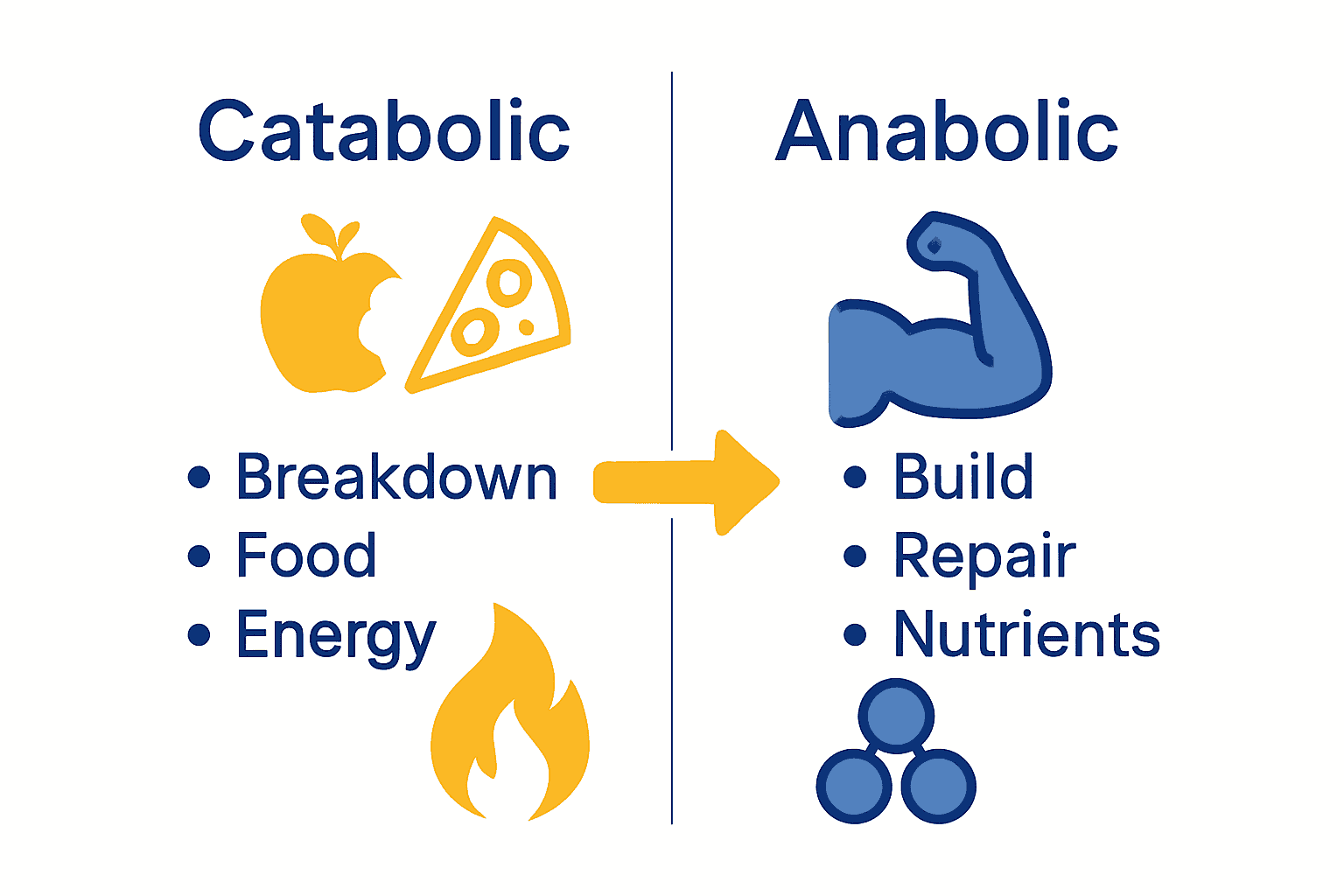
When an individual eats, the reactions that take place in the body to break down proteins, carbohydrates, and lipids into simpler substances are referred to as catabolic metabolism. This metabolism is found to be operating in almost all body tissues. It works by breaking down more complex molecules into the less complex form while at the same time extracting energy from them.
The second type of metabolism is the anabolic metabolism. The process entails the formation of complex molecules from relatively less complex ones. In most cases, it has been found that energy is required for the anabolic reactions to take place.
The type of metabolism is associated with activities such as muscle building and repair. When exercising, the process helps to build new tissues by repairing the existing ones. It can also be said that the body uses the anabolic metabolism to generate energy. The overall health status of an individual is dependent on the balance of these two metabolic activities.
These activities are the main factors that determine the amount of energy that a person utilizes throughout the day. To know more about the best way to boost your metabolism level, go through our article on the possible ways that can help you achieve it.
Key Differences Between Catabolic and Anabolic Metabolism
- Catabolic Metabolism
- Breaks down complex molecules
- Releases energy
- Associated with activities like digestion and exercise
- Anabolic Metabolism
- Builds complex molecules
- Requires energy input
- Associated with growth, repair, and muscle development
Understanding these metabolic processes can help you make more informed decisions about nutrition, exercise, and overall health strategies.
How Metabolism Influences Weight Loss
Metabolism is the key process to managing weight. It is the mechanism through which the body burns calories for energy.
According to the Cleveland Clinic, the primary factors that determine weight loss are the balance of calories in and out, and the individual’s age, sex, and level of physical activity.
The metabolism-weight loss link is complex and depends on various factors. According to the Cleveland Clinic, weight loss is a function of both catabolic and anabolic metabolism. Catabolism is when the body breaks down molecules to produce energy. It is the process in which calorie-burning physical activities such as aerobic exercises take part.
Anabolism is a process in which the body synthesizes new molecules. Strength-training activities such as weightlifting allow the individual to gain muscle mass and therefore increase the resting metabolic rate.
Key Metabolic Factors in Weight Loss
- Basal Metabolic Rate (BMR)
- Calories burned at rest
- Influenced by muscle mass, age, and genetics
- Accounts for 60-75% of daily energy expenditure
- Exercise and Metabolic Impact
- High-intensity workouts increase metabolic rate
- Builds lean muscle, enhancing long-term metabolism
- Creates post-exercise oxygen consumption effect
To accelerate your metabolism and lose weight, it’s essential to find effective ways to build muscle tissue and to maintain an active lifestyle. The guide to the gut and metabolism will help you understand how the inner workings of your body affect your metabolism and vital functions.
Knowing your metabolism is vital, and some people are simply more fortunate to be born with a quick metabolism. However, everyone can benefit from learning how to increase their metabolic rate and burn more calories.
The most effective way is to combine regular and intense workouts with the right diet and study the mechanism of action of calories in the body.
Factors Impacting Your Metabolic Rate
Metabolism is not a straightforward process and can differ significantly among individuals. According to the Cleveland Clinic, there are several variables that can affect the metabolic rate, namely, age, sex, and the amount of muscle, and hormone levels.
Some factors are hard to control, but there are those that are in the power of every person.
For example, Cleveland Clinic suggests that metabolism can be influenced by specific hormones. To put it another way, the level of hormones in the body is directly related to the metabolic rate.
In particular, adrenaline and cortisol are hormones that increase energy expenditure, while insulin and growth hormones decrease it.
Key Metabolic Rate Influencers
- Uncontrollable Factors
- Genetics
- Age
- Biological sex
- Inherited metabolic conditions
- Controllable Factors
- Muscle mass
- Physical activity level
- Sleep quality
- Stress management
- Nutritional habits
Understanding how these factors are interconnected may contribute to developing effective strategies for metabolic optimization.
If you are worried about your age-related metabolic decline, our article on the connection between age and metabolism may provide you with comprehensive information on the topic and offer practical advice on sustaining a healthy metabolic rate at all ages.
Therefore, it is important to understand that human metabolism is influenced not only by genetic and external factors but can also be controlled by an individual.
Thus, to increase the metabolic rate, one should focus on the controllable factors such as muscle gain, stress reduction, and regular physical activity.
Common Myths and Metabolism Mistakes
There are several myths about metabolism that may hinder one’s efforts to lose weight. According to Cleveland Clinic, weight loss is not as simple as one’s metabolism.
There is a dangerous myth that a person’s metabolism dictates whether they gain or lose weight.
Cleveland Clinic also dispels myths about the types of exercise that are optimal for fat loss.
Some people think that certain forms of exercise exclusively burn fat, while others do not, but according to Cleveland Clinic, one must perform both anaerobic and aerobic exercises to burn fat and lose weight. The ideal exercise program is the one that one enjoys and is consistent with, combining both aerobic and anaerobic exercises.
Top Metabolism Misconceptions
- Metabolism Myth: “Skinny People Have Fast Metabolisms”
- Metabolic rate is more complex than body size
- Muscle mass plays a crucial role
- Genetics and hormones significantly influence metabolism
- Exercise Myth: “Cardio is the Only Way to Lose Weight”
- Strength training builds muscle
- Increased muscle mass boosts resting metabolic rate
- Balanced approach yields better results
If you are having trouble brushing off these popular misconceptions, our experts on the most common mistakes in terms of understanding how to lose weight can assist you in elaborating on the comprehensive approach to the matter.
To truly get rid of them, you need to understand that your metabolism is a complex mechanism that can be influenced by numerous factors.
Therefore, taking a serious look at the entire situation from more than one perspective can help you achieve a better and more thorough understanding of the issue and solve it faster.
Frequently Asked Questions:
This FAQ section delivers a clear, data-driven understanding of metabolism and its role in sustainable weight loss, helping users make informed and effective health decisions:
Q-1. Describe how metabolism works for weight loss in simple terms in 2026?
A-1. Metabolism meaning the way the body burns food for energy and for weight loss; your body should burn more calories than you intake in food. About 60-70% of the calories you burn each day are used for your resting metabolic rate. In the USA, it has been found that if you have a 500-calorie deficit per day, you will lose weight at the rate of 0.5-1 lbs per week.
Q-2. How can one naturally boost metabolism for weight loss in the USA?
A-2. The natural way to boost metabolism includes weight training exercises, consuming more protein in the diet, and staying active throughout the day. When people eat foods that are high in protein, it helps them burn calories at a faster rate than usual by about 15-30%. As many as 66% of the sports enthusiasts in the USA these days have been found to use resistance training and this has increased their metabolic rate by as much as 7%.
Q-3. Does slow metabolism lead to weight gain and how to overcome it?
A-3. Having a slow metabolism can mean that you gain weight easily but it is not the main reason for weight gain. There are other contributors to weight gain that include lack of proper exercise and unhealthy diets. Studies have shown that an individual’s resting metabolic rate can vary by only 5-10% which means that there is little difference in calorie-burning capacity between people. The way to improve your metabolism is by increasing your muscle mass, getting good sleep, and having regular meals.
Q-4. What are the foods that help improve a slow metabolism and burn fat?
A-4. The foods that are helpful in improving slow metabolism and burning fat are those that are high in proteins, green tea, and chili peppers. Foods that are high in proteins increase the number of calories burned by up to 20% when you eat them. Taking foods that contain capsaicin, for instance, chilies, can speed up your metabolism for a short time but not enough to cause significant weight loss. As many as 58% of Americans are fond of taking metabolism-boosting foods to lose weight.
Q-5. Is boosting metabolism important or calorie deficit for weight loss?
A-5. Having a calorie deficit is more important than boosting your metabolism. This is because when you have a calorie deficit, you are certain to lose weight no matter your metabolic rate. However, if you have a normal metabolic rate and you increase it by 10%, you might not see the results you desire due to the variations in metabolic rates among people. As many as 72% of people in the USA have lost weight through calorie deficit.
Q-6. What are the signs of a fast and slow metabolism?
A-6. The signs of a fast metabolism are that you are always energetic and you do not gain weight easily. On the other hand, people with slow metabolism are those who gain weight easily and are always tired. However, the variations between a slow and fast metabolism are not that big since studies have shown that there is only a 10-15% difference between people’s metabolic rates. The signs of slow and fast metabolism do not necessarily indicate whether you can lose weight or not because there are other factors that contribute to weight loss.