

Everyone talks about healthy weight like it is all about hitting the right number on the scale.
Here is where things get interesting.
BMI might say you are healthy, but factors like muscle mass and waist size can change your real health picture entirely.
Your weight range is not just a fixed goal but a unique equation shaped by genetics, lifestyle, and more.
Most people never realize how personal this number really is.
Table of Contents
- Defining Healthy Weight Range: What Does It Mean?
- The Importance Of Healthy Weight Range For Your Health
- Factors Influencing Healthy Weight Range: Beyond Bmi
- How To Evaluate Your Healthy Weight Range Realistically
- Real-World Implications Of Maintaining A Healthy Weight Range
Quick Summary
| Takeaway | Explanation |
|---|---|
| Understand BMI, but don’t rely solely on it. | BMI is a useful initial metric, but body composition and individual factors are essential for accurate health assessment. |
| Consider waist circumference for health risks. | Waist size is critical to identify risks related to heart disease and diabetes, complementing weight measurements. |
| Assess overall health, not just weight. | A comprehensive evaluation includes blood pressure, cholesterol, and lifestyle factors, beyond just weight metrics. |
| Genetics and environment influence weight. | Your healthy weight range is affected by genetic predispositions and lifestyle choices, emphasizing personalized approaches. |
| Maintain a healthy weight for life benefits. | Healthy weight management can enhance professional performance, social interactions, and overall well-being, transforming life quality. |
Defining Healthy Weight Range: What Does It Mean?
Understanding what constitutes a healthy weight range is fundamental to managing personal health and preventing potential medical complications. A healthy weight range represents more than just a number on a scale it encompasses a comprehensive assessment of an individual’s overall physical well being.
Calculating Your Healthy Weight Range
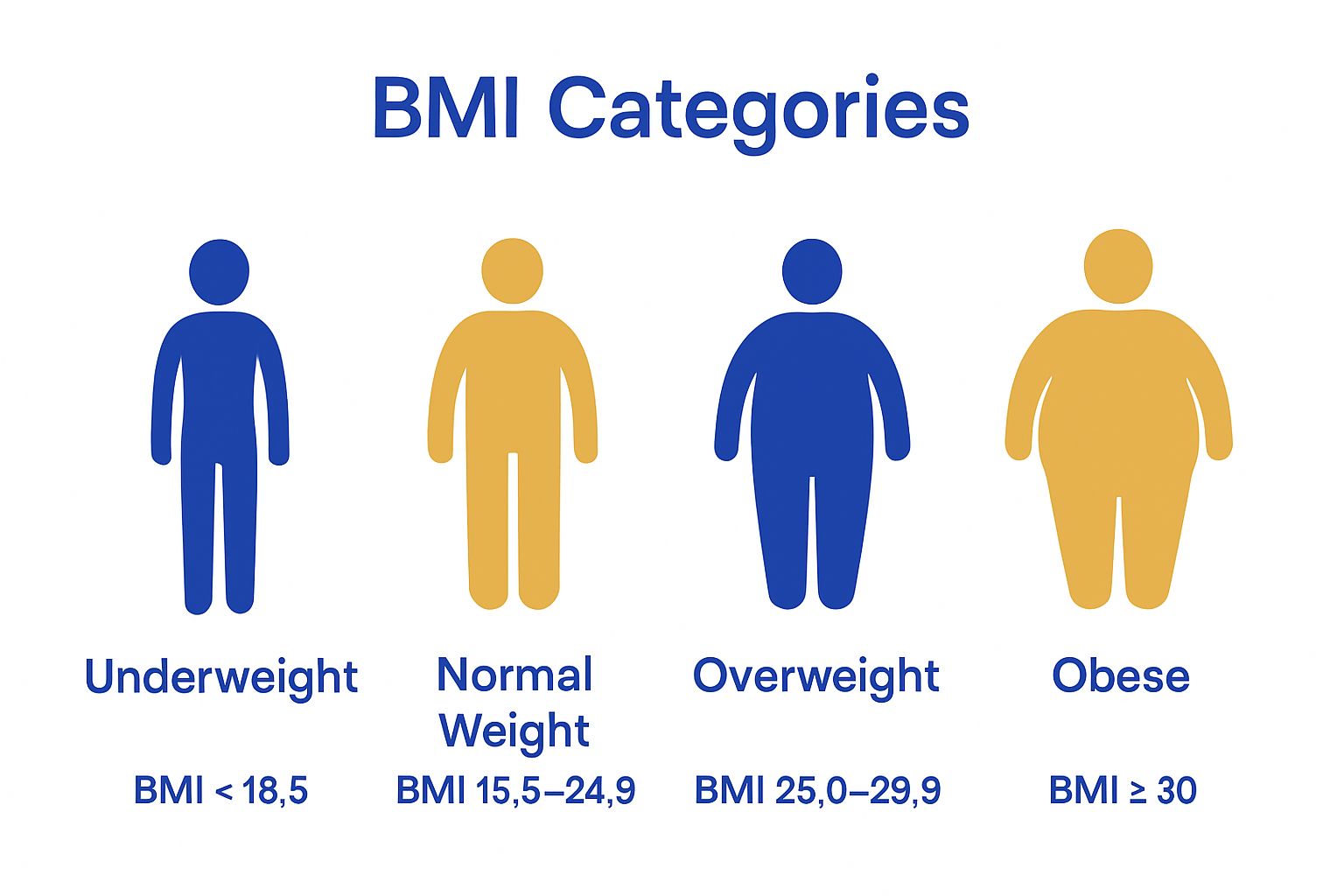
Weight management experts typically use the Body Mass Index (BMI) as a primary tool for determining an appropriate weight range. BMI calculates the relationship between height and weight, providing a standardized metric that helps categorize individuals into different weight classifications
 :
:
- Underweight: BMI below 18.5
- Normal Weight: BMI between 18.5 and 24.9
- Overweight: BMI between 25 and 29.9
- Obese: BMI of 30 or higher
However, BMI is not a perfect measurement. Muscle mass, bone density, overall body composition, age, and gender can influence the interpretation of these numbers.
Athletes with high muscle mass, for instance, might have a higher BMI that does not necessarily indicate poor health.
The table below summarizes BMI classification categories and their associated BMI ranges, making it easier to quickly identify each weight status based on BMI values.
| BMI Classification | BMI Range (kg/m²) |
|---|---|
| Underweight | Below 18.5 |
| Normal Weight | 18.5 – 24.9 |
| Overweight | 25 – 29.9 |
| Obese | 30 or higher |
Beyond the Numbers: Holistic Health Considerations
A healthy weight range involves more than mathematical calculations. It encompasses several critical health factors.
Waist circumference becomes another essential indicator, particularly for understanding potential risks of conditions like heart disease and diabetes. Individuals with excess abdominal fat face higher health risks, even if their overall weight seems within a standard range.
Comprehensive health assessments consider multiple aspects beyond weight, including:
- Blood pressure levels
- Cholesterol profiles
- Blood sugar measurements
- Family medical history
- Overall physical fitness and activity levels
You might want to read more about setting realistic weight loss goals to develop a personalized approach to achieving and maintaining a healthy weight range.
Ultimately, a healthy weight range is a dynamic concept that varies between individuals. Consulting healthcare professionals who can provide personalized assessments remains the most reliable method for understanding your specific health requirements and optimal weight range.
The Importance of Healthy Weight Range for Your Health
Maintaining a healthy weight range is not just about appearance or societal standards it is a critical component of comprehensive health and disease prevention.
Consistent weight management directly impacts multiple physiological systems and plays a significant role in reducing risks associated with various chronic health conditions.
Metabolic and Cardiovascular Health Implications
Research from leading health institutions demonstrates that maintaining a healthy weight range significantly reduces risks of serious medical conditions.
When body weight remains within recommended parameters, individuals experience improved metabolic functioning and decreased likelihood of developing critical health problems:
- Lower risk of type 2 diabetes
- Reduced chances of heart disease
- Improved cholesterol and blood pressure levels
- Enhanced insulin sensitivity
- Better overall cardiovascular performance
The connection between weight and metabolic health is profound. Excess body weight creates additional stress on internal organs, disrupting hormonal balance and increasing inflammation markers that can trigger multiple health complications.
Long-Term Health Outcomes and Disease Prevention
Beyond immediate health metrics, maintaining a healthy weight range contributes to long-term wellness and quality of life.
Obesity and being overweight are associated with increased risks of:
- Certain types of cancer
- Respiratory disorders
- Musculoskeletal problems
- Reproductive health challenges
- Neurological disorders
Discover strategies for maintaining sustainable weight loss that can help you achieve and preserve your optimal health range.
Preventing weight-related health risks requires a holistic approach that combines balanced nutrition, regular physical activity, and periodic health assessments.
Understanding your body’s unique needs and working proactively to maintain a healthy weight can significantly enhance your overall life expectancy and wellness trajectory.
Factors Influencing Healthy Weight Range: Beyond BMI
While Body Mass Index (BMI) provides a standardized framework for understanding weight, it represents only one piece of the complex puzzle of individual health.
A comprehensive understanding of weight requires examining multiple interconnected factors that extend far beyond simple height and weight calculations.
Genetic and Biological Determinants
Scientific research reveals that genetic predispositions play a significant role in determining an individual’s healthy weight range.
Genetic factors influence metabolism, fat storage patterns, and how efficiently the body processes nutrients:
- Inherited metabolic rates
- Hormonal regulation mechanisms
- Propensity for fat storage
- Muscle mass development potential
- Genetic variations affecting appetite and satiety
Understanding weight loss and genetic influences can provide deeper insights into personalized health strategies that account for individual biological differences.
Environmental and Lifestyle Influences
Beyond genetics, external factors substantially impact an individual’s healthy weight range. Lifestyle choices, socioeconomic conditions, and environmental contexts create complex interactions that determine overall health and weight management:
- Dietary habits and nutrition quality
- Physical activity levels
- Stress management
- Sleep patterns
- Access to healthcare and nutritional resources
These environmental factors can significantly modify how an individual’s body responds to diet and exercise, making weight management a nuanced and personalized journey.
This table compares genetic/biological and environmental/lifestyle factors that influence a person’s healthy weight range, helping distinguish between internal predispositions and modifiable external influences.
| Category | Key Influences |
|---|---|
| Genetic & Biological | Inherited metabolic rate, hormonal regulation, fat storage patterns, muscle mass potential, genetic appetite/satiety variations |
| Environmental & Lifestyle | Dietary habits, physical activity, stress management, sleep patterns, access to healthcare/nutrition resources |
Individuals seeking a truly comprehensive approach to health must recognize that weight is a dynamic metric influenced by an intricate web of biological, psychological, and environmental factors. Consulting healthcare professionals who can provide personalized assessments remains crucial for developing targeted, effective health strategies.
How to Evaluate Your Healthy Weight Range Realistically?
Evaluating a healthy weight range requires more than simple numerical calculations.
A nuanced, comprehensive approach considers multiple health indicators and recognizes that individual wellness cannot be reduced to a single metric or standard formula.
Professional Assessment Strategies
Medical experts recommend comprehensive health evaluations that go beyond traditional weight measurements.
Accurate assessment involves multiple professional diagnostic tools:
- Comprehensive physical examination
- Blood panel and metabolic screenings
- Body composition analysis
- Cardiovascular health assessment
- Nutritional and lifestyle consultation
These professional evaluations provide a holistic understanding of an individual’s health status, accounting for unique physiological characteristics that generic weight charts might overlook.
Personal Health Metrics and Self-Monitoring
Self-awareness plays a critical role in understanding personal health trajectories.
Key personal metrics offer insights into overall wellness beyond traditional weight measurements:
- Waist circumference measurements
- Resting heart rate
- Energy levels and daily functionality
- Muscle strength and flexibility
- Overall physical endurance
Learn about establishing realistic weight loss targets to develop a personalized, sustainable approach to health management.
Realistic weight range evaluation demands a multifaceted perspective that integrates professional medical guidance, personal health data, and an understanding of individual physiological nuances.
Approaching weight management as a comprehensive health journey rather than a restrictive numerical goal ensures more sustainable and meaningful personal wellness outcomes.
Real-World Implications of Maintaining a Healthy Weight Range
Maintaining a healthy weight range transcends mere physical appearance, profoundly impacting multiple dimensions of personal and professional life.
The consequences of weight management extend far beyond medical metrics, influencing psychological well-being, social interactions, and overall life opportunities.
Professional and Economic Consequences
Research demonstrates that individuals maintaining a healthy weight range often experience significant advantages in workplace settings and economic stability.
Weight-related health can dramatically influence career trajectories and earning potential:
- Enhanced professional performance
- Reduced healthcare expenditure
- Lower rates of workplace absenteeism
- Increased mental clarity and productivity
- Improved interpersonal workplace relationships
Employers increasingly recognize the correlation between employee health and organizational effectiveness, making weight management a critical personal investment.
Psychological and Social Dimensions
Beyond professional impacts, maintaining a healthy weight range profoundly affects psychological resilience and social interactions.
Individuals who successfully manage their weight often report improved:
- Self-confidence and body image
- Mental health and emotional stability
- Social engagement and relationship quality
- Stress management capabilities
- Overall life satisfaction
Explore strategies for long-term weight maintenance to understand how sustainable health practices can transform your life.
Recognizing weight management as a holistic journey rather than a temporary intervention allows individuals to develop sustainable lifestyle strategies that yield comprehensive personal and professional benefits.
The real-world implications of maintaining a healthy weight range extend far beyond numerical metrics, representing a fundamental investment in personal potential and quality of life.

Move Closer to Your Healthy Weight Range With the Right Support
Are you feeling overwhelmed by all the advice about finding your healthy weight range?
When it comes to bridging the gap between knowing what is best for your health and actually making lasting changes, personalized guidance makes all the difference.
If tracking numbers and trying to fit into a one-size-fits-all plan has not worked, it is time for an approach that truly addresses your goals.
Discover meal planning resources and learn to build lasting habits at Meal Planning – LeanAndFit.
Start building a healthier future today.
Visit leanandfit.info now for step-by-step plans, practical exercise ideas from our Exercise Regimens – LeanAndFit section, and evidence-based strategies personalized for you. Your healthy weight range is within reach when you use the right tools. Take your first step now and begin your transformation.
Frequently Asked Questions:
A healthy weight range is not just a number on a scale—it reflects how well your body is functioning internally.
It connects metabolism, muscle mass, fat distribution, and lifestyle habits into one overall picture of health.
Instead of chasing a “perfect weight,” the real goal is to understand the range where your body performs best physically and mentally.
Q-1: Why does the “healthy weight range” feel different for every person even at the same height?
A-1: The healthy weight range is influenced by more than height—it includes muscle mass, bone density, fat distribution, and even genetics.
Two people of the same height can have very different body compositions.
One may have higher muscle mass, which naturally increases weight but improves health markers. Another may carry more body fat at the same weight.
This is why healthy weight range is not a fixed universal number but a spectrum where body composition matters more than the scale alone.
Lifestyle habits also shape where a person naturally settles within that range.
Q-2: Can someone be inside the healthy weight range and still have hidden health risks?
A-2: Yes, and this is more common than people realize. Being inside a healthy weight range does not guarantee internal health.
A person may still have high visceral fat (fat around organs), insulin resistance, poor cardiovascular fitness, or nutrient deficiencies.
This condition is sometimes called “normal weight obesity.” It happens when weight appears normal but fat distribution and metabolic health are not optimal.
That is why relying only on weight can be misleading. True health requires checking energy levels, waist circumference, blood markers, and physical fitness, not just the scale.
Q-3: Why does the body tend to “fight back” when we try to go below the healthy weight range?
A-3: The body is designed to protect energy reserves for survival.
When weight drops too low, especially below the natural healthy weight range, the body may reduce metabolism, increase hunger hormones, and lower energy output.
This is known as biological adaptation. It is not sabotage—it is protection. The body interprets very low weight as a potential threat and tries to restore balance.
This is why extreme dieting often leads to fatigue, cravings, and rebound weight gain. Sustainable health happens when the body is kept within its natural range rather than pushed below it.
Q-4: How does muscle change the idea of a “healthy weight range” in real life?
A-4: Muscle completely changes how the healthy weight range should be interpreted.
Muscle tissue is denser than fat, meaning it weighs more but takes up less space. A person with higher muscle mass may weigh more but still be healthier and leaner in appearance.
This is why athletes often fall on the higher end of weight charts but are in excellent health.
Muscle also improves metabolism, insulin sensitivity, and physical strength. So, the healthy weight range becomes more flexible when muscle is considered, shifting focus from weight alone to body composition.
Q-5: Why do people often regain weight after reaching a “perfect” healthy weight range?
A-5: Weight regain usually happens when the method used to reach the target weight is not sustainable. Extreme calorie restriction or overly strict diets slow down metabolism and increase cravings.
Once normal eating resumes, the body tends to restore lost weight quickly. Additionally, psychological burnout plays a role—people cannot maintain restrictive habits forever.
Sustainable weight management requires gradual changes in eating habits, consistent activity, and realistic expectations.
Healthy weight range is not meant to be achieved temporarily but maintained naturally over time through balanced living.
Q-6: How does stress affect whether someone stays in their healthy weight range or not?
A-6: Stress plays a major role in weight regulation. Chronic stress increases cortisol levels, which can lead to fat storage, especially around the abdominal area.
It can also disrupt sleep, increase cravings for high-calorie foods, and reduce motivation for physical activity. On the other hand, some people may lose weight under stress due to reduced appetite.
Either extreme pulls the body away from its healthy weight range.
Managing stress through sleep, movement, and relaxation practices helps maintain a stable metabolic environment, making it easier to stay within a healthy weight zone.
Q-7: Is it possible for your “healthy weight range” to change over time?
A-7: Yes, absolutely. The healthy weight range is not fixed for life. It changes with age, muscle mass, lifestyle habits, hormonal changes, and activity levels.
For example, as people age, muscle mass naturally declines unless actively maintained, which can shift weight distribution. Similarly, someone who starts strength training may increase weight but actually improve health.
Life events such as pregnancy, illness, or lifestyle shifts can also redefine what “healthy” means for the body. The key is not to chase a past version of yourself but to adapt to your current body needs.
Q-8: What is the simplest way to understand your real healthy weight range without medical confusion?
A-8: The simplest approach is to combine three indicators: how you feel, how your body functions, and how your measurements look.
If you have steady energy, good digestion, normal waist size, and stable mood, you are likely within a healthy range—even if the scale varies slightly. Waist-to-height ratio and body composition provide better insight than weight alone.
Healthy weight range should feel sustainable, not restrictive. If maintaining a weight requires extreme effort, it is likely not your natural healthy range. The goal is long-term balance, not short-term control.
Recommended
- What Is a Healthy Weight Loss Rate? Facts You Need – LeanAndFit
- Understanding Weight Loss for Teens: Key Concepts Explained – LeanAndFit
- Setting Realistic Weight Loss Goals for Lasting Success – LeanAndFit
- Understanding Healthy Fats Examples for Better Health – LeanAndFit
- Why Trust LeanAndFit.info?
- For educational purposes only